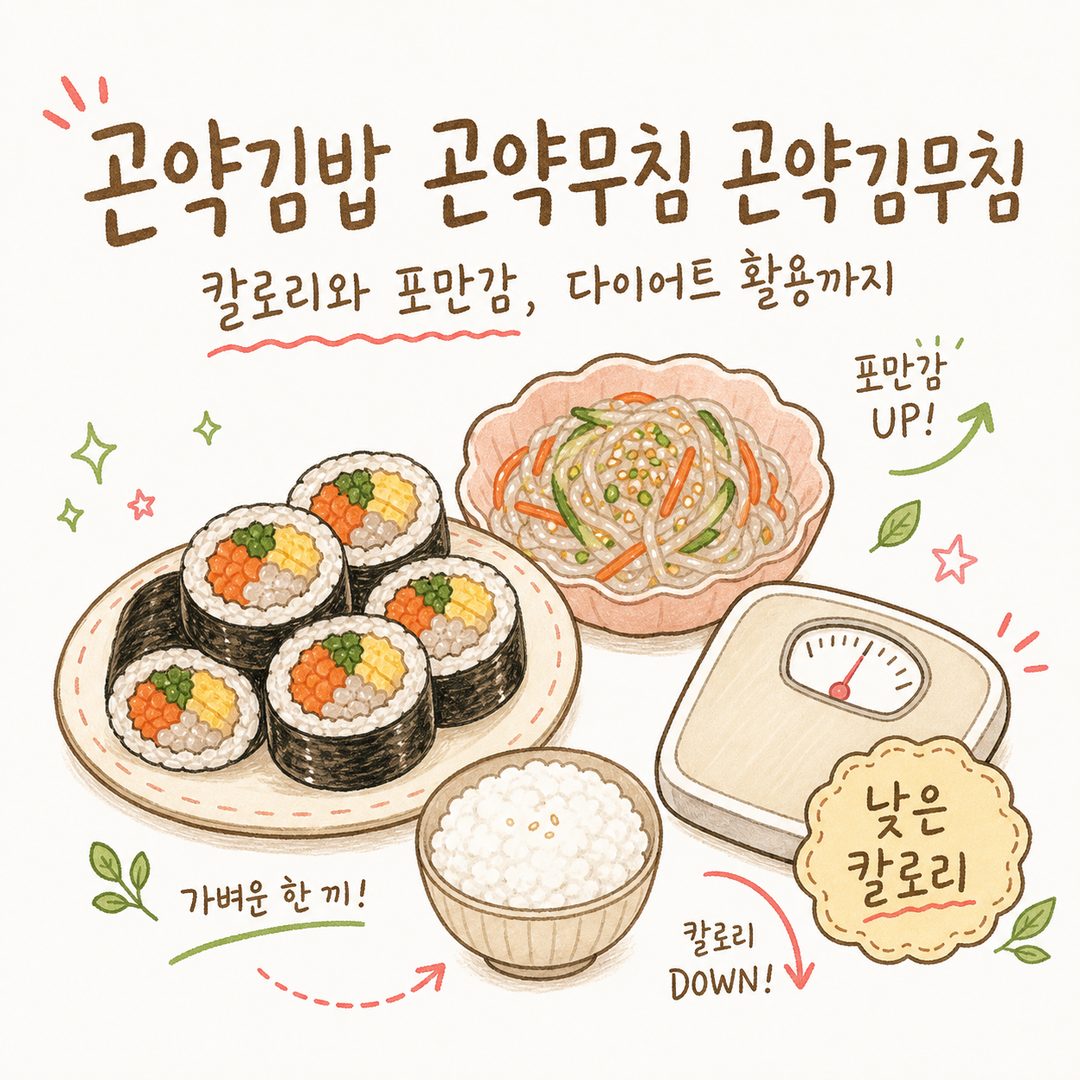
Konjac Gimbap & Side Dishes for Weight Management

Table of Contents
Many people eat gimbap for a quick meal after working late. However, I often hear in the clinic that eating white rice gimbap leaves them feeling bloated and gradually gaining weight. As someone who loves gimbap, I had the same concern. Through discussions with patients, I've developed effective ways to use konjac gimbap, konjac salad, and seasoned konjac with seaweed.
Why Does a Single Roll of Gimbap Cause Weight Gain?
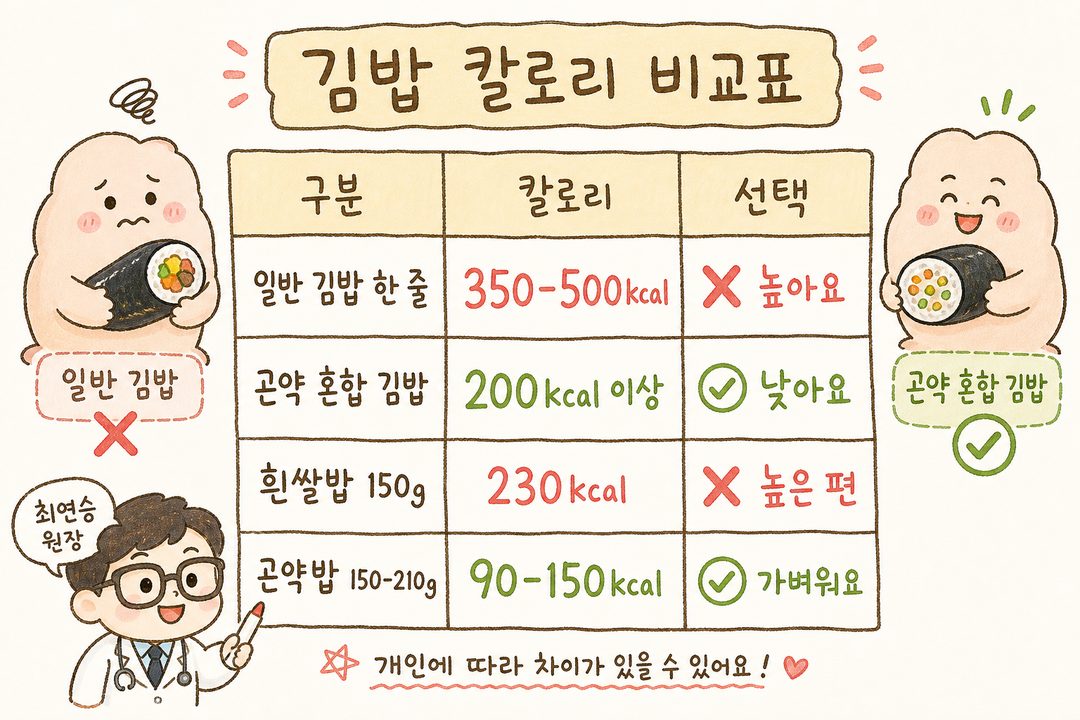
When examining the diets of patients who struggle with weight loss, I often find that 'simple meals' like gimbap can be problematic. A single roll of regular gimbap typically contains 350-500kcal. Eating one roll for lunch and another for dinner can account for nearly half of the daily recommended calorie intake, primarily from rice and oil.
A single bowl of rice (200g) contains about 340kcal. Gimbap rice includes additional sesame oil and salt, making it even more calorie-dense. Meals centered around white rice cause rapid blood sugar spikes and crashes, leading to hunger soon after eating. This hunger creates a vicious cycle of overeating. The key isn't quantity, but rather 'what fills you up.'
Does Adding Konjac Really Make It Lighter?
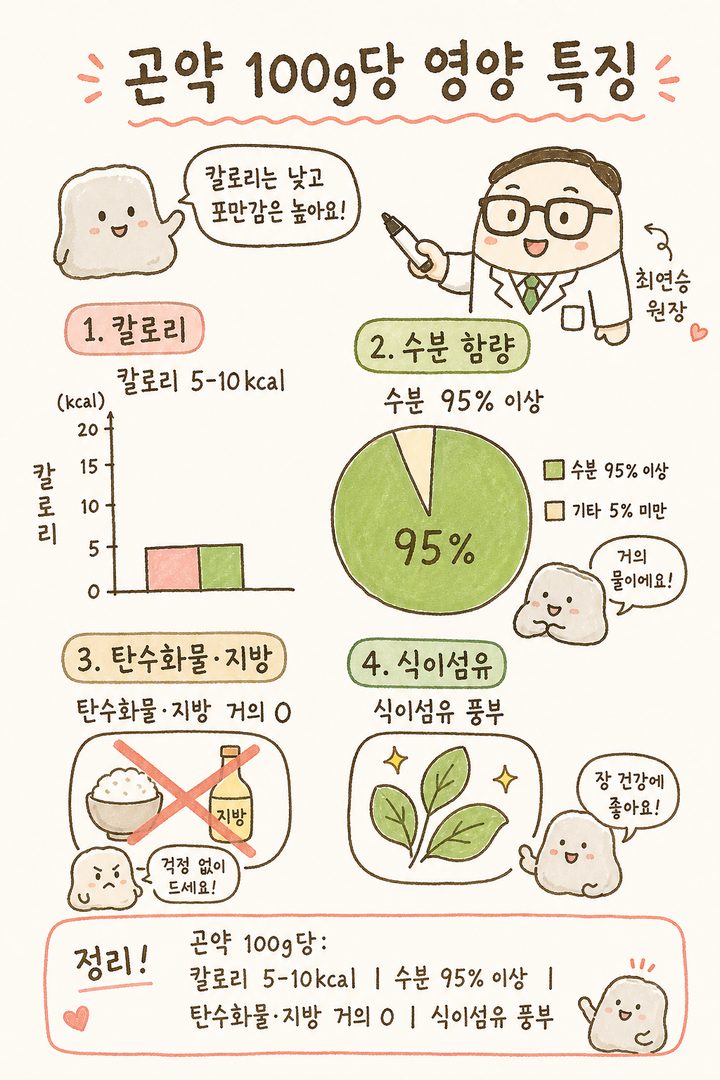
Konjac itself is very low in calories, at about 5-10kcal per 100g. Since it's over 95% water and contains almost no carbohydrates or fat, you can eat a generous portion with minimal calorie impact. Many patients who switch to konjac rice gimbap report feeling less heavy even after eating a full roll.
Store-bought konjac rice typically contains 90-150kcal per package (150-210g). Compare this to 150g of white rice at about 230kcal, and the difference is clear. I often recommend mixing rice and konjac rice 1:1 when cooking at home, which can reduce carbohydrates and calories by nearly half. Some commercial diet gimbap products advertise as low as 200kcal per roll, a significant reduction from regular gimbap.
The principle is similar for konjac salad. To prepare, blanch konjac jelly or noodles in boiling water with a tablespoon of vinegar and a pinch of salt for 2-3 minutes to remove the distinctive odor, then mix with vegetables and season with gochujang vinaigrette or soy sauce-based dressing. However, be aware that konjac salad with mayonnaise can contain up to 350kcal per serving. Remember, changing the seasoning changes the calorie count.

Baekrokdam's Korean Medicine Perspective
In Korean medicine, the terms phlegm-dampness and dampness often appear when discussing weight gain tendencies. People with weak digestion and a tendency to accumulate sticky waste products in the body tend to gain weight more easily and retain water, even when eating the same amount as others. For these individuals, a diet centered on white rice can increase digestive burden and worsen phlegm-dampness accumulation.
Konjac has a cool, gentle nature that's less irritating to the stomach, and its rich dietary fiber supports intestinal movement. While using Korean herbal medicine to improve digestive function, replacing some white rice with low-calorie, high-satiety ingredients like konjac can help with both constitutional improvement and weight management. However, since konjac has cooling properties, those who often have cold hands and feet or diarrhea should consume it blanched with warm seasonings.

Practical Tips You Can Start Today
Start by changing just one meal a day. Here are some key points I often recommend to patients:
Mix rice and konjac rice 1:1 for gimbap, spreading just a thin layer on the seaweed
Blanch konjac jelly or noodles in boiling water with vinegar and salt for about 3 minutes before use
Use light seasonings like gochujang vinaigrette or soy sauce-based dressings, limiting mayonnaise to one teaspoon or less
Include protein-rich fillings like egg strips, cucumber, carrot, perilla leaves, and chicken sausage
For seasoned konjac with seaweed, lightly toast and crumble the seaweed, using just enough sesame oil for flavor
Limit konjac portion to about one handful per serving
These simple changes can significantly reduce the calories in each meal. Most importantly, the satisfaction of 'eating lightly without starving' helps prevent overeating at the next meal.
Konjac isn't a magical ingredient. However, it's a reliable ally in quietly reducing white rice and oily side dishes from your daily diet. Remember that its effectiveness varies by constitution, and results depend on seasonings and accompaniments. If you're struggling with weight loss or experiencing yo-yo dieting despite managing your diet, it might be time to consider your constitutional type. Baekrokdam's Baekrok Gambi-jung is formulated to improve digestive function while addressing phlegm-dampness and dampness, working in harmony with dietary management. If you'd like to try combining konjac recipes with our approach, please feel free to schedule a consultation.