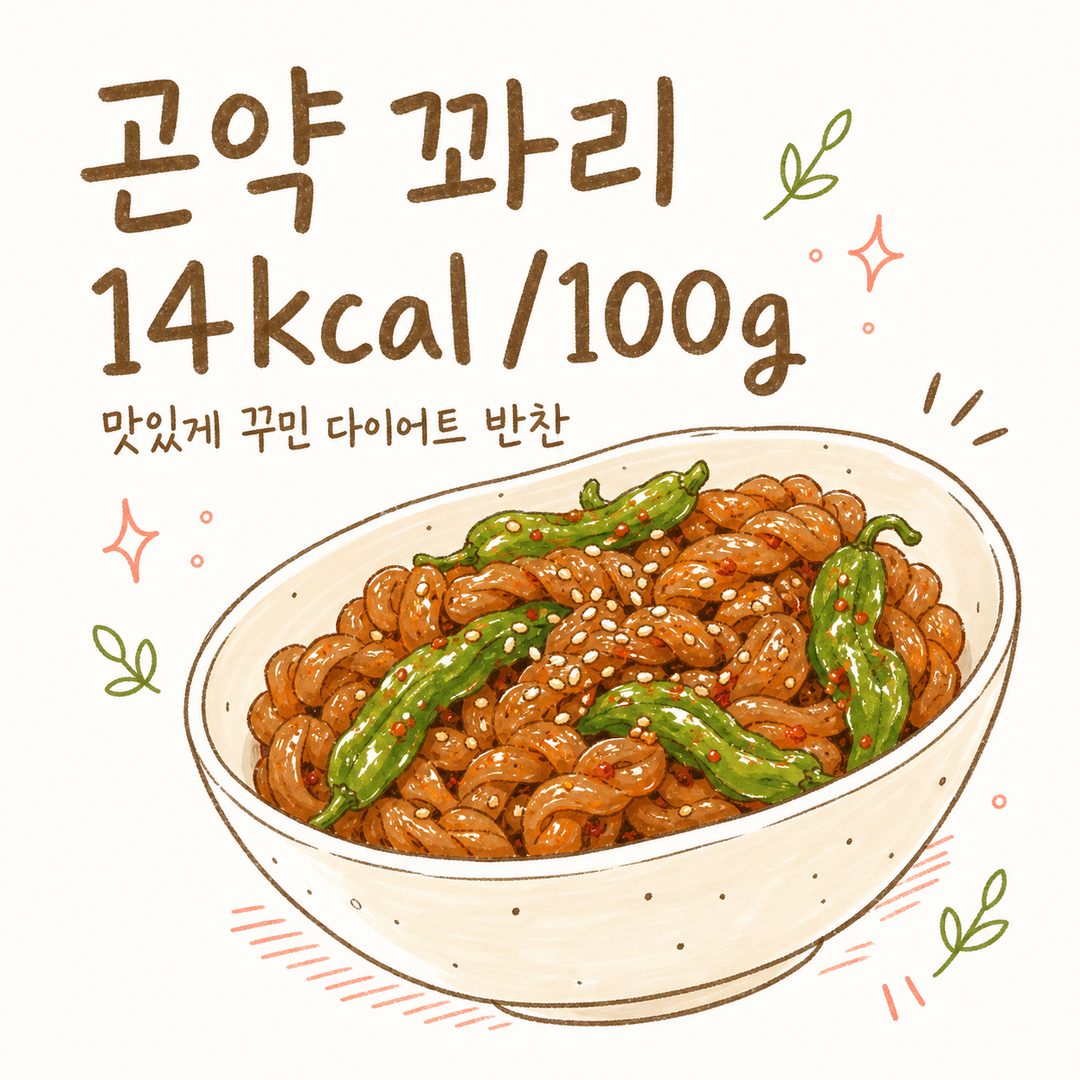
How to Make Braised Konjac Twists: A Low-Calorie Recipe

Table of Contents
When you're on a diet but crave savory side dishes, konjac is a great alternative. Many patients in the clinic ask, "Doctor, is there a way to make konjac taste better?"
Why Konjac Twists Are Perfect for Your Diet Plan
Konjac is a food made from the root of the konjac potato (Amorphophallus konjac). Its main component is glucomannan, a type of dietary fiber and water, meaning it provides volume with almost no calories. Some data suggests that konjac itself contains only about 14 kcal per 100g. Since it lacks other nutrients, you should pair it with grains, protein, and vegetables to ensure a balanced meal.
When you crave soy-braised dishes like tteokbokki or braised fish cakes, a bowl of braised konjac twists can satisfy your palate with less burden. One recipe indicates that a 100g serving of konjac is approximately 20–30 kcal. Compared to a bowl of white rice, the difference is quite significant.
Create a Twisted Shape with Just One Cut
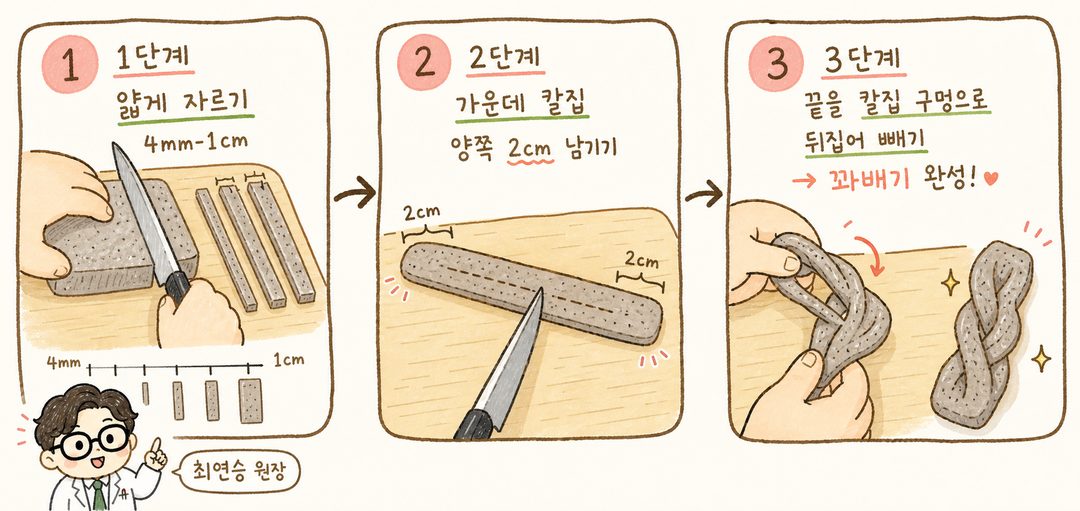
The key to konjac twists is simple: scoring the center and flipping one end through the hole. It might sound difficult, but it takes less than a minute per piece once you try it.
Slice one block of konjac (200–300g) into thin pieces about 4mm to 1cm thick. If you want longer strips, aim for 0.8–1cm.
For each piece, make a vertical slit in the center, leaving about 2cm at both ends.
Push one end of the konjac through the slit and pull it out to create a twisted (ribbon) shape.
Shaping it this way not only looks beautiful but also allows the seasoning to absorb much better because the surface area increases where the cuts are made.
Remove the Odor and Braise the Sauce
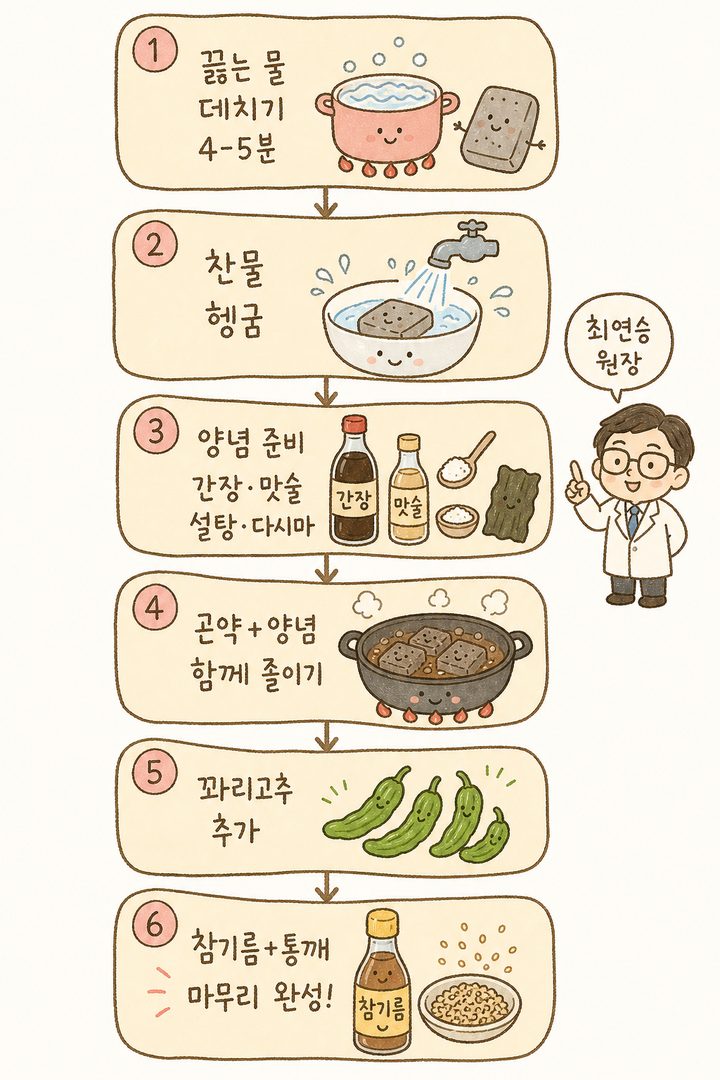
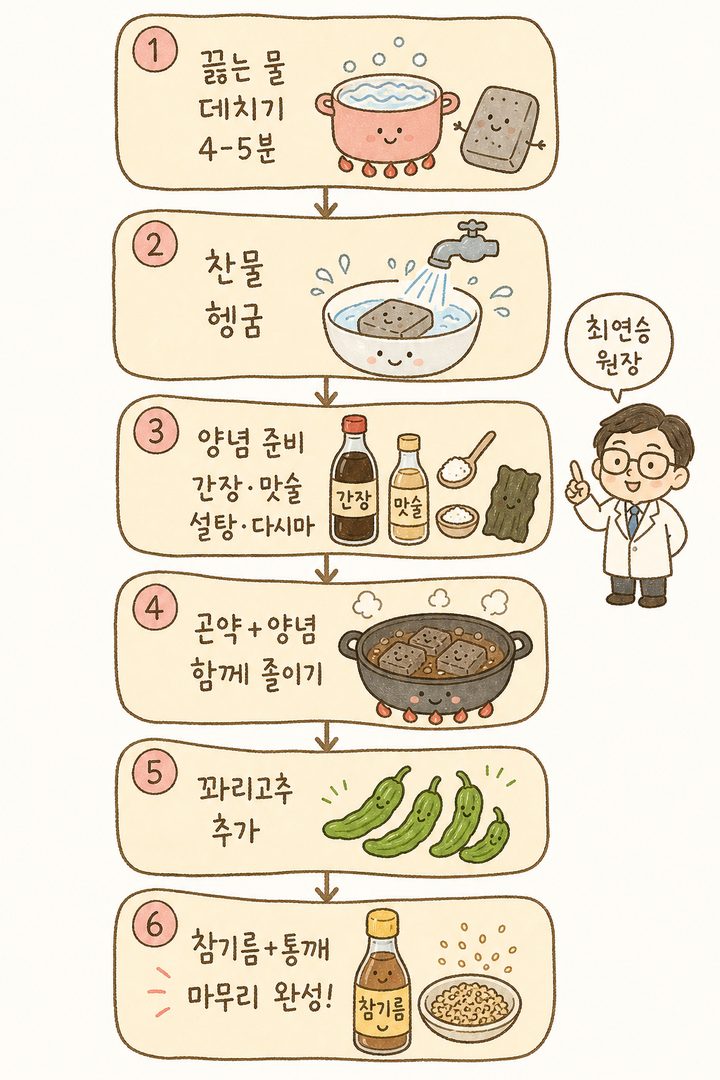
Many people find the unique scent of konjac off-putting. You can eliminate most of this odor by blanching it in boiling water with a bit of vinegar or salt. Usually, 4 to 5 minutes is enough.
The braising sauce is simple. For 2–3 servings, mix 2–3 tbsp of soy sauce, 1–2 tbsp of cooking wine (mirin), 1–2 tbsp of sugar or oligosaccharide, and 1 tbsp of plum extract with ½ to 1 cup of water. Adding a 10cm piece of dried kelp (dashima) significantly enhances the umami. Shishito peppers (about 30 pieces, ~120g) and 3 cloves of garlic pair perfectly with the sauce.
Braise the konjac with the sauce, and when the liquid has reduced, add the shishito peppers and braise a bit longer. Finish with 1 tbsp of sesame oil and a sprinkle of toasted sesame seeds for a savory and nutty dish.

Konjac from the Perspective of Baekrokdam Clinic
In the consultation room, I don't always recommend fiber-heavy foods unconditionally. In Korean medicine, obesity is often viewed as a state where phlegm-fluid (痰飮) or dampness (濕) has stagnated. If someone with a cold or weak stomach frequently consumes foods with a cold and heavy nature like konjac, they may suffer from indigestion or bloating.
However, for those struggling because their overall food intake won't decrease, or those who find it hard to give up savory side dishes, alternative sides like konjac twists are very helpful. It’s a way to soothe the palate while slightly reducing the amount of white rice. Pairing it with a protein-rich side dish will also help you feel full longer after the meal.
Action Points to Try Starting Tonight
Buy one block of konjac (200–300g), slice it 4mm–1cm thick, and try scoring it. Remember to leave 2cm at both ends so the shape holds.
Blanch in boiling water for 4–5 minutes to remove the odor, then rinse in cold water and drain.
For the sauce, use 2–3 tbsp soy sauce, 1–2 tbsp cooking wine, 1–2 tbsp sugar/oligosaccharide, and ½–1 cup water, adding kelp for umami.
Add about 30 shishito peppers at the end to stimulate your appetite with a spicy aroma.
Make 2–3 servings at a time and eat about 100g per meal. At roughly 20–30 kcal per serving, it is very low-burden.
If you have a weak stomach, I recommend pairing this with a bowl of warm soup. This helps complement the cold nature of the konjac.
While the recipe is simple, maintaining a consistent diet/weight management plan is harder than it looks. If you want to create a diet plan that pleases your palate with low-calorie side dishes like konjac twists while maintaining your body's balance, consider a consultation for Baekrok Gambi-jung. We will examine your constitution and lifestyle habits to help you map out a sustainable weight loss approach.