
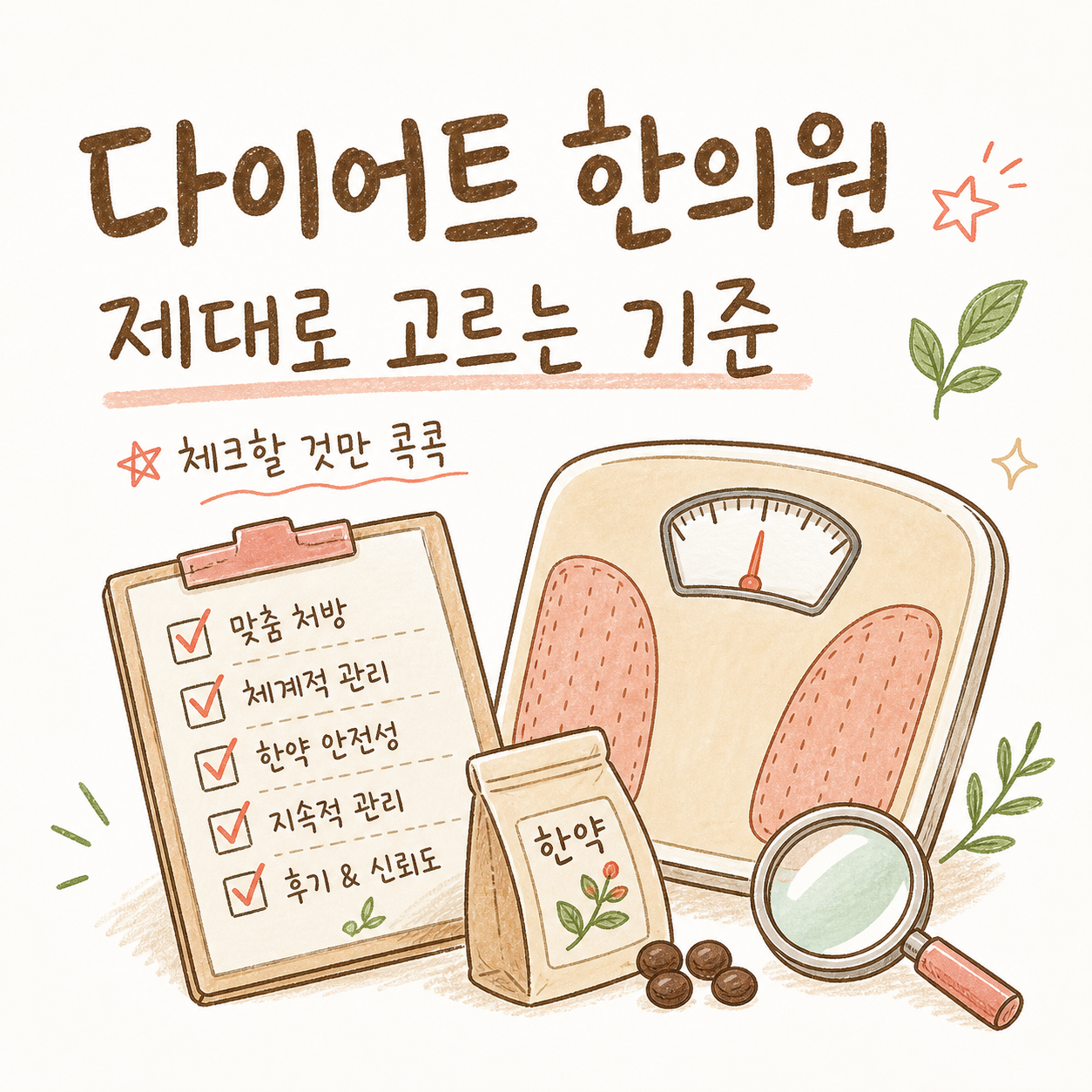
Choosing a Korean Medicine Weight Loss Clinic

Table of Contents
When starting a weight loss journey, many search for 'diet clinics.' But with countless ads, it's hard to find a reliable one. I often hear patients ask, 'Doctor, which clinic is the best?' Honestly, rather than asking 'Where is cheapest?', you should first consider 'How safe and evidence-based is their approach?' Knowing what to look for helps you avoid falling for marketing hype.
What is a Korean Medicine Weight Loss Clinic?
A Korean medicine weight loss clinic doesn't rely on just one method. Typically, they combine various approaches to help reduce weight and body fat. It starts with personalized consultation and examination, followed by body composition analysis like InBody to quantify your current physical state. Then, Korean herbal medicine is prescribed to suppress appetite, aid fat breakdown and elimination, while also addressing issues like edema, sleep, and stress.
Many clinics also offer Korean medicine treatments such as acupuncture, pharmacopuncture, cupping, electroacupuncture, and low-frequency therapy to improve metabolism and reduce edema. Diet and lifestyle coaching is essential, helping set recommended calorie intake and adjust carbohydrate-to-protein ratios and activity levels. In short, rather than relying solely on medication, these clinics examine everything from eating habits to lifestyle patterns.
How Did It Become So Diverse?
Interestingly, each clinic emphasizes different aspects. Some focus on reducing body fat while maintaining basal metabolic rate — the philosophy being to avoid losing muscle mass through starvation. Others promote carbohydrate-controlled diets, restructuring meals to reduce carb intake. Some operate standardized programs across national networks.
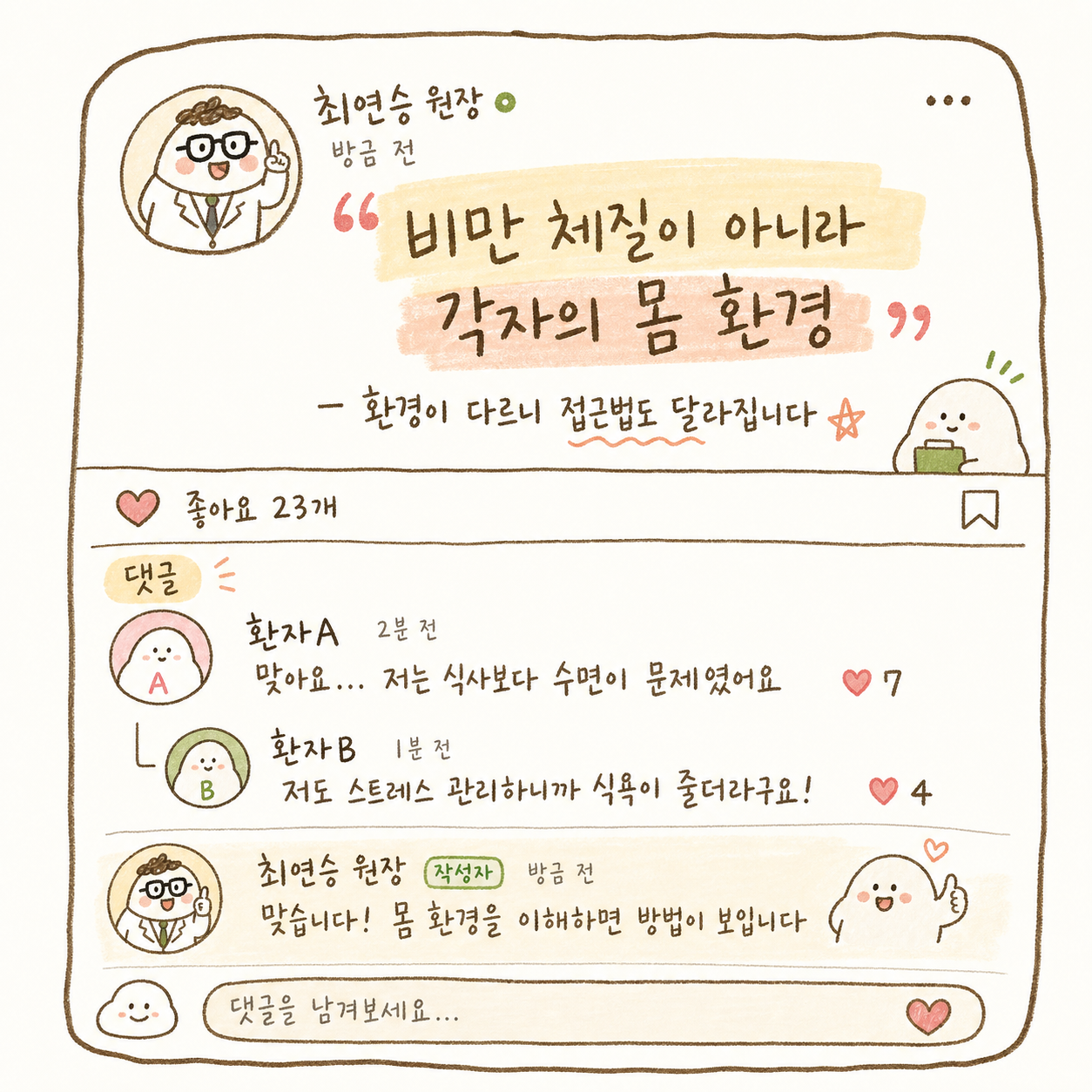
Why such variation? Because everyone's weight gain environment differs. Some struggle with appetite, others with edema, and some with disrupted sleep and late-night eating patterns. That's why there's no one-size-fits-all solution. I view this not as 'obesity constitution' but as individual body environments. Different environments naturally require different approaches.
Checklist for Choosing a Good Clinic
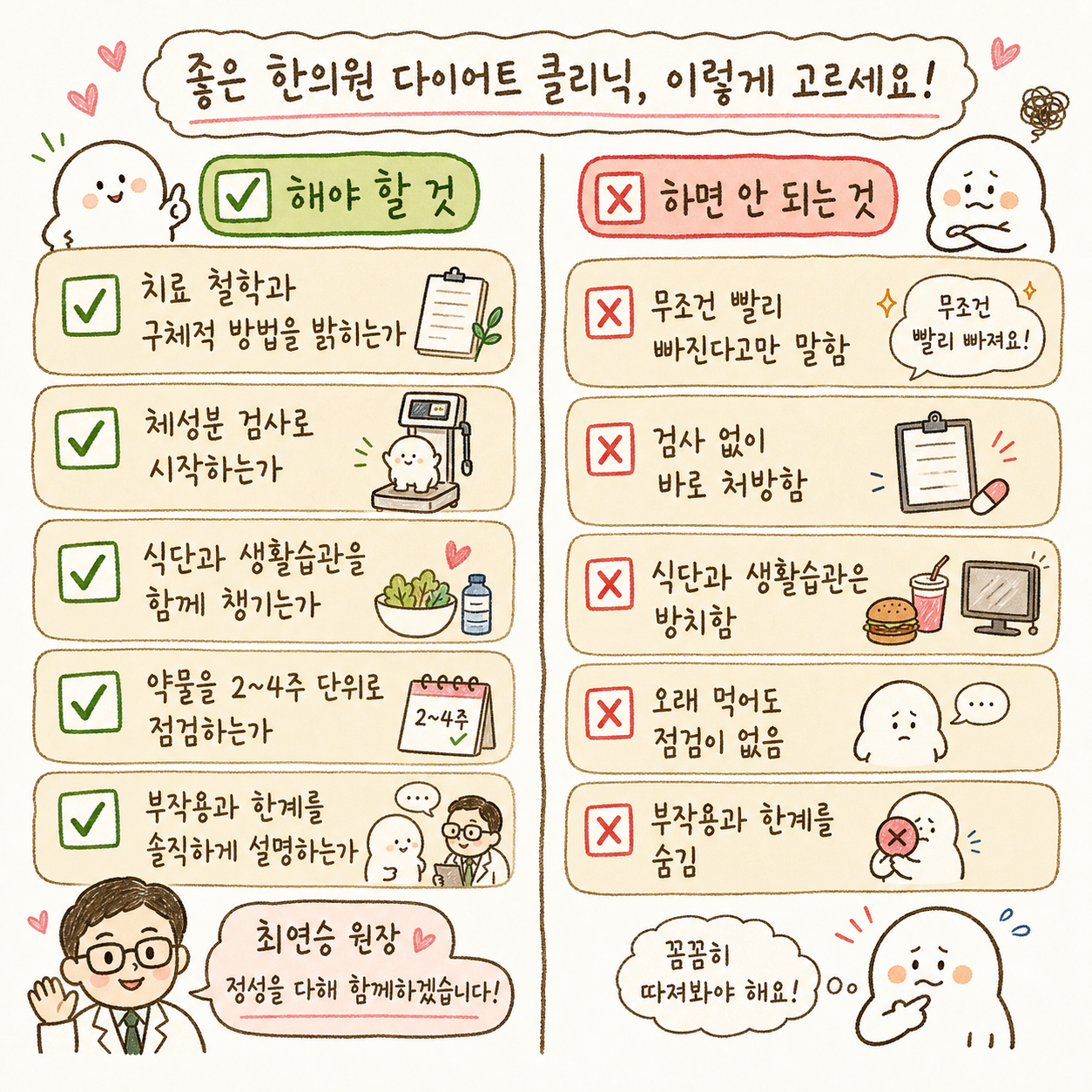
A doctor-turned-YouTuber's criteria for choosing Western-Korean medicine weight loss hospitals applies equally to Korean medicine clinics. When reviewing websites or blogs, check for these points:
Do they disclose their treatment philosophy and specific methods? Look for clinics that suggest realistic weight loss of 0.5-1kg per week rather than promising 'X kg guaranteed.'
Do they start with body composition analysis? Be skeptical of places that prescribe medication without initial testing.
Do they address diet and lifestyle habits? Even with 800-1000kcal daily intake, check if they maintain protein at 1.0-1.5g per kg of body weight to minimize muscle loss.
Do they review herbal medicine every 2-4 weeks to monitor body response, or do they push long-term packages?
Are they honest about side effects and limitations? A clinic that discusses potential drawbacks is preferable to one that only highlights benefits.
These five points will help you navigate past marketing claims.
Common Misconceptions
The most common myth is that 'herbal medicine makes you lose weight without effort.' Not true. Herbal medicine helps control appetite and supports your condition — it's not magic that melts fat while you remain inactive and overeat. Diet and activity levels must support the process.
The second misconception is that 'higher cost means better results.' Price and evidence are unrelated. A clinic that carefully assesses your condition and explains thoroughly is often safer than one pushing expensive packages without proper testing.
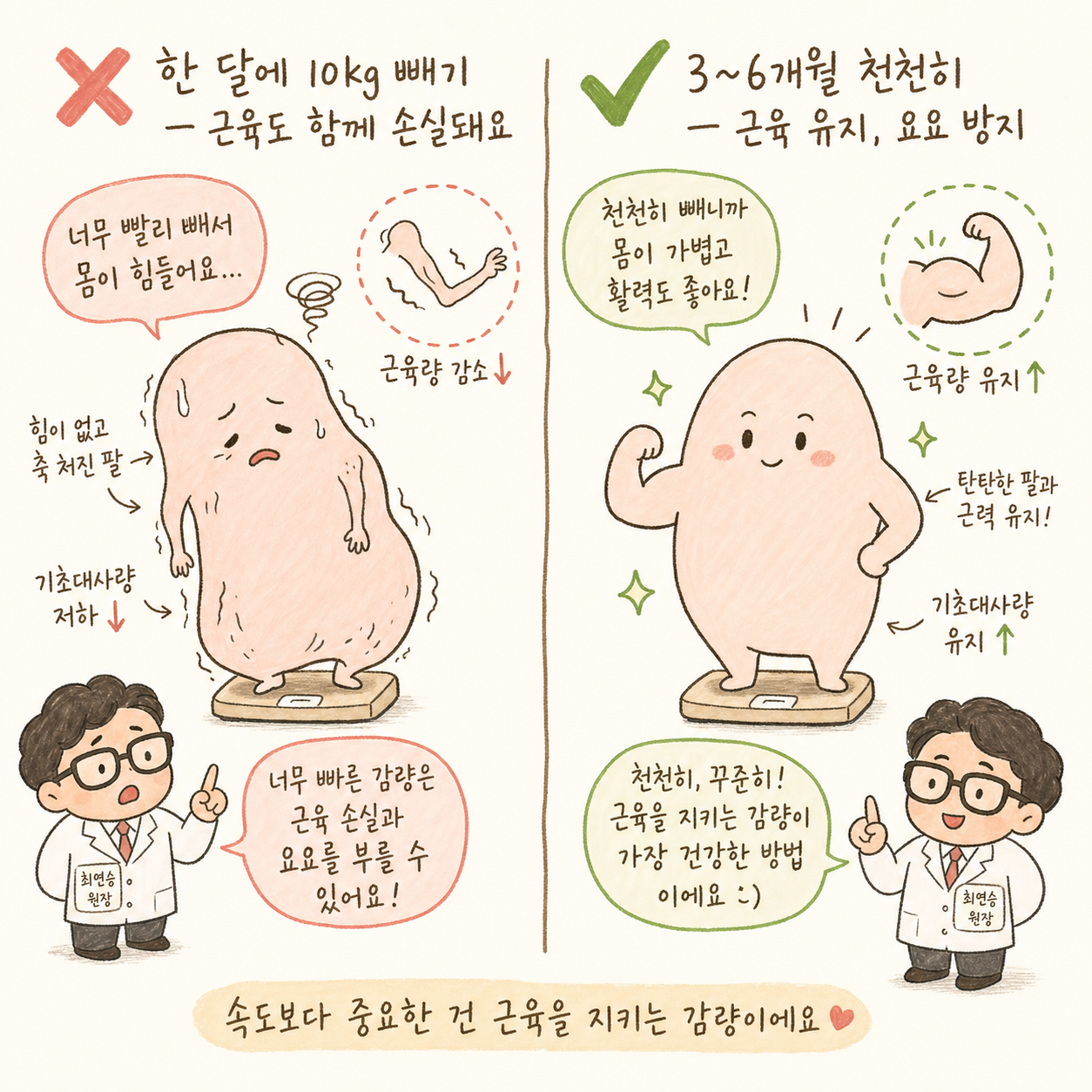
The third is about speed. '10kg in one month' sounds tempting — I understand the appeal. But losing weight too quickly leads to muscle loss and easier weight regain. A 3-6 month gradual approach is typically less stressful on the body.
So, Is It Really Effective?
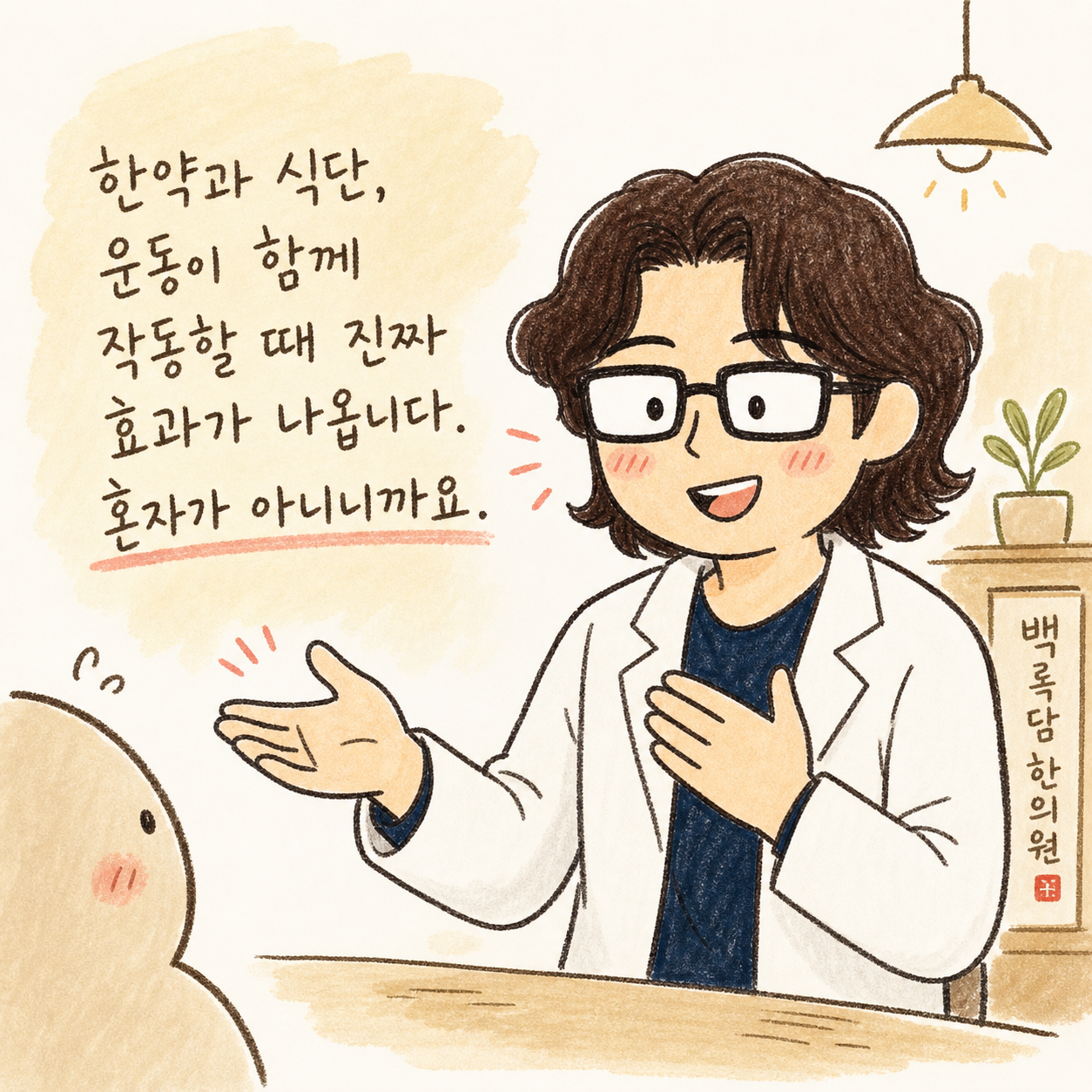
To be honest, Korean medicine weight loss clinics aren't places where 'weight melts off without effort.' However, they excel at addressing the points where people typically struggle when going solo. When hunger is controlled, sticking to a diet becomes easier. Reduced edema makes the body feel lighter, increasing motivation to move. Acupuncture sessions, though short at 5-10 minutes each, help maintain a consistent management routine.
Ultimately, the core elements are diet, exercise, and lifestyle rhythm. The clinic's role is to support these sustainably. Therefore, choose a clinic that says 'Let's build habits together' rather than 'This pill is all you need.' This approach makes it much easier to maintain weight loss.
To reiterate, a Korean medicine weight loss clinic is where you verify your body's condition through testing and combine herbal medicine, treatments, and coaching to progress gradually. Choose based on philosophy and explanation, not just price. At Baekrokdam, we've focused on sustainable approaches rather than extreme dieting, and Baekrok Gambi-jung is a prescription developed with this philosophy for a manageable start. If you're unsure where to begin, we encourage you to start with a consultation.