Diet Delivery Food: How to Choose Protein and Sauces

Table of Contents
Did you open a delivery app after work again? The guilt of ordering food while on a diet is something I hear often in the clinic.
The Real Reason Delivery Food Hinders Weight Management
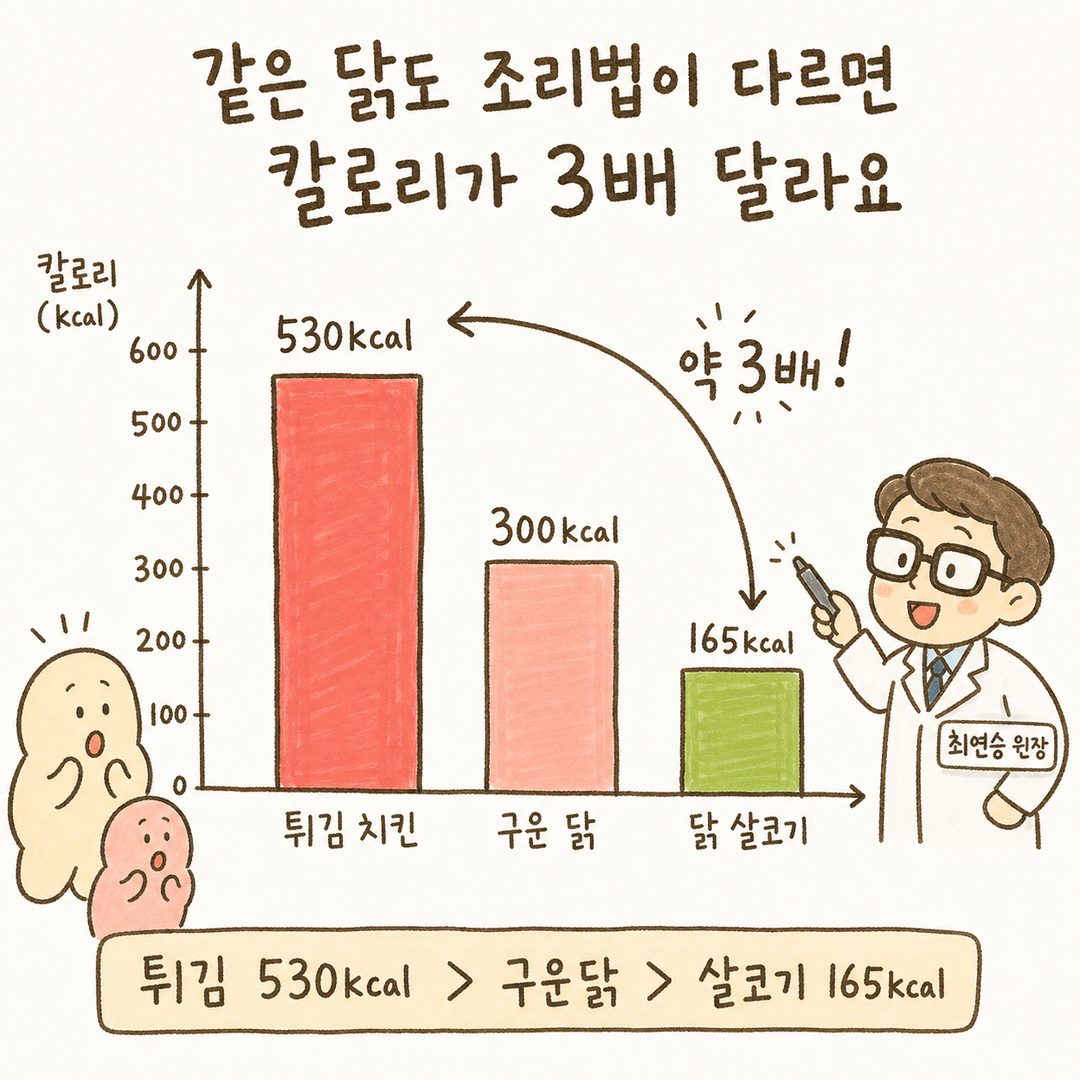
Is delivery food itself the problem? In fact, it is much more common for the cooking methods and sauces underlying the delivery menu to be the issue. According to data compiled by health media outlets, the combination of frying, cream, and high-sugar sauces is ranked as the top thing to avoid during a diet. Even with the same chicken, the calorie difference is significant depending on whether it is fried or rotisserie-style. Similarly, the burden of a meal changes depending on whether you drench raw fish in red chili paste or lightly dip it in soy sauce.
Numerical data also reveals this difference. One diet magazine introduces 200g of fried chicken as approximately 530kcal. In contrast, 100g of lean chicken meat is guided as a high-protein, low-fat food at about 165kcal, with 31g of protein and 3.6g of fat. This means the chicken itself isn't what causes weight gain; rather, the breading and seasoning sauces nearly double the calories.
Criteria for Choosing Safe Delivery Menus
I first teach my patients one specific standard: Aim for 400–600 kcal per meal, with sufficient protein and minimal carbohydrates, oil, and sauces. Health sections of major newspapers also recommend this range.
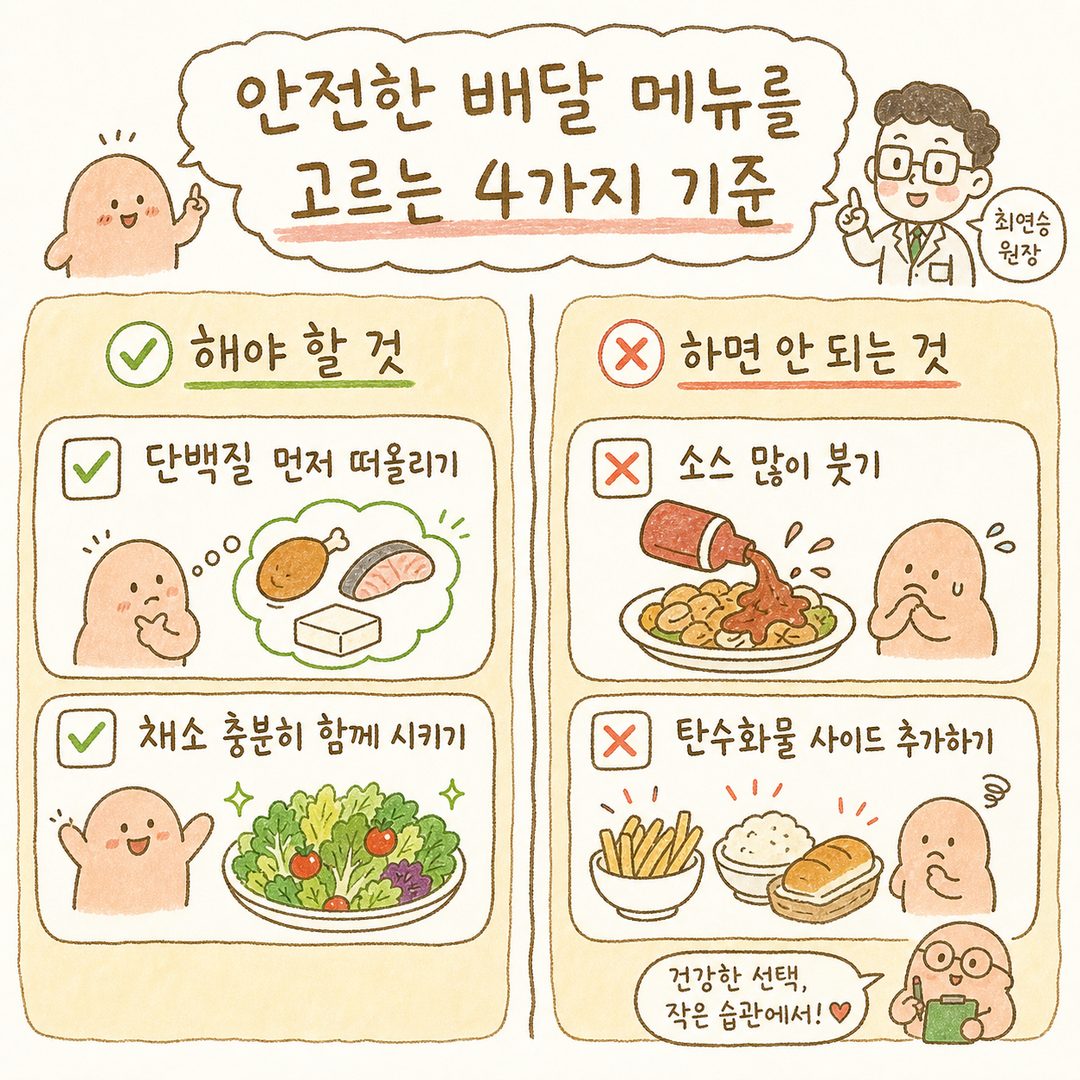
Here are the detailed criteria:
Think Protein First: When choosing a menu, ask, "What is the main protein in this dish?"
Plenty of Vegetables: Order side dishes like vegetable wraps, salads, or seasoned greens together.
Sauce on the Side: Get into the habit of adding only half the sauce and tasting it before mixing.
Skip Carbohydrate Sides: Consciously avoid adding French fries, ramen noodles, or extra bowls of rice.
By following these four rules, your delivery options narrow down, making the decision much easier.
Delivery Menus with Less Burden
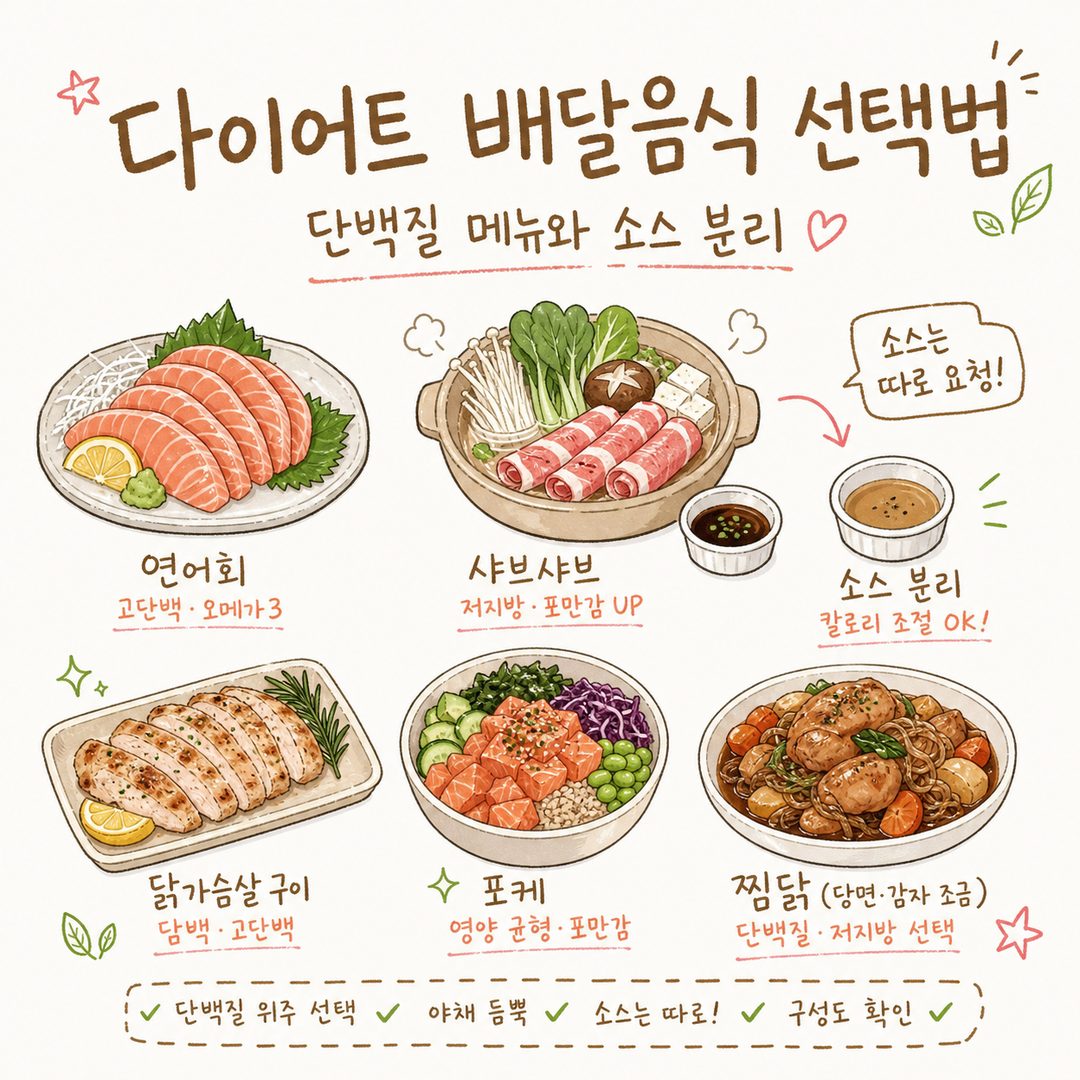
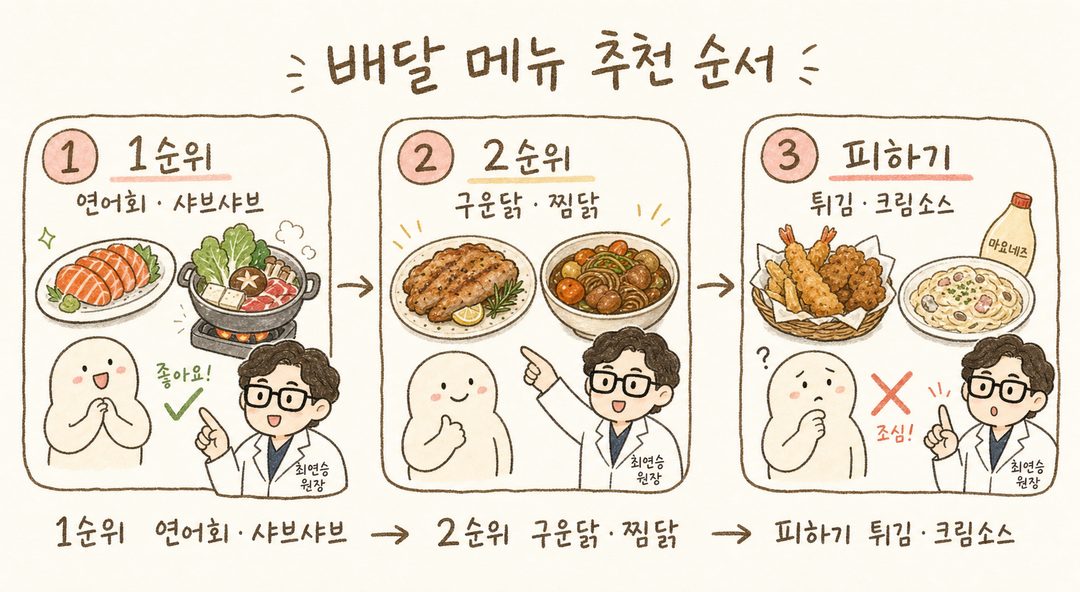
Synthesizing various data, delivery menus that are less burdensome during a diet include salmon sashimi, shabu-shabu, jjimdak (excluding glass noodles), bossam (reducing fat and sauce), roasted chicken, poke, and tacos.
Salmon Sashimi: According to data, salmon contains 120kcal, 0g of carbohydrates, 3.8g of fat, and 20g of protein per 100g, making it a great fit for a low-carb, high-protein diet. White fish (flatfish, rockfish, etc.) is even lighter at around 100kcal per 100g.
Shabu-shabu: Centered on vegetables and lean meat or seafood, it is highly versatile for delivery. It is best to skip the glass noodles or ramen and focus on the vegetables and meat.
Jjimdak: If you focus on the chicken and exclude the glass noodles, it is a fairly good choice for protein supplementation.
Bossam: Often introduced as having less fat than jokbal (pig's trotters). It is recommended to remove thick fatty parts and eat it wrapped in vegetables.
Roasted/Rotisserie Chicken: Uses less oil than fried chicken, resulting in relatively lower calories and saturated fat. The key is to remove the skin and eat mainly the lean meat.
Poke: Balance is improved if you ask for half the rice or switch to a salad base and increase the protein.
Tacos: Since you eat meat, seafood, and vegetables together, the ratio of carbohydrates, protein, and fat is quite good.
Conversely, combinations to avoid are clear: fried foods, mayonnaise/cream/rosé sauces, sugary seasonings, and excessive noodle or rice additions. These four are the decisive variables that determine whether the same menu is a diet-friendly meal or not.
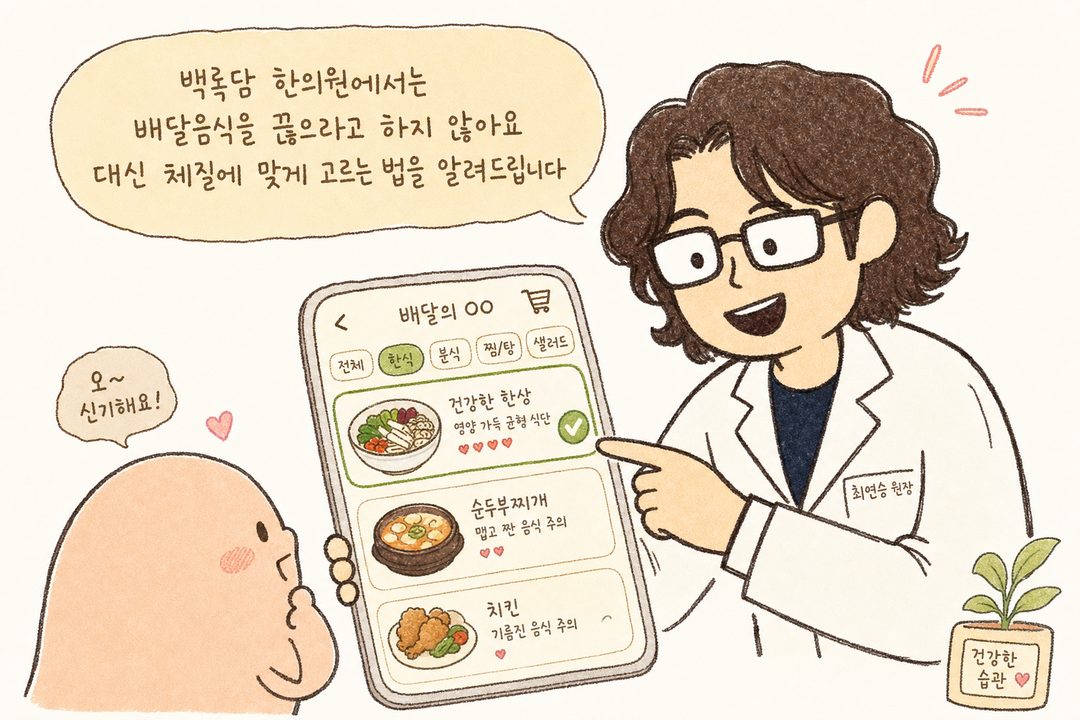
The Baekrokdam Clinic Perspective
When the topic of delivery food comes up in our clinic, we don't simply say, "Stop eating it." For many, that is realistically impossible. It's the same for me. Instead, we examine the patient's constitution and eating patterns together.
In Korean medicine, we believe that everyone reacts differently to the same delivery food. Those who frequently feel bloated or experience edema (swelling) react more sensitively to salty seasonings and oily sauces. Those who reach for food as soon as they see something sweet have high carbohydrate cravings, so prioritizing the reduction of sweet triggers like seasoned chicken, rosé sauce, or desserts is the first step. Even when ordering the same menu, it is more efficient to reduce the elements that are weakest for your specific constitution.
One more thing I emphasize is the eating order. Put protein and vegetables in your mouth first, and eat carbohydrates sparingly at the end. Many people find that simply changing this order results in a different level of satiety even when eating the same menu. This is one of the most frequent changes observed in our clinic.

Action Points to Apply Starting Today
Before opening your delivery app, keep these five lines in mind:
Menu Selection: Choose from salmon sashimi, shabu-shabu, roasted chicken, poke, or jjimdak.
Skip Sides: Filter out French fries, ramen noodles, and extra rice.
Request Sauce Separately: Write a note saying, "Please provide the sauce on the side."
Protein First, Plenty of Veggies: Consciously change your eating order.
Drinks: Choose sparkling water or water instead of soda.
Specifically, requesting sauce on the side is incredibly effective. Since pre-mixed seasonings always contain a lot of sugar and salt, receiving it separately and using only half provides almost the same taste while significantly reducing calories. When these small habits accumulate over a month or two, many people feel the difference in the fit of their clothes before they even see the numbers change on the scale.
Weight management is entirely possible without quitting delivery food. The key is changing the menu and the sauce strategy. However, if you struggle with appetite control or experience recurring edema and abdominal bloating, another option is to receive a prescription tailored to your constitution and dietary coaching through Baekrok Gambi-jung. We will start step-by-step in the clinic by checking your dietary patterns together.