
7-Day Diet Plan: Calorie Limits & Weight Loss Speed

Table of Contents
- The Reality of the 'Standard Diet Plan' We Seek
- What Is a Safe and Healthy Weight Loss Speed?
- Long-term Benefits of Initial Weight Loss Speed
- Baekrokdam Clinic's Perspective on Dieting
- Principles for Diet Composition You Can Start Now
- A Realistic Sample for Starting Your Week (Monday Example)
- References
"If I just stick to this for one week, I'll definitely lose weight." Many people search for diet plans online with this mindset. In the clinic, many patients bring printouts or show me their phone screens and ask, "Doctor, will this work if I follow it exactly?"

The Reality of the 'Standard Diet Plan' We Seek
Let me be honest with you. There are almost no cases where a standard 7-day[1] diet plan has been scientifically proven to work identically for everyone in the world. This is true even when searching through PubMed or KoreaMed databases. Most reports indicate that weight loss is achieved when methods such as calorie restriction, Korean-style meal patterns, intermittent fasting, or meal replacements are consistently maintained for 6 to 12 weeks or more, rather than a short-term one-week plan.
Therefore, the one-week diet plans we commonly see are not "answer keys," but rather sample plans designed based on these scientific principles. It is much more realistic to view them this way. Since everyone's physical condition and activity level differ, a process of adjusting the sample to fit your own body must follow.
What Is a Safe and Healthy Weight Loss Speed?
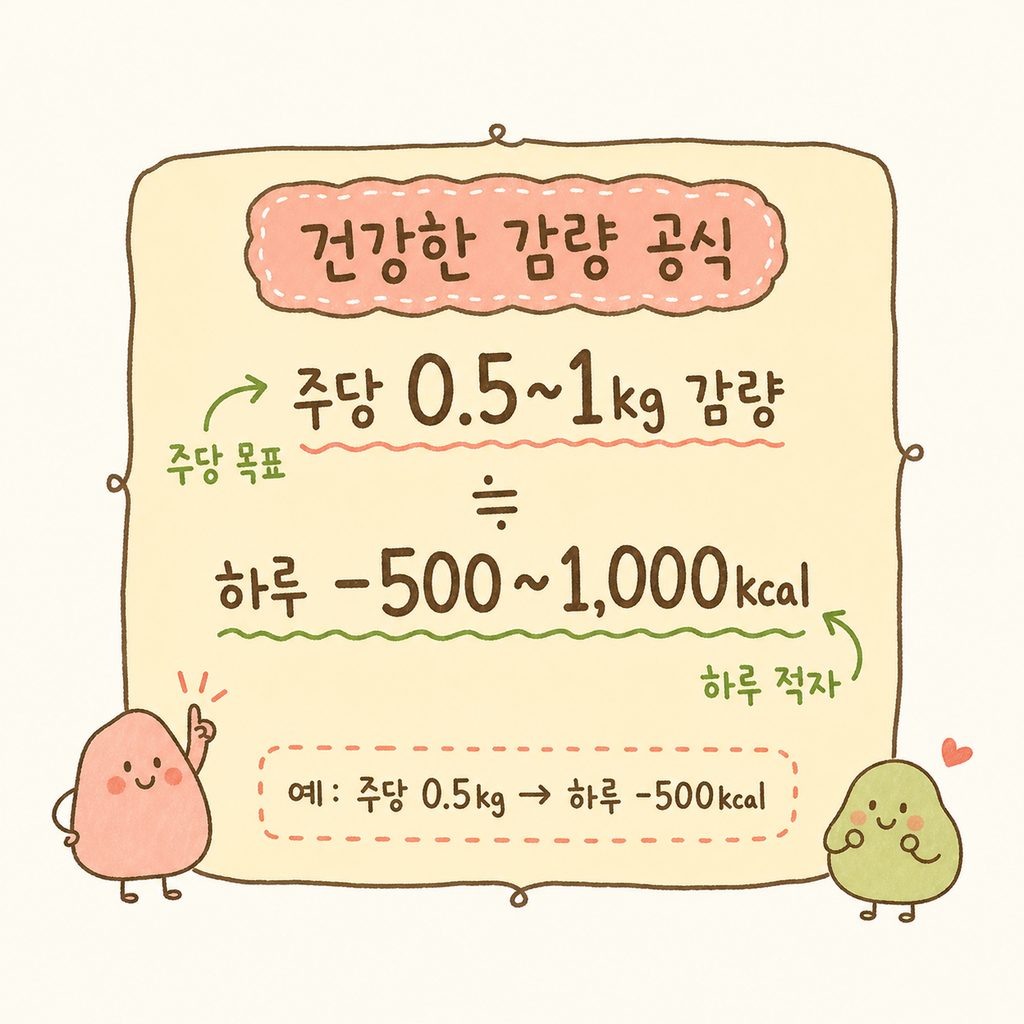
Instead of blindly starving yourself, it is important to first know exactly how much energy you need to reduce. The healthiest and most sustainable speed recommended by experts is about 0.2 to 0.5 kg per week. Even if you push a bit harder, up to 0.5 to 1 kg per week is considered a relatively safe range.
To lose this much, you need to consume 3,500 to 7,000 kcal less per week. This breaks down to a reduction of approximately 500 to 1,000 kcal per day. If you are just starting out, try beginning lightly by reducing your daily intake by about 500 kcal from your usual amount. For example, if you usually consume 2,000 kcal, try aiming for around 1,500 kcal for a week.
Long-term Benefits of Initial Weight Loss Speed
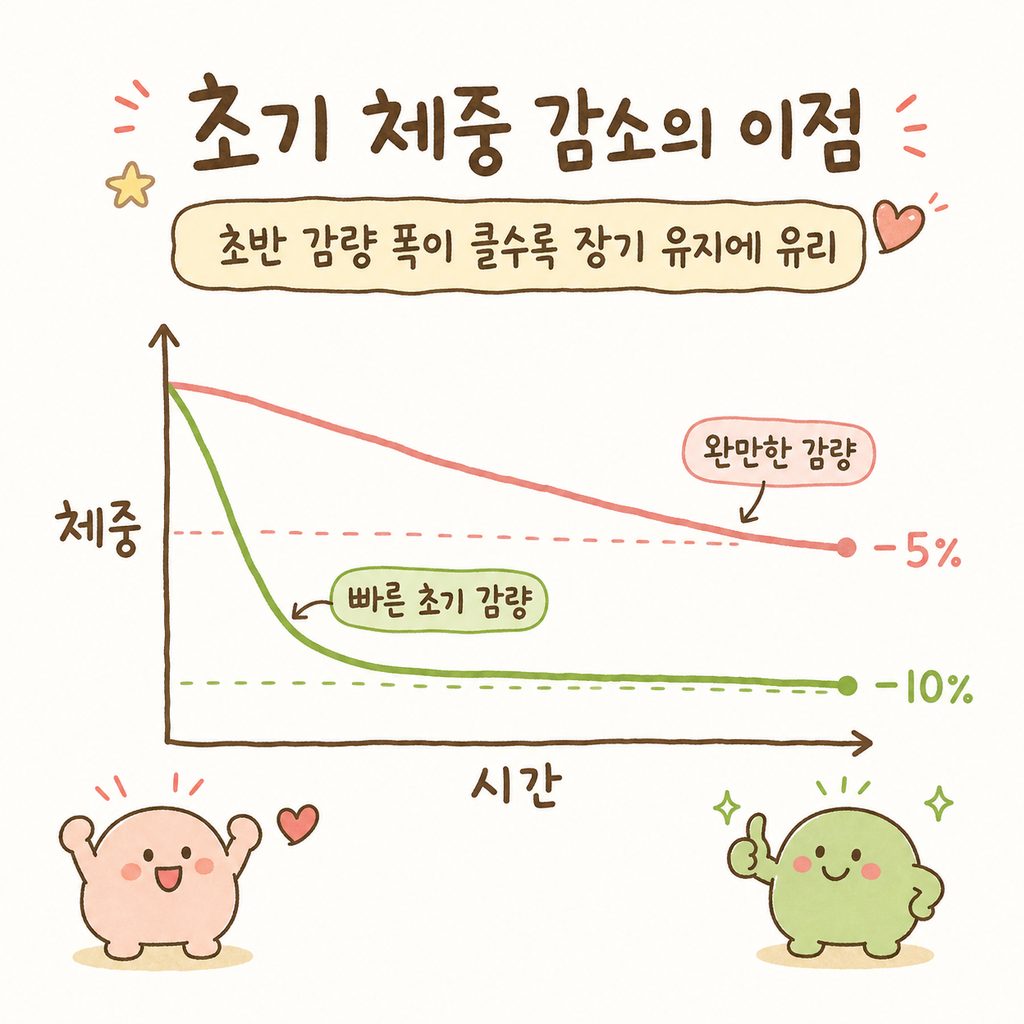
It is often said that losing 0.5 kg per week is the standard. However, some Korean health promotion studies have shown slightly different results. They suggest that rapid initial weight loss may actually be more advantageous in terms of overall weight loss magnitude and maintenance compared to traditional gradual methods.
This doesn't mean you should simply starve. Methods like the Very Low Energy Diet (VLED), where you consume only 400–800 kcal per day, lead to rapid loss of 1–2 kg per week, but they significantly increase the risk of nutritional deficiencies and muscle loss. The Korean Medical Association's dietary guidelines for obesity also state that VLED must only be performed under medical supervision. Extreme fasting without safety measures can be toxic to the body.
Baekrokdam Clinic's Perspective on Dieting
In Korean medicine, we pay more attention to 'metabolic efficiency' and 'constitution' than just counting calories. If you blindly eat too little, your body enters an emergency mode to save energy. If your basal metabolic rate (BMR) drops significantly, your constitution changes into one that gains weight even when eating very little.

What I always emphasize during consultations is nutrient density. Even with the same 1,300 kcal, the body's response is completely different depending on whether you fill up on refined carbohydrates or high-quality protein and vegetables. The key to weight management without the yo-yo effect is maintaining a meal pattern suitable for Koreans while removing unnecessary sugars and processed foods.
Principles for Diet Composition You Can Start Now
So, how do you set up a one-week plan that fits your body? Generally, a short-term weight loss goal is often set at 1,200–1,400 kcal for adult women and 1,400–1,600 kcal for men. Refer to the ratios below:
Carbohydrates (40–50%): Choose complex carbohydrates like brown rice, multi-grains, or sweet potatoes instead of white rice or bread.
Protein (25–30%): Aim for 60–80g per day using chicken breast, tofu, fish, and eggs.
Fats (20–30%): Focus on unsaturated fats such as olive oil, nuts, and avocado.
Vegetables: Filling about 50% of your plate with vegetables and fruits at each meal helps maintain satiety and supports health.
Drink about 1.5–2L of water in small portions throughout the day, and keep snacks light—under 200 kcal—such as a handful of nuts or Greek yogurt.
A Realistic Sample for Starting Your Week (Monday Example)
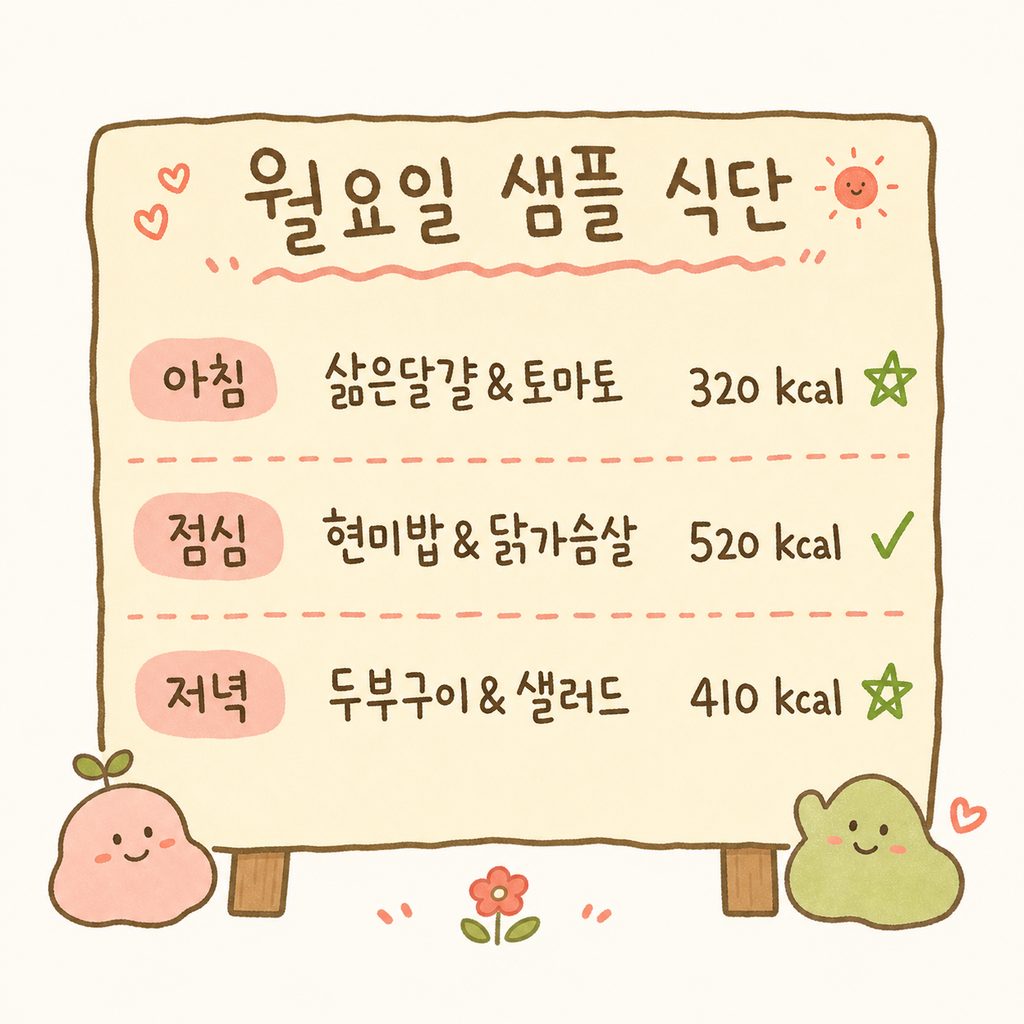
For those who need a more specific guide, here is an example of a Monday meal plan set at approximately 1,300–1,500 kcal.

Breakfast (Approx. 200–300 kcal): Start light with 2 boiled eggs, a tomato, and a cup of unsweetened black coffee. You can also add an apple.
Lunch (Approx. 400–450 kcal): Try 1/2 bowl of brown rice (100g) with 100g of chicken breast, steamed broccoli, and seasoned vegetable side dishes. Adding a slice of whole-wheat bread for extra energy is also fine.
Dinner (Low-Carb Composition): Have grilled tofu (150g) and a cabbage salad drizzled with 1 teaspoon of olive oil. The key is to reduce the portion size compared to other meals, especially carbohydrates.
Try to record everything you eat for 5 to 7 days of the week. Looking back at your records will help you identify easy areas to cut back, such as snacks or drinks you were consuming mindlessly.
Dieting can feel dizzying and overwhelming at first. I have had the same concerns myself. However, the process of listening to your body's signals and making gradual adjustments is already the beginning of successful weight management. If you find it difficult to control on your own or feel that your weight loss has stalled due to a drop in metabolism, seeking professional help is a wise choice.
With the Baekrok Gambi-jung program, you can manage the hunger that arises during dieting and look forward to better results. Try the principles I mentioned today first, and let me know how it went during your next visit. I support your healthy transformation.
References
[1] A systematic review on the effectiveness of diet and exercise in the management of obesity. (Diabetes & metabolic syndrome, 2023) — https://pubmed.ncbi.nlm.nih.gov/37084486/
References