Causes of Diet Plateau — Body Signals That Don't Lose Weight Even When Eating Less and How to Restore Metabolism

Table of Contents
- Causes of Diet Plateau — Body Signals That Don't Lose Weight Even When Eating Less and How to Restore Metabolism
- Why Does Your Body Suddenly Stop Losing Weight? The Real Causes of Diet Plateaus
- Do Stagnation of Qi (痰飮) and Spleen Deficiency (脾虛) Play a Role?
- Do Hormonal Imbalances Make Plateaus Last Longer?
- Are "Invisible Calories" in Daily Life a Hidden Cause of Plateaus?
- What Strategies Work Best for Breaking Through Plateaus?
- Frequently Asked Questions
Causes of Diet Plateau — Body Signals That Don't Lose Weight Even When Eating Less and How to Restore Metabolism
When you first start adjusting your diet and exercising, the numbers dropping consistently must have felt great. But at some point, you've probably experienced the scale suddenly stopping. That's when many people wonder, "Is my willpower lacking?" or "Is my body just not meant to lose weight?" and start blaming themselves. I can definitely relate because I've been there too—I used to get so frustrated thinking, "Why won't it come off?" and made plenty of mistakes along the way.
However, based on what we see with patients in our clinic, a plateau is closer to your body sending a survival signal that it has adapted to the current calorie deficit rather than a sign of insufficient effort. It's not simply a matter of eating less—there are three interconnected dimensions at play: metabolism, hormones, and lifestyle habits. Let me walk you through each one.
Why Does Your Body Suddenly Stop Losing Weight? The Real Causes of Diet Plateaus
When we reduce food intake, the body initially draws on stored energy and loses weight. But if this continues, our body interprets it as a "crisis situation." It decides, "Energy intake is too low, so I need to conserve as much as possible," entering what we call metabolic adaptation.
As basal metabolic rate drops, the same calorie intake that used to produce weight loss no longer works. This is the most fundamental cause of diet plateaus. In other words, your body has optimized its "energy efficiency" to match the reduced calorie intake.
Do Stagnation of Qi (痰飮) and Spleen Deficiency (脾虛) Play a Role?
From a Korean medicine perspective, it's not merely a calorie problem—the focus is on how energy and waste products flow through the body. In particular, among those experiencing plateaus, many have weakened digestive function in a state of spleen deficiency (脾虛) or have accumulated excess waste products known as phlegm-dampness (痰飮).
When spleen deficiency develops, nutrient absorption and metabolic capacity decline, so even eating less results in energy not being used efficiently and feeling heaviness in the body. Furthermore, when qi fails to circulate properly and becomes stagnant, the body swells and feels heavy, and weight changes slow down even more. In such cases, rather than simply starving yourself, approaches such as formulas like Bangpungtongseong-san (防風通聖散)—which help release internal heat and eliminate waste—or methods that promote the flow of qi are needed.
Do Hormonal Imbalances Make Plateaus Last Longer?
Yes, that's correct. Body weight is not determined by a simple "calorie math." In particular, when the balance of stress hormones like cortisol and appetite-regulating hormones like leptin and ghrelin is disrupted, plateaus tend to last longer.
Combining extreme dietary restriction with high-intensity exercise puts the body under severe stress. When cortisol levels rise, the body tries to retain water (causing edema) and promotes muscle breakdown, further lowering basal metabolic rate. If you're telling yourself, "I'm barely sleeping and under a lot of stress, but I'll just adjust my diet," your body is more likely to protect fat stores rather than release them, making it easy to fall into a plateau.
Are "Invisible Calories" in Daily Life a Hidden Cause of Plateaus?
When we carefully review patients' diets in the clinic, we often find hidden "lifestyle rewards" even when they believe they are "really eating very little."
For example, there's a pattern where someone strictly eats chicken breast and salad during weekdays but then has "reward days" once or twice on weekends with high-calorie foods. Or sugared beverages drunk without thinking, or snacks eaten with a "just one bite is fine" attitude, turn out to be adding more total calories than expected—enough to match up with the lowered basal metabolic rate from metabolic adaptation. The result is a strange limbo where you don't lose fat but don't gain it either.
What Strategies Work Best for Breaking Through Plateaus?
To break free from a plateau, you need both a strategy to "fool" your body again and a process to "flush out" waste.
Refeeding Instead of Cheat Days: Rather than binge eating randomly, strategically increasing clean carbohydrate intake sends the body a signal that "starvation is over now," helping to restore metabolic rate.
Change Up Your Activity: If you've only been doing the same intensity of walking every day, add short, high-intensity interval training to give your body a new stimulus.
Sleep and Rest: Getting quality sleep of 7 or more hours per day lowers cortisol levels and creates an environment conducive to fat burning.
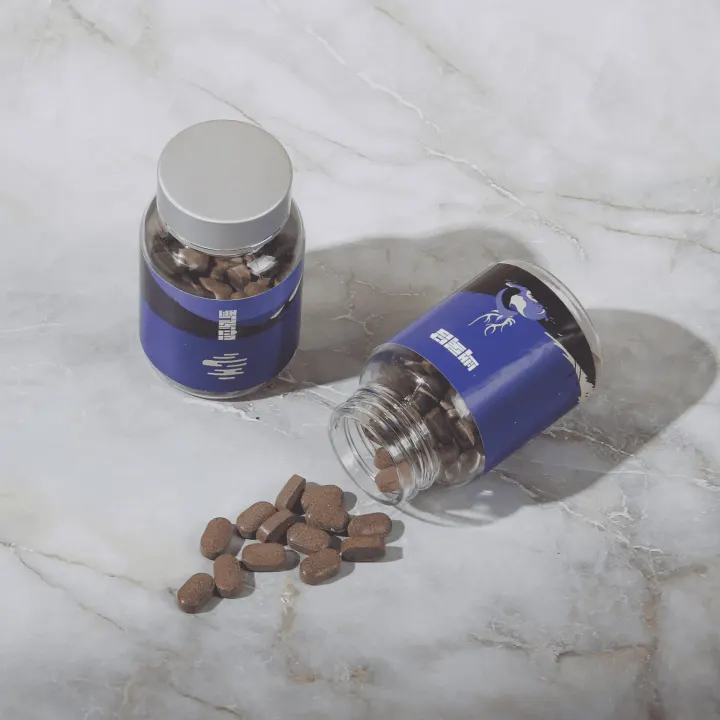
Turn On Metabolic Switches: If plateau feels too challenging to handle on your own, consider methods like Baekrok-gam Bijaeng that help regulate appetite and improve metabolic efficiency to help you get through the plateau faster.
Frequently Asked Questions
Q. If I hit a plateau, will eating even less eventually make me lose weight?
It's an easy assumption to make, but once metabolic adaptation has already occurred, further reducing food intake pushes the body into an even stronger "energy conservation mode." This actually lowers basal metabolic rate even more, which can lead to a significant yo-yo effect when you return to normal eating later—causing you to regain weight much faster. Instead of cutting portions, restructuring the nutritional composition is more helpful.
Q. I increased my exercise a lot but my weight hasn't changed. Is it because I'm gaining muscle?
That's certainly possible. During the "recomposition" process where fat is lost and muscle is gained, body weight may not change. In such cases, check your "eye-body" (how you look in the mirror) and waist measurement rather than the scale number. If your measurements are decreasing but weight stays the same, that's actually a healthy sign that you're losing fat successfully—no need to worry.
Q. Can herbal medicine formulas actually help overcome plateaus?
Yes, they can help. Especially for those with stagnant qi and blood circulation or a lot of phlegm-dampness (痰飮) or blood stasis (瘀血), metabolic efficiency tends to be low, making self-efforts alone feel limited. With appropriate herbal formulas that help restore circulation and reduce swelling, many people experience the stalled weight numbers starting to move again.
A plateau is not a sign that your willpower is lacking—it's proof that your body is working hard to survive. Now it's time for a smart approach that reads your body's metabolic and hormonal state rather than the one-size-fits-all answer of just eating less. If you're curious about where you currently stand, I recommend checking in with us through [Baekrokdam Health Consultation] to review your status together.