Korean Medicine Diet: Ingredients, Side Effects & Body Types

Table of Contents
- How Korean Medicine Diet Pills Work for Weight Loss
- Ingredients to Watch Out For: The Two Faces of Ma Huang
- What Research Shows: The Real Changes from Korean Medicine
- The Relationship Between Appetite Suppression and Satiety
- What Matters More Than "Recommended" Korean Medicine: Body Type Customization
- Practical Lifestyle Tips to Enhance Korean Medicine Effects
- References
A common question heard daily in the clinic: "Doctor, which diet Korean medicine is most popular these days?" "Is there a medication you'd recommend?" Most likely, you've heard someone's success story or seen a popular product on social media. I completely understand that curiosity. However, I always say: what works for someone else isn't necessarily the right answer for you. Today, let's calmly explore the principles and precautions of diet Korean medicine that we don't always have time to cover fully in the clinic.

How Korean Medicine Diet Pills Work for Weight Loss
Let's first look at how Korean medicine works within the body. The foundation of diet Korean medicine is boosting basal metabolic rate. It works by creating a body that uses more energy by influencing the autonomic nervous system and hormone secretion.
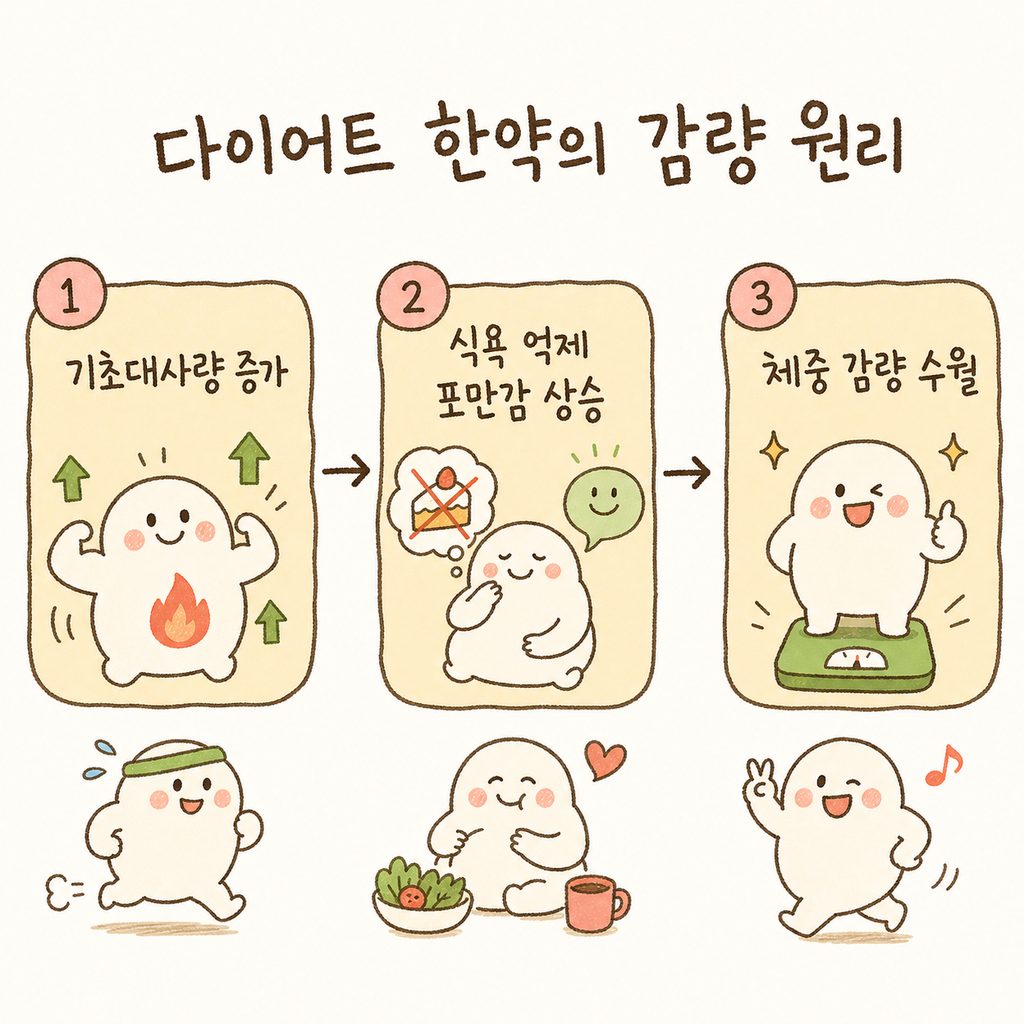
As this happens, appetite naturally decreases and satiety comes more quickly. This isn't about losing weight through starvation. It's about turning on your body's metabolism switch to create an environment where fat loss becomes easier.
Ingredients to Watch Out For: The Two Faces of Ma Huang
A common ingredient in diet Korean medicine is ma huang. It's quite a useful herb that promotes metabolism and suppresses appetite, but side effects can occur in some people, so it must be handled with caution.

Recently on a broadcast, columnist Kwak Jeong-eong confessed that her heart raced severely after taking diet Korean medicine. In reality, symptoms like heart palpitations and excessive sweating can occur due to ma huang content. What was fine when you were young may produce different reactions as your body changes with age. Therefore, you must always get a prescription for the appropriate dosage suited to your body's condition under the diagnosis of a Korean medicine doctor.
What Research Shows: The Real Changes from Korean Medicine
Many of you are probably more interested in objective numbers than just "feeling lighter." Let me introduce a related research case.
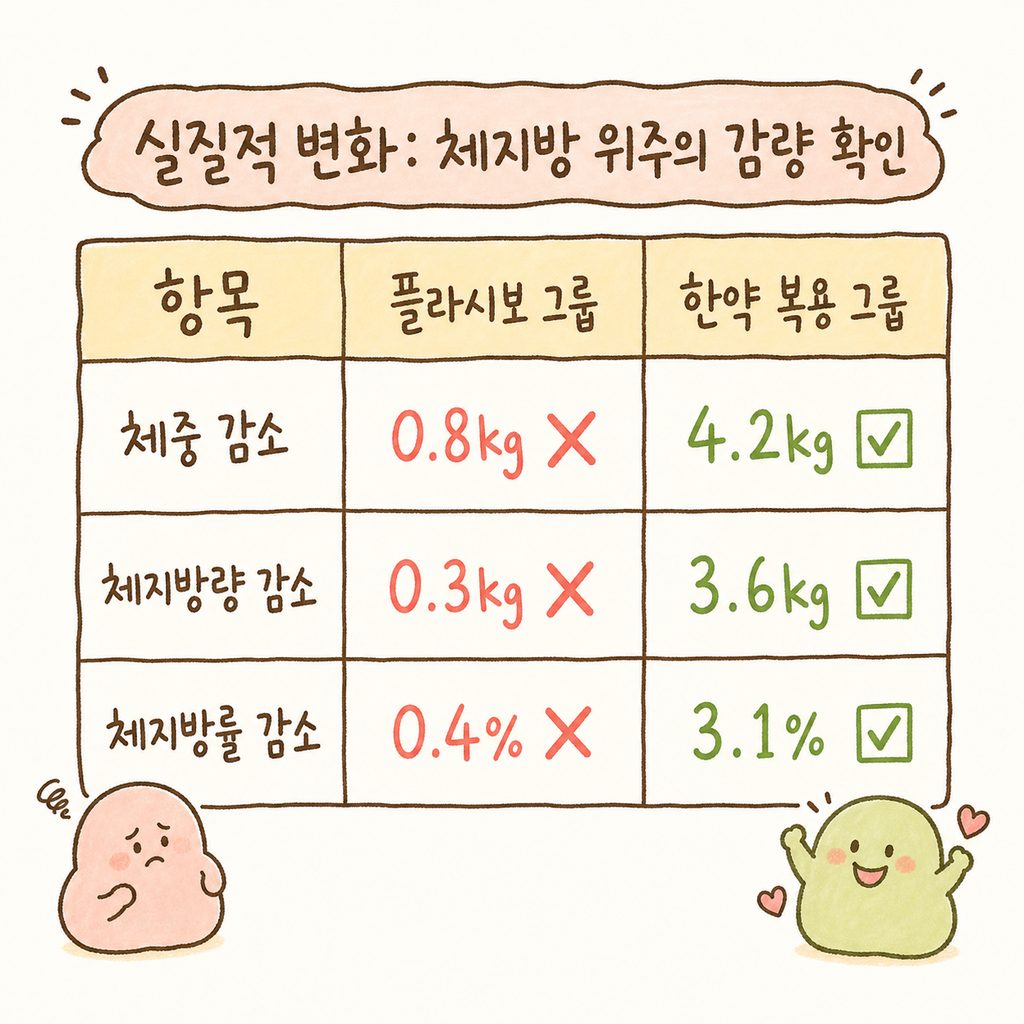
This was a clinical trial published in BMC Complementary and Alternative Medicine. Overweight adults with BMI 25.0–29.9 kg were given YY-312, a Korean herbal extract powder, for 12 weeks. The result showed significantly 312g[1] greater weight loss compared to the placebo group.
There's another noteworthy point. It wasn't just body weight that decreased—body fat mass (BFM) dropped an additional 1.6 kg, and body fat percentage (BF%) decreased by an additional 1.5%. You might feel these numbers aren't dramatic, but the fact that fat was lost preferentially is what makes Korean medicine diet meaningful.
The Relationship Between Appetite Suppression and Satiety
The biggest enemy of weight management is still "false hunger." Looking deeper into the research data, among 139 patients with available data, 56.8% (79 people) reported experiencing decreased appetite.
When medication controls appetite, you don't have to force yourself to resist through willpower alone, making it much easier to sustain your weight management journey. Satiety comes quickly, naturally reducing food intake. However, if you eat too little and feel weak or dizzy, the prescription should be adjusted immediately.
What Matters More Than "Recommended" Korean Medicine: Body Type Customization
Actually, the phrase "recommended Korean medicine" itself is a bit risky. Because everyone's innate body type and current metabolic state are completely different.
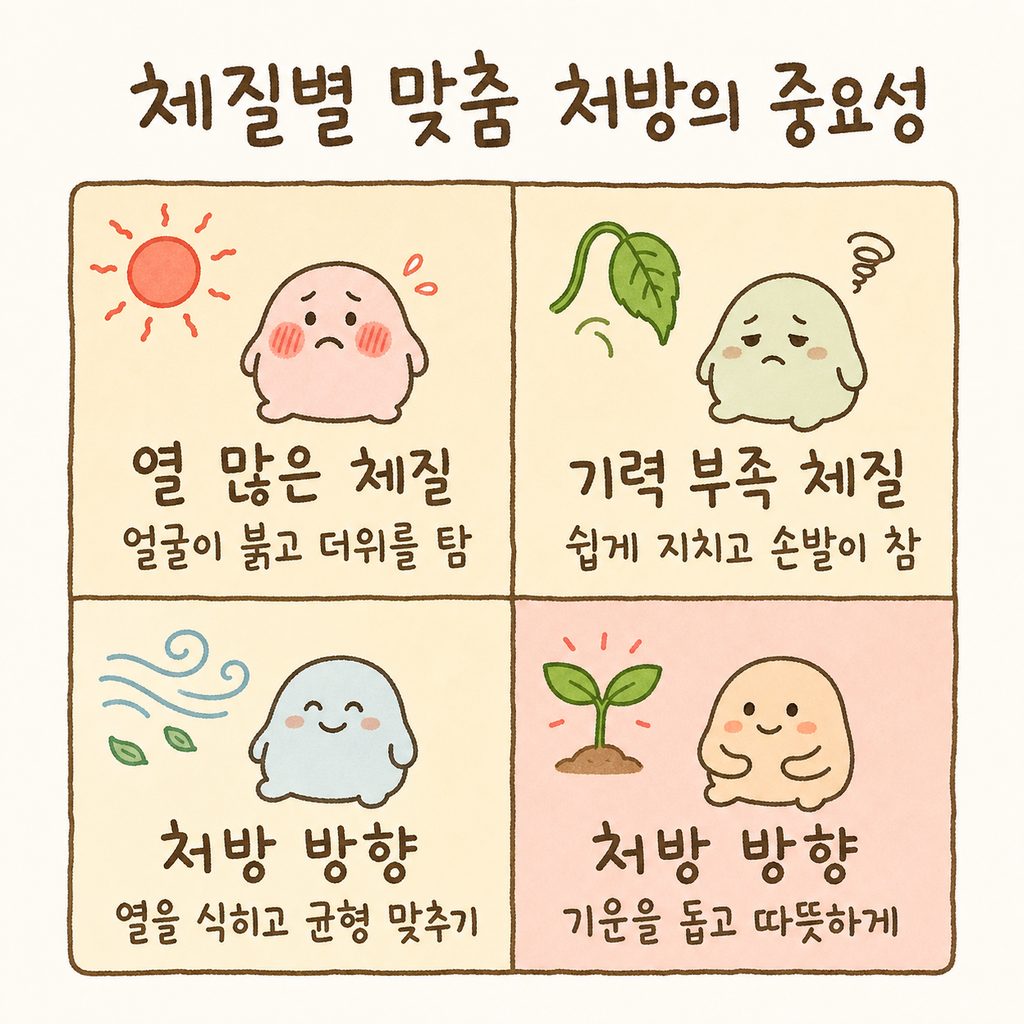
For example, someone with excess body heat and a robust appetite needs a completely different prescription than someone whose energy is depleted, has severe edema, and slow metabolism. If you only give someone with a heat-prone constitution medication that strongly boosts metabolism, palpitations and insomnia may worsen. And if you focus only on appetite suppression for someone with qi deficiency (氣虛) symptoms, their body becomes even more weakened. This is also why I examine pulse and conduct detailed patient history taking to assess body type in the clinic.
Practical Lifestyle Tips to Enhance Korean Medicine Effects
If you pay a little more attention to your daily routine while taking Korean medicine, the results can be significantly different. There's one small habit I always recommend to my patients.

It's simply taking a light walk for about 20–30 minutes after meals. This brief movement greatly helps with digestion and stabilizing blood sugar. When you've already elevated your metabolism with Korean medicine, adding a little activity on top creates synergy. You don't need strenuous exercise—just start with light steps after meals.
If you've been wandering around searching for whatever medication worked for others, now it's time to listen to your body's signals. Rather than losing weight at all costs, losing it healthily at a pace your body can handle is ultimately the right answer to sustainable weight management.
With careful prescription tailored to each individual's body type, you can expect more effective and comfortable weight loss through the Baekrokdam Gambi-jung program. Don't struggle alone and stress yourself out—feel free to consult anytime to find the method that's right for you. Next time I see you in the clinic, I look forward to hearing about your experience after trying it.
References
[1] Effect of a herbal extract powder (YY-312) from Imperata cylindrica Beauvois, Citrus unshiu Markovich, and Evodia officinalis Dode on body fat mass in overweight adults: a 12-week, randomized, double-blind, placebo-controlled, parallel-group clinical trial. (BMC complementary and alternative medicine, 2017) — https://pubmed.ncbi.nlm.nih.gov/28754119/
References