Chicken Breast Rice Paper Gimbap: Low-Carb & High-Protein

Table of Contents
Have you ever put down your chopsticks because you craved gimbap while on a diet, but felt burdened by the calories of a full roll of rice?

Why Calories Differ When Using Rice Paper Instead of Rice
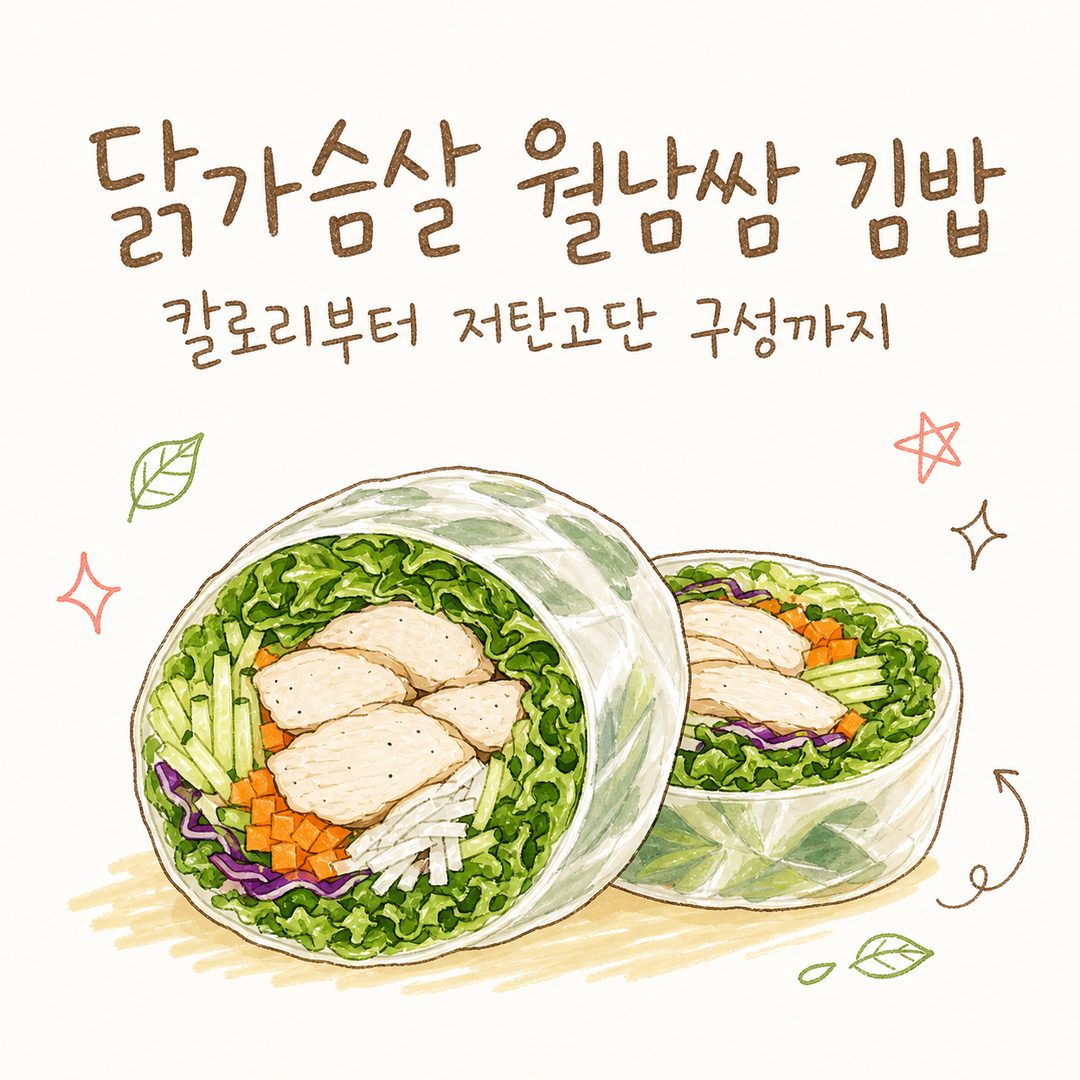
In the consultation room, I am often asked, "Is gimbap bad for weight management?" When that happens, I tell them we must first look at the fillings and the carbohydrate ratio. Chicken breast rice paper gimbap is usually a low-carb, high-protein meal made by wrapping chicken breast and vegetables in rice paper.
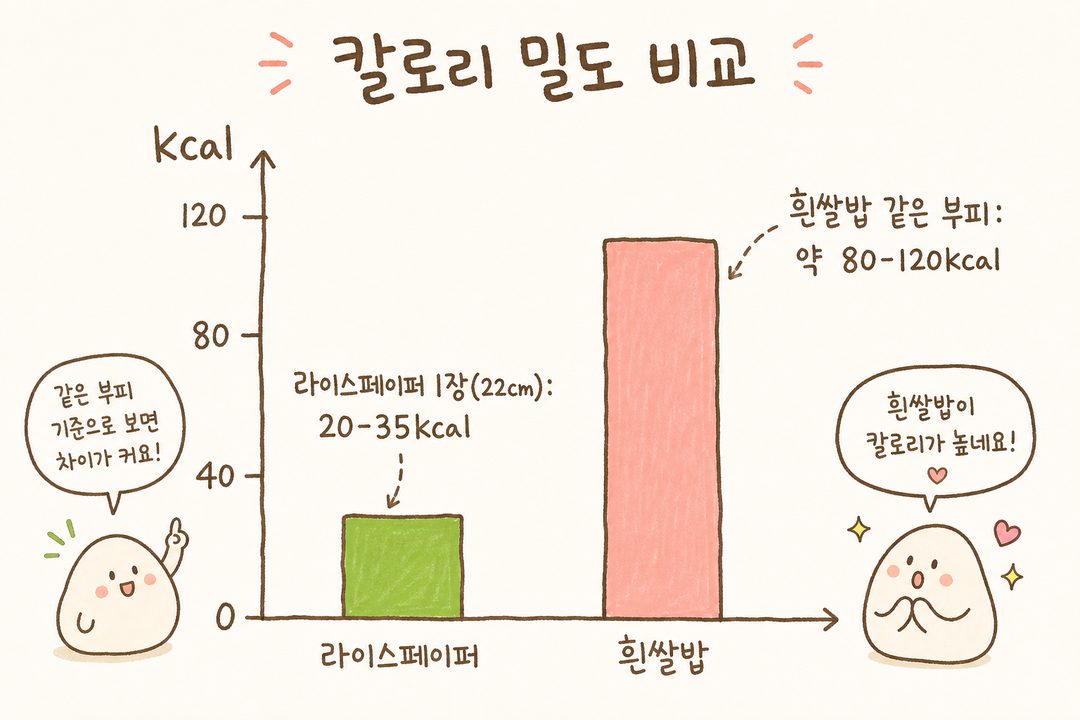
The key is reducing white rice and filling that space with rice paper. According to data, a single 22cm sheet of rice paper is approximately 20–35 kcal, which has a lower energy density than the same volume of white rice. By wrapping ingredients in rice paper instead of a full bowl of rice, you reduce carbohydrates and create room to increase protein.
Why Calories Can Double for the Same Dish
This is where many people get confused, as calorie counts vary widely in search results.
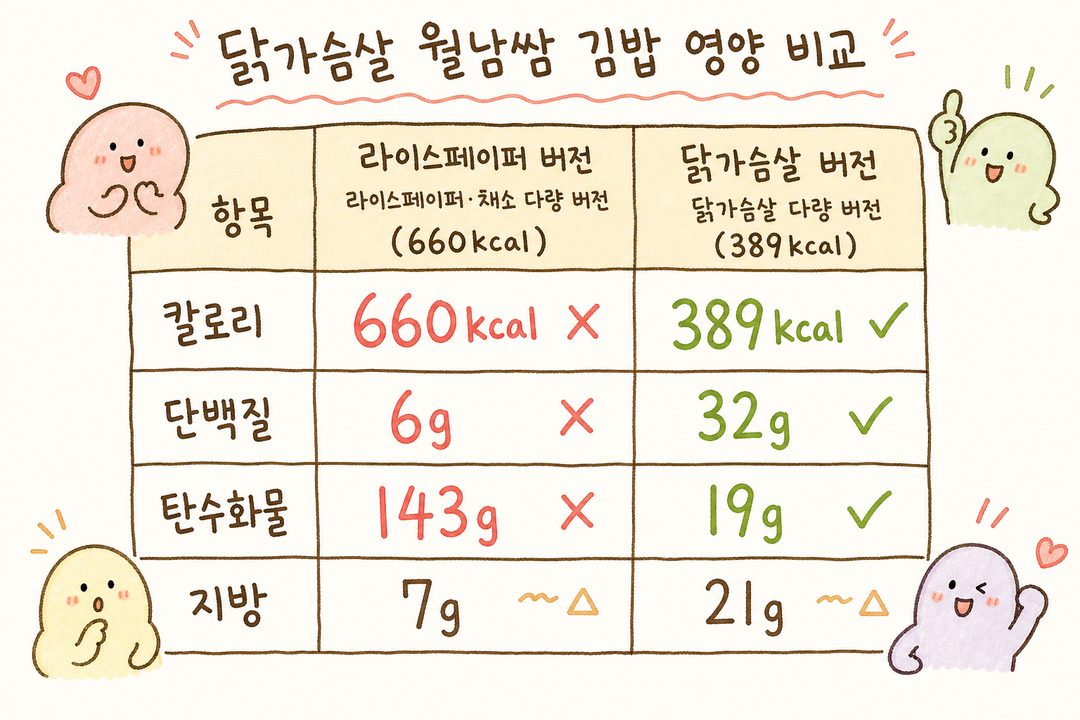
In actual search results, one case showed one serving of chicken breast rice paper gimbap at 660 kcal, with 143g of carbs, 6g of protein, and 7g of fat. In another example, one serving (283g) of chicken breast keto gimbap was calculated at 389 kcal, with 18.79g of carbs, 32.01g of protein, and 21.12g of fat. Even though they are in the same food category, the calories and protein amounts differ significantly.
The difference lies in the amount of rice and sauce, and the proportion of chicken breast. If you increase rice paper and vegetables while reducing rice, you get a composition with low protein and high carbohydrates, like the first example. If you add a generous amount of chicken breast, the protein can rise to the 30g range, as seen in the second example. This is why you shouldn't choose based on the name "chicken breast gimbap" alone.
A Low-Carb, High-Protein Meal from a Baekrokdam Perspective
In Korean medicine, we believe that the same food is processed differently depending on the body's internal environment. I often explain this as the "obesity-prone constitution." For those who experience a brief sense of fullness followed by quick hunger after carbohydrate-heavy meals, increasing the protein ratio and lowering refined carbohydrates puts less strain on the body.
Therefore, rather than recommending chicken breast rice paper gimbap unconditionally, I examine how it is composed. The chicken breast itself is a noteworthy protein source. One study on the metabolic and nutritional characteristics of chicken pointed out that certain native chicken breeds provide lean meat that is low in fat and high in protein. Of course, this study doesn't go as far as saying "eating this gimbap will make you lose weight." Use it as a reference to understand the nature of the ingredients.

How to Prepare Your Meal Today
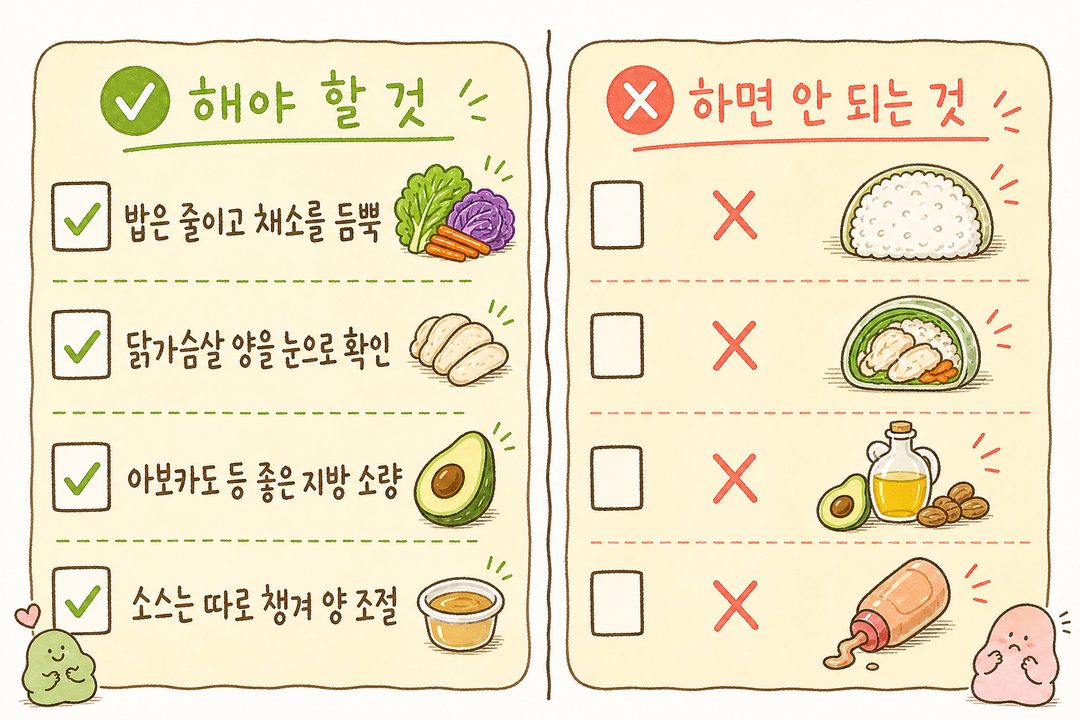
Here are some key points to remember when making it at home or choosing an option while eating out:
Reduce rice and add plenty of vegetables. One roll of chicken breast rice paper gimbap with minimal rice and lots of vegetables should weigh about 150–180g. This composition provides volume while lowering the carbohydrate burden.
Visually check the amount of chicken breast. The feeling of fullness is significantly different between a composition with 6g of protein and one with over 30g. Look at the actual proportion of chicken breast, not just the name.
Use a small amount of healthy fats. If adding avocado, about 20–30g per roll is appropriate. This adds unsaturated fats without excessively increasing the total calories.
Keep the sauce on the side. No matter how light the rice paper and vegetables are, sweet and oily sauces will drive up the calories. Try to control the amount by using a dipping method.
When choosing at a convenience store or restaurant, simply checking the nutrition label on the back is enough. Seeing whether it falls closer to 660 kcal or 389 kcal, and how many grams of protein it contains, will change your choice.
Chicken breast rice paper gimbap is a practical meal that provides protein while easing the burden of a standard roll of rice—if chosen wisely. However, please remember that calories and nutritional composition can nearly double even under the same name. Depending on whether your goal is weight loss or maintenance, you can slightly adjust the serving size and ingredient proportions. If you find it difficult to manage on your own or feel that your body reacts differently to various diets, it is also good to review your meal composition according to your constitutional environment through the Baekrok Gambi-jung program. Try it out and feel free to let me know how it went during your next consultation.
References