Chicken Breast Baby Food: Timing, Recipes, and Storage

Table of Contents
You know that nervous excitement when your baby tries meat for the first time. In the consultation room, I am frequently asked, "When can I start feeding my baby chicken breast?" Since it is a staple in adult weight management diets, parents tend to be extra mindful of it. Today, I will explain how to safely introduce chicken breast into baby food and how it connects to a mother's postpartum diet strategy.
Chicken Breast Baby Food, Defined in One Line
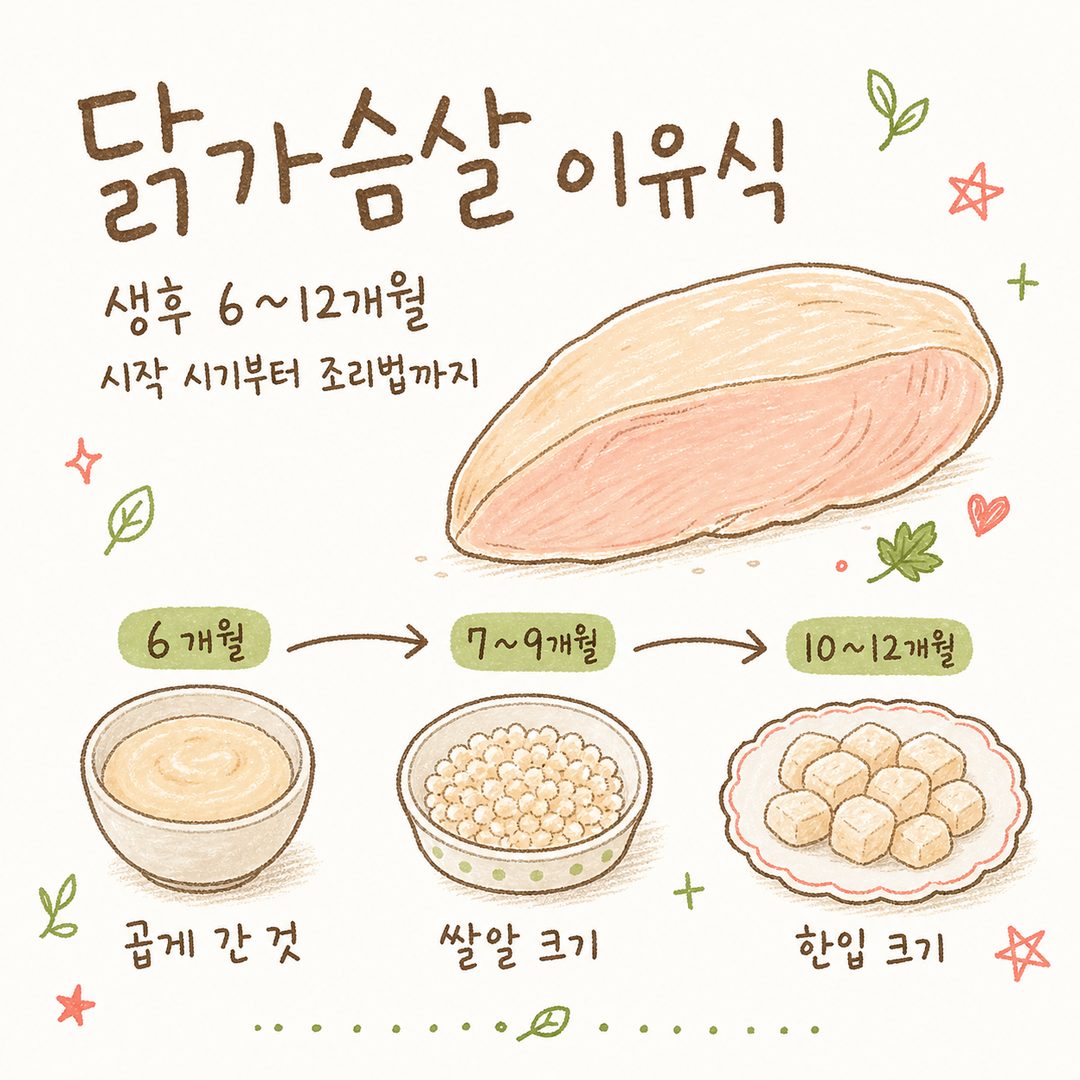
Chicken breast baby food is a protein supplement made by completely cooking chicken breast (with fat and tendons removed) and then finely grinding or shredding it to be served as porridge or a side dish. While it is often introduced after weaning begins around 6 months of age, practical recipes frequently introduce it during the middle stage of weaning at 7–8 months. While chicken is a common protein source, it is important to remember that in the early stages of weaning, beef is often recommended more frequently as a staple protein to ensure adequate iron intake.
Why Do We Think of Chicken Breast First?
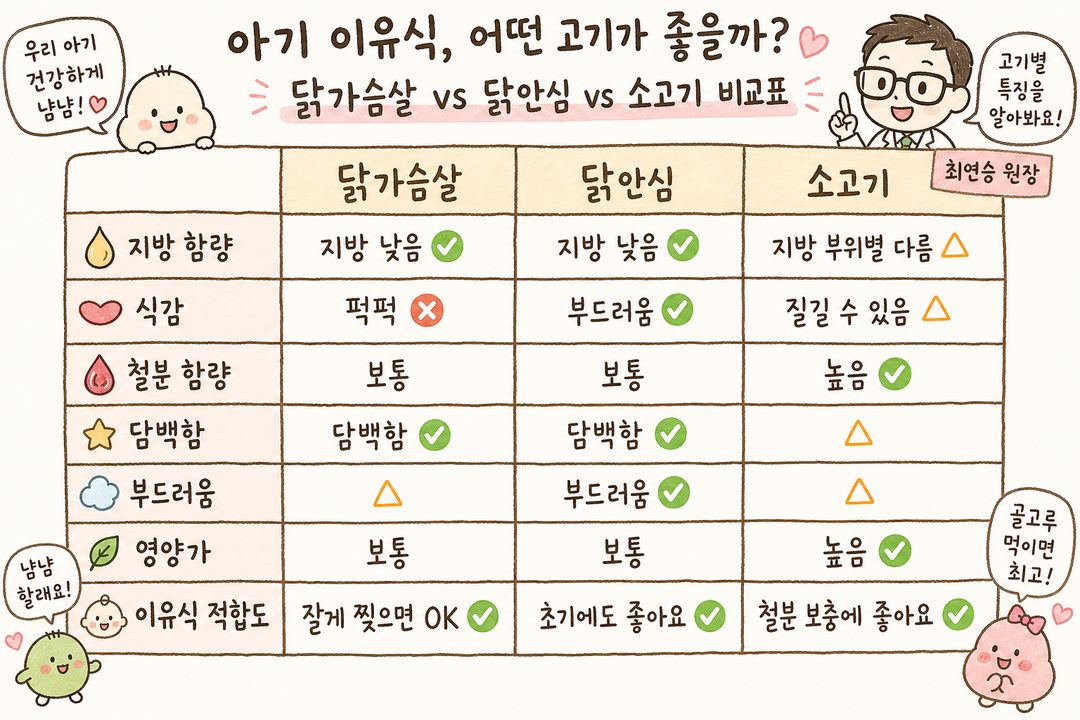
There is a reason why mothers think of chicken breast first among all chicken parts. It has a strong reputation for being lean and high in protein. However, some recipe resources point out that because chicken breast is low in fat, it can be somewhat dry and tough, making it difficult for babies to swallow. In contrast, chicken tenderloin has a slightly higher fat content than chicken breast, offering a softer texture, which is why many prefer it for baby food. Rather than there being a single right answer, choose based on your preference: "If you are confident in trimming fat and grinding it finely → chicken breast," or "If you want a softer start → chicken tenderloin." Also, keep in mind that beef is mentioned more often than chicken when it comes to iron.
Key Checklist for First-Time Moms
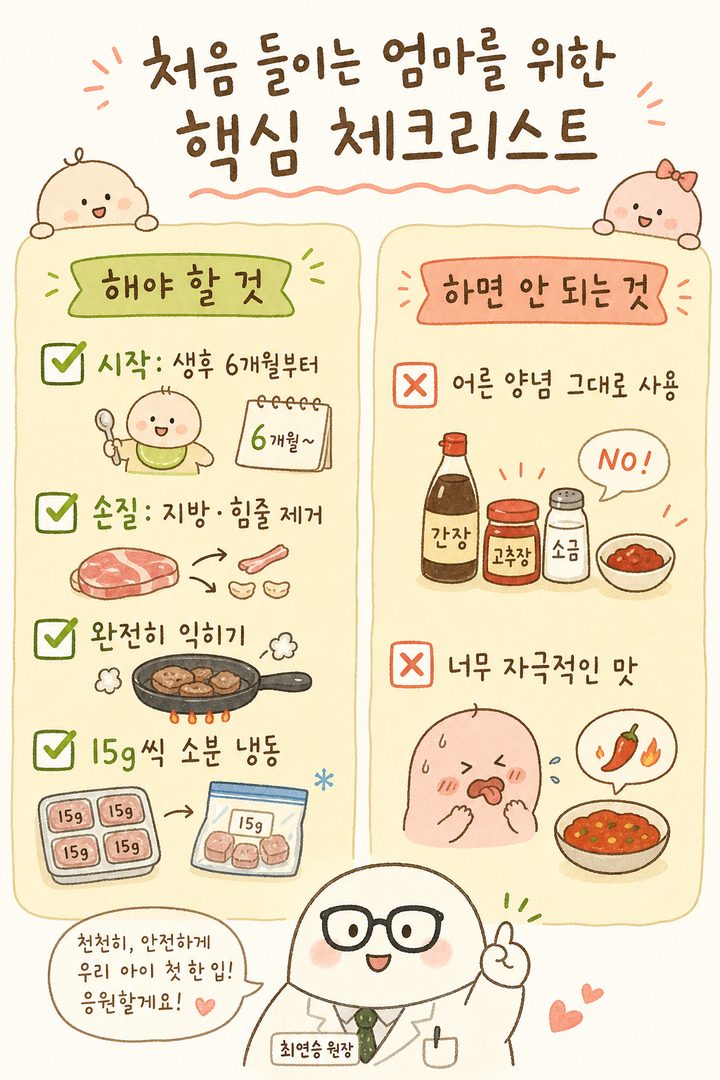
It might seem complicated, but the rules are actually simple. Just keep these points in mind every time you prepare a meal:
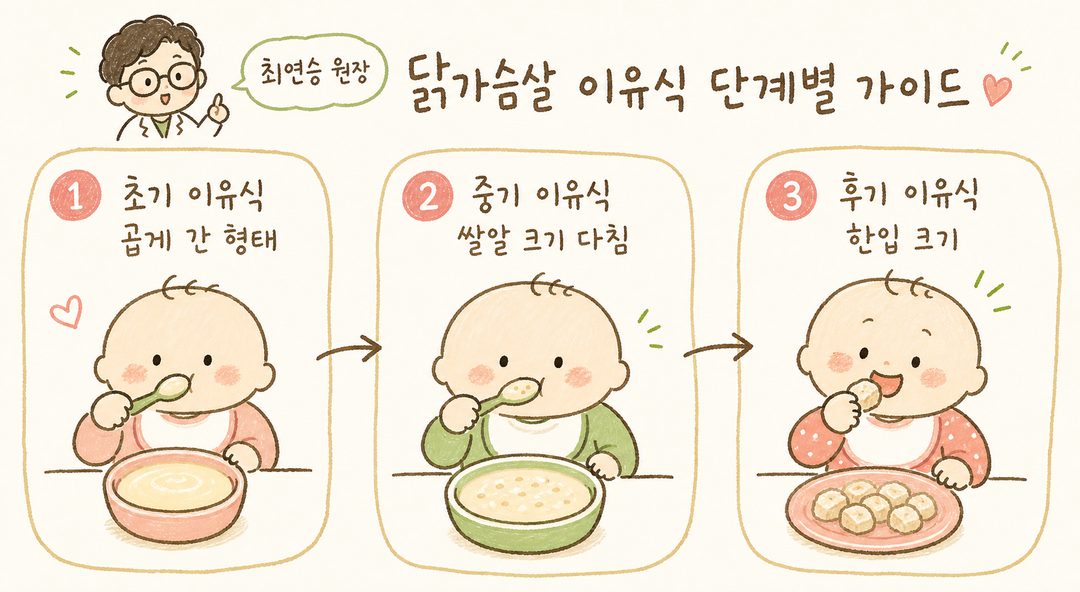
Starting Timing: Meat is usually introduced in small amounts starting from the early stages of weaning around 6 months. Chicken is used from the early to middle stages, and from the late stage (9–11 months) onwards, it is finely minced and used like a side dish.
Preparation: Cleanly remove all visible fat and tendons. Boiling it for 5–10 minutes first helps remove impurities and oils, reducing odors. If the smell is strong, you can soak it in milk briefly before rinsing, but ensure your baby does not have a milk allergy first.
Texture Control: In the early stage, boil well and grind finely to mix into porridge. In the middle stage, mince to the size of a rice grain. As you move to the late stage, increase the size to bite-sized pieces.
Amount: In middle-stage weaning examples, a baby might eat 70g of porridge twice a day (total 140g), and the chicken breast included is usually about 10–20g. Using small amounts of chicken cubes as toppings is also sufficient.
Storage: After cooking, it is convenient to freeze in 15g portions for future meals.
Seasoning: For babies aged 6–11 months, no salt is the rule. Instead of regular soy sauce, use baby soy sauce or vegetable broth to add subtle flavor. Even after 12 months, keep it very light—less than 1/3 of adult seasoning levels.
Safety: Always ensure the meat is completely cooked through. On the day you introduce a new ingredient, observe closely for any allergic reactions.
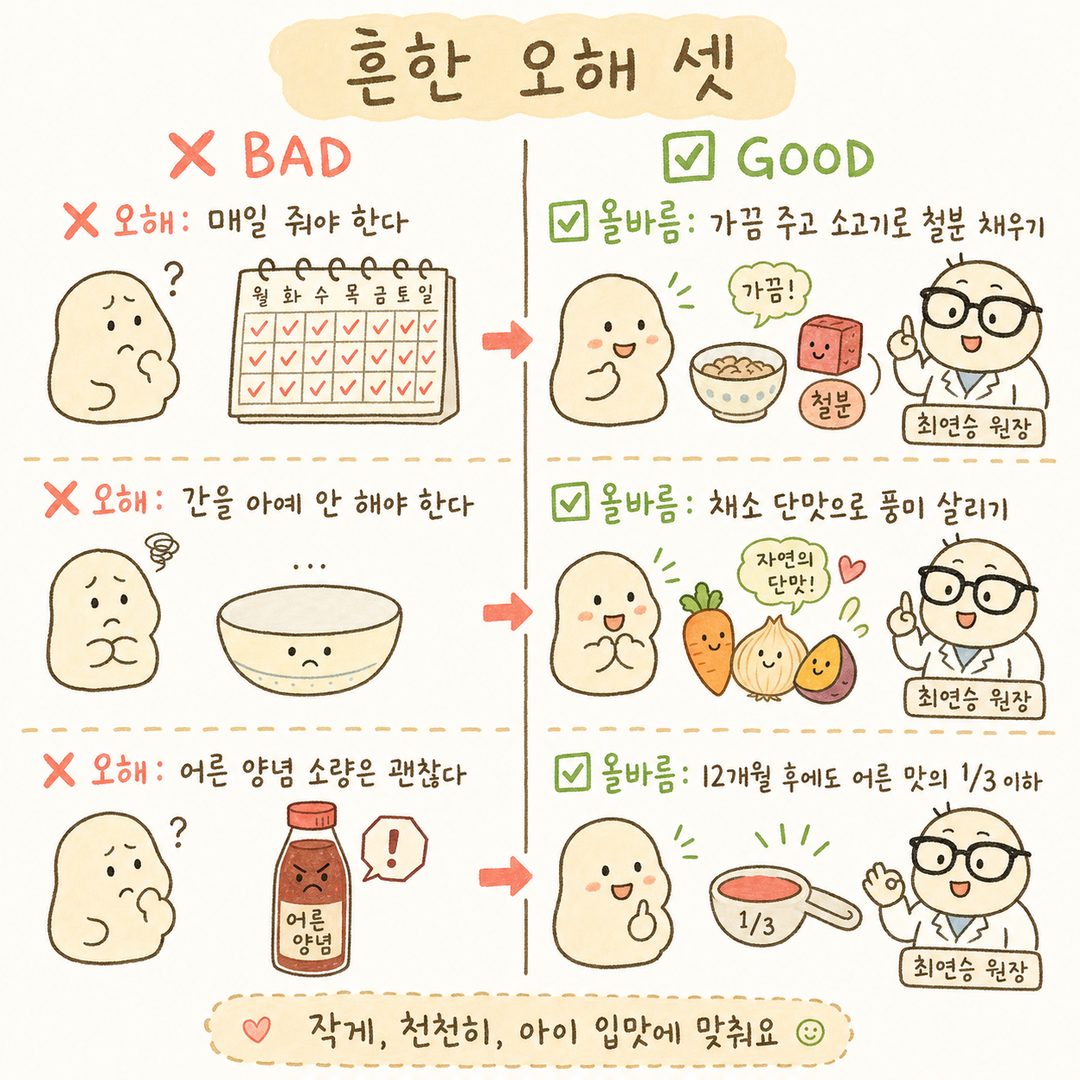
Three Common Misconceptions Heard in the Clinic
First, the misconception that "you must give chicken breast every day because it's high in protein." Chicken breast has lower iron content than beef. Most advice suggests giving chicken occasionally while prioritizing beef daily for iron supply. At this stage, the variety and balance of protein are more important than the sheer quantity.
Second, the worry that "since it's for a baby, I shouldn't season it at all, but it looks so tasteless." For 6–11 months, no salt is the standard. It is more natural to supplement sweetness using vegetable sweetness from onions, carrots, sweet potatoes, or pumpkins rather than sugar.
Third, I often see the mistake of thinking, "It's okay to give just a little bit of chicken breast with adult seasoning." Even after 12 months, only small amounts of soy sauce and salt are allowed, and even then, it must be very light—less than 1/3 of an adult's taste. The principle is to avoid sugars like granulated sugar, corn syrup, or oligosaccharides as much as possible.

From a Mom's Diet Perspective, Does This Really Help?
Now, let's talk about the mothers. When preparing chicken breast for a baby, it naturally starts appearing more often in the mother's meals as well. The habits of boiling to remove fat, using very light seasoning, and enhancing flavor with vegetable sweetness are the fundamentals of a postpartum weight management diet.
However, I must be honest: simply increasing chicken breast intake won't make the weight fall off on its own. After childbirth, hormonal changes, lack of sleep, and the demands of breastfeeding change your appetite and metabolism. In the clinic, I emphasize two things: first, include a set amount of protein in every meal by rotating between chicken breast, beef, fish, and eggs; second, create a sense of fullness with vegetables and whole grains to prevent late-night overeating. Chicken breast works best as one reliable, lean pillar in that rotation.

Practical Tips for a Light Week
Many mothers use the same chicken breast for their own lunch while making baby food cubes. Here are some points to make it easier:
After boiling → freeze 15g cubes for the baby, and shred the rest for yourself to use as toppings for salads or rice bowls.
Boiling for 5–10 minutes is the easiest way to remove odors. Use the milk-soaking method only if no one in the family has a milk allergy.
Try reducing the seasoning in your own food to about half of what you're used to. Many find that reducing stimulation also reduces late-night cravings.
If you're tired of porridge, try changing the texture to meatballs, braised dishes, or steamed dishes. These can serve as side dishes for late-stage weaning and a main meal for mom.
The act of preparing the same ingredients connects the mother's and baby's diets, and I see this as the most reliable starting line for postpartum weight management.
Ultimately, chicken breast baby food comes down to four things: "proper prep, thorough cooking, small cuts, and gradual increases." When a mother's diet is aligned with these same principles, postpartum recovery and weight management become much easier. If you feel that diet alone is not enough and you need constitutional support, consider a consultation for Baekrok Gambi-jung at Baekrokdam Clinic. We will look at your postpartum body type, sleep, and appetite patterns to suggest a Korean medicine diet strategy tailored to your constitution. Let's organize everything from your baby's meals to your own.