Tteokbokki Konjac Calories: Per Pack & Rice Cake Comparison

Table of Contents
Craving tteokbokki but worried about calories? Many patients ask if konjac tteokbokki is a good alternative. While it's lighter than regular tteokbokki, calorie content varies significantly by product and sauce. Let's break down the numbers.
Why Konjac Tteokbokki Has Fewer Calories
Let's start with the difference in the rice cakes themselves. Regular rice cakes contain 200-250kcal per 100g, which can be quite heavy. Konjac 'cakes' used in tteokbokki contain only about 10kcal per 100g. Looking at the nutrition label for Konmibang Tteokbokki Konjac, it shows 10kcal, 2g carbohydrates, 0g protein, and 0g fat per 100g - almost negligible. Even other konjac products typically contain only 20-30kcal per 100g, making a significant difference from rice cakes.
Konjac is so light because it's mostly composed of water and glucomannan, a soluble dietary fiber. Glucomannan absorbs water, expands in the stomach, and moves slowly through the digestive system. This creates lasting satiety despite the low calorie count. Using konjac instead of rice cakes reduces calories to about 10-30kcal per 100g, making it excellent for weight management.
Commercial Konjac Tteokbokki: Product Variations
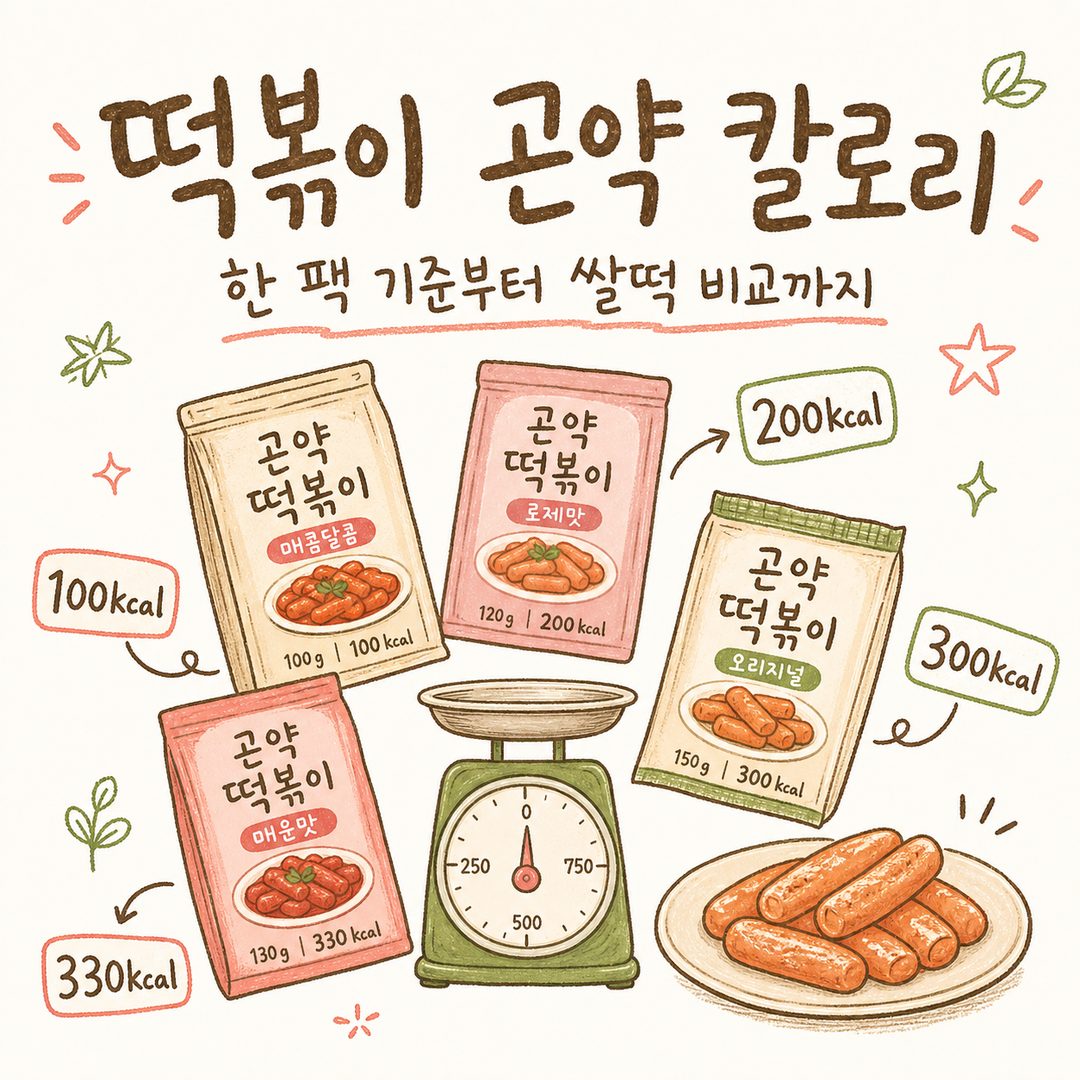
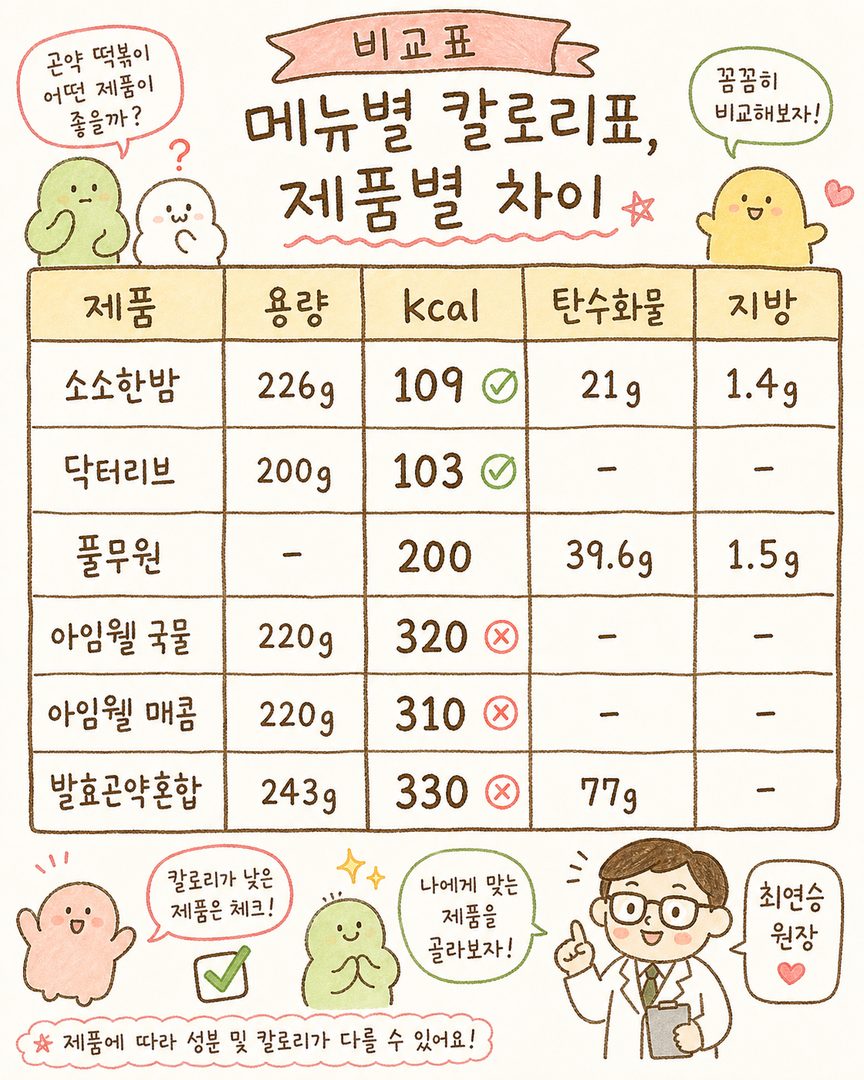
The issue lies with 'ready-to-eat' products. Once sauce is added, calories can increase significantly. Commercial konjac tteokbokki ranges from 100-330kcal per package (one serving).
Sosohanbam Konjac Tteokbokki: 109kcal per 226g cup (1.4g fat, 21g carbs, 3g protein)
Dr. Live Konjac Tteokbokki: Approximately 103kcal per 200g
Pulmuone Konjac Tteokbokki: 200kcal per serving, 39.6g carbs, 4g protein, 1.5g fat
I'm Well Broth Konjac Tteokbokki: 320kcal per 220g
I'm Well Spicy Konjac Tteokbokki: 310kcal per 220g
25% Fermented Konjac Mixed Rice Cake Product: 330kcal per 243g package, 77g carbs
Despite sharing the name 'konjac tteokbokki,' calories can range from 109kcal to 330kcal per serving. Always check the label. Compared to regular tteokbokki at 600kcal per serving, konjac products reduce calories to about 1/2 to 1/6 of the original. However, remember that a 330kcal spicy tteokbokki package (250g) isn't exactly a 'zero-calorie snack.'
When Used as a Meal Replacement
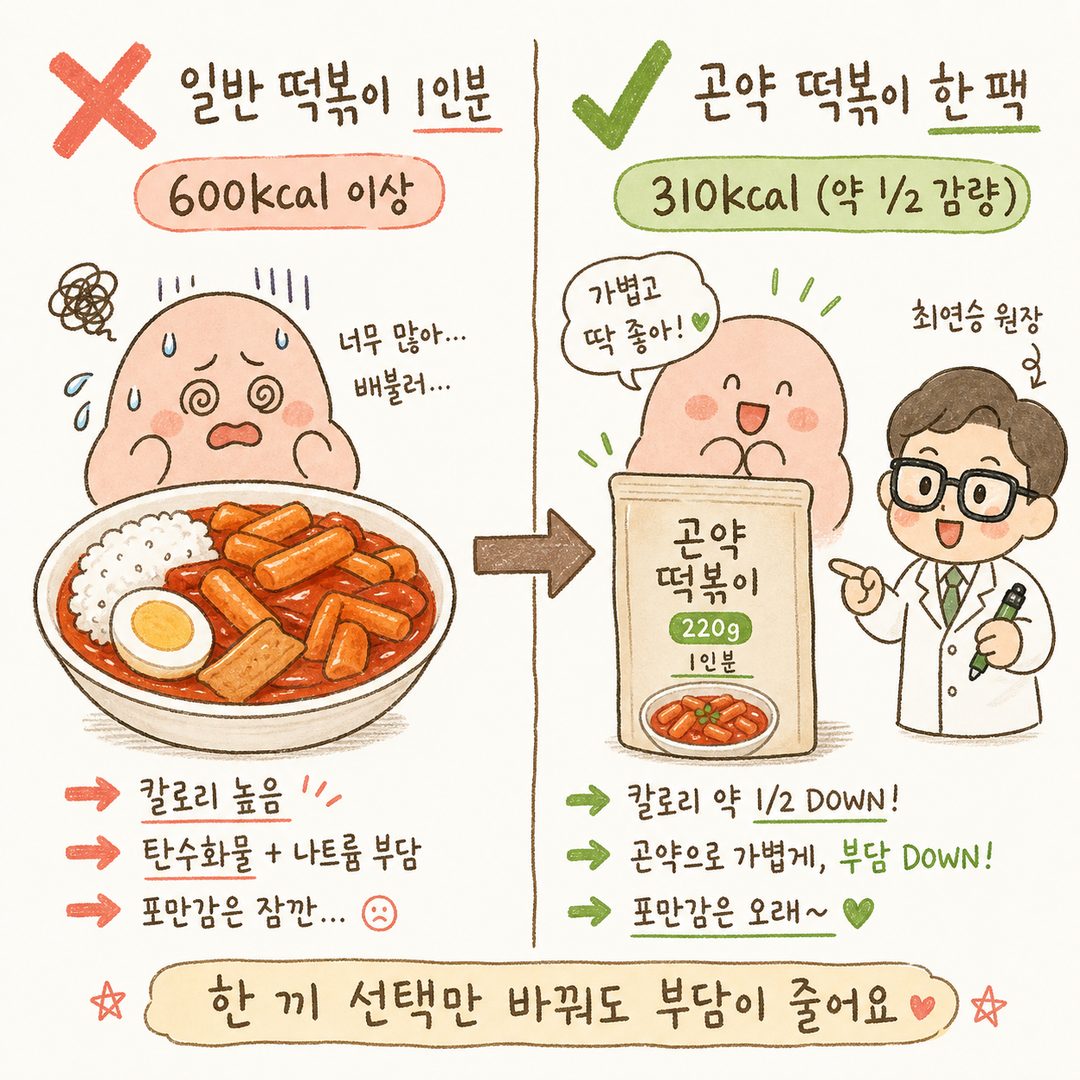
Many patients say they can't give up tteokbokki for late-night snacks. Switching from regular tteokbokki (600+ kcal) to the same amount of konjac tteokbokki (e.g., I'm Well Spicy 220g, 310kcal) can save nearly 300kcal per meal. Even maintaining 1-2 late-night meals per week can significantly reduce weekly calorie intake.
However, switching to konjac tteokbokki doesn't mean you can freely add side dishes. Adding fish cakes, tempura, or instant noodles will increase calories. More sauce means more sodium and sugar, so using half the provided sauce can make a big difference.
Baekrokdam Korean Medicine Clinic's Perspective
In Korean medicine, obesity isn't just about overeating but is understood as an accumulation of phlegm-dampness (痰飮) and damp-heat (濕熱). Those who crave spicy, sweet, and salty foods like tteokbokki often experience bloating, dry mouth, and strong late-night cravings. For these individuals, light, water-rich ingredients like konjac help reduce stomach burden.
Soluble fibers like glucomannan slow gastric emptying, helping reduce overeating between meals. However, konjac isn't a magic food. Some products contain only 25% fermented konjac with rice cakes (243g, 330kcal, 77g carbs), with carbohydrate content similar to a bowl of rice. I always advise checking three things on the label: whether only the rice cakes are konjac, if it's a ready-to-eat product with sauce, and the serving size (g).
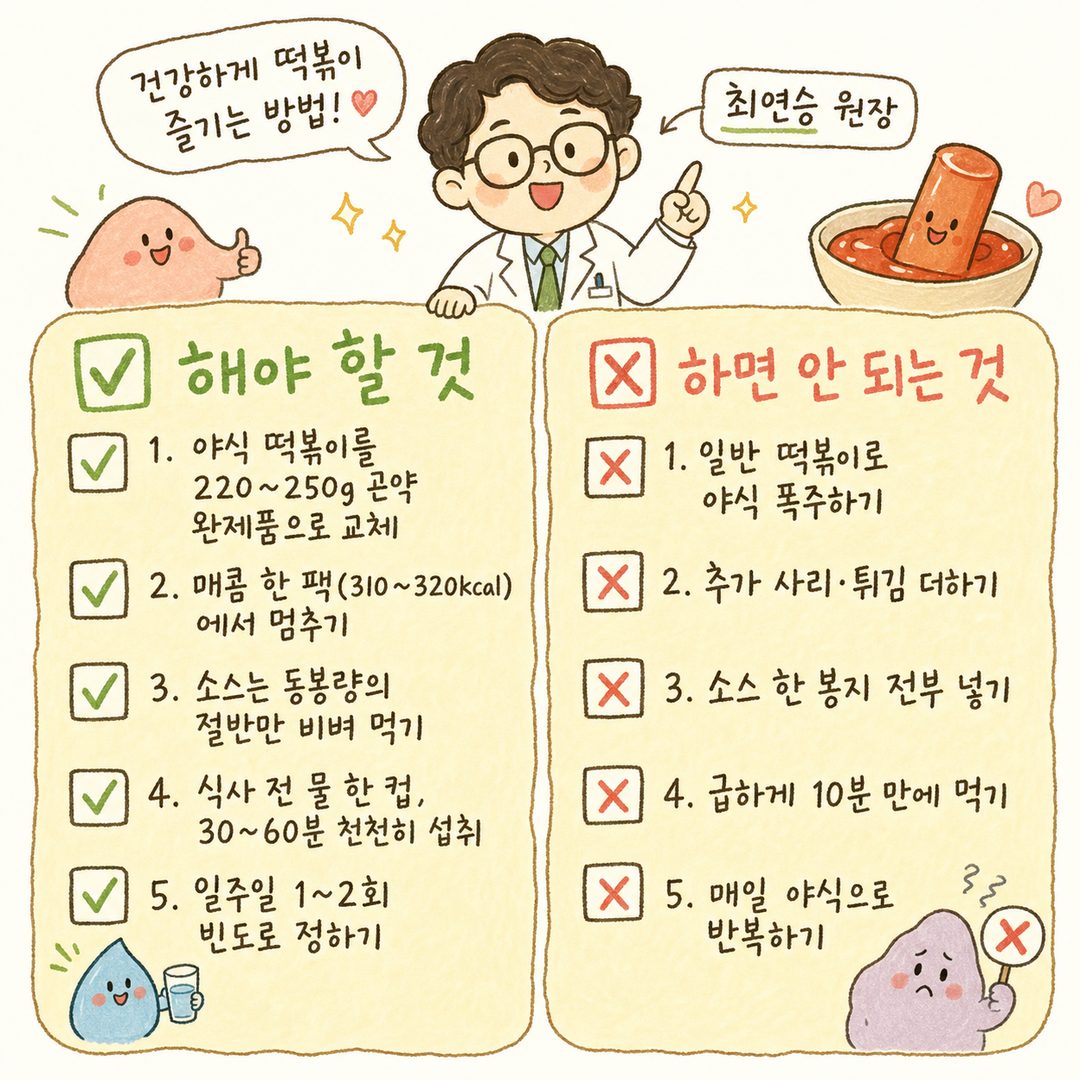

Actionable Tips Starting Today
Small habits go further than drastic diets. Here are the most frequently recommended tips from our clinic:
Replace regular tteokbokki with konjac tteokbokki with clear calorie labeling (220-250g per package)
Limit spicy ready-to-eat products to one serving (about 220g, 310-320kcal) and avoid additional toppings or tempura
Use only half the provided sauce and save the rest for another meal
Drink a glass of water before eating and take 30-60 minutes to eat slowly for better satiety
Set a limit of 1-2 times per week to break the 'daily late-night snack' habit
These changes alone can significantly reduce weekly calorie intake. Rather than extreme fasting, 'lightening your usual favorite foods' is more sustainable.
Konjac tteokbokki is certainly a helpful ally in weight management. However, remember that mindlessly eating two packages without checking labels can approach the calorie count of regular tteokbokki. If you still struggle with late-night cravings or weight loss despite dietary changes, it might be time to examine your constitutional patterns. Baekrok Gambi-jung helps address phlegm-dampness and damp-heat constitutions with customized herbal prescriptions to regulate appetite and metabolism. If you hit a plateau with konjac tteokbokki, feel free to visit Baekrokdam Korean Medicine Clinic for a consultation.