Obesity Calculator: BMI Formula, Normal Range & Overweight Criteria

Table of Contents
After weighing yourself, have you ever wondered, 'Is this normal, or am I overweight?' It's the most common question I hear in my practice. It's hard to tell just by looking. That's where the obesity calculator comes in - with just your height and weight, you can get an objective measurement of where you stand. Today, let's explore how this tool works and when to consider additional indicators.

How is Obesity Calculated?
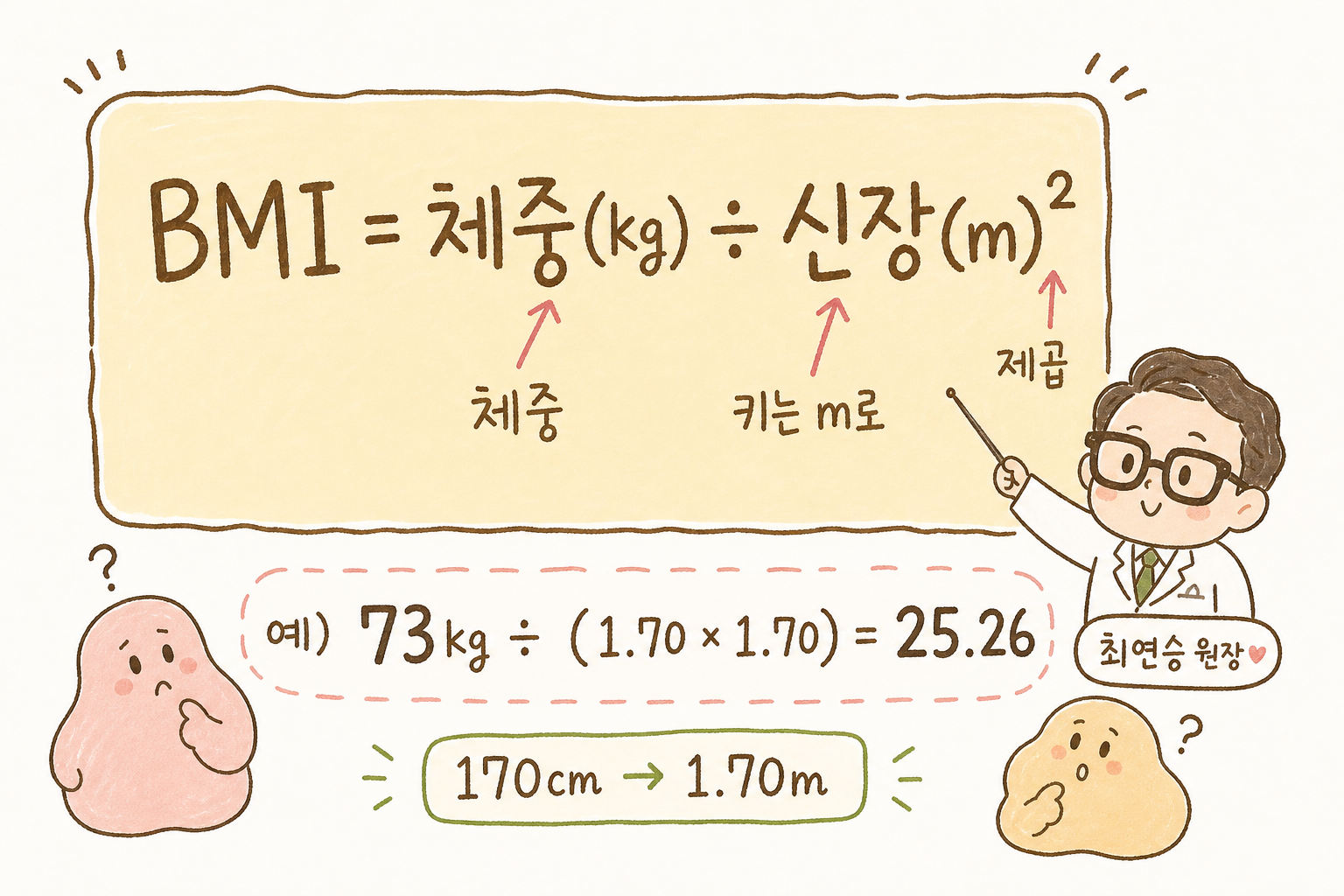
Obesity is typically measured by Body Mass Index (BMI). The formula is surprisingly simple: weight (kg) divided by height (m) squared. The only catch is converting height from centimeters to meters - for example, 160cm becomes 1.60m, 172cm becomes 1.72m. The resulting number shows whether you fall within the normal range or somewhere between overweight and severe obesity. Since it only requires height and weight, you'll get the same result whether you use a public health center calculator or an online tool.
What's the BMI for 170cm and 73kg?
Let's calculate with real numbers. For someone 170cm tall weighing 73kg, first convert height to 1.70m. Then 1.7 × 1.7 = 2.89. Divide 73 by 2.89 = 25.26. This 25.26 is the BMI. By Korean standards, 25.0 and above is considered stage 1 obesity, so someone 170cm and 73kg would be slightly over overweight into stage 1 obesity. Try plugging in your own measurements - it only takes 30 seconds with a phone calculator.
Where Does My BMI Fall?
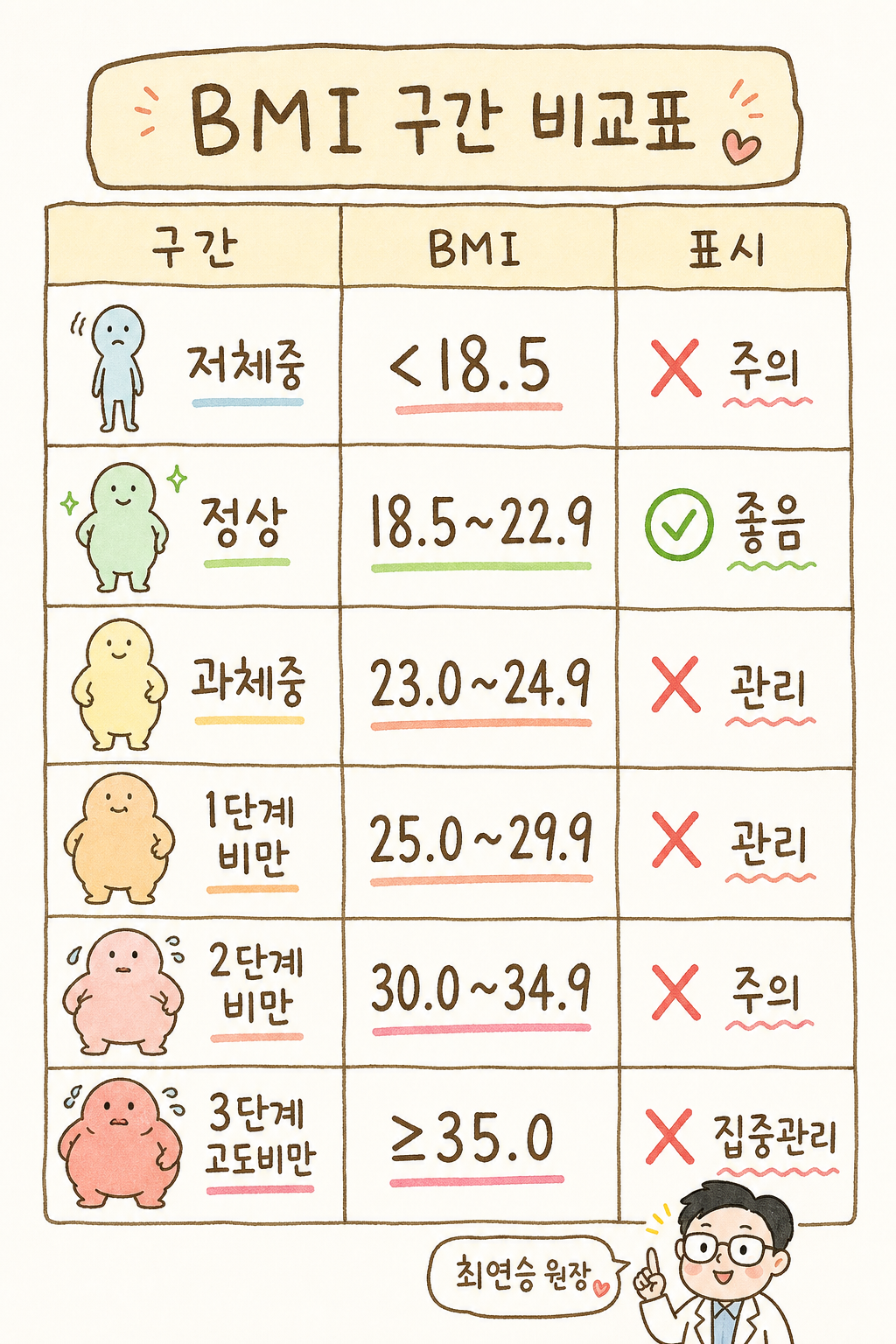
Korean adults follow these standards from the Korean Society for the Study of Obesity and public health centers:
Underweight — BMI below 18.5
Normal — 18.5~22.9 kg/m²
Pre-obesity (Overweight) — 23.0~24.9 kg/m²
Stage 1 Obesity — 25.0~29.9 kg/m²
Stage 2 Obesity — 30.0~34.9 kg/m²
Stage 3 Severe Obesity — 35.0 kg/m² and above
While Western standards consider 25+ as overweight, studies show Koreans have higher body fat and metabolic risks at the same BMI, so 23+ is considered a warning sign. Some regions use slightly different standards, but these 6 stages are the most widely used in clinical practice.
When BMI Alone Isn't Enough
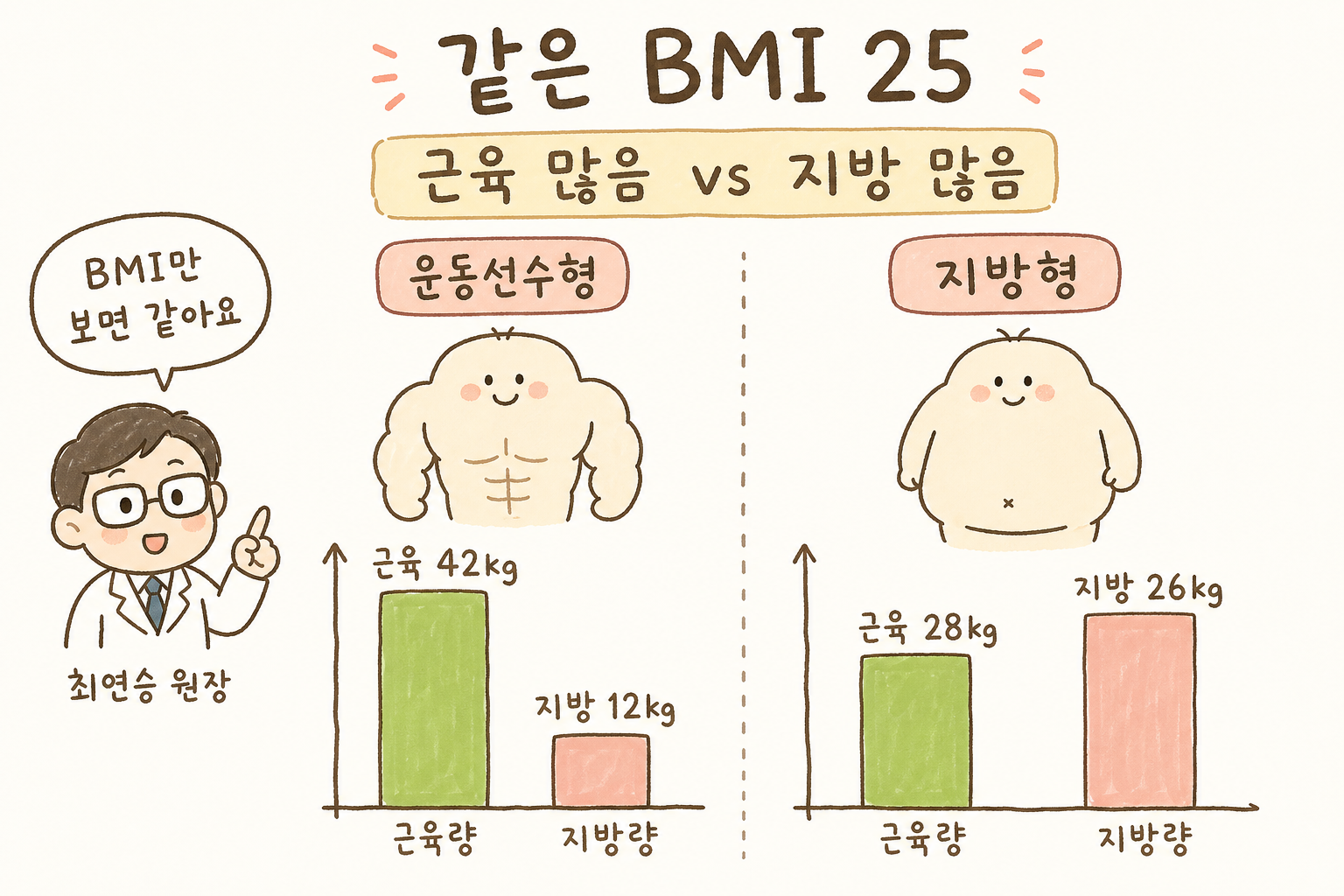
Despite its simplicity, BMI has limitations. It only considers height and weight, not body composition. Two people with BMI 25 could be an athlete with solid muscle or someone with low muscle and high body fat. Some people carry weight around their waist, others in their limbs. In older adults, muscle loss can lead to "normal weight obesity" where BMI is normal but body fat is high. It's also less accurate during pregnancy, with severe edema, or at extreme heights. Don't stop at BMI - consider these additional indicators.
Consider Waist Circumference and Body Fat Percentage
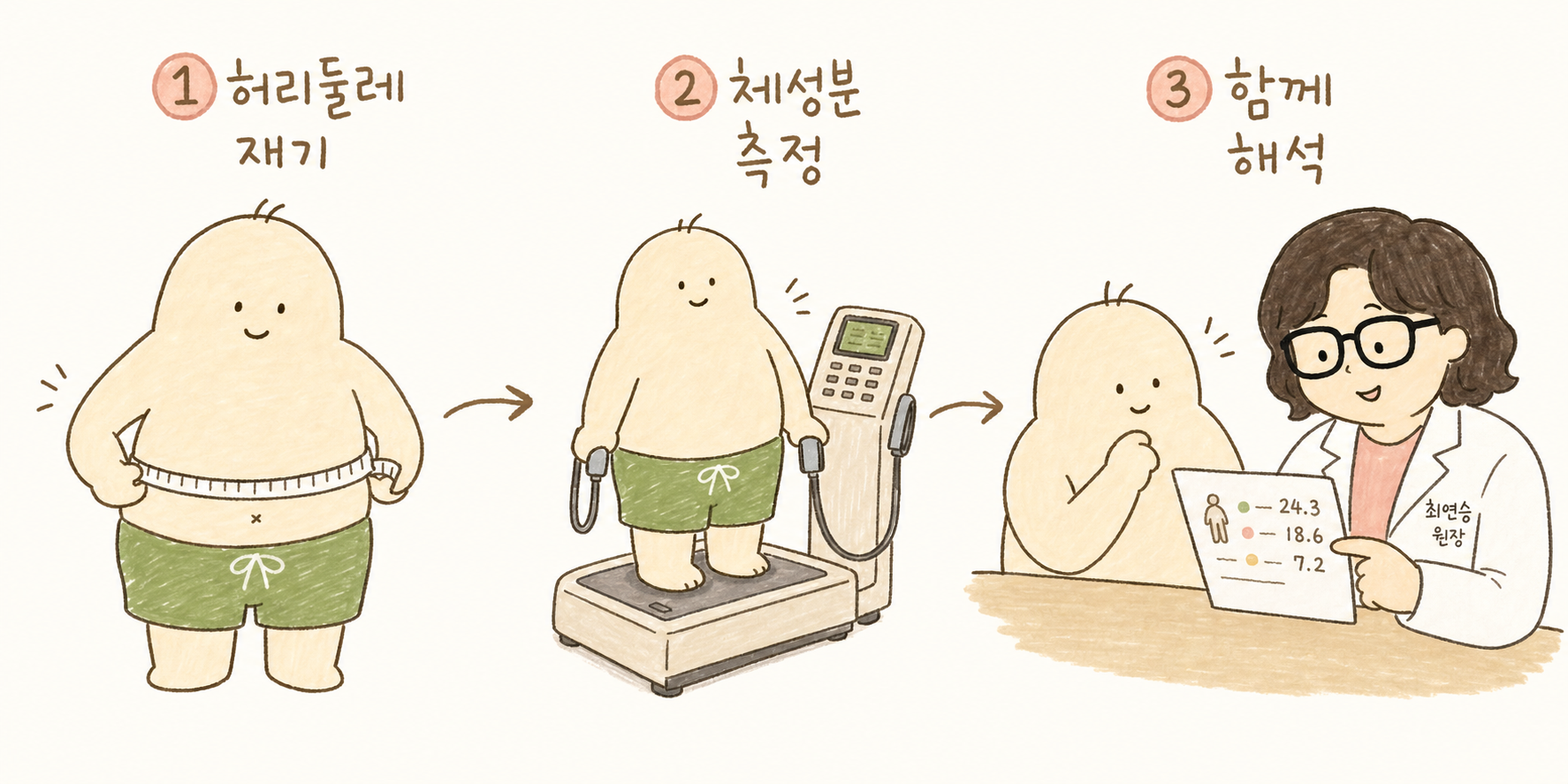
Abdominal fat, or visceral fat, carries higher metabolic risks even at the same weight. By Korean standards, waist circumference over 90cm for men or 85cm for women indicates abdominal obesity. Measuring around your navel with a tape measure can reveal what BMI misses. Body fat percentage is another key indicator - 25%+ for men and 30%+ for women indicates obesity. You can measure this with home body composition scales or at health centers. Even with normal BMI, if either waist circumference or body fat percentage is high, address that first. Also check muscle mass - too little muscle lowers basal metabolism, making weight regain easier. For children and adolescents, obesity is defined as BMI at or above the 95th percentile for their age and gender.
How Often Should I Check My Obesity Measurements?
Weight and BMI fluctuate daily. A salty meal or poor sleep can cause 1-2kg swings. Don't stress over daily numbers. Weigh yourself once a week at the same time, in similar clothing, before meals. Check waist circumference monthly, and body composition every 2-3 months. Don't be discouraged by plateaus - they happen to everyone. When they occur, try adjusting your diet slightly or increasing activity. As I often tell my patients, "Numbers are just a map for direction, not a daily report card." Many find this perspective liberating.
In Korean medicine, we believe that even with the same BMI, weight loss speed and patterns vary based on constitution, phlegm-dampness, and qi-blood circulation. Rather than judging by numbers alone, it's important to understand what they signal about your body. After using the obesity calculator, the next step is observing how your body responds and adjusting your diet and lifestyle accordingly. At Baekrokdam Korean Medicine Clinic, we assess BMI, waist circumference, and body composition to understand your starting point, then provide constitution-based dietary guidance and prescribe Baekrok Gambi-jung. If you're feeling overwhelmed after just using the calculator, visit our clinic - we'll help you plan your next steps together.