Postpartum Diet in Korean Medicine — Why the Recovery Timeline Matters More Than Aggressive Weight Reduction

Table of Contents
- Postpartum Diet in Korean Medicine — Why the Recovery Timeline Matters More Than Aggressive Weight Reduction
- Why Is the Recovery Phase Prioritized in Postpartum Diet Korean Medicine?
- What Does the Postpartum Weight Loss Timeline Look Like by Period?
- Why Is Weight Hard to Lose Even When Eating Less After Childbirth?
- How Does Herbal Medicine Help with Postpartum Diet?
- Frequently Asked Questions
Postpartum Diet in Korean Medicine — Why the Recovery Timeline Matters More Than Aggressive Weight Reduction
When you stand in front of the mirror after giving birth and see a silhouette that doesn't look like your old self, the anxiety and urgency you feel is something every new mother can relate to. In my clinical practice, when I meet many postpartum patients, the question I hear most often is, "Doctor, when can I actually start losing weight?" Your heart wants to start tightening up your diet and exercising starting tomorrow, but you must first understand that a postpartum body is in a completely different "emergency state" compared to a normal dieting situation.
The core of postpartum diet in Korean medicine is not simply reducing calories, but rather restoring the body's balance that was disrupted by pregnancy and childbirth, and naturally helping weight come down. Today, instead of following a reckless starvation diet, I'll explain the step-by-step timeline for postpartum recovery and weight loss from a Korean medicine perspective.
Why Is the Recovery Phase Prioritized in Postpartum Diet Korean Medicine?
The body immediately after childbirth is in a state of massive energy expenditure and hormonal upheaval. In Korean medicine, this period is viewed as a time when woryeol (瘀血, stagnant blood) remains and giyeol (氣血, vital energy and blood) is extremely depleted. Woryeol refers to a state where normal blood circulation is not functioning and blood has become stagnant. If this woryeol is not properly eliminated, swelling persists for a long time, metabolism decreases, and you can easily end up with a constitution where weight doesn't come off easily.
Many people start a diet plan right after giving birth, but in reality, 'elimination' and 'replenishment' should take priority over 'reduction' at this time. You need to expel waste products from the body and fill in the deficient energy to turn the metabolic switch back on. If you just starve yourself when your basal metabolic rate has decreased, our bodies try to hold onto energy even tighter for survival, which can cause plateaus to come faster or harm your health.
What Does the Postpartum Weight Loss Timeline Look Like by Period?
Postpartum weight loss is like a marathon. If you expend all your energy in the beginning like a short-distance race, you'll tire out quickly and rebound easily. I usually recommend the following step-by-step approach:
Phase 1: Postpartum Weeks 1–6 (Recovery and Elimination Period) The star of this period is not dieting, but rather woryeol (瘀血, stagnant blood) elimination and lochia discharge. Rather than strenuous exercise, it's important to gently tune up the body with light walks and nutritious meals. If you don't recover properly during this time, it can result in bihwi (脾虛, spleen deficiency), meaning your digestive and absorption abilities decrease and metabolism slows down.
Phase 2: 6 Weeks to 3 Months Postpartum (Metabolism Normalization Period) This is when you start to feel your body becoming lighter. From this point, you can begin adjusting meal portions in earnest, but it's best to avoid extreme low-calorie diets. Especially while breastfeeding, nutritional imbalance can occur, so caution is needed. From a Korean medicine perspective, this is the time to focus on resolving ganul (肝鬱, liver qi stagnation), which helps release stagnant energy, and managing swelling.
Phase 3: 3 Months Postpartum and Beyond (Full-Scale Weight Control Period) Now that your body has stabilized to some extent, you can establish a systematic diet plan. From this point, incorporating herbal medicine that promotes metabolism and aids fat breakdown becomes more efficient.
Why Is Weight Hard to Lose Even When Eating Less After Childbirth?
Among the postpartum patients I see in clinic, many complain, "I'm really eating so little, so why isn't it coming off?" When I first started studying, I also thought this mechanism was quite tricky and made some missteps. But the reason is clear. It's due to the decline in 'metabolic efficiency.'
After childbirth, fluid retention worsens due to hormonal changes, and sleep deprivation combined with childcare stress causes cortisol levels (the stress hormone) to rise. This promotes fat accumulation and leads to muscle loss. Particularly from a Korean medicine perspective, if there is dam-eum (痰飮, phlegm-dampness) — meaning unnecessary waste products have accumulated in the body — blood circulation is impeded, and no matter how little you eat, you enter a plateau where fat burning doesn't occur. In other words, creating a body that 'burns well' is far more important than 'eating less.'
How Does Herbal Medicine Help with Postpartum Diet?
The core of postpartum diet Korean medicine is not to forcibly suppress appetite, but to enhance the body's self-healing ability and normalize metabolism. It's not simply a weight-loss pill — prescriptions that restore the collapsed giyeol (氣血, energy and blood) balance after childbirth must be incorporated.
For example, if someone has excessive body heat, severe swelling, and constipation, Bangpungtongseong-san (防風通聖散, Bofutsusho-san)-based formulas can help eliminate waste products and reduce heat. Conversely, if the person is very low on energy and feels cold, they need to first supplement blood (보혈, bohyul) and boost energy with formulas that raise metabolic capacity before proceeding with weight reduction.
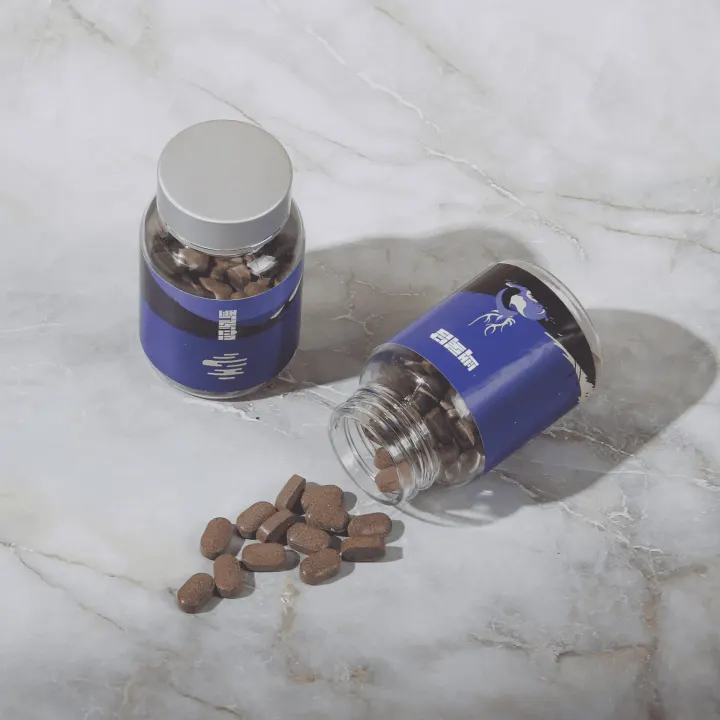
Recently, there's a trend toward managing metabolism conveniently in daily life through tablet-formulated prescriptions (e.g., Baekrok-gam Bi-jeong, etc.) that reduce the inconvenience of herbal decoctions. This works on the principle of not simply losing weight through starvation, but by eliminating dam-eum (痰飮, phlegm-dampness) within the body and activating metabolism to naturally regulate body weight.
Frequently Asked Questions
Q. Is it safe to take diet herbal medicine while breastfeeding?
When breastfeeding, the selection of herbal ingredients must be extremely careful. Rather than unconditional appetite suppressants, prescriptions that reduce swelling and boost energy without affecting lactation are needed. It's best to consult with an expert to confirm whether the prescription is safe to take while breastfeeding.
Q. Is it okay to go to the gym right after childbirth and exercise vigorously?
I don't recommend it. After childbirth, joints are in a very loose state due to the influence of the relaxin hormone. If you strain with heavy weights or exercise vigorously at this time, joint damage can occur, and it can actually increase bodily stress and trigger swelling. For about 6 weeks, start with light stretching and walking.
Q. Is diet control alone sufficient?
Of course it's possible. However, since hormones and metabolic functions change rapidly after childbirth, you will inevitably encounter a 'plateau' where willpower alone has its limits. At that time, rather than forcefully starving yourself, getting Korean medicine support to turn on the metabolic switch will help you reach your target weight much more smoothly and healthily.
Postpartum dieting is not simply a process of reducing numbers, but a process of adapting to and recovering into your new body as a mother. Please don't be too impatient, listen to the signals your body is sending, and take it one step at a time. If you'd like to learn more about specific weight management methods, check your condition through the [Baekrokdam Diet Guide].