
Daily Calorie Intake for Women: Calculation & Guidelines

Table of Contents
"Doctor, how much should I eat per day?" This is a question I hear very often during diet consultations. Looking online, you might see recommendations ranging from 1,200 kcal to 2,000 kcal, which can be confusing. Since everyone has a different physique and activity level, there isn't just one right answer.
Why Your Ideal Calorie Intake Varies
Daily calorie needs for adult women cannot be reduced to a single fixed number. They are determined by the interplay of weight, age, and activity level. According to data from authoritative institutions, most fall within the 1,600 to 2,000 kcal range.
Our bodies consume energy even when we are just breathing; this is known as the Basal Metabolic Rate (BMR). Most adults consume over 1,000 kcal per day through BMR alone. Total daily energy expenditure is then calculated by adding activities such as commuting, housework, and exercise. Naturally, there will be a significant difference in recommended intake between an active person and someone who primarily works at a desk.
How to Calculate Your Daily Calorie Needs
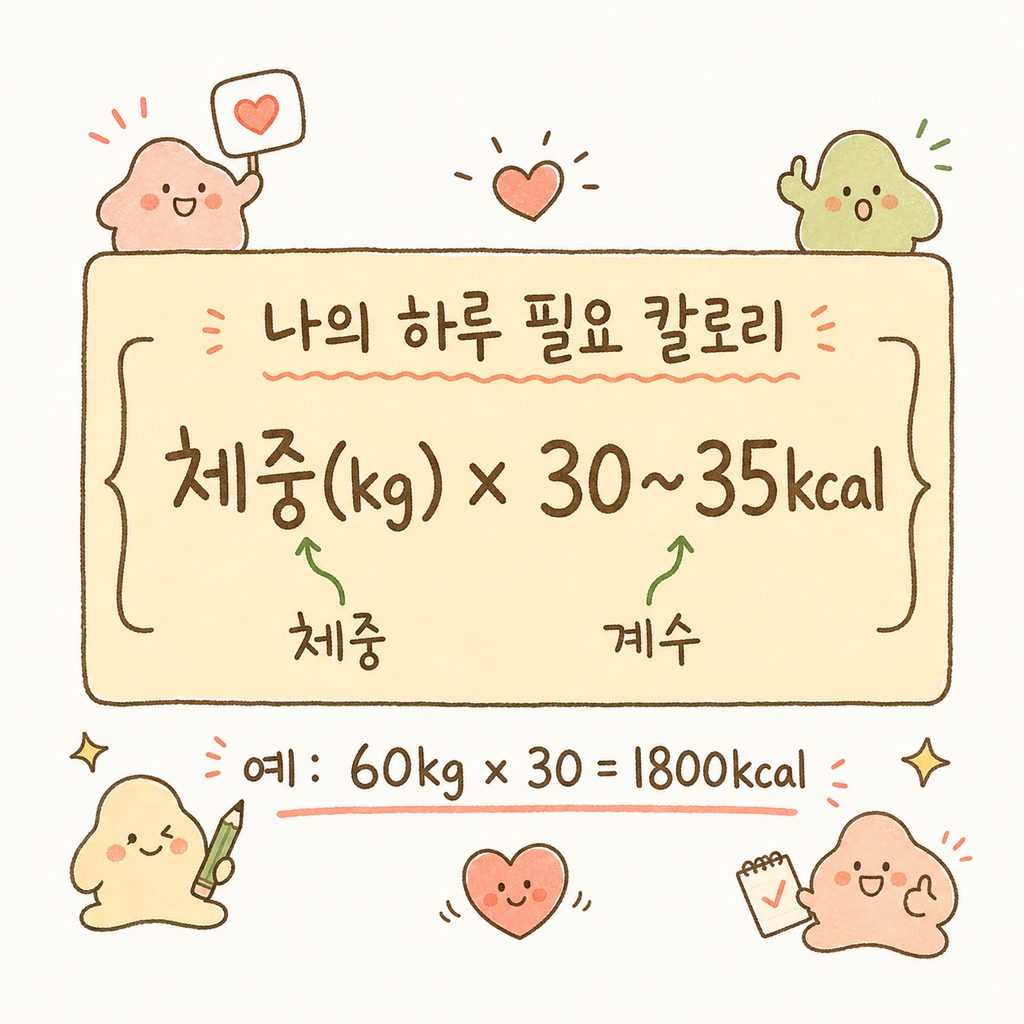
So, how do you calculate this specifically? The Korean Diabetes Association suggests a daily requirement of weight (kg) × 30–35 kcal for adults with moderate activity levels. This formula allows you to find a number more tailored to your own body.
Let's look at examples based on a woman with average activity levels:
Weight 50kg: Approx. 1,500–1,750 kcal
Weight 55kg: Approx. 1,650–1,925 kcal
Weight 60kg: Approx. 1,800–2,100 kcal
Therefore, for an adult woman weighing 50–60kg, it is reasonable to adjust intake between 1,500 and 2,000 kcal based on activity levels.
Why Recommended Intake Decreases with Age
If you find yourself gaining weight despite eating the same amount as when you were younger, you need to consider age-related changes. As we age, muscle mass decreases and physical activity often becomes less frequent, causing energy requirements to drop accordingly.
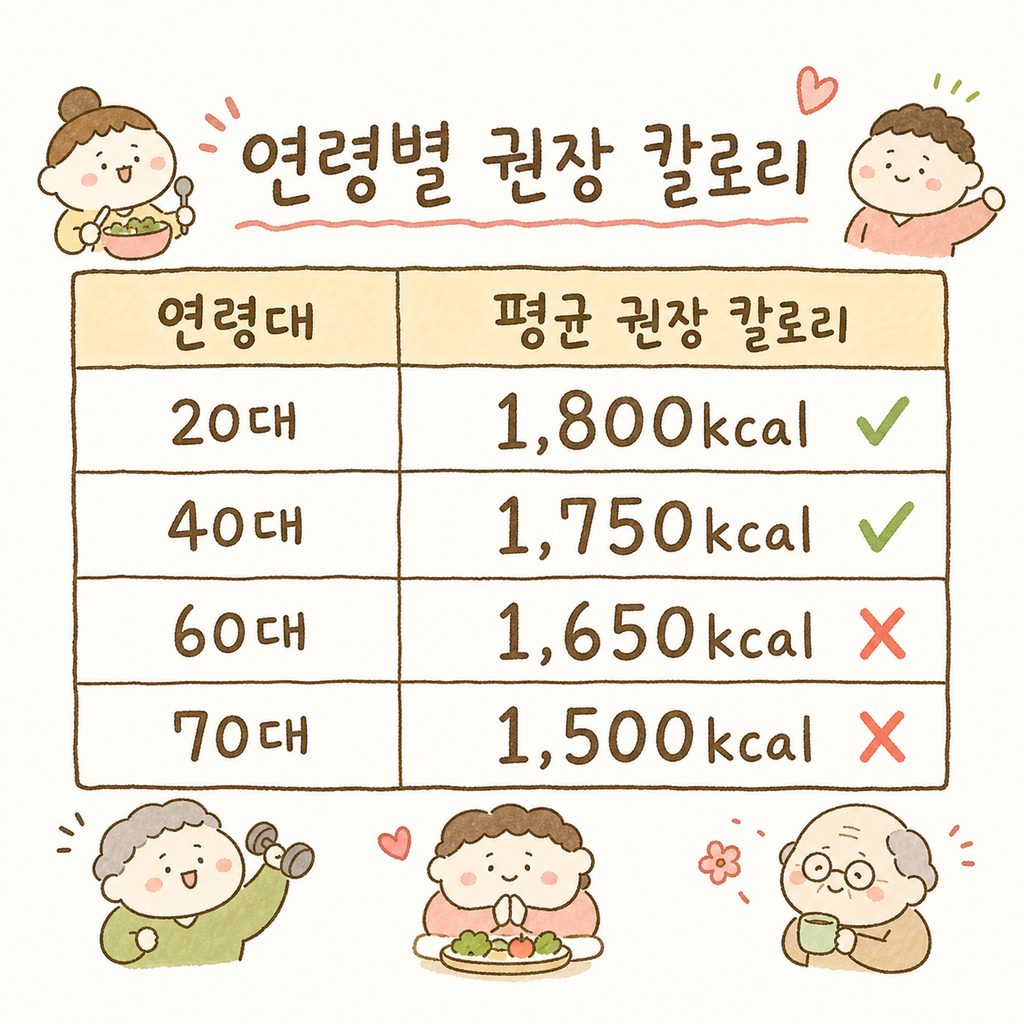
According to medical Q&A data, average recommended intakes show the following trends by age group:
Women in their 10s–20s: Approx. 1,800 kcal
Women in their 30s–40s: Approx. 1,750 kcal
Women in their 50s–60s: Approx. 1,650 kcal
Women in their 70s: Approx. 1,500 kcal
In particular, for elderly women, data from the Korea Disease Control and Prevention Agency (KDCA) suggests recommended calories range from 1,200 to 1,600 kcal, which is about 400–500 kcal lower than for younger adults. As metabolism slows over time, it is wise to adjust your diet according to your age rather than insisting on previous eating habits.
Energy Metabolism in Korean Medicine
In the clinic, I often warn that a diet focused solely on matching numbers can be risky. In Korean medicine, we prioritize metabolic efficiency and constitution over the mere "quantity" of calories.
Even when consuming the same 1,800 kcal, one person may feel energetic while another feels heavy and bloated. This is because digestive absorption and the circulation of Qi and Blood differ for everyone. Rather than unconditionally lowering calories, the priority should be to boost your metabolic function to create a body that uses energy efficiently. Instead of being trapped by numbers and feeling stressed, try listening to your body's signals of hunger and fullness.
Safe and Effective Weight Loss Targets
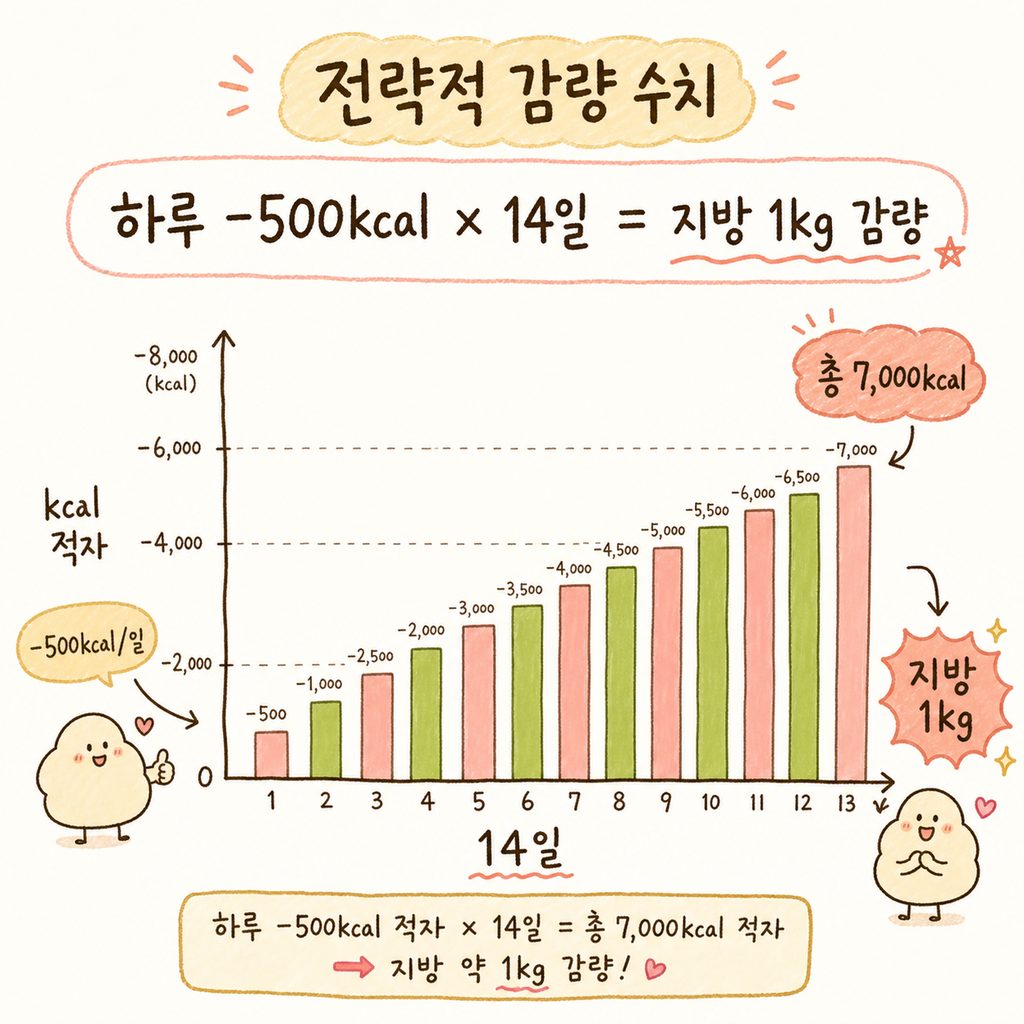
If you've decided to start a diet/weight management plan, you need a strategy rather than just eating less. Samsung Medical Center generally recommends a reduction of about 300–500 kcal per day.
It is well known that losing 1kg of fat requires a deficit of about 7,000 kcal, while 0.5kg requires about 3,500 kcal. By reducing 500 kcal a day, you can expect to lose about 1kg after two weeks.
One thing to be careful of: even for average adult women, extreme low-calorie diets of under 1,200 kcal should be avoided for long periods. If you eat too little, the body perceives it as an "emergency," lowering the basal metabolism and potentially changing your constitution so that you gain weight even when eating very little later on.
Practical Diet Tips for Today
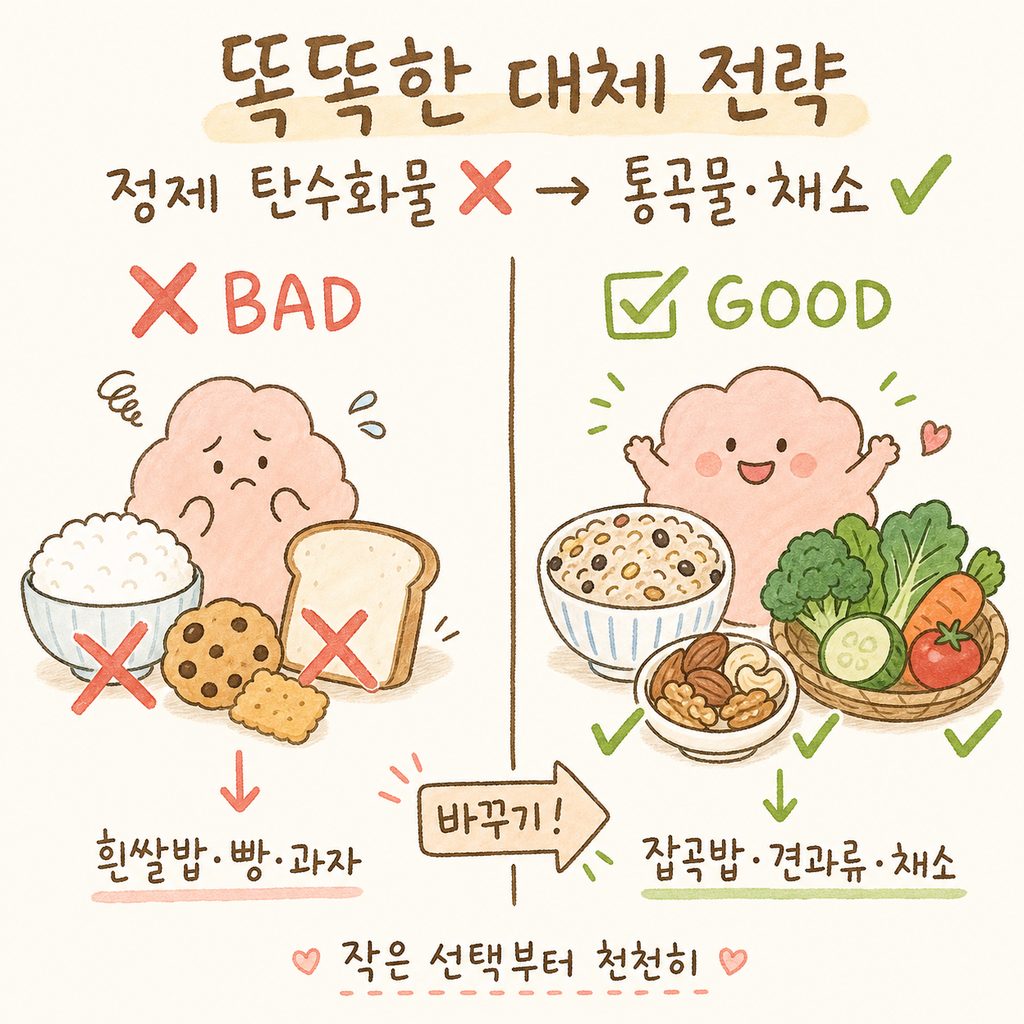
If calorie counting feels too overwhelming, try using a 'replacement strategy' instead of obsessing over numbers. This means swapping high-calorie foods for nutrient-dense, lower-calorie alternatives rather than simply starving yourself.

Swap refined carbohydrates (white rice, flour) for multigrain or whole grains.
Replace snacks like cookies or bread with fresh vegetables or nuts.
Drink a glass of water before meals to help prevent overeating.
These small replacements can naturally reduce your intake by 300–500 kcal a day. Creating sustainable habits is much more likely to lead to success than a diet based on forced endurance.
Healthy weight management begins with accurately understanding your body's state and setting an appropriate calorie goal. However, many people feel lost when managing their diet alone due to low energy or unexpected plateaus. In such cases, receiving help tailored to your constitution and metabolism is much more effective. The Baekrok Gambi-jung program helps restore your metabolism to normal, allowing for healthier and more effective results. Try the calculation method I shared today, and feel free to discuss any questions during your next consultation.
References