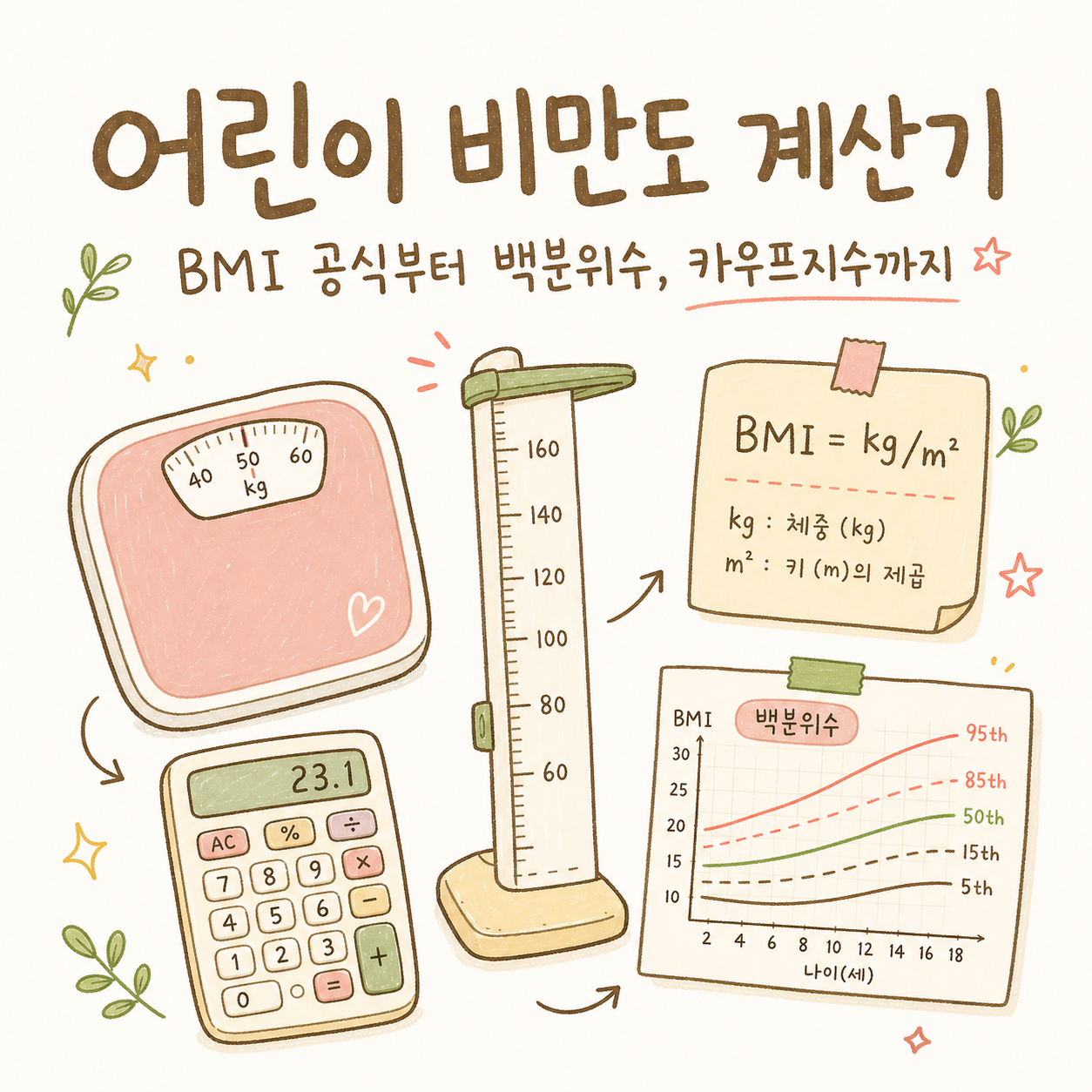
Child Obesity Calculator: BMI to Percentile Guide

Table of Contents
title: "Child Obesity Calculator — From BMI Formula to Percentiles and Kaup Index" ---
Parents often ask in the clinic, "My child seems chubbier than their peers—could they be obese?" Children's weight is different from adults'—they're still growing in height, and their muscle-to-fat ratio fluctuates. That's why we can't apply adult BMI standards directly. There's a separate pediatric obesity calculator that accounts for age and gender. Let me explain which online calculators to use and how to interpret the results.

What is a Pediatric Obesity Calculator?
Simply put, it's a tool that calculates BMI (Body Mass Index) from height and weight, then determines the percentile by comparing with same-age, same-gender peers. While adults are classified as normal weight, overweight, or obese based on a single BMI number, it's not that simple for children aged 2-18. A BMI of 20 means different things for a 7-year-old boy versus a 15-year-old girl.
The formula itself is the same as for adults:
- BMI = Weight(kg) ÷ {Height(m) × Height(m)}
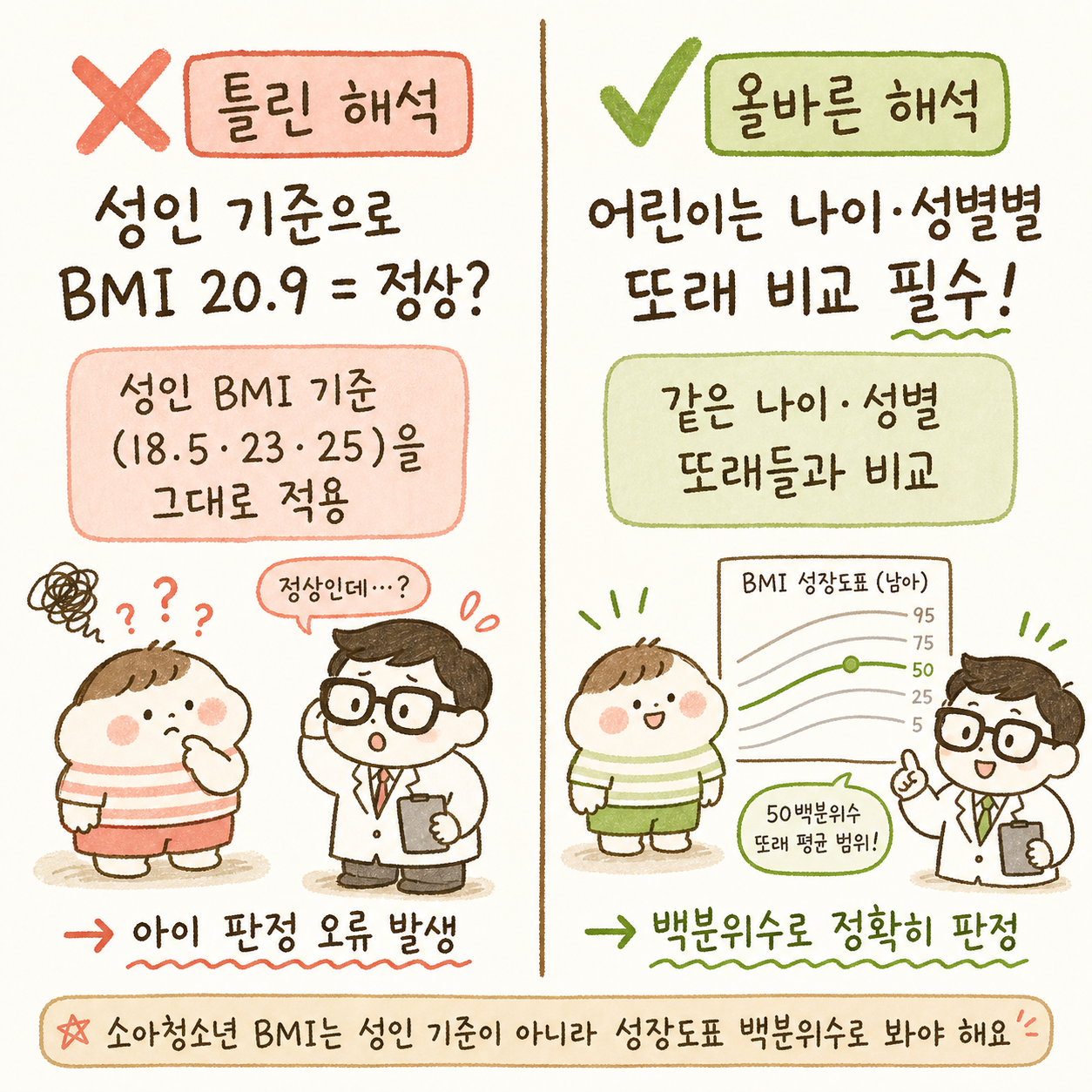
But we go one step further. We compare the calculated BMI to the 2017 Korean National Growth Charts to see where the child falls in the percentile ranking. The required inputs are typically gender, age in months, height (cm), and weight (kg). While you can find calculators by searching 'child obesity calculator' on Naver, some use adult standards (18.5, 23, 25), so double-check the criteria.
Let's Calculate Together
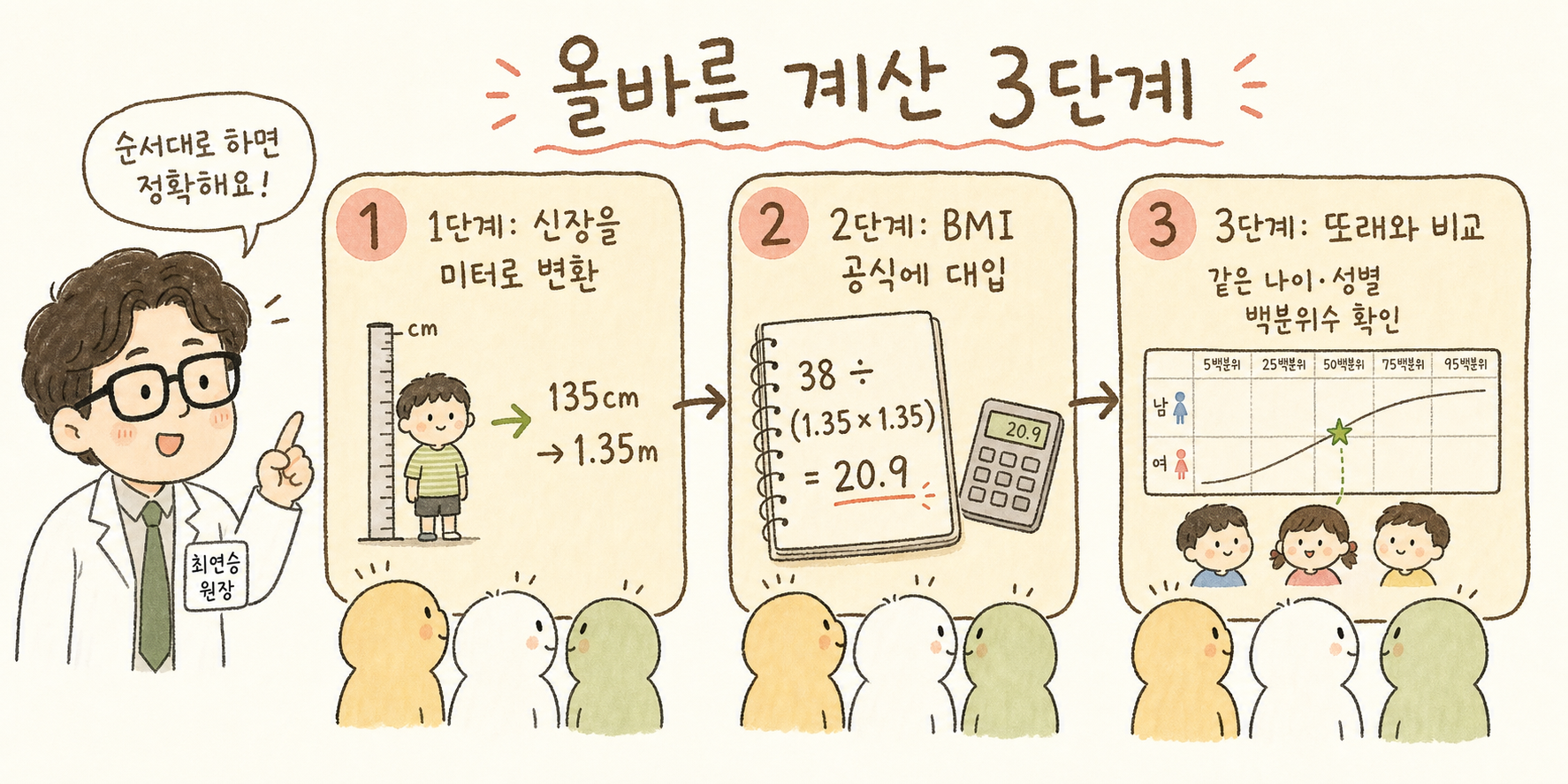
Let's use an example: an elementary school student who is 135cm tall and weighs 38kg.
First, convert height to meters: 135cm = 1.35m. Then apply the formula:
- BMI = 38 ÷ (1.35 × 1.35) ≈ 20.9
Anyone can do this calculation. The real question is what 20.9 means for this child. For an adult, this would be near normal. But for an 8-year-old girl, it might be quite high compared to peers, while for a 14-year-old boy, it might be average. That's why the calculator must provide not just the BMI number but also the percentile to be truly useful.
How to Interpret Results
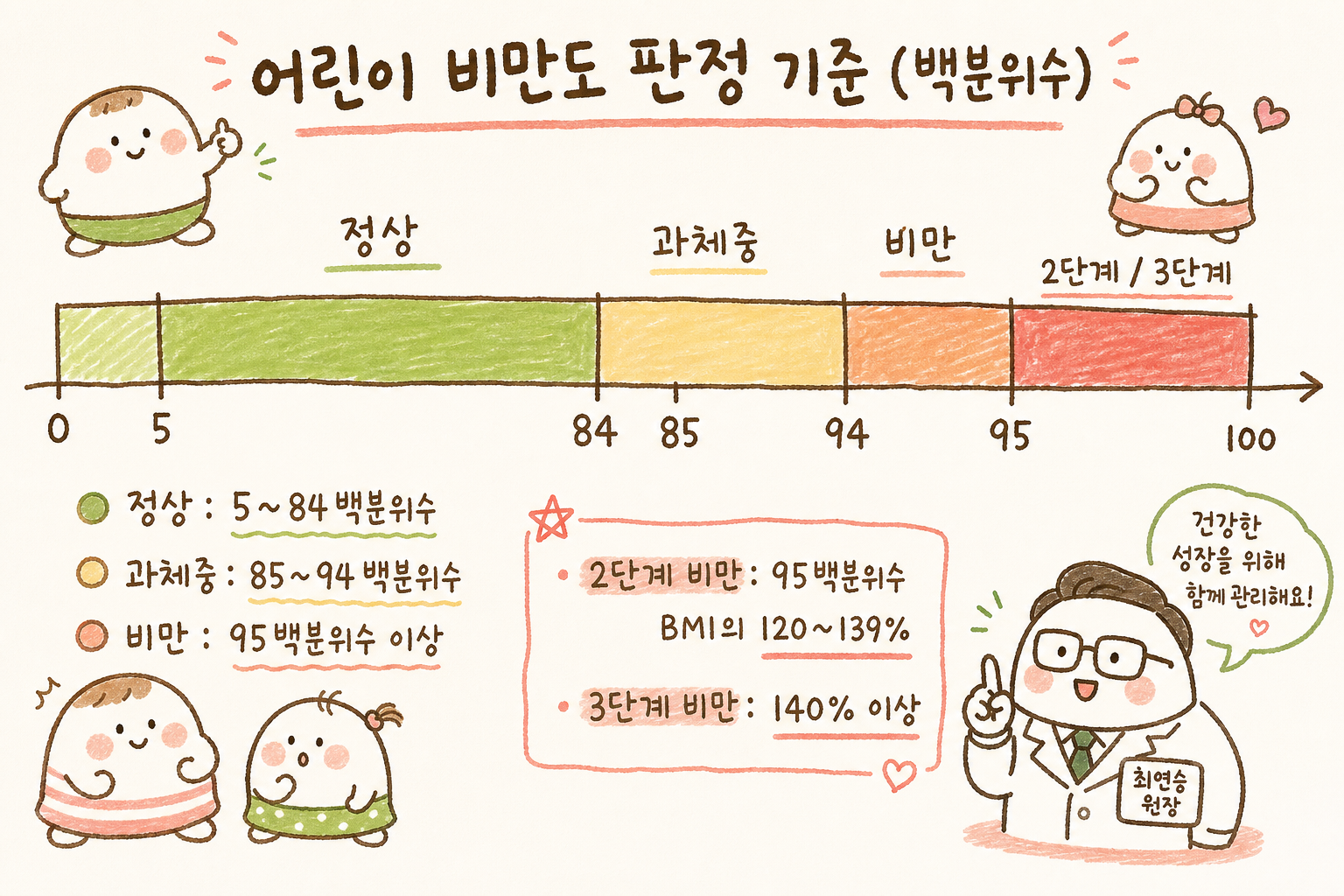
According to the Korean Society for the Study of Obesity 2020 guidelines and 2017 Growth Charts:
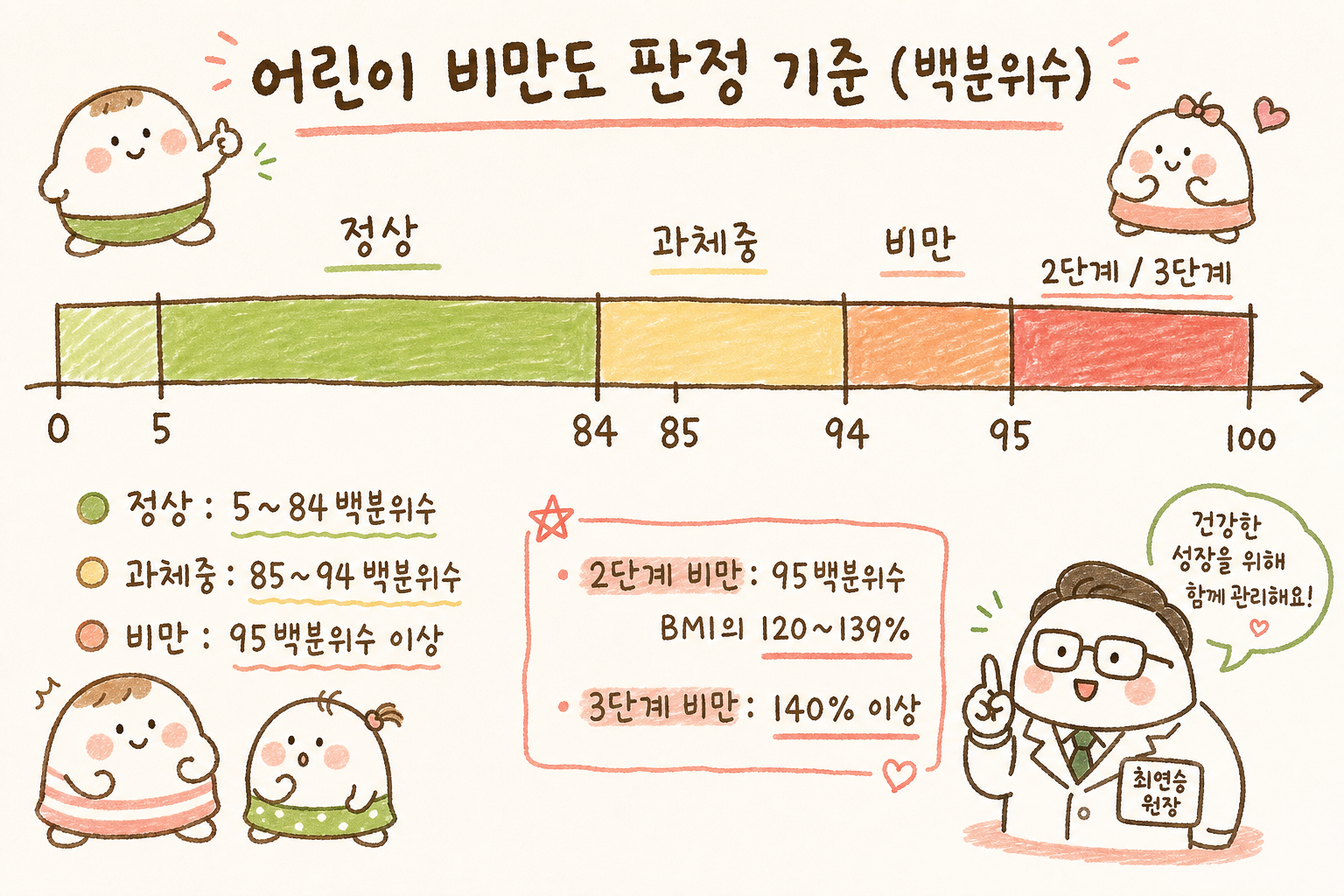
Normal: BMI 5th-84th percentile
Overweight: BMI 85th-94th percentile
Obese: BMI ≥95th percentile or ≥25 kg/m²
Stage 2 Obesity: 120-139% of the 95th percentile BMI
Stage 3 Obesity: ≥140% of the 95th percentile BMI
Though the numbers seem complex, the key is simple: it's about where your child ranks among their peers. Below the 85th percentile is considered normal, while above requires attention. Above 95th percentile is considered obese, and exceeding 139% of that value moves into stage 3 obesity.
For children under 3, we use the Kaup Index instead of BMI. Since height-weight ratios mean different things for infants, public health centers follow this standard. Remember: ages 2-18 use pediatric BMI calculator, younger than that use Kaup Index.
When the Formula Might Not Fit
I always emphasize to parents: calculator numbers are a starting point, not the finish line. Don't take results at face value in these cases:
Children entering puberty may experience temporary weight spurts
Athletic children may have higher BMI due to muscle mass—this indicates good physique, not obesity
Children with chronic conditions or medications may have weight fluctuations that BMI alone can't assess
During growth spurts, BMI may naturally decrease over months even with the same weight
Especially during rapid growth periods, trends matter more than single measurements. If a child moves from 95th to 80th percentile in the next measurement, it might be due to height growth. If it stays the same or increases, it's time to examine diet and activity levels. Overwhelming? I found it complex too when I first learned these standards as a parent.
Complementary Indicators to Consider
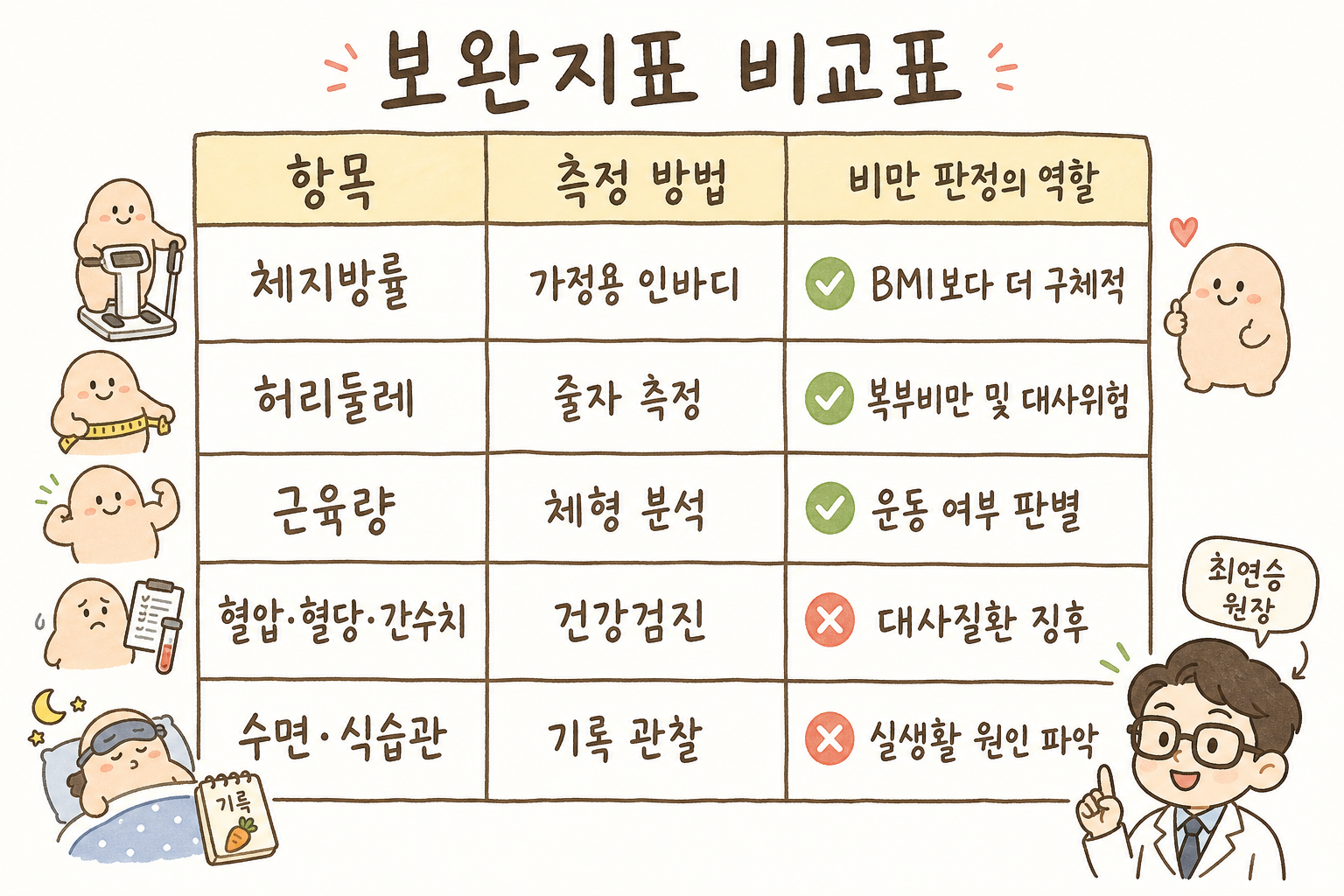
Since BMI only considers height and weight, it can't assess internal body composition. That's why we also examine:
Body fat percentage: Can be roughly measured with home scales. Higher body fat at the same BMI raises priority for management
Waist circumference: More sensitive than BMI for detecting metabolic risks associated with abdominal obesity
Muscle mass: Important as children starting exercise may gain weight from muscle, which BMI alone can't distinguish
Blood pressure, blood sugar, liver function: Prolonged childhood obesity can affect metabolic markers like in adults
Sleep and dietary records: Often reveal more than numbers alone
You don't need to measure all at once. Consider these as next steps if the calculator shows overweight or obesity.
Korean Medicine Perspective
In Korean medicine, we recognize that obesity manifests differently—some children have cold-damp constitutions with swelling tendencies, while others have heat excess with strong appetites. We tailor dietary and activity approaches accordingly. Think of it as reading the child's overall condition behind the numbers.
Once you've assessed your child's status with the calculator, the next step is adjusting daily habits. Remember, children's weight management differs from adults—never restrict food intake or use strong supplements. At Baekrokdam Korean Medicine Clinic, we help adult patients with weight management using Baekrok Gambi-jung. If you're concerned about your child's weight, I recommend first establishing healthy parental eating habits—children learn from their parents' tables. If you need help with your own weight management journey, feel free to schedule a consultation.