Oatmeal Diet Guide: Steel-Cut, Protein & Recipes

Table of Contents
When discussing diet/weight management plans in the clinic, I often hear, "I know oatmeal is good, but there are so many types I don't know which to choose." Some people stand in the cereal aisle for a long time before picking the most familiar instant oatmeal, while others buy expensive-looking steel-cut oats but leave them in the cupboard because they don't know the recipe. It was quite overwhelming for me at first, too. Today, I will point out four variables you really need to pay attention to when starting an oatmeal diet and summarize the "best combinations" I frequently recommend to my patients.
The Base — Which Oatmeal to Choose
Half of a successful oatmeal diet is actually decided by product selection. Even with the same oats, the rate at which blood sugar rises varies greatly depending on the degree of processing.
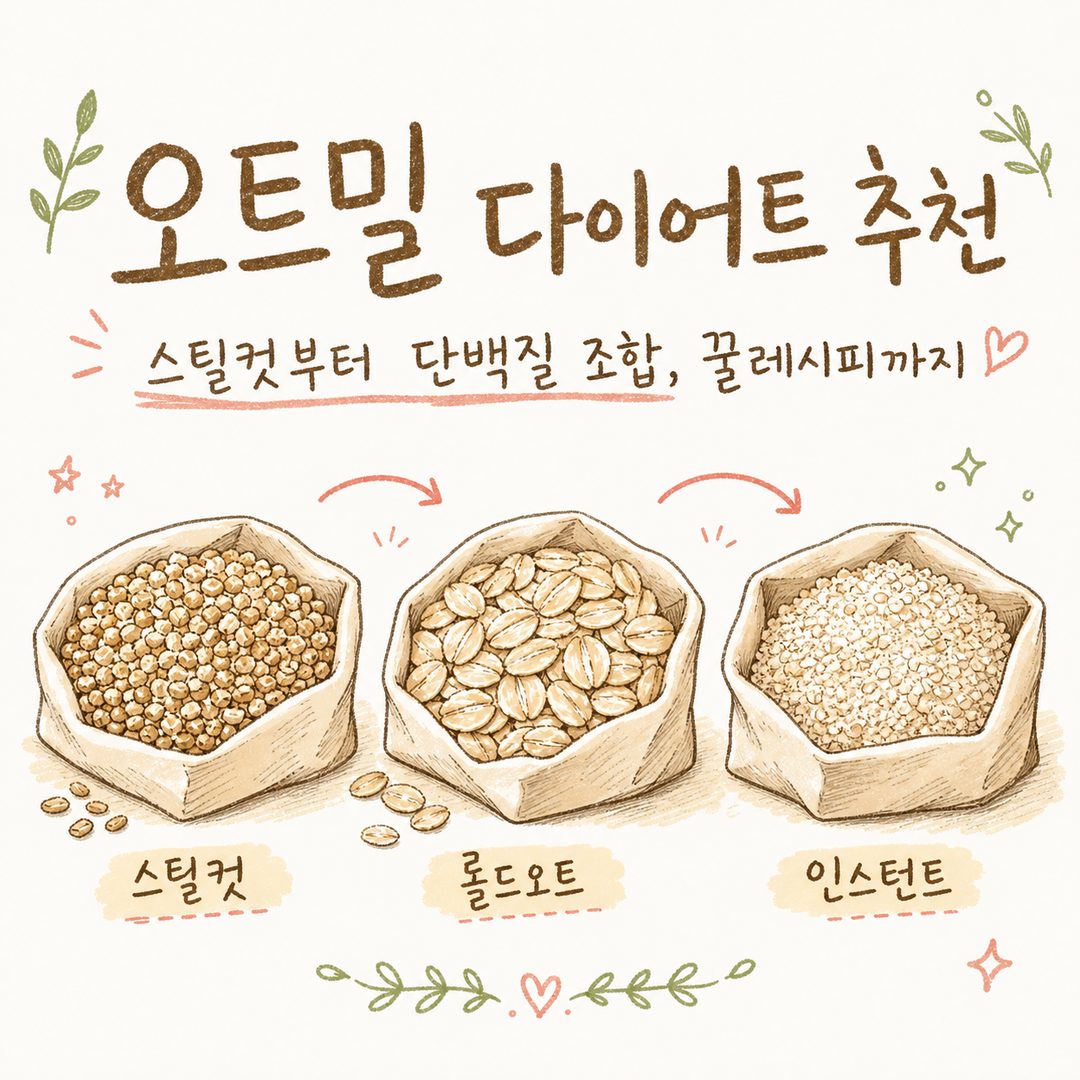
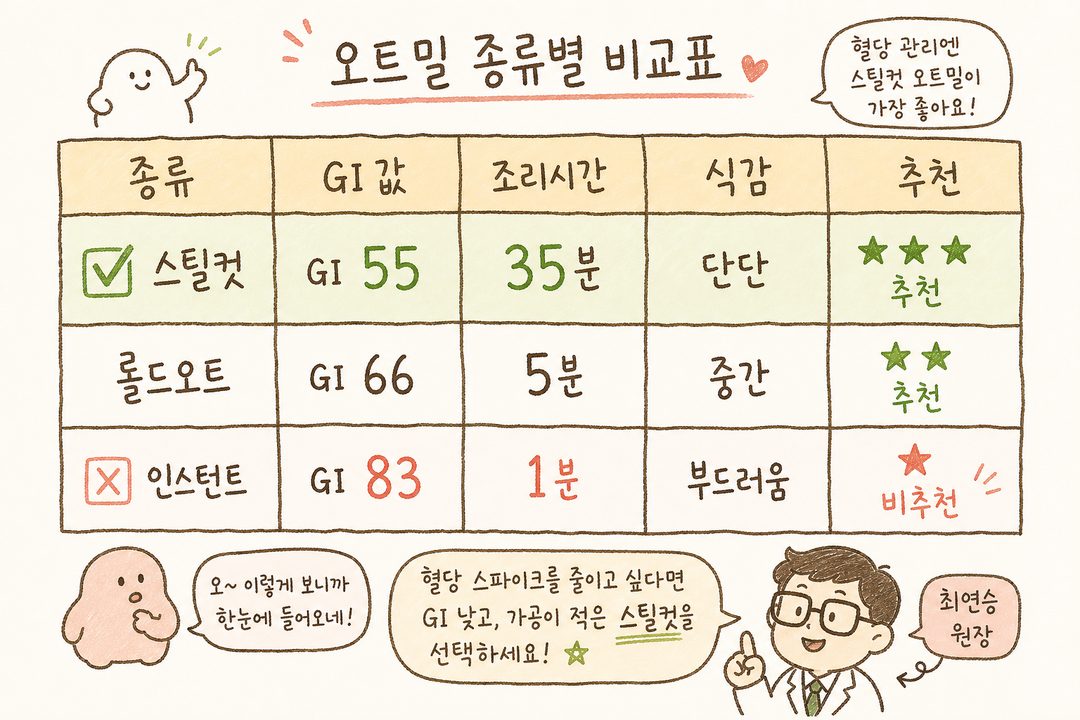
The most recommended type is steel-cut oatmeal. Since it is just whole oats cut into small pieces, processing is minimal, and the Glycemic Index (GI) is relatively low at around 55. It is rich in dietary fiber, so it digests slowly, providing long-lasting satiety. The only downsides are that it takes some time to cook and has a firm texture.
The second option is rolled oats (old-fashioned/pressed oats). These are steamed and then flattened, representing a medium level of processing. They are softer and faster to cook than steel-cut oats, but the rate at which blood sugar rises is slightly faster. For those short on time, this often becomes the practical first choice.
Finally, quick/instant oatmeal is highly processed and broken into small pieces, resulting in a high GI. There are cases where the GI of instant quick oatmeal has been measured as high as 83. Because it cooks quickly, it also raises blood sugar quickly, so I recommend avoiding it if your goal is weight management.
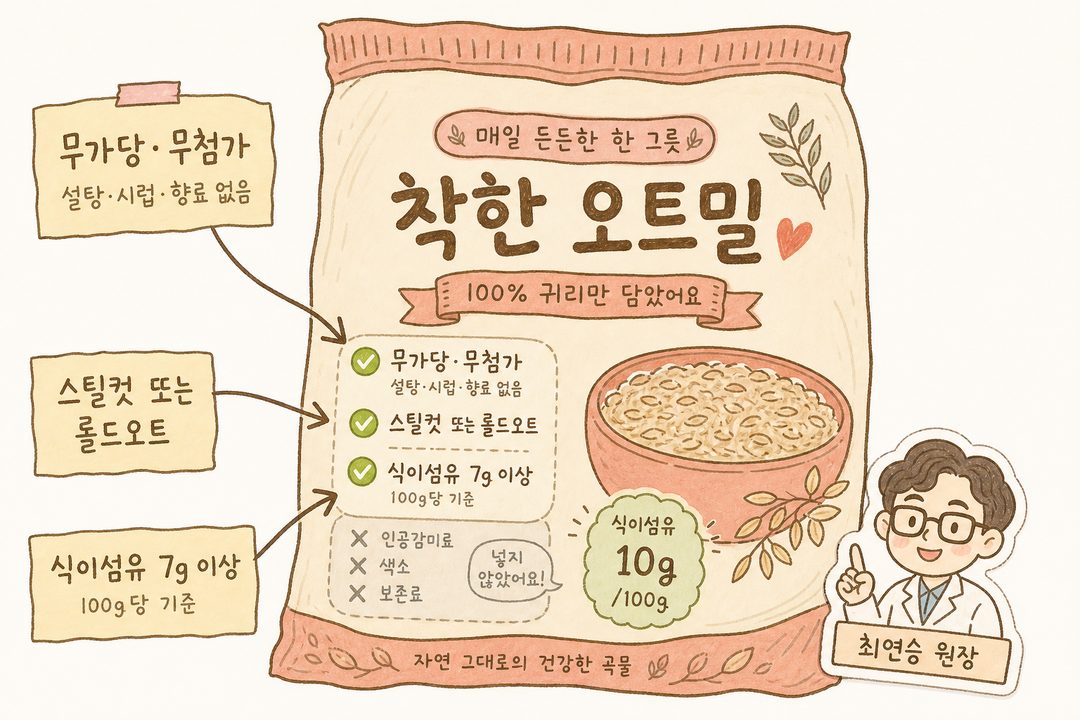
When choosing a product, check just three things on the label: Is it unsweetened/no additives (no sugar, syrup, flavoring, or sugar-coated dried fruit)? Is it minimally processed "steel-cut" or "rolled oats"? Is the dietary fiber content per 100g high? Checking these three lines alone is half the battle.

Protein — What to Top It With
Eating only oatmeal makes for a carbohydrate-heavy meal, which can lead to feeling hungry again quickly. That’s why I always tell my patients, "Make sure to add protein."
The most versatile partner is the egg. Even in oatmeal bread recipes, two eggs are almost a standard formula. They contain a good balance of protein, fat, and vitamins, which helps maintain satiety. If your mornings are busy, boiling them the night before is a good strategy.
The second is plain yogurt. Unsweetened Greek yogurt is even better. A popular basic recipe among patients is mixing 200g of oatmeal, 2 bananas, 2 eggs, 1 plain yogurt, and 1 spoon of baking powder to bake. If you prefer milk, a ratio of 2 cups of oatmeal to 1.5 cups of milk, 1 banana, and 2 eggs also works well.
Third are soy milk or unsweetened plant-based drinks. I recommend these to those who need lactose-free options or have lactose intolerance. However, many commercial products with a strong sweet taste contain sugar or syrup, so be sure to check the label.
One point often missed: it's easy to think, "I put in enough protein, so I can eat a lot," but the calories in oatmeal itself cannot be ignored. Usually, one serving is about 150–200g based on dry oatmeal, and it's best to adjust this according to your activity level.
Toppings — Fruits and Nuts, How Much is Okay?
You don't have to eat oatmeal without flavor just because it's for a diet. However, you must be aware that calorie traps are hidden in the toppings.
A prime example is the banana. It's a great ingredient that provides both satiety and sweetness, but even just two ripe bananas can significantly raise sugar levels. Replacing half with an apple provides similar sweetness while reducing the sugar burden.
The same goes for nuts. A handful of walnuts or almonds adds good fats and protein, but if one handful becomes two and two become three, the calories quickly add up. I recommend the habit of setting aside only half a palm's worth from the start.
Dried fruit is the item you should be most careful with. Even if "sugar coating" isn't explicitly stated on the label, if it's very sweet, it almost certainly contains syrup. For a weight management oatmeal, I recommend fresh fruit or frozen berries whenever possible.
One more thing: many people bake oatmeal bread, but thinking "it's healthy bread, so I can eat as much as I want" is dangerous. Calories definitely exist, so it's safer to set a limit of 1–2 slices.
Sauces & Seasoning — Managing Sweet and Salty
The moment you add plenty of honey or maple syrup because the oatmeal is bland, that meal shifts from a diet plan to a dessert.
If you absolutely need sweetness, cinnamon powder is an excellent choice. It brings out the flavor significantly while putting almost no burden on blood sugar. Unsweetened cocoa powder plays a similar role. Try adding a pinch when you crave a rich flavor.
If you must add sweetness, I recommend borrowing it from ripe fruit instead of honey. Half a mashed banana can make it sweet enough without any syrup.
For those who prefer a savory base, I recommend a combination of a pinch of salt, pepper, and a small amount of olive oil. Adding a fried egg on top completes a meal instantly. When going with a savory base, boiling it with water or vegetable broth instead of milk brings out the flavor.
Cooking time is also a variable. Steel-cut oats need to be simmered for about 35 minutes to become soft, but if you soak them in water the night before, it takes less than 10 minutes the next morning. This is a time-saving tip I often share with patients.
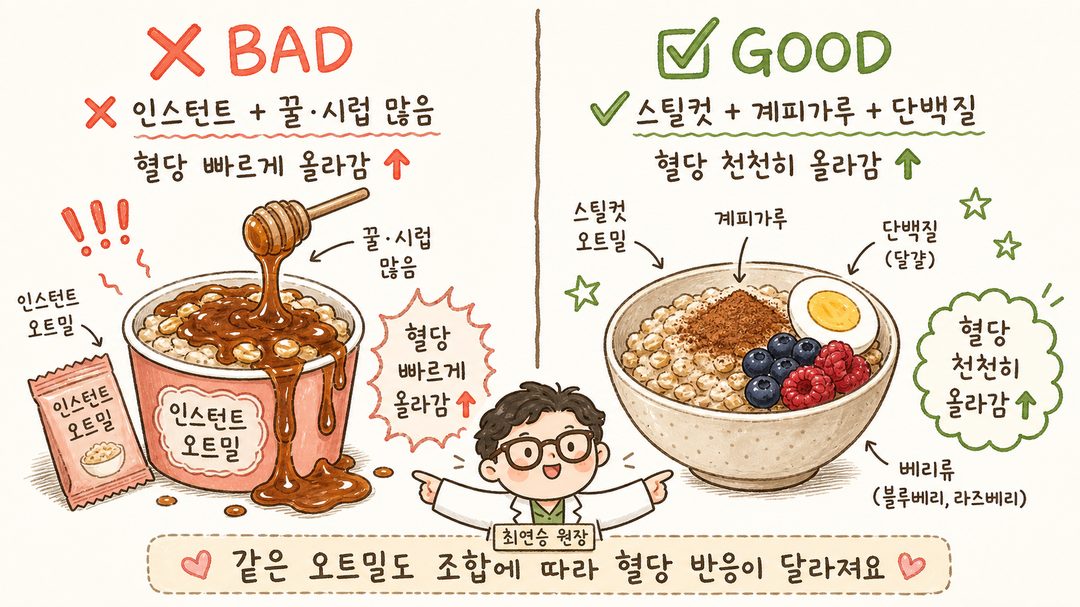

❌ Common Mistakes vs ✅ Recommended Methods
❌ Plenty of sugar/syrup in instant oatmeal → ✅ Finish steel-cut or rolled oats with cinnamon powder
❌ Eating only oatmeal in a large bowl → ✅ 150–200g dry oatmeal + 1 protein source
❌ "It's healthy bread, so I'll eat the whole loaf" → ✅ 1–2 slices of oatmeal bread + protein side
❌ Adding sweetness with dried fruit, honey, or maple syrup → ✅ Natural sweetness from ripe bananas, apples, or frozen berries
❌ Just eating it with milk like cereal → ✅ Reinforce protein with eggs or yogurt
❌ No portion control outside of breakfast → ✅ Use as a meal replacement once a day, managed within the 180–220 kcal range
When prepared well, oatmeal can be quite filling at about 180–220 kcal per meal. Conversely, if you start adding two or three toppings, it can easily soar to nearly 900 kcal. It's safe to say that how you combine the same ingredients is almost everything.
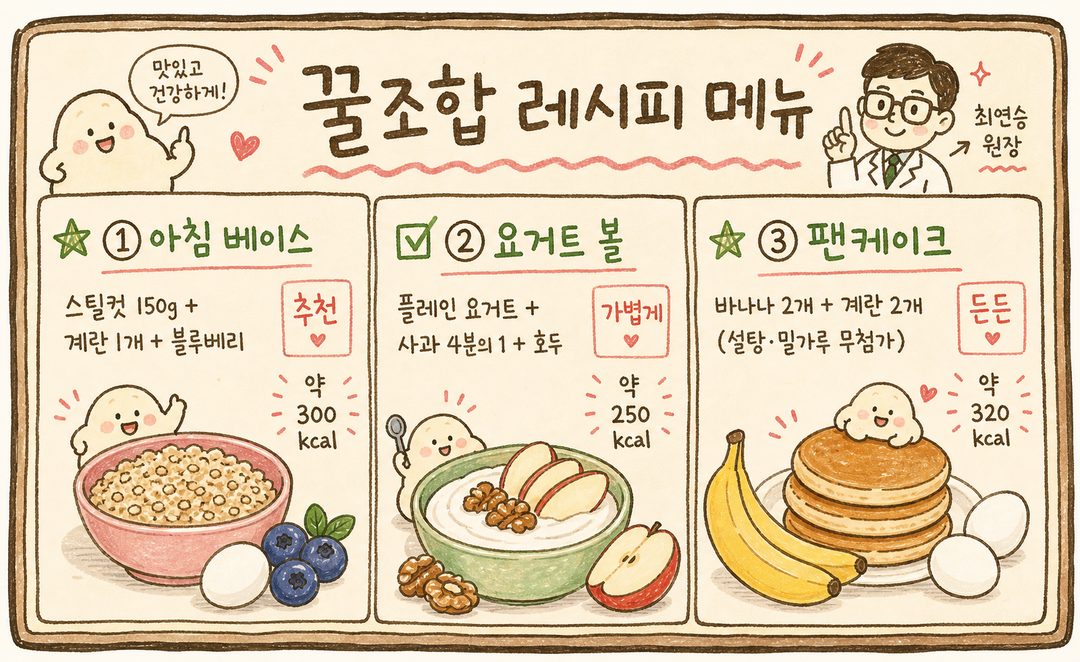
3 Recommended Combinations from the Clinic
① Morning Base Oatmeal Boil 150–200g of steel-cut or rolled oats with water or unsweetened soy milk, and top with one boiled egg and a handful of frozen blueberries. Finish with a pinch of cinnamon powder. This is a configuration that is filling before work while raising blood sugar slowly.
② Oatmeal Yogurt Bowl Mix dry oatmeal into one plain yogurt and top with a quarter of an apple and half a palm's worth of walnuts. This is suitable as a simple breakfast or a light evening meal.
③ Oatmeal Protein Pancakes Blend 120g of oatmeal, 2 ripe bananas, and 2 eggs, then fry them in a pan. Since no additional sugar or flour is added, the sugar burden is much lower than regular pancakes. Limit yourself to 1–2 slices and enjoy with unsweetened yogurt or berries on top.
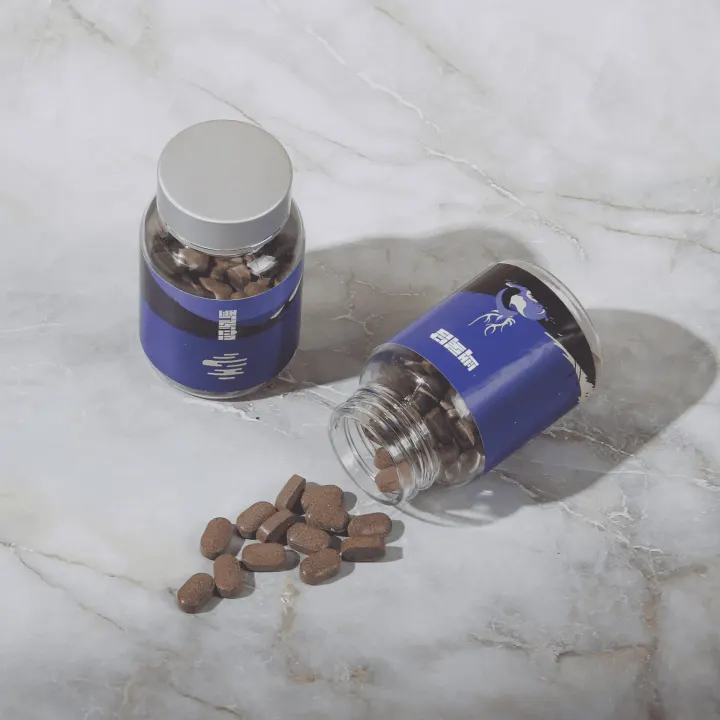
An oatmeal diet is very easy to apply once you learn it. However, reactions to the same diet can vary depending on your constitution and digestive power. For those who often feel cold or bloated, or those who have binge-eating patterns when seeing sweet food, dietary control alone may have limits. In the clinic, I recommend a combination of Korean herbal medicine tailored to the patient's constitution and lifestyle coaching. At Baekrokdam Clinic, we help manage appetite, digestion, and basal metabolism flow through Baekrok Gambi-jung. Rather than struggling with your diet alone, it is a good starting point to have a check-up with an expert.