Olive Young Diet Snacks: Protein Bars, Chips & Calories

Table of Contents
- Base Variable — Which Category to Choose First
- Protein — Why the Main Ingredient Should Be Protein
- Supplementary Ingredients — Incorporating Light Alternative Snacks
- Sauces & Sugars — Categorize Cravings Separately
- ❌ vs ✅ — How Similar Diet Snacks Can Differ
- 3 Recommended Combinations — Choose According to Your Situation
Standing before Olive Young's snack aisle, we all face the same dilemma. You're on a diet but crave variety, yet feel guilty grabbing anything. While products appear healthy at first glance, some hide surprisingly high sugar content. As a doctor, I'm often asked, 'What should I buy at Olive Young?' Today, I'll share the advice I frequently give in my clinic, organized by category.
Base Variable — Which Category to Choose First
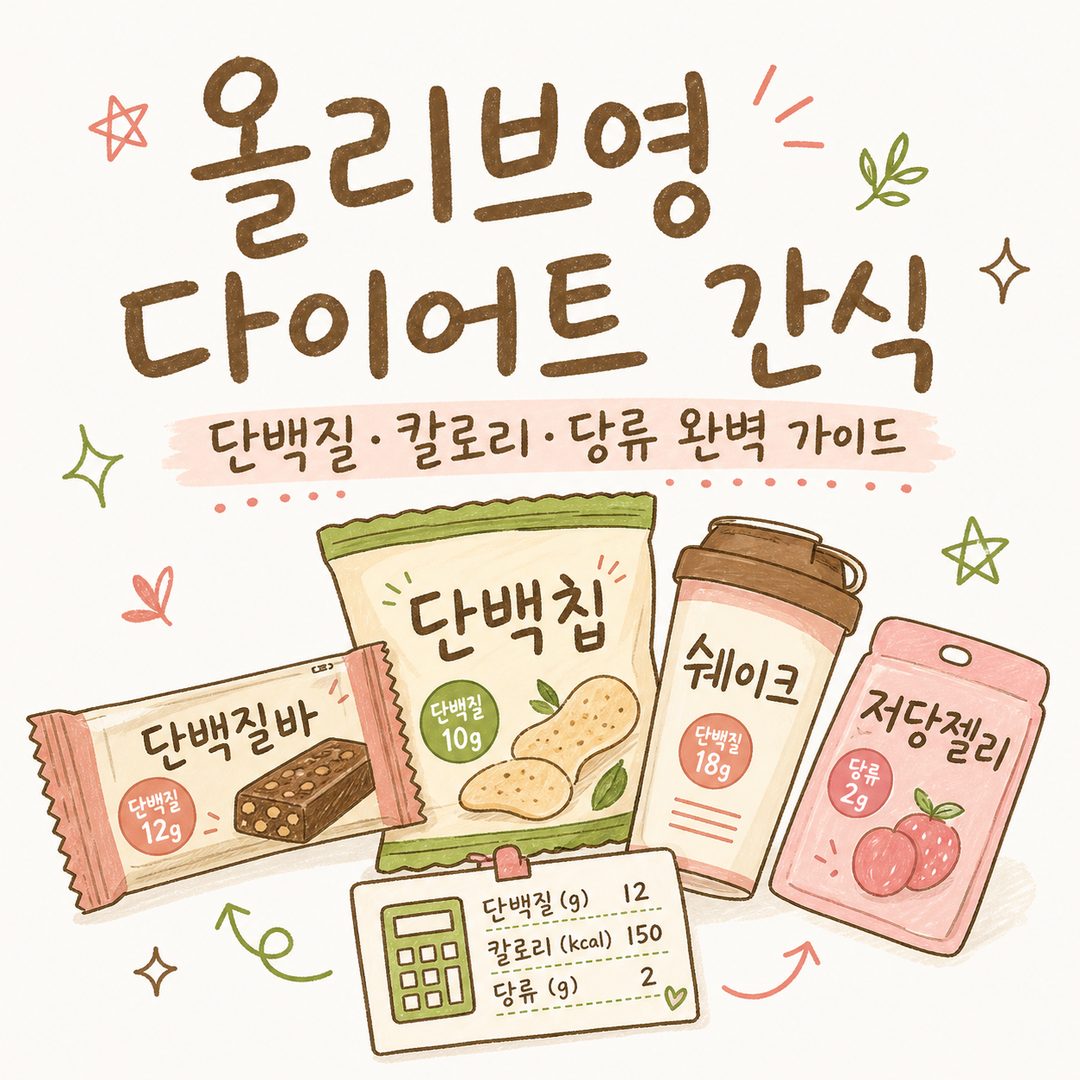
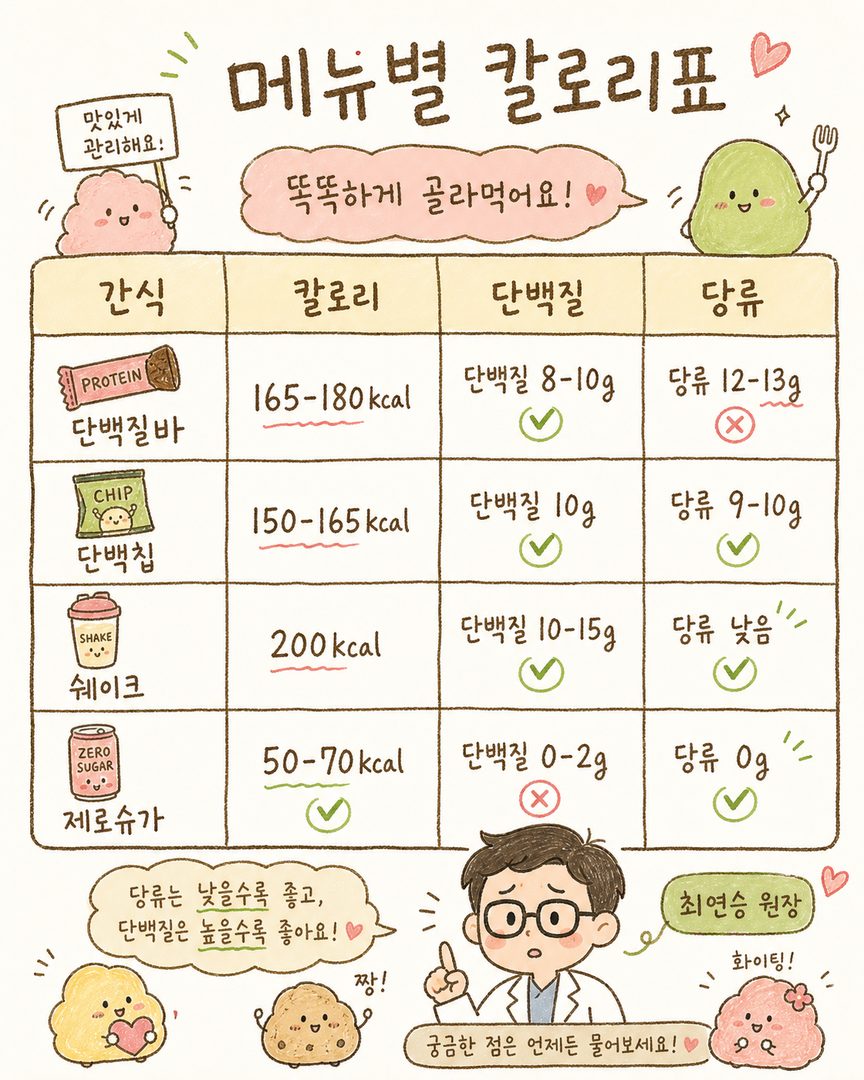
The first thing to consider is the 'base' of your snack. Olive Young's diet snack section can be narrowed down to four main categories: protein bars, protein chips, shakes, and zero-sugar jellies/drinks. Even Harpers Bazaar's curation and blog reviews typically recommend within these four categories. To minimize failure, it's safest to narrow down your choices within these categories.
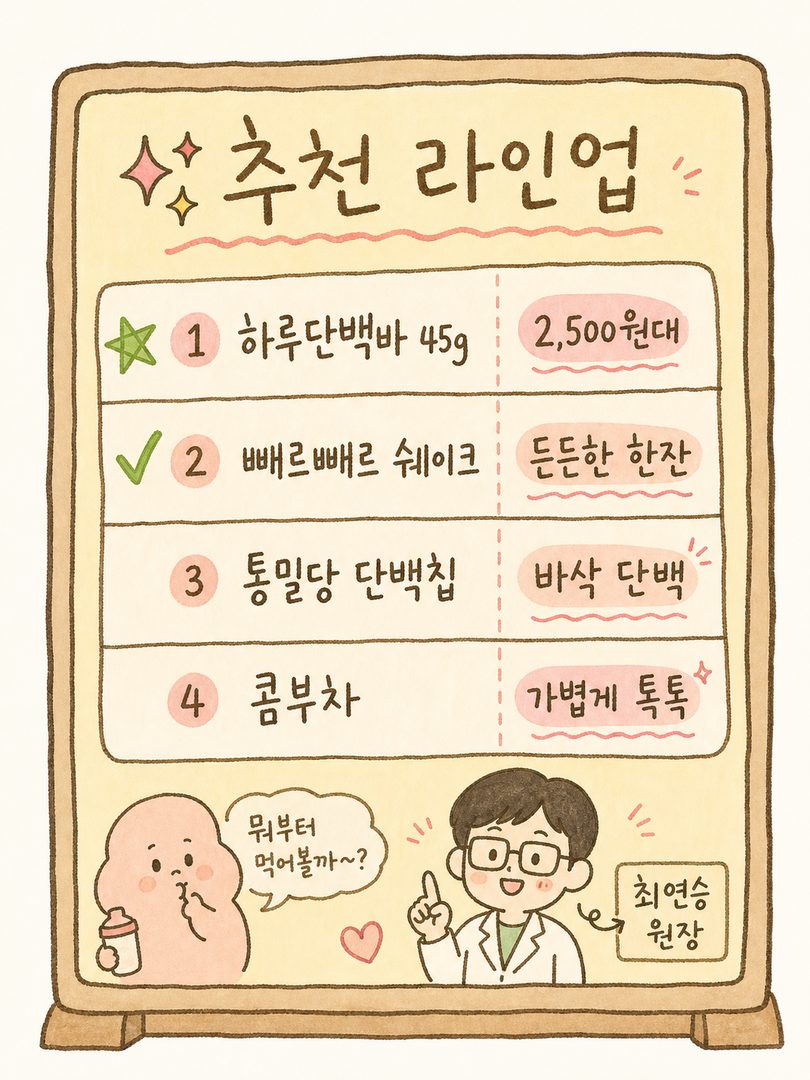
Olive Young's special promotions often feature diet and protein snacks separately, with products like Haru Protein Bar 45g (3 types) around 2,500 won, Bbare Bbare Shake, and Kombucha frequently appearing in recommended lineups. For beginners, starting with one protein bar, one pack of protein chips, and one shake per week is a low-pressure approach. In my clinic, I advise patients, "Don't stick to just one type; diversify across two or three categories."
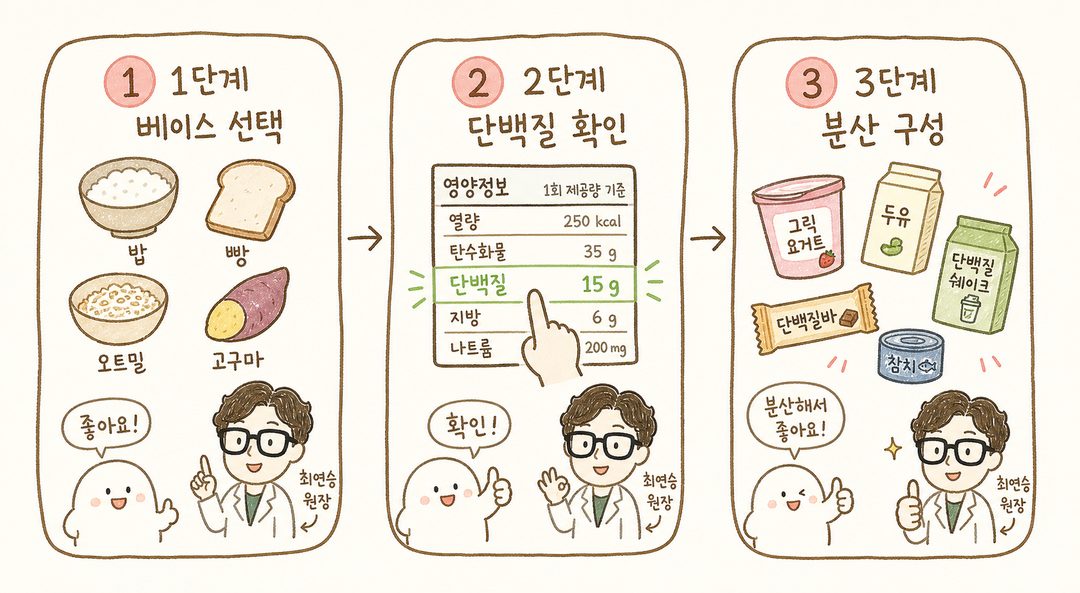
Protein — Why the Main Ingredient Should Be Protein
Even if labeled as diet snacks, those lacking in protein will leave you hungry again quickly. That's why I prioritize products where protein is the main ingredient. For protein bars, regulars include Soyjoy, Labnosh Protein Cookies/Cookie Bars, and Haru Protein Bars. For protein chips, Whole Grain Protein Chips, Fromm It Protein Chips, and Delight Project Protein Chips are top choices.
Looking at nutritional examples helps: Labnosh Protein Cookies contain 180kcal (40g) with 13g sugar, while Fromm It Protein Chips contain 10g protein. Whole Grain Protein Chips are mentioned in video reviews as having 164kcal, 10g protein, and 9g sugar, and are baked rather than fried. Some tofu-based snacks contain 8g protein. Around 8-10g protein per serving is a reasonable standard for diet snacks.
Supplementary Ingredients — Incorporating Light Alternative Snacks
Let's be honest—eating only protein bars and shakes won't last a week. Your mouth gets bored, and the texture becomes monotonous. That's why I recommend including one or two light alternative snacks. Frequently mentioned options include Delight Project Bagel Chips, Myeongin Chapssal Rice Crackers, and roasted sweet potatoes. Particularly, Delight Project Myeongin Kong Mayo Chapssal Rice Crackers often appear as savory snacks and have made Olive Young's top 5 diet snacks in videos.
The role of supplementary ingredients is simple: they complement the sweetness and savoriness of protein-focused items to prevent boredom. However, even seemingly light snacks like rice crackers or bagel chips require checking calories and sugar per serving size. Pay attention to the recommended serving size rather than the entire package. I often tell patients, "Don't eat straight from the bag; portion out a handful onto a plate."
Sauces & Sugars — Categorize Cravings Separately
The most dangerous moment during a diet is when you're desperately craving something sweet. Many people break down in front of bakeries after trying to resist. I completely understand this struggle. That's why it's strategic to keep some low-sugar, sugar-free alternatives on hand. Frequently recommended products include Bba Bba Real Chocolate and Sugarolo Sugar-Free Gummies. Having these when a sweet craving hits significantly reduces the chance of breaking your diet.
However, don't be fooled by 'low-sugar' labels—always double-check the nutrition facts. Some cookies are advertised as 55kcal per 20g serving with 7g sugar (35%), which is a higher sugar ratio than expected. 15g of sugar is about 15% of the daily recommended intake, so consuming too much at once can be detrimental to your diet. When craving sweets, try portioning out half instead of eating the whole package.
❌ vs ✅ — How Similar Diet Snacks Can Differ
Even similar-looking products can have surprisingly different nutritional values. Here are patterns I often compare with patients in my clinic:
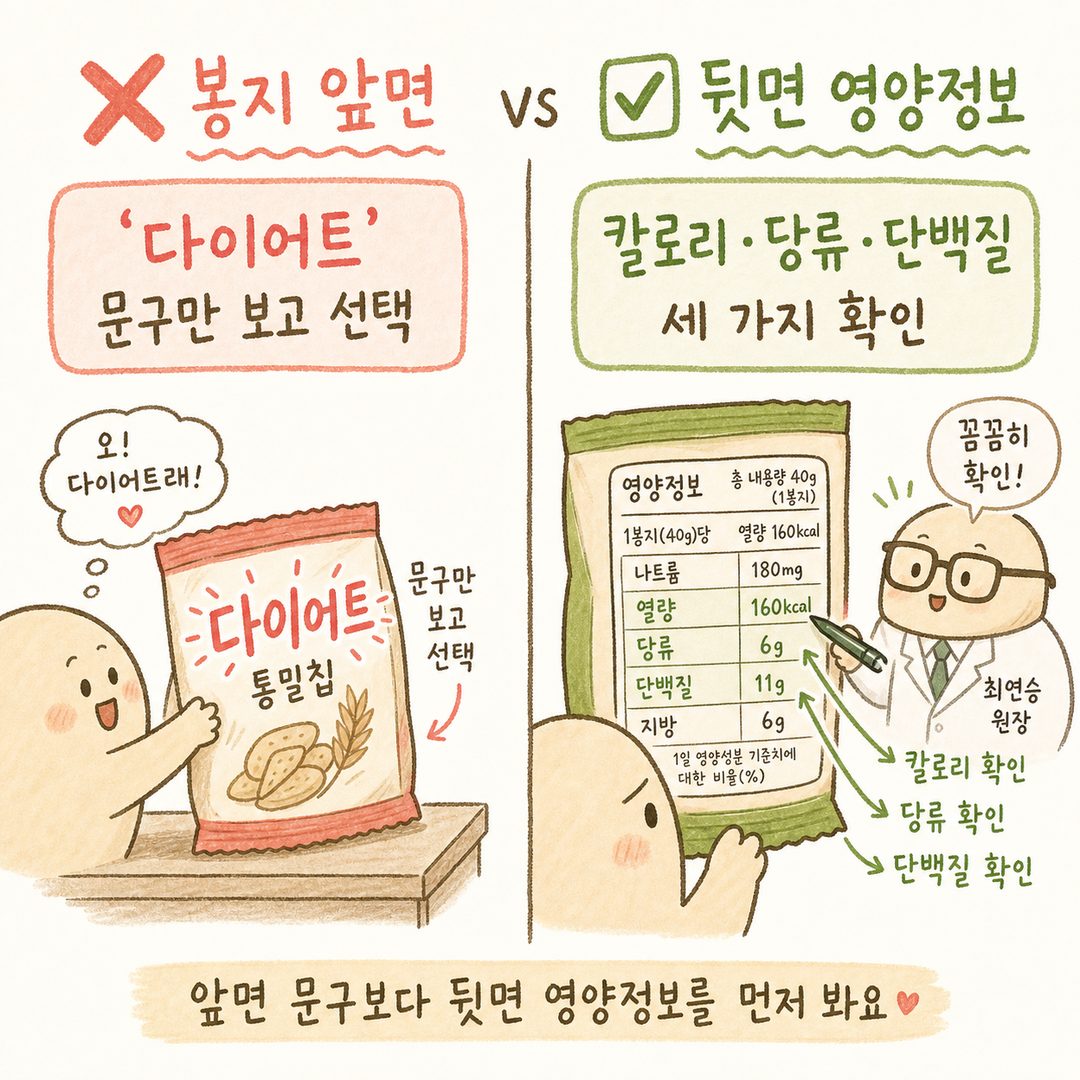
❌ Buying based solely on 'diet' claims on the front → ✅ Checking calories, sugar, and protein per serving on the back
❌ Eating a whole bag saying "It's diet food, so it's fine" → ✅ Calculating per serving (e.g., 165kcal per 40g serving, 67kcal per bottle)
❌ Completely avoiding sweets when craving → ✅ Keeping low-sugar alternatives like sugar-free gummies or real chocolate on hand
❌ Eating only one type of protein bar all week → ✅ Rotating between protein bars, protein chips, and light supplementary items
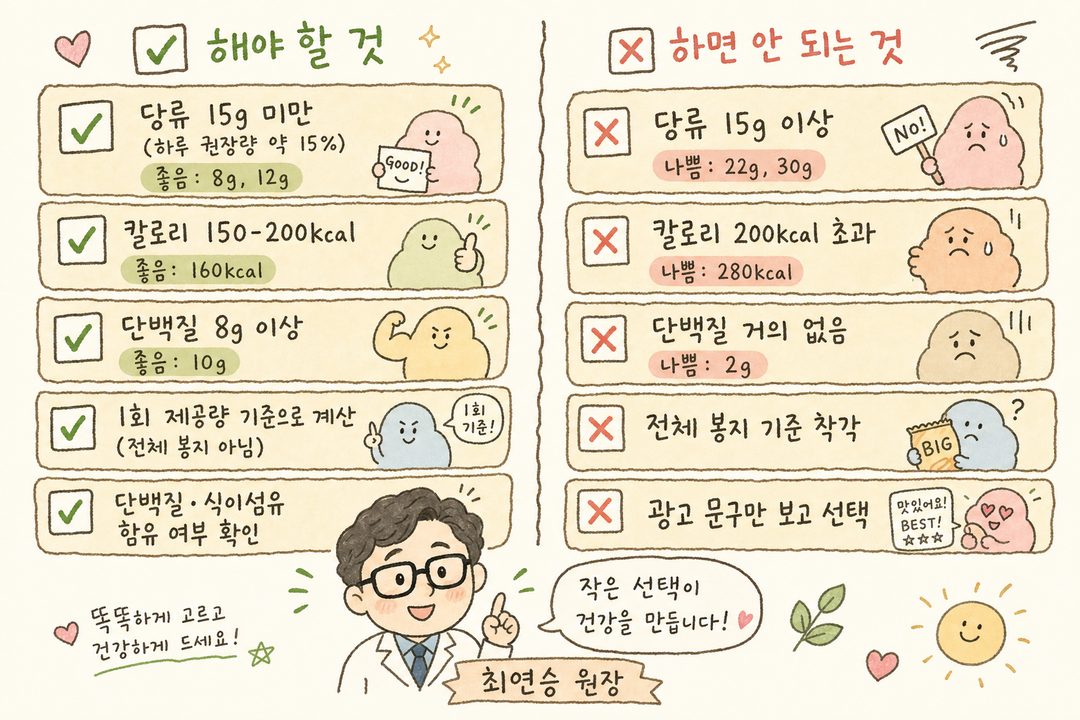
❌ Focusing only on calories while ignoring sugar → ✅ Checking under 15g sugar, under 200 calories, and presence of fiber and protein
With only one or two criteria, it's easy to be misled by labels. The most practical approach is to consider calories, sugar, and protein as a set.

3 Recommended Combinations — Choose According to Your Situation
Finally, here are combinations I frequently recommend in my clinic. Since everyone's situation differs, choose what fits your pattern:
Desk Drawer Combo: Haru Protein Bar + Whole Grain Protein Chips + Kombucha. Use protein to combat afternoon slumps, satisfy cravings with savory protein chips, and finish with kombucha. This lineup won't burden your desk space.
Dinner Replacement Combo: Bbare Bbare Shake + handful of Myeongin Chapssal Rice Crackers. When working late or having late dinners, use the shake as a base and add crackers for chewing satisfaction. This prevents late-night snack cravings by keeping your stomach comfortably full.
Sweet Craving Emergency Combo: Bba Bba Real Chocolate + Sugarolo Sugar-Free Gummies. Keep these as insurance for sudden sweet cravings. Rather than resisting until breaking down in front of a bakery, using low-sugar alternatives to satisfy the craving is much safer.
The same criteria apply when creating combinations: under 150-200 calories per serving, less than 15g sugar, and contains protein and fiber. Following these three guidelines helps avoid major setbacks.
With Olive Young diet snacks, the key is 'category selection + label checking + portion control.' However, if you're hitting a plateau with snack management alone or struggling to control your appetite, consider complementary Korean medicine approaches tailored to your constitution. Baekrok Gambi-jung is a prescription that supports your daily diet without strain by considering your constitution and eating habits. If snack control alone isn't enough, feel free to discuss this during your clinic visit.