Yin Deficiency Thirst Diet

Table of Contents
- Yin Deficiency Thirst Diet
- Why Does Yin Deficiency Reduce Diet Efficiency?
- What is the Mechanism Behind Thirst and Weight Plateau Occurring Together?
- What is the Principle of Traditional Korean Medicine Formulas that Supplemented Yin Deficiency?
- What Lifestyle Habits Should You Be Careful About During Yin Deficiency Thirst Dieting?
- Frequently Asked Questions
Yin Deficiency Thirst Diet
Have you ever experienced your lips becoming dry no matter how much water you drink, or feeling heat rising for no reason at night and losing sleep? Some people, while starting a diet and adjusting their diet, find that their weight stays the same while their thirst intensifies. I also remember struggling in the past when I overly restricted my diet and ended up with a parched mouth and night sweats, thinking 'Is this all a side effect of dieting?'
Usually, when we feel thirsty, we simply think 'I'm not drinking enough water.' However, from a Traditional Korean Medicine perspective, this is not a simple water deficiency but rather a state of Yin deficiency (陰虛) where the body's essence fluids have become depleted. Today, I'll walk you through how Yin deficiency creates weight loss plateaus and triggers thirst.
Why Does Yin Deficiency Reduce Diet Efficiency?
The 'Yin (陰)' we commonly refer to represents the body's internal fluids, blood, and the nutritional substances that maintain them. Yin deficiency (陰虛) literally means that this storage has been emptied. Just as skin becomes parched in a room with the humidifier turned off, the body's internal organs begin to overheat when essence fluids become insufficient.
The phenomenon that appears at this time is called internal heat (內熱). Like how a car engine without engine oil quickly overheats, when Yin blood (陰血) becomes deficient, the Yang fire (火) energy rises relatively. When you diet strenuously in this state, the following vicious cycle repeats:
Decreased metabolic efficiency: When essence fluids are insufficient, blood circulation and nutrient transport slow down. Even though you're eating less on the surface, the body recognizes this as an 'emergency' and strongly倾向 to store energy.
False hunger triggers: The brain often cannot clearly distinguish between thirst and hunger. Thirst caused by Yin deficiency is mistaken for hunger, easily creating 'false appetite' that makes you eat continuously.
Decline in sleep quality: Due to Yin deficiency with fire agitation (陰虛火動), if you experience tidal heat (潮熱) or night sweats (盜汗) where you sweat during sleep, you cannot sleep deeply. Sleep deprivation lowers leptin levels, the appetite-regulating hormone, making dieting even more difficult.
What is the Mechanism Behind Thirst and Weight Plateau Occurring Together?
Thirst experienced during dieting is not simply caused by eating salty foods. Especially from the perspective of the Yin deficiency thirst diet, this is a signal that the body's 'cooling system' has malfunctioned.
In the classic text of Traditional Korean Medicine, 《Neijing (內經)》, this is explained in connection with overexertion injury (勞倦傷). When energy is weakened from excessive labor, stress, or extreme dietary restrictions, and when grain energy (穀氣) fails to grow properly, the flow of the upper burner (上焦) becomes blocked, and stomach heat rises into the chest through vaporization (薰蒸), causing internal heat.
To use a simple analogy, think of your body as a pot. When there is sufficient water (Yin fluids), even with fire (Yang energy), it bubbles and creates energy, but when the water runs out, the bottom of the pot begins to burn. What you feel at this time is burning thirst and a plateau. If you keep adding fire (strenuous exercise or fasting) without water, instead of losing weight, the body burns up and metabolism comes to a complete halt.
What is the Principle of Traditional Korean Medicine Formulas that Supplemented Yin Deficiency?
Simply drinking more water is not enough. A process is needed where the water you drink is absorbed into cells and transforms into 'essence fluids.' Therefore, Traditional Korean Medicine uses Yin-nourishing (滋陰) herbs to replenish the deficient Yin.
Looking at formulas referenced in actual clinical practice, herbs such as Rehmannia glutinosa (熟地黃), Raw Rehmannia (生地黃), and Ophiopogon japonicus (麥門冬) are key components.
Rehmannia glutinosa and Raw Rehmannia: Directly replenish deficient blood and essence fluids.
Ophiopogon japonicus and Asparagus cochinchinensis: Cool the heat in the lungs and stomach, and supply moisture to dry mucous membranes.
Anemarrhena (知母) and Phellodendron bark (黃柏): Draw down excessive deficient heat (虛熱) to help you sleep comfortably.
For example, formulas like Cheng Li Zi Gam Tang (淸离滋坎湯) have a composition that simultaneously addresses tidal heat and night sweats from Yin deficiency, as well as heart palpitations. This is not simply a weight-loss medication but serves as 'groundwork' to fill the body's cooling water so that metabolism runs smoothly again.
What Lifestyle Habits Should You Be Careful About During Yin Deficiency Thirst Dieting?
When in a state of Yin deficiency, focusing on 'what to remove' is far less effective than focusing on 'how to fill.' Here are a few points I recommend to my patients.
First, reduce stimulant caffeine intake. Caffeine in coffee promotes diuretic effects, releasing the essence fluids you've worked hard to replenish back outside. Drinking coffee to quench thirst when it's severe is like pouring oil on a burning fire.
Second, drink lukewarm water slowly and frequently. Drinking large amounts of water at once burdens the stomach and is quickly excreted as urine. Drinking slowly, as if moistening your mouth, is a method to increase absorption rates.
Third, teas made with grains like black beans (흑두), mung beans (녹두), and red beans (적소두) are helpful. These food ingredients have mild properties while also having effects of reducing heat and replenishing essence fluids, making them useful for controlling deficient heat that occurs during dieting.
Lastly, rather than highly intense high-intensity interval training, try switching to yoga or light walking. Exercise that causes excessive sweating can accelerate Yin deficiency state and actually hinder weight loss.
Frequently Asked Questions
Q. I drink more than 2L of water a day but my throat keeps getting dry. Is this also Yin deficiency?
Yes, that's very likely. It's not simply a water deficiency but a state where the 'storage capacity (Yin fluids)' that holds water has diminished. It's like pouring water into a jar with a hole in the bottom. In this case, rather than blindly increasing water intake, you need a process of first filling the bottom of the jar through Traditional Korean Medicine formulas that replenish essence fluids or dietary adjustments.
Q. My thirst suddenly worsened after taking diet supplements. Why is that?
Many diet supplements or appetite suppressants use methods that stimulate the sympathetic nervous system to forcibly boost metabolism. From a Traditional Korean Medicine perspective, this is an act of forcibly creating 'fire (火)' energy. If your body has sufficient essence fluids, you might endure it, but those with Yin deficiency体质 may experience rapid depletion of essence fluids during this process, leading to severe thirst, insomnia, and heart palpitations.
Q. Will my plateau really break if I improve Yin deficiency?
In most cases, yes. When the body's heat decreases and essence fluids are replenished, stress hormone cortisol levels stabilize and sleep quality improves. Then, even without forcibly starving yourself, your body returns to an efficient state where it naturally burns energy on its own.
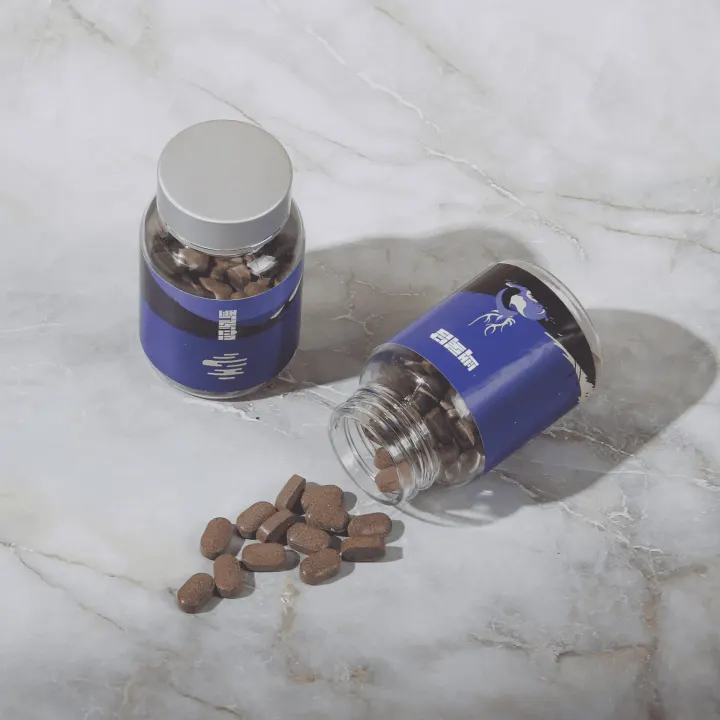
If you ignore your body's signals and only chase numbers, at some point your body will declare a strike. Please remember that thirst is your body's urgent 'water request' sent to you. If you find it difficult to manage on your own, first balancing your body's equilibrium through systematic support like Baekrokdam Tablets (백록감비정) can be a wise choice.
If you're curious about more detailed constitution-specific management methods, check them through the [Baekrokdam Internal Guide].