How to Use InBody: Tips for Accurate Body Composition

Table of Contents
I hear it all the time in the consultation room: "Doctor, my InBody results are different every time I step on the scale." It's rarely the machine's fault; in most cases, the conditions differ with each measurement. Today, I’ll explain why results fluctuate even for the same person and how to obtain data worth tracking at the gym or a Korean medicine clinic.
Why do InBody numbers change every time?
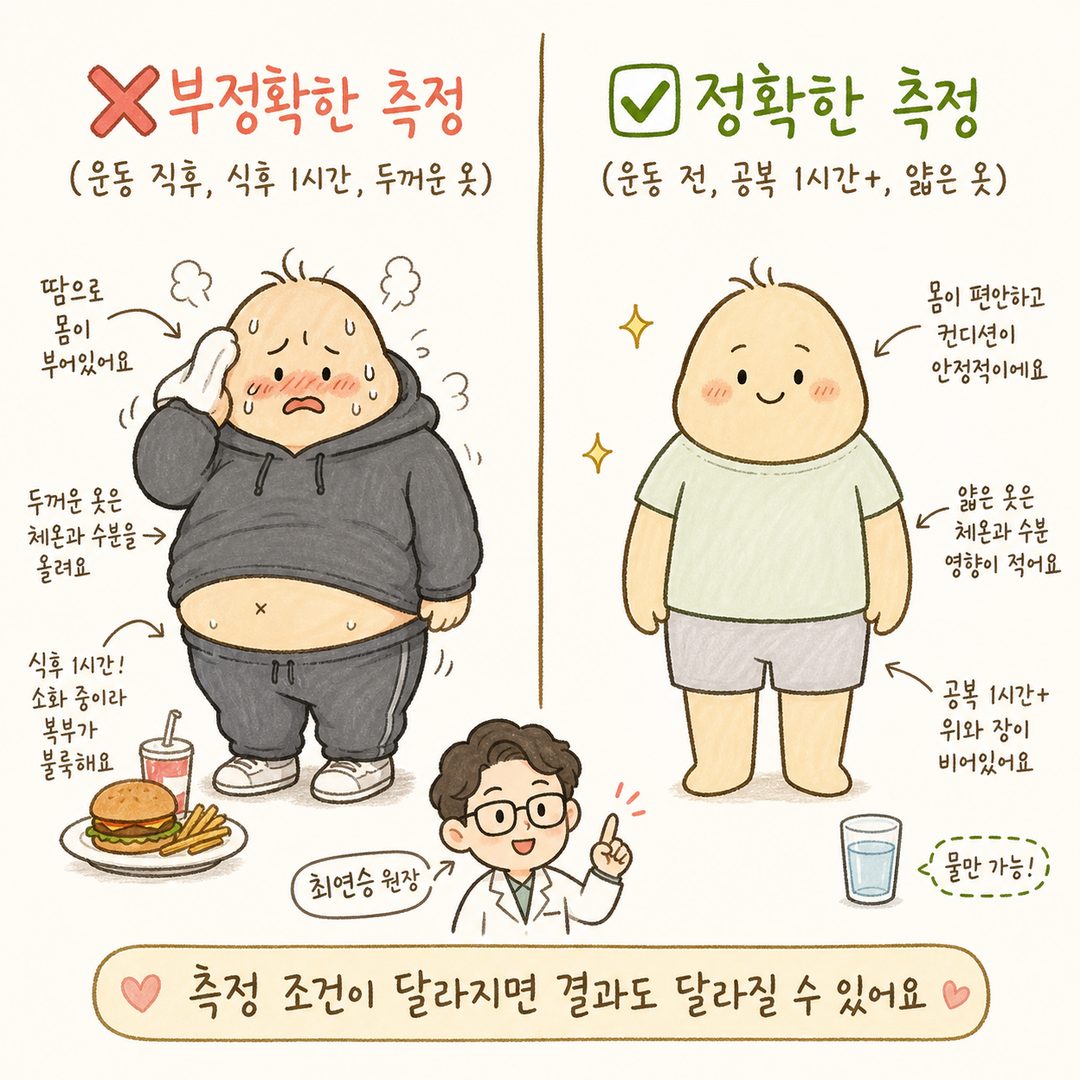
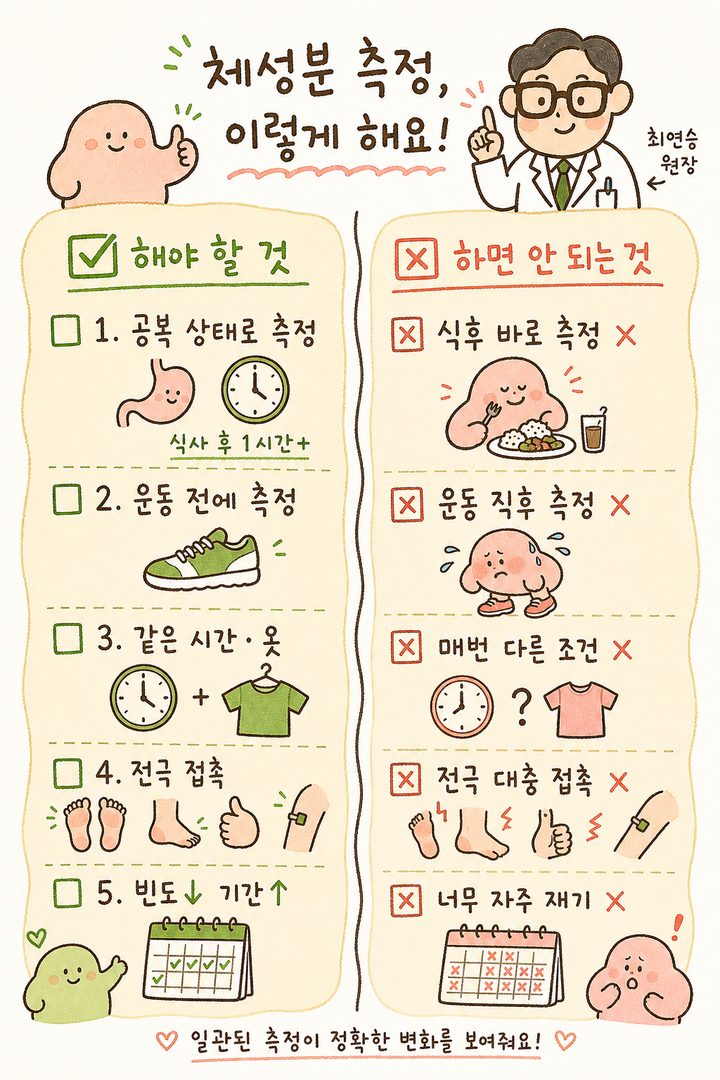
InBody is a device that estimates weight, muscle, fat, and water distribution by sending microcurrents through the body. Therefore, if the path of the current is unstable, the numbers will fluctuate as well. According to the InBody manual and measurement guidelines, measuring immediately after a meal increases error due to body water and stomach contents. Right after exercise, blood flow, body temperature, and water distribution shift, causing the values to swing. The basic principle is to measure while fasting for at least 1 hour and before exercise.
Clothing cannot be ignored either. You shouldn't think, "Oh, I lost weight!" comparing a day you wore a thick hoodie to a day you wore just a T-shirt. Please remember that measuring at a similar time in similar clothing is essential for accurate progress tracking. Metal accessories or smartwatches can also affect current flow and weight, so the InBody manual recommends removing them whenever possible.
How to step onto a gym InBody machine correctly
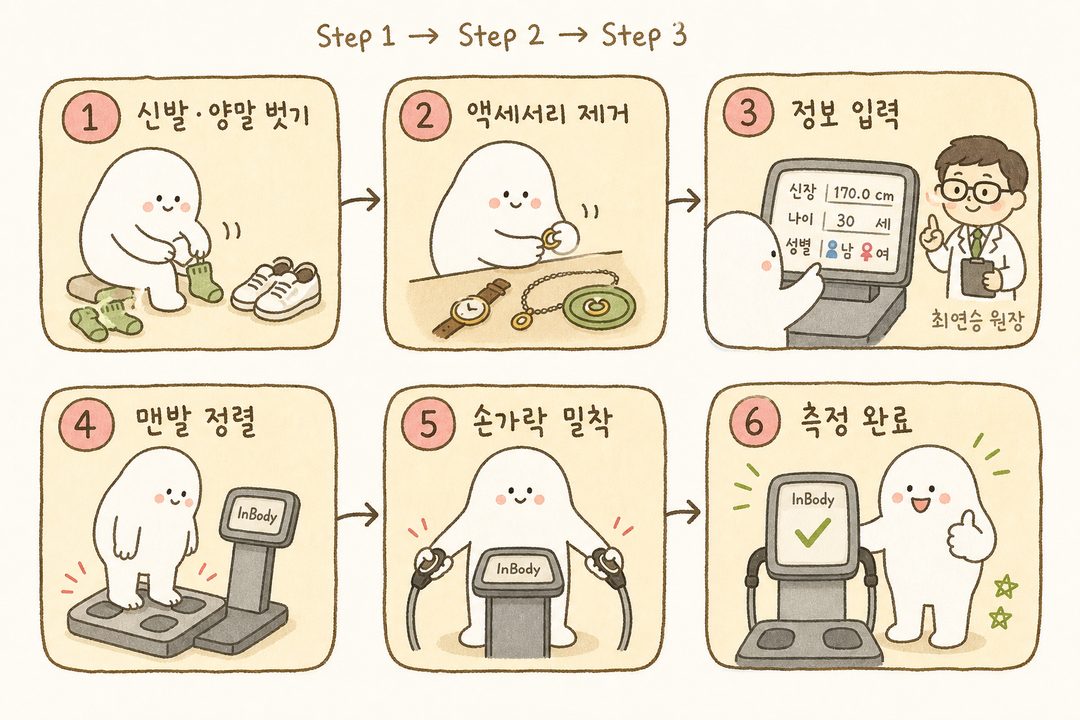
Many people feel flustered in front of the machine, but if you learn the sequence, a single measurement takes less than 10 minutes.
Remove shoes and socks completely. Socks or stockings block the flow of current, leading to errors.
Remove metal accessories (watches, necklaces, rings). If there is moisture or lotion on your hands or feet, wipe it off.
Enter age, height, and gender accurately. Some machines require you to step on first to measure weight, then enter your ID, age, height, and gender on the screen.
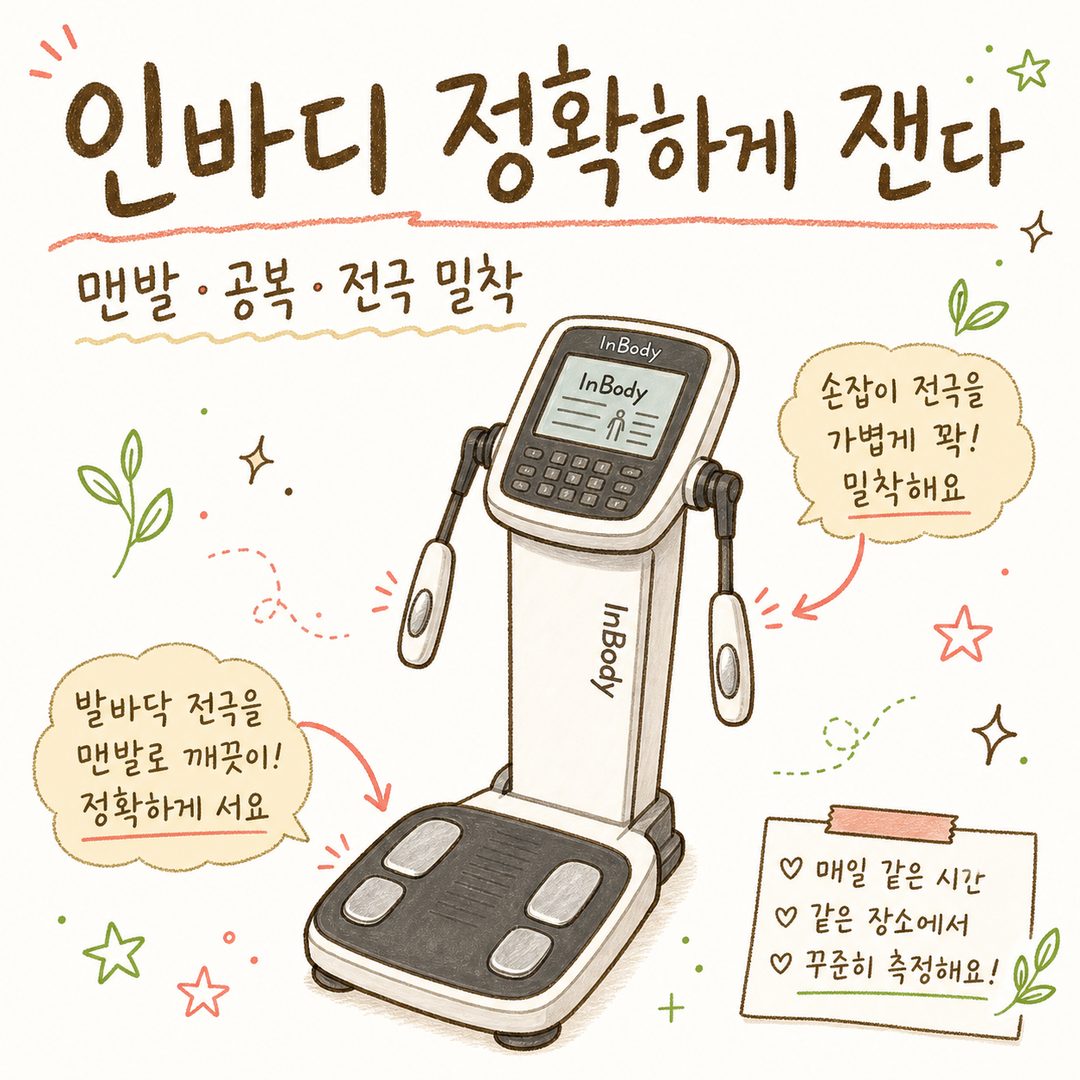
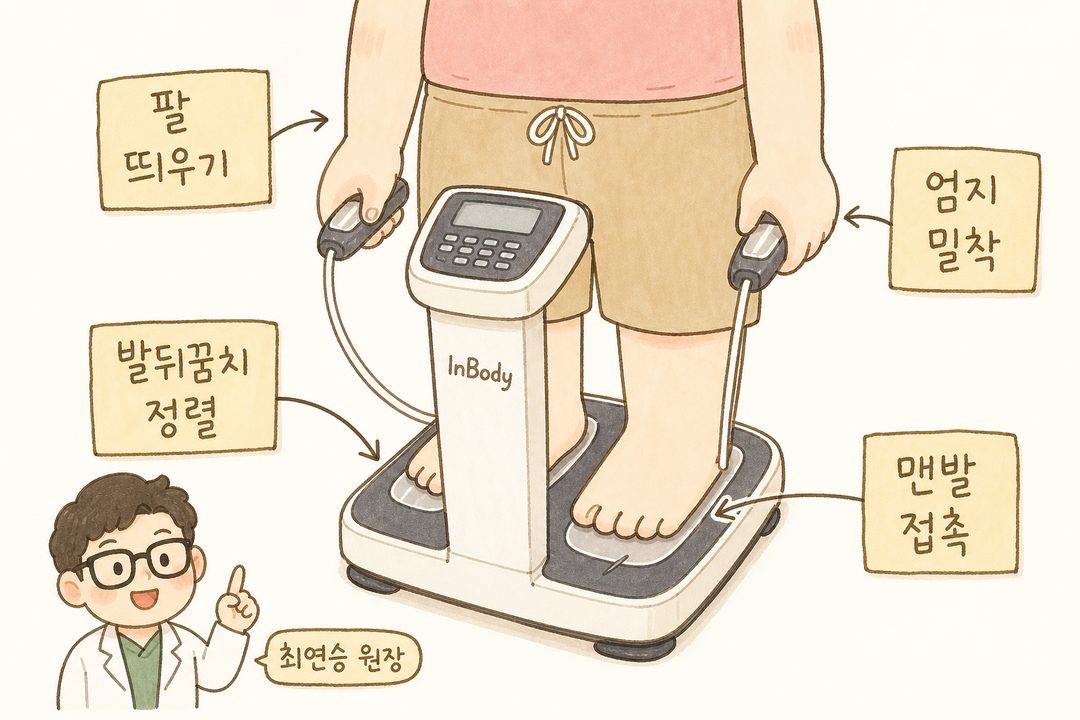
Stand barefoot on the silver foot electrodes, matching the foot shape. A commonly missed point is aligning your heels exactly with the back edge of the electrodes.
If wearing long pants, pull them up slightly so the fabric doesn't get caught between the electrode and your foot.
Lift the side handles to hip height and place your thumbs exactly on the square silver electrodes. Keep your arms straight and away from your torso. Stand still in a slightly spread posture rather than at attention.
If you don't maintain this posture, the same person can see a difference of nearly 1kg in muscle mass even when measured twice on the same day. It can be dizzying. That's why it's important to learn the proper method from the very first measurement.
You must view changes in monthly or three-month units
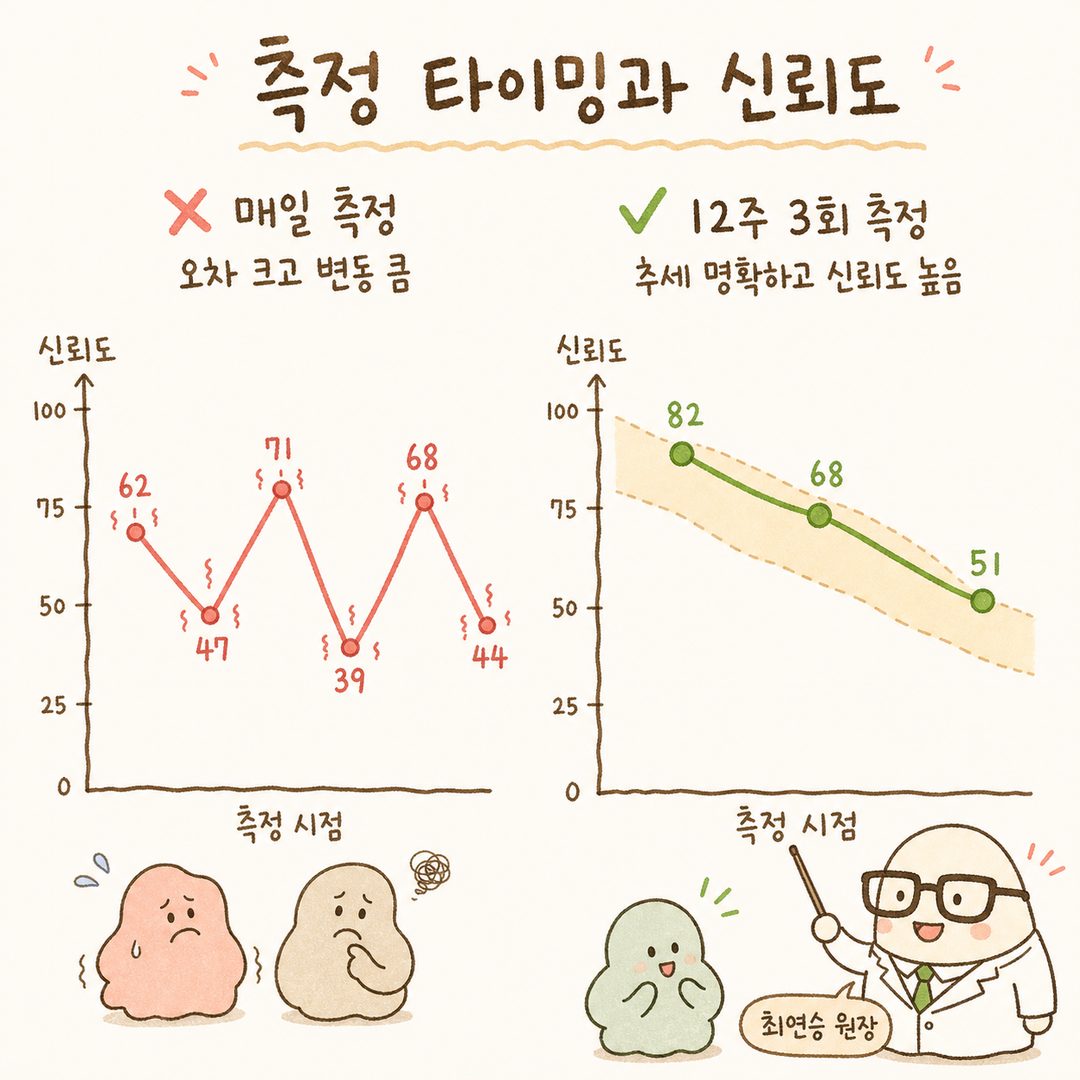
A frequent comment in the consultation room is, "My skeletal muscle mass is different again from what I measured yesterday." Honestly, daily changes are almost entirely within the realm of water weight and measurement error. InBody is a tool for viewing trends, not for comparing yesterday to today.
In our clinic, we advise those starting a Korean medicine diet program to measure three times over a 12-week period: the starting point, the midpoint, and the end. We unify conditions by measuring at the same time, in the same clothes, and while fasting. This clearly shows how much the body fat percentage has dropped and whether muscle mass has been maintained. Conversely, those who bring in daily measurement graphs tend to be swayed by the numbers and change their diet/weight management plan too quickly. I want to emphasize once more that changes are only reliable when measurement conditions are 100% controlled.
How is InBody utilized in Korean medicine?
At Baekrokdam Korean Medicine Clinic, InBody is the starting point of diagnosis, not the finish line. For two women who both weigh 70kg, one might have sufficient muscle but fat concentrated in the abdomen (a Phlegm-Dampness constitution), while another might lack muscle overall (closer to a Qi Deficiency constitution). InBody's segmental muscle and fat analysis provides very useful clues for determining these constitutions.
However, we never give prescriptions like "You must starve because you need to lose body fat" based solely on InBody numbers. We establish the herbal prescription and dietary direction after considering clinical information such as pulse diagnosis, abdominal palpation, usual eating habits, sleep, and menstrual cycles. InBody is used as an objective yardstick to confirm if "fat was truly lost and muscle was protected" when we meet again after 12 weeks.
Action points to change starting today
It’s not complicated. If you follow these five points, the reliability of your InBody numbers will increase significantly.
Measure while fasting: Measure at least 1 hour after eating. Consume water or beverages after the measurement.
Measure before exercise: Post-exercise values may appear inflated or deflated due to fluid shifts.
Same time, same clothing: Measuring immediately after waking up on an empty stomach in light clothing is the most consistent.
Thorough electrode contact: Bare feet, heel alignment, thumb electrode contact, and arms away from the body. Check your posture 3–4 times during a single measurement.
Decrease frequency, increase duration: Instead of daily, measure once every two weeks or once a month. If you are on a diet/weight management program, we recommend three measurements (start, middle, end) for a 12-week course.
Conclusion
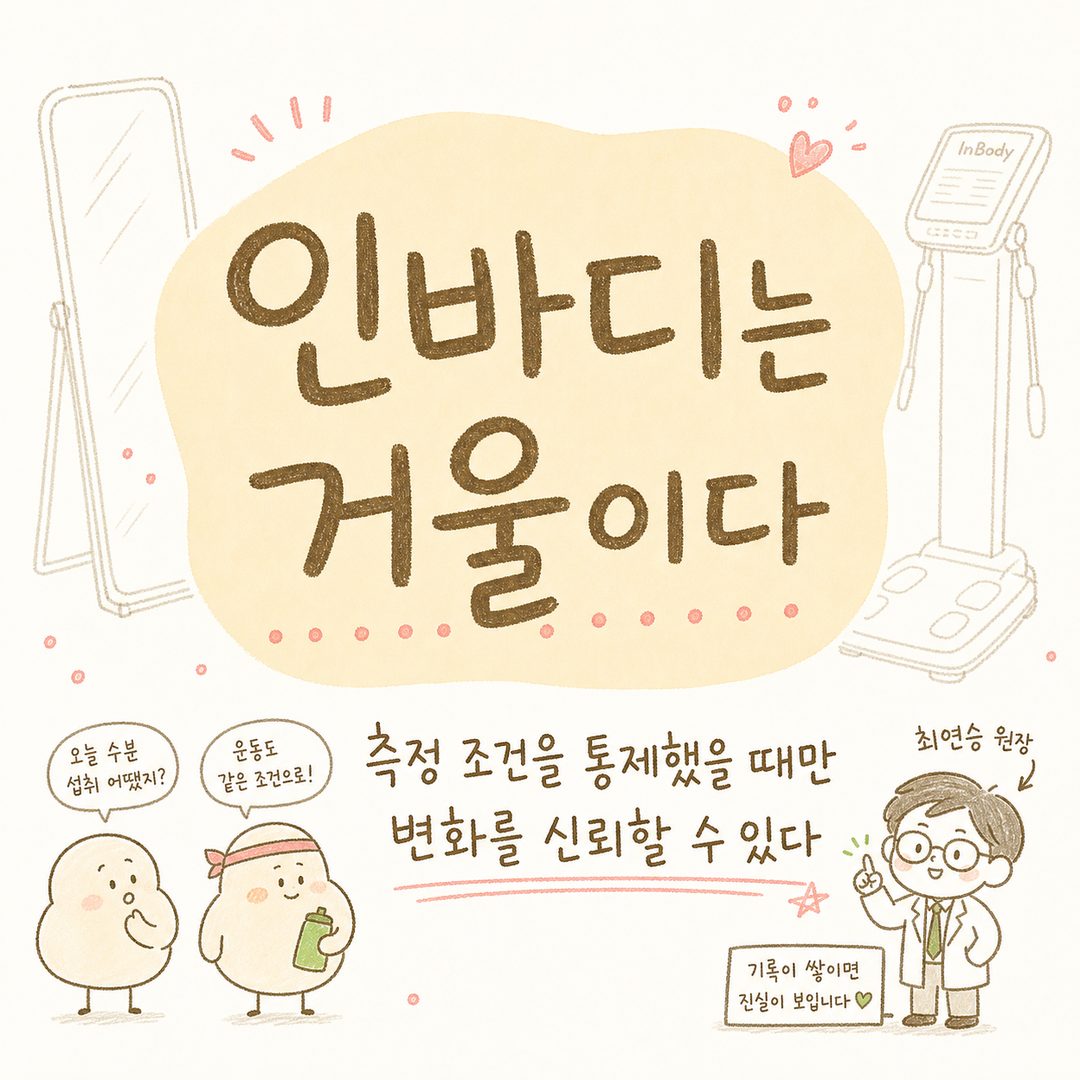
Ultimately, InBody is a "mirror that allows you to objectively see the changes in your body." Just as your appearance looks different if you look in a mirror from a different angle every day, you will be swayed by the numbers if you don't control the measurement conditions. Once you learn the sequence I’ve outlined today, you’ll be able to get consistent figures whether you measure at a gym or a Korean medicine clinic. If you would like to establish a diet/weight management strategy suited to your constitution, please bring your recent InBody results during a Baekrok Gambi-jung consultation. We will design a more precise customized prescription by analyzing your segmental muscle and fat distribution.