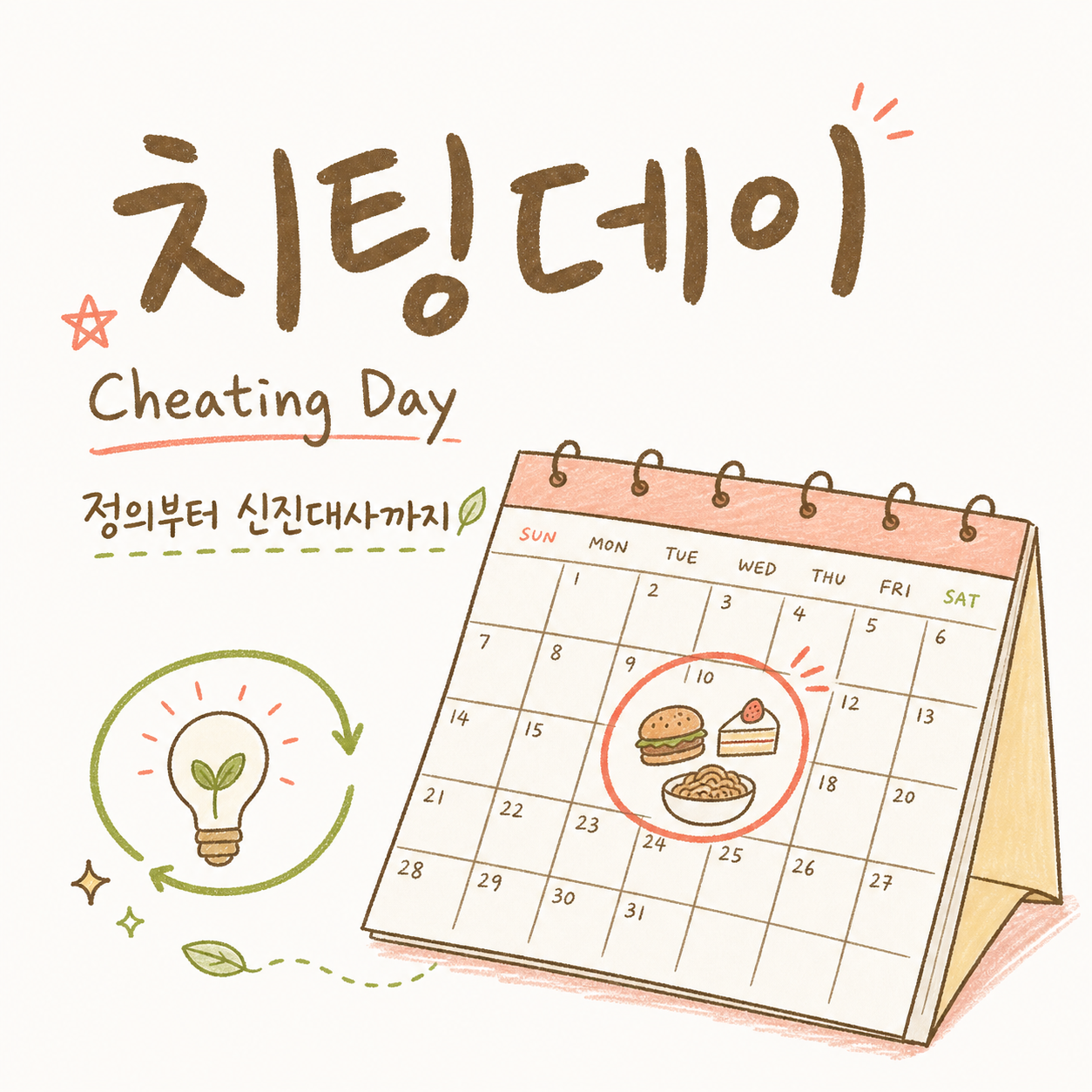
Cheat Day: Definition, Metabolism, and Misconceptions

Table of Contents
One of the most frequent questions I receive from weight loss patients is, "Doctor, can I have a cheat day?" I can tell they've already decided on the answer just by their expressions. Having struggled with the same thoughts during my own diets, I truly understand. Today, let's break down what this 'body-fooling day' actually is and whether it is truly effective.
The Meaning of "Cheat Day," Lexically Speaking
Cheat Day is a compound word combining "cheating" and "day." Lexically, it refers to a day during a diet, occurring about once every one to two weeks, when you eat the foods you have been craving. The National Institute of Korean Language suggested the refined Korean term "Meok-yo-il," a portmanteau of "eat" (meok-da) and "day of the week" (yo-il). It’s a bit cute, but surprisingly intuitive. When I mention this word to patients, it always brings a smile to their faces.

Who Exactly Are We Fooling?
While "cheat" means to deceive, the target of this deception isn't another person—it's our own body. The human body is a master of adaptation; if a caloric deficit continues for a long time, it automatically lowers the metabolic rate to conserve energy. Data suggests that in a state of prolonged caloric deficiency, the metabolic rate can drop by about 10–20%. This leads to a plateau where weight no longer drops even if you continue to eat very little.
A cheat day is a mechanism to "shake awake" that adaptation. By intentionally consuming 20–30% more carbohydrates or calories than usual on a specific day, you trick the body into thinking, "I'm not in a state of starvation yet." Hormonally, this temporarily increases leptin (the hormone responsible for appetite regulation), effectively switching off the body's "emergency mode."
Key Rules for a Safe Cheat Day
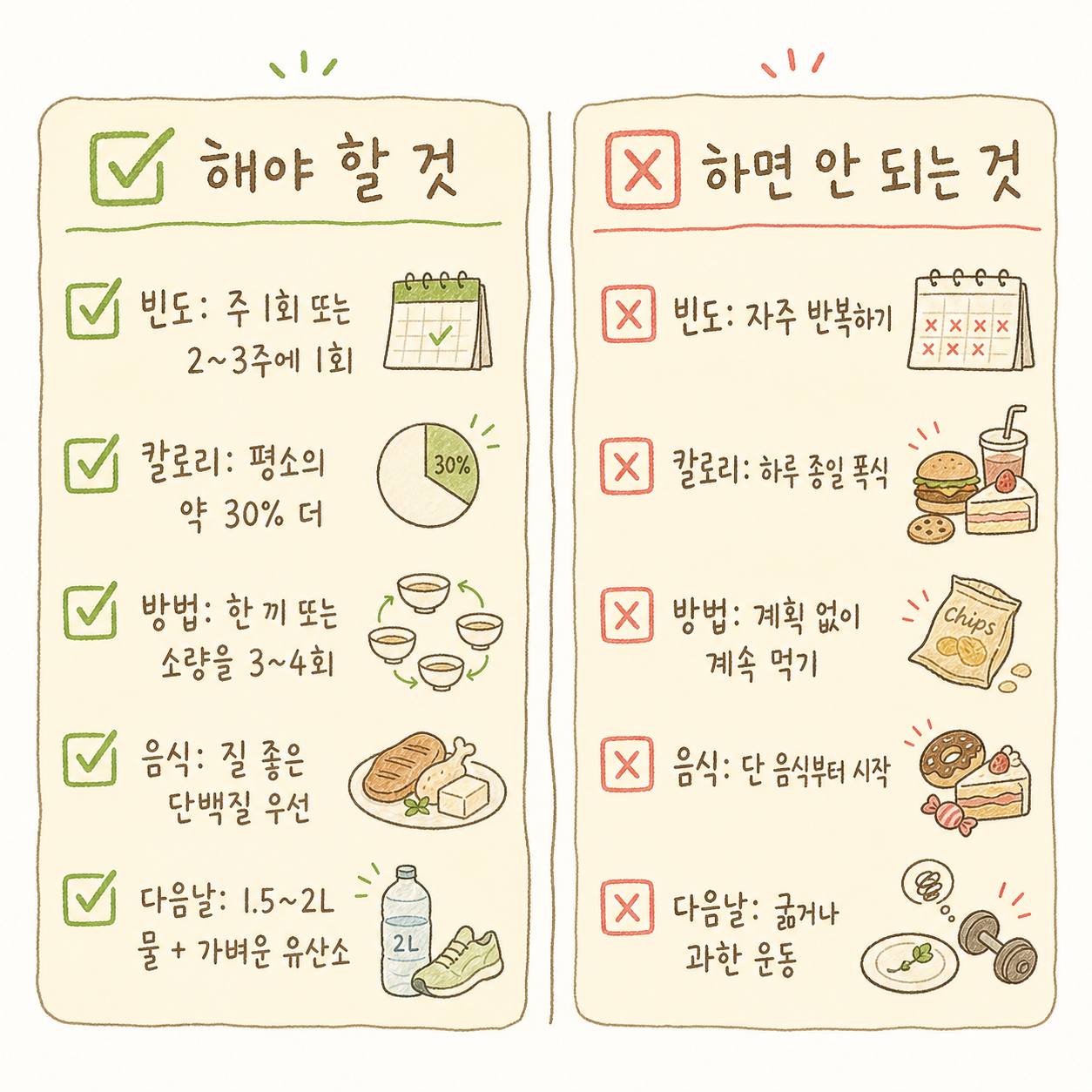
It isn't a day to eat recklessly. Based on the data, here is the ideal framework:
Frequency: Once a week, or once every 2–3 weeks during the initial intensive weight loss phase.
Calories: Approximately 30% more than your usual intake (e.g., if you usually consume 2,000 kcal, increase it by that ratio).
Method: Consume it as a single meal or divide it into 3–4 small portions.
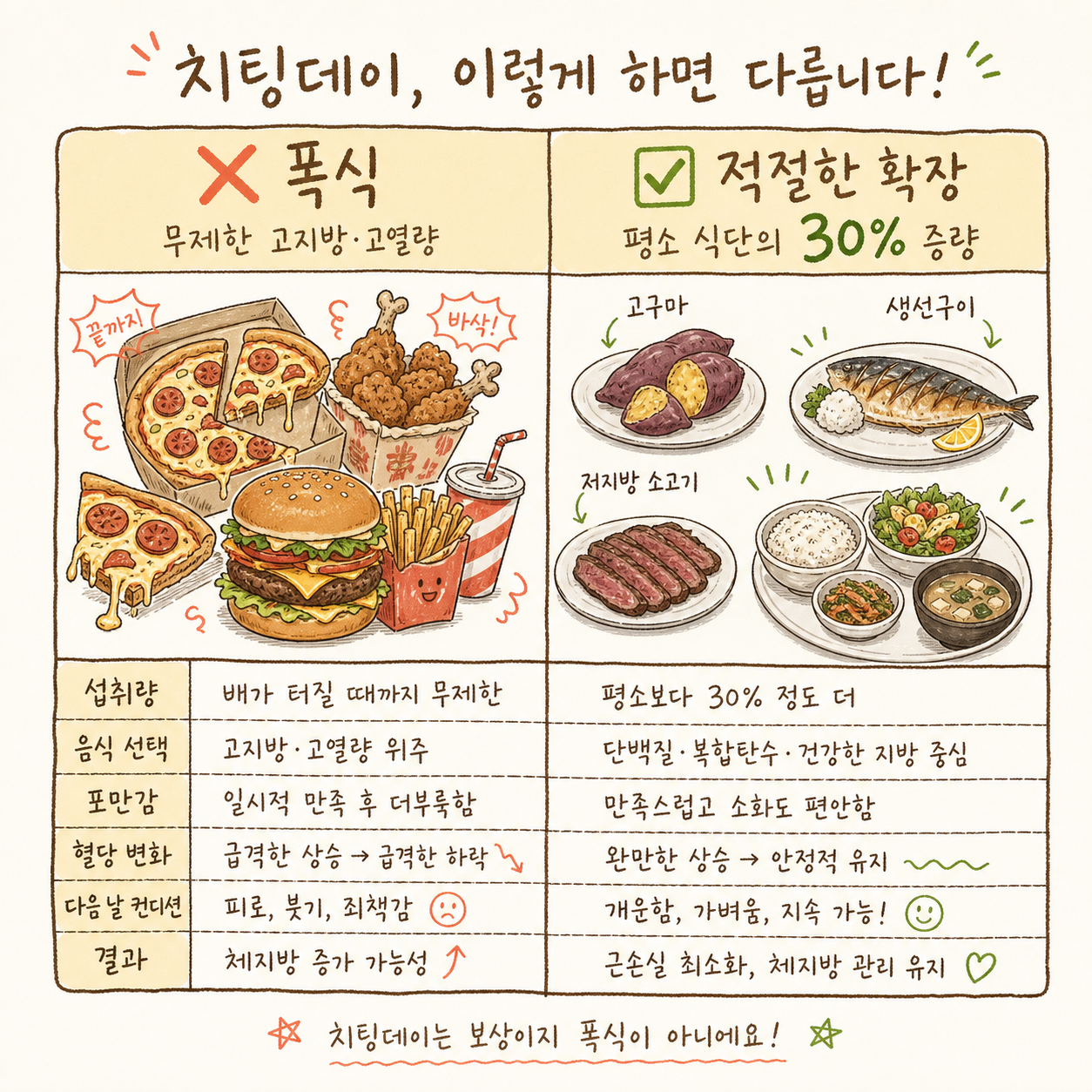
Concept: Think of it as an "expansion" of your usual meals—for example, if you usually eat 200g of sweet potato, increase it to 300g.
Food Choice: Prioritize high-quality proteins like fish rich in unsaturated fatty acids or low-fat beef.
Post-Care: The next day, drink 1.5–2L of water and perform 30 minutes of light aerobic exercise to restore your rhythm.
It looks like a checklist, but it can be summarized in one sentence: It is an "extended version" of your diet, not a "liberation day."
Common Misconceptions — "It’s an All-You-Can-Eat Day"
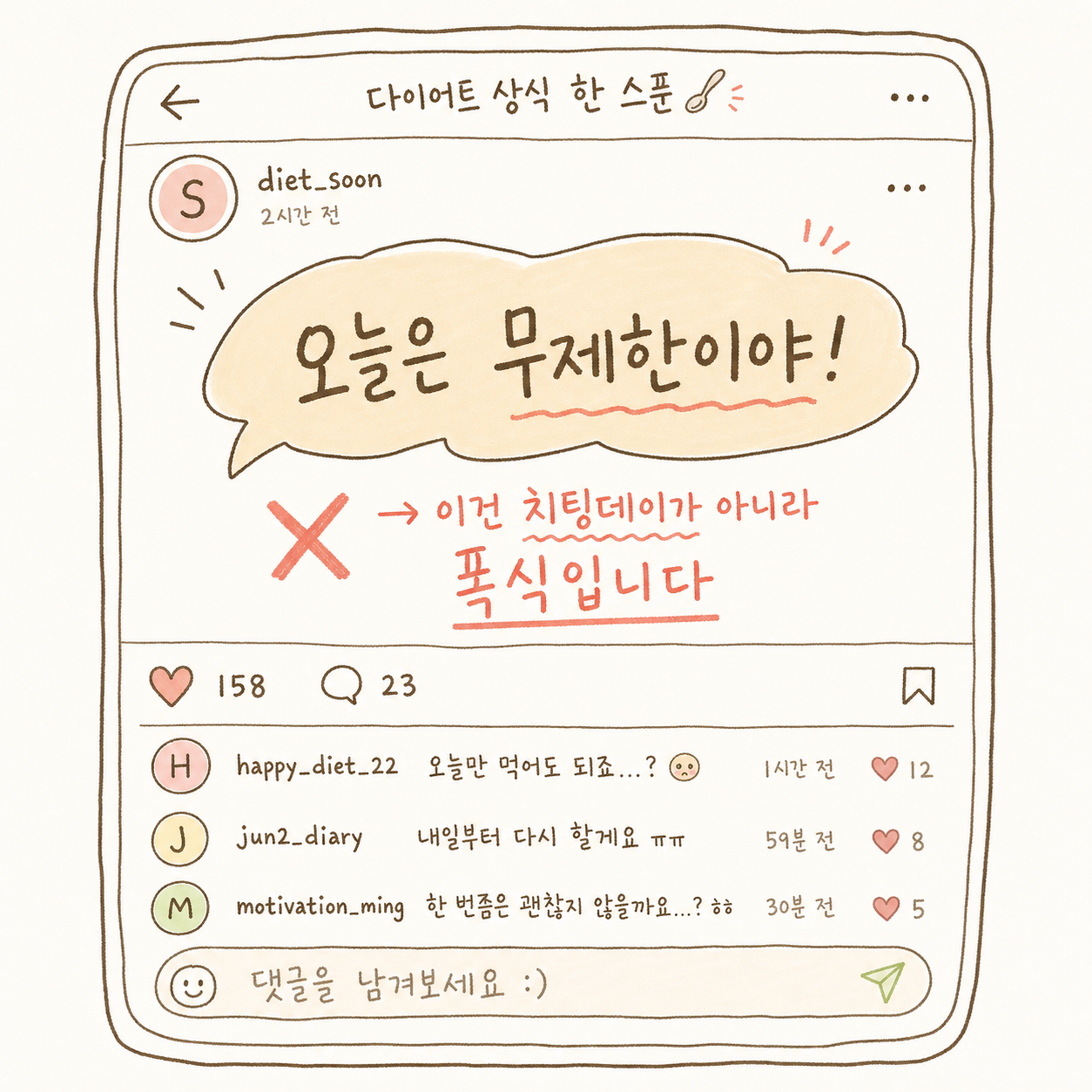
"Since it's a cheat day, I'll have a whole pizza, a whole chicken, and finish with a burger set!" This is a scenario I hear all too often in the clinic, but that isn't a cheat day—it's simply binge eating. Clinical data clearly classifies the indiscriminate consumption of high-fat, high-calorie foods as a misinterpretation. It’s dizzying just to write it down, but I’m telling you this because I’ve experienced those days myself.
The idea that "once a week is always safe" is also a common myth. According to reports citing a University of Toronto study, adolescents who repeated cheat days more than once a week showed a 20–30% higher rate of eating-related issues such as obsession, anxiety, and purging. This is a signal that both frequency and quantity must be managed carefully.
Those who have lost more than 15% of their body weight in a short period must be especially cautious. A sudden high-carbohydrate meal can lead to Refeeding Syndrome, risking arrhythmia or hypotension. If you fall into this category, do not decide on a cheat day alone; it is safer to consult with us in the clinic first.

Does It Actually Work for Weight Loss?
This is the most important question. Data suggests three main benefits:
First, it temporarily boosts metabolism. Increasing carbohydrates by 20–30% raises leptin levels, signaling the body to exit its "emergency conservation mode."
Second, it helps break through plateaus. Reports show that applying a cheat day after 2–3 weeks of consistent caloric restriction can restart stalled fat loss. Sometimes, restoring hormonal rhythm is more efficient than forcing yourself to starve further during a plateau.
Third, psychological satisfaction cannot be ignored. Dieting is a marathon; if you suppress yourself for months without a "breathing hole," you may eventually collapse into a massive binge. Having a scheduled reward period reduces obsessions like food addiction.
However, all data emphasizes: Within one day, and within a set amount. Crossing that line only increases fat storage and leads straight to diet failure. Therefore, a cheat day is a tool, not a reward. A tool only works when you know how to use it.
It is also worth noting that the effectiveness of a cheat day only matters if your usual diet is faithful. If you are already eating loosely on a regular basis, there is no need for a separate cheat day. In that case, every day is essentially a "mini cheat day."
In conclusion: A cheat day is a strategy to fool the body and awaken metabolism, not a time to release all restraint. Keep the frequency to once a week or once every 2–3 weeks, the amount to about 30% more than usual, and consume it in one meal or small portions. Following these three rules is enough to help you break through a plateau. However, the "safety zone" varies significantly depending on your constitution and weight loss speed. For some, once a week works well; for others, even once every three weeks is tight. If you are currently on a weight loss program using Baengnok Gambi-jeong, we can help you set the timing and menu for your cheat days during your consultation. Don't struggle alone—feel free to ask during your next visit.