
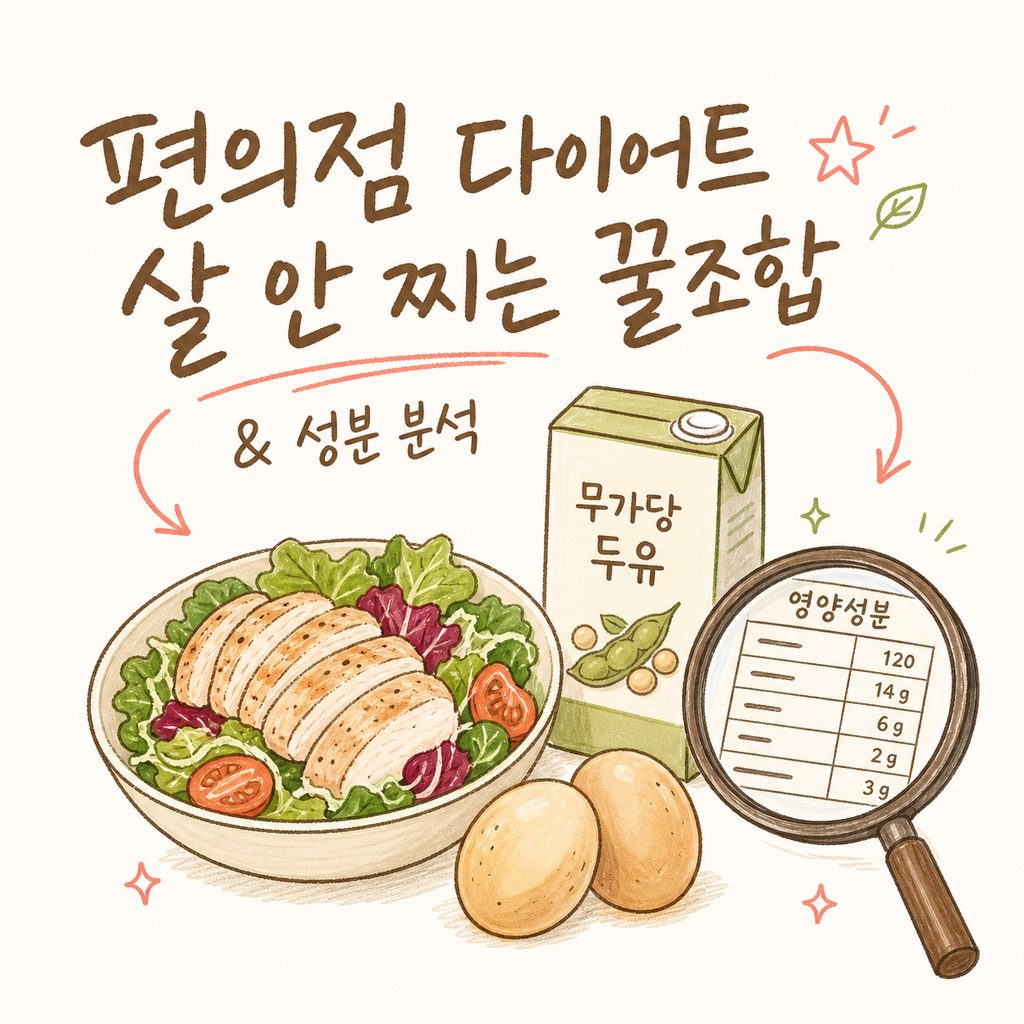
Convenience Store Diet: Protein Snacks & Meal Picks

Table of Contents
- Are Convenience Store Foods Always the Enemy of Weight Management?
- How Small Choices Create Major Calorie Differences
- Convenience Store Meal Strategy from a Korean Medicine Perspective
- Convenience Store Meal Combinations to Use Starting Tomorrow
- Foolproof Convenience Store Snack Selection
- Smart Shopping Habits to Prevent Overeating
We've all been there—standing in a convenience store trying to figure out what to eat for lunch. Committed to your diet but can't always prepare healthy meals? Here's how to make smart convenience store choices.
Are Convenience Store Foods Always the Enemy of Weight Management?
Many people automatically associate convenience store food with high calories and high sodium. But take a closer look at today's convenience store shelves, and your perspective might change. With the rise of single-person households and health-conscious consumers, low-calorie, high-protein products have become incredibly diverse. The problem isn't the convenience store itself—it's what you choose within it.
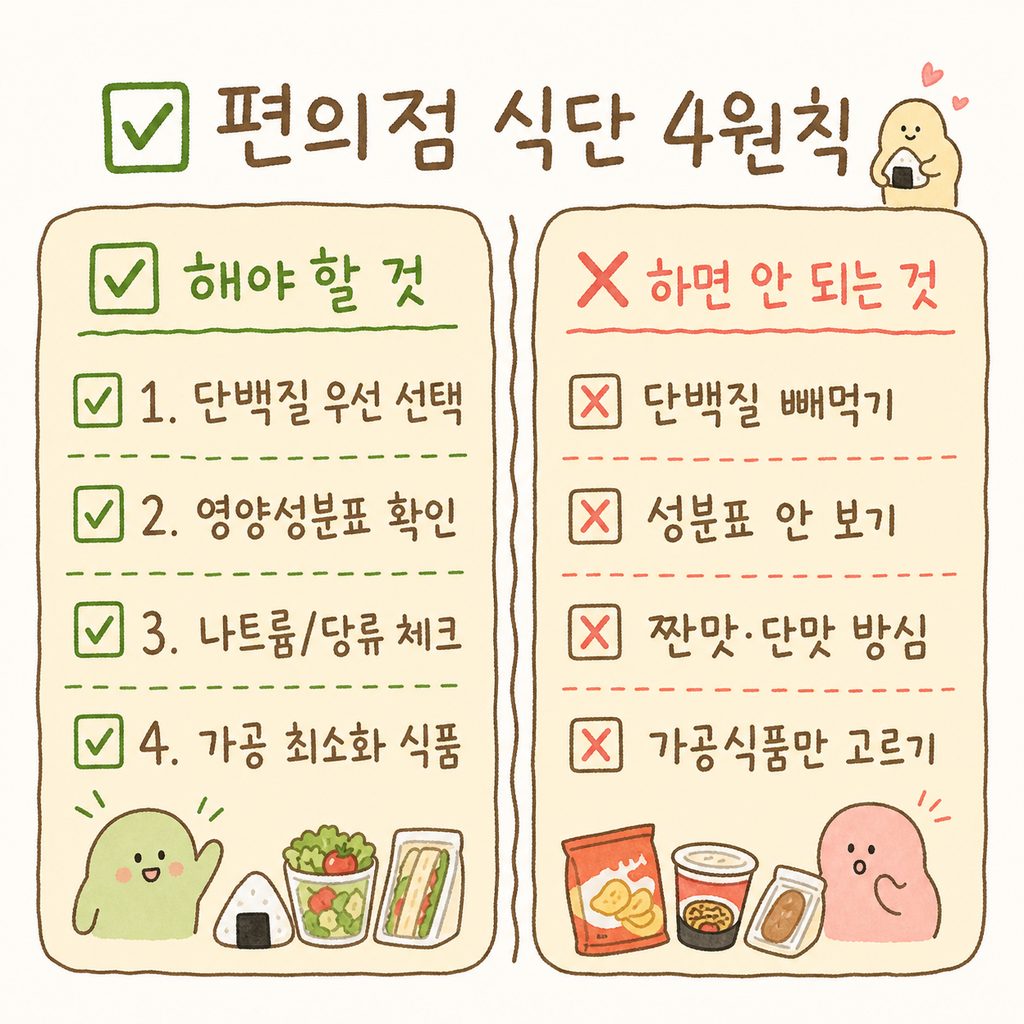
Entering a convenience store on an empty stomach triggers your brain to seek out high-calorie snacks for immediate energy. Unconsciously grabbing chips or刺激性食品 (stimulating foods) is what sabotages your weight management efforts. By establishing principles beforehand, healthy weight management at convenience stores is absolutely achievable. The four principles I emphasize to patients in my clinic are: prioritize protein, check nutrition labels, monitor sodium and sugar, and choose minimally processed foods.
How Small Choices Create Major Calorie Differences
An unconsidered menu selection can significantly alter your daily total calorie intake. The prime example is ramen. Regular cup noodles use deep-fried noodles, and adding soup brings calories to around 500kcal.
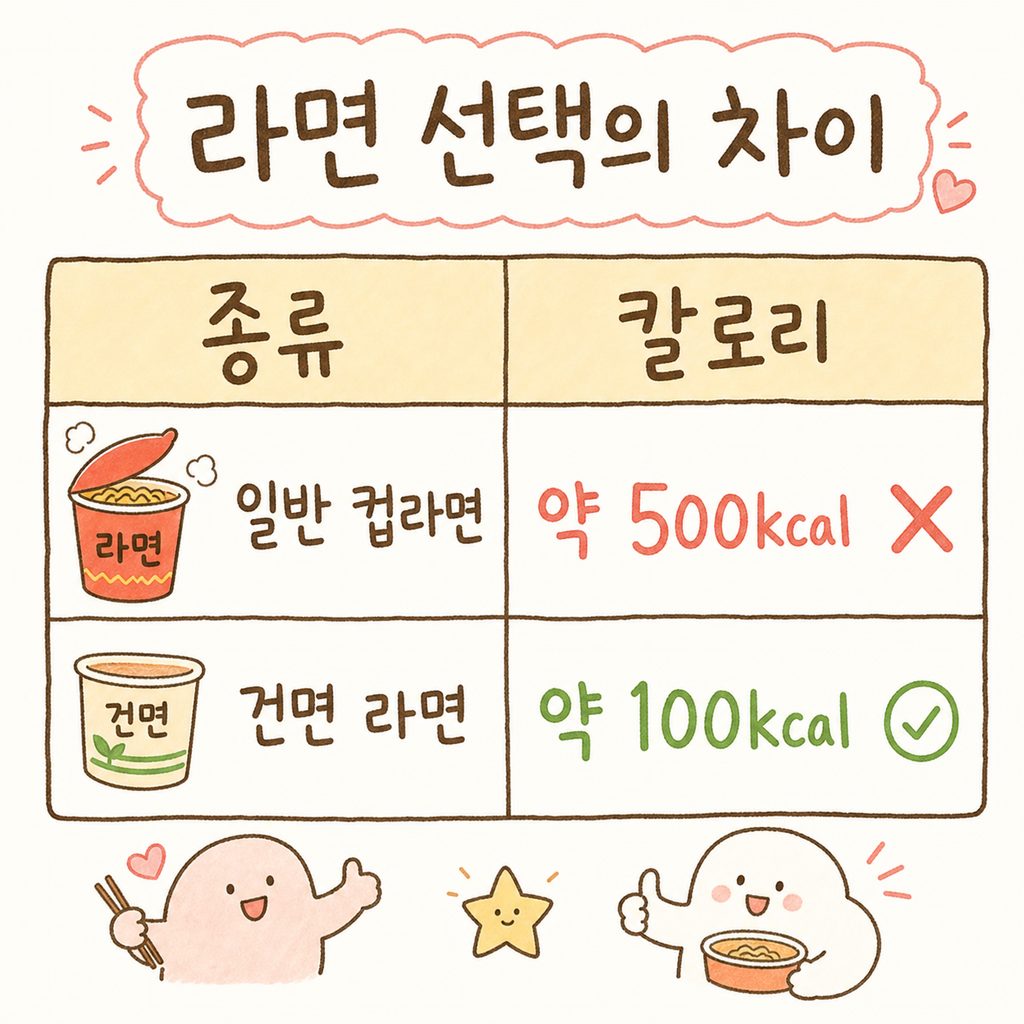
Choosing dried noodles that are cooked and then air-dried changes the story. Non-fried ramen drops calories to around 100kcal. With lower fat content, these have become popular among health-conscious consumers. However, even with dried noodles, sodium levels are similar to regular ramen, so be cautious about finishing all the soup. Adding one boiled egg (approximately 50kcal) fills in the protein that ramen lacks, making the nutritional balance much better.
Convenience Store Meal Strategy from a Korean Medicine Perspective
In Korean medicine, we don't view weight management merely as a calorie-counting game. The key lies in how to eliminate accumulated waste products, known as damsip (痰濕), and how to boost metabolism. A convenience store diet centered on processed foods can easily cause water retention and metabolism stagnation due to artificial additives and high sodium.
That's why when I recommend convenience store meals, I suggest foods where the original ingredient form is preserved. The shorter the processing stage, the less energy your body expends on digestion, and nutrient absorption becomes more efficient. Especially to maintain muscle mass and basal metabolic rate, quality protein is essential—simple options like eggs and soy milk available at convenience stores become excellent alternatives.
Convenience Store Meal Combinations to Use Starting Tomorrow
So what should you actually eat? Let me share two breakfast combinations (targeting 300~400kcal) that I recommend.
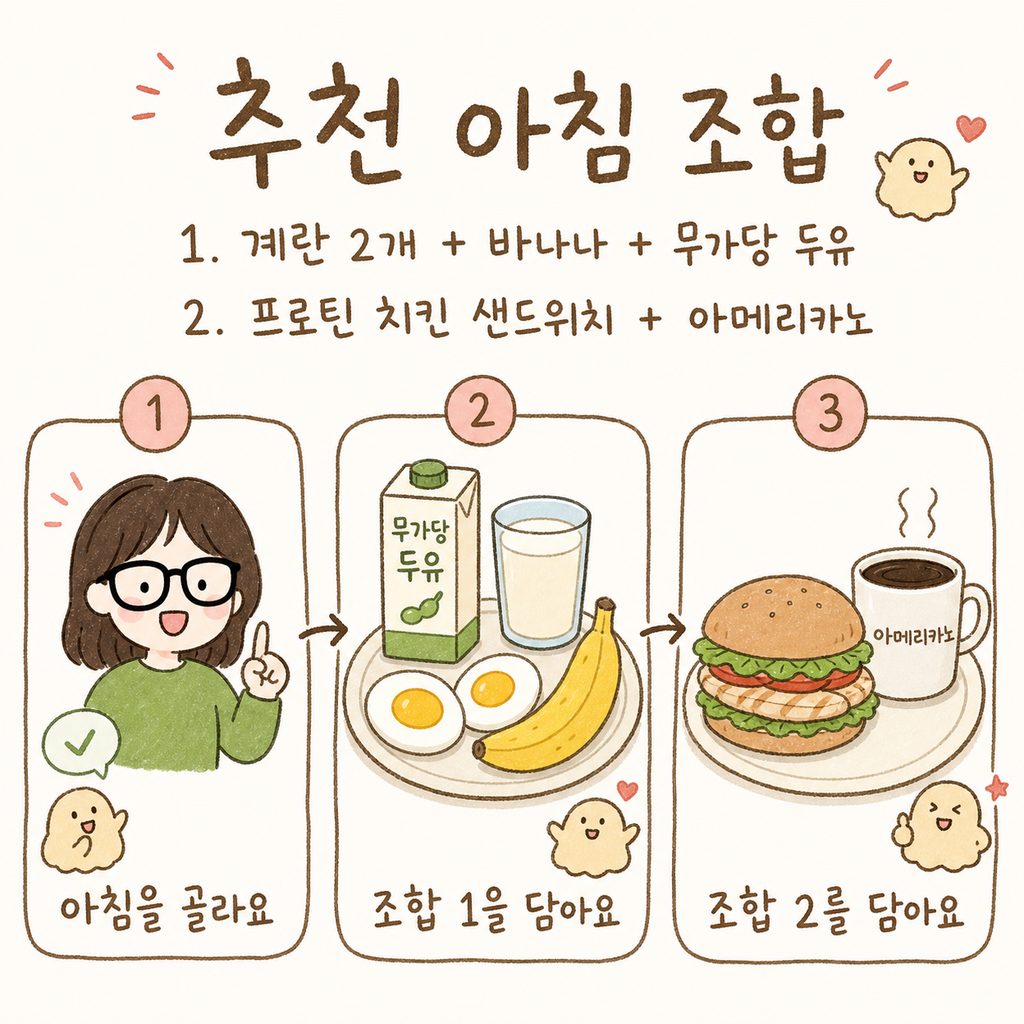
The first is the protein and fruit combination. Two grilled eggs (approximately 140kcal), one banana (approximately 90kcal), and one pack of unsweetened soy milk (approximately 90kcal) come together for a total of approximately 320kcal—light but hearty enough to start your day right. Grilled eggs are a complete protein containing all essential amino acids, making them truly excellent for single households to stock up on.
The second is the high-protein sandwich combination. Try pairing a protein chicken sandwich (approximately 320kcal, protein 17g) with an unsweetened American coffee (0kcal). With a total of approximately 320kcal, you match the calories while increasing protein content for prolonged satiety.
Foolproof Convenience Store Snack Selection
Snacks eaten between meals to satisfy hunger actually determine the success or failure of your weight management. My top recommendation is plain Greek yogurt. High in protein with almost no sugar, it's excellent for quelling hunger. When cravings hit, eating this instead of chips provides surprisingly high satisfaction. However, fruit-flavored or honey-added products significantly jump in sugar and calories, so make it a habit to check nutrition labels for unsweetened or plain labels.
Boiled eggs and smoked eggs are also excellent choices. One to two eggs quickly alleviate hunger, and since no preparation is needed, they're convenient to eat on the go. One caution—products with mayonnaise or separate sauces dramatically increase fat and calories. Try to choose plain, simple egg formats without sauce.
Smart Shopping Habits to Prevent Overeating
My final tip is to pay attention to packaging sizes. Mini-packs individually wrapped at approximately 100kcal per bag greatly help prevent unconscious overeating.
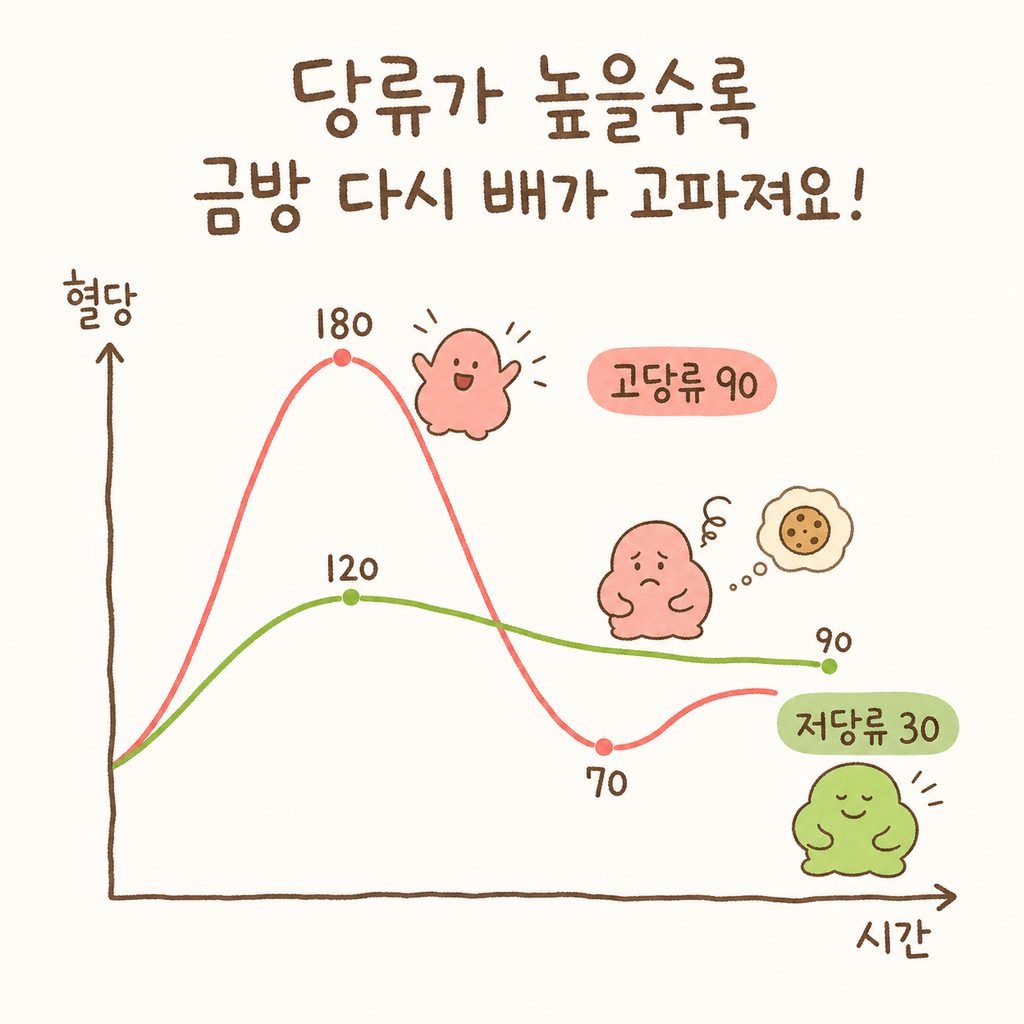

Don't be afraid to read the nutrition facts on product back labels. What deserves more attention than the calorie number itself is sugar and sodium. Products with excessively high sugar spike blood glucose and then crash, making you hungry again soon after. Just understanding this principle and selecting accordingly makes for an intelligent weight management approach at convenience stores.
Even I sometimes rely on convenience stores when time is tight between consultations. Every time, I apply the principles I shared today, and I definitely notice less bloating and easier condition management.
While establishing the basics with a convenience store diet, if you also join the Baekrok Gambi-jung program, you can expect even better results as metabolic efficiency increases. Try one of the combinations I shared this week, and be sure to tell me about any changes in your body at your next consultation. I cheer for your healthy weight management.
References