
Lower Body Weight Management: Yoga, Strength, and Diet

Table of Contents
In the clinic, I often meet patients who are frustrated, asking, "Why is my lower body staying the same when I'm losing weight everywhere else?" This lower body obesity type, where fat accumulates in the hips, thighs, and calves or involves severe edema, is particularly common among women.
Why does fat accumulate specifically in the lower body?
Lower body obesity isn't caused simply by eating too much. Multiple factors are intertwined. First, genetic factors and the influence of female hormones play a significant role. Additionally, prolonged sitting habits or a lack of exercise often hinder circulation in the lower body.
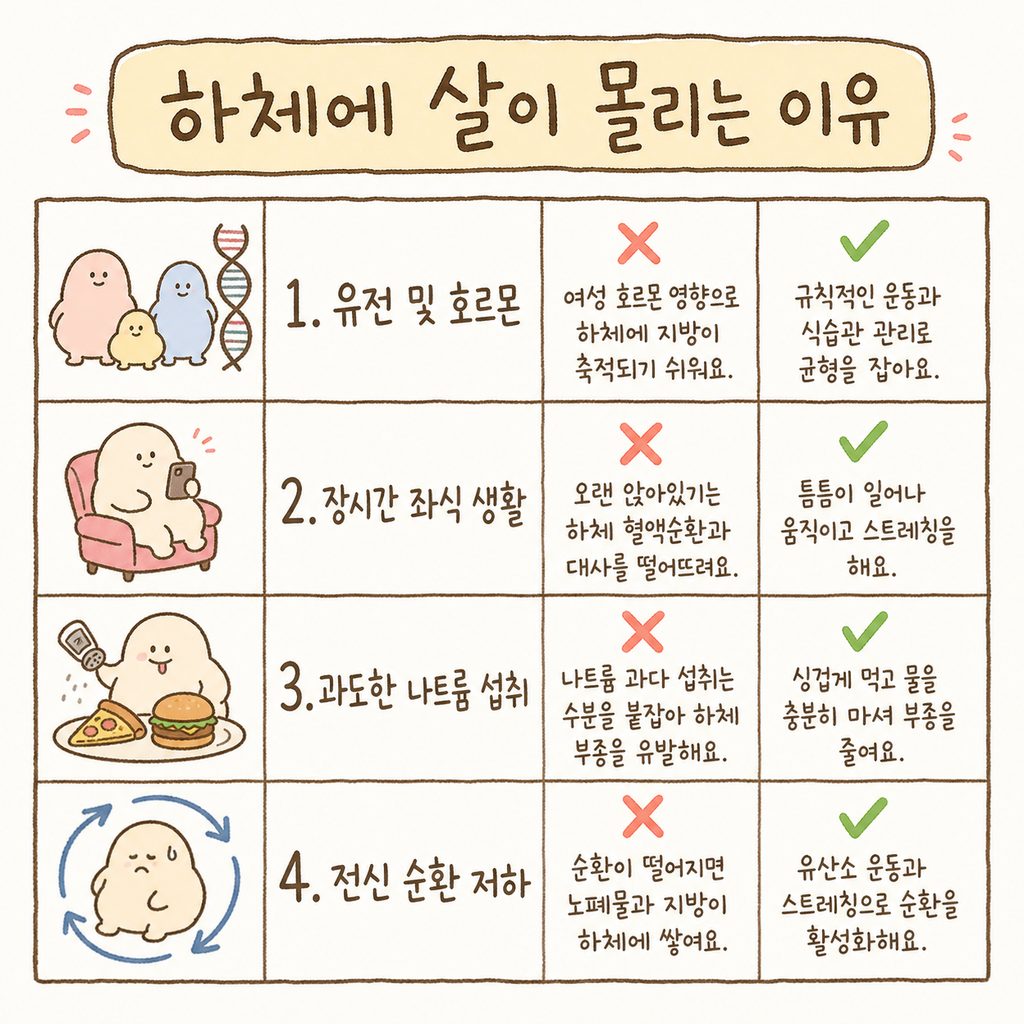
Consuming salty foods leads to water retention, causing edema. When this cycle repeats, it creates an environment where fat accumulates more easily in the lower body. Many patients I see in the clinic are affected by these lifestyle habits.
Is 'spot reduction' for the lower body difficult?
Let me be clear: realistically, it is difficult to target and eliminate fat from only one specific part of the body. Many people hope to lose thigh fat through 'lower body yoga' or specific stretches, but yoga and stretching are tools that provide greater help with posture correction, flexibility, and stress management.
A realistic strategy is to focus on overall body fat reduction as the foundation, while incorporating lower body strength training and diet management. Lower body fat will only clear away when total body fat decreases. Strength training must be added to this to create a toned line.
The actual effects of yoga on body composition improvement
This doesn't mean yoga isn't helpful for weight management. On the contrary, it serves as an excellent supplementary tool for improving overall body composition. A study on a 12-week yoga program for obese adolescents showed a significant decrease in BMI and Body Fat Mass (BFM) in the yoga group.
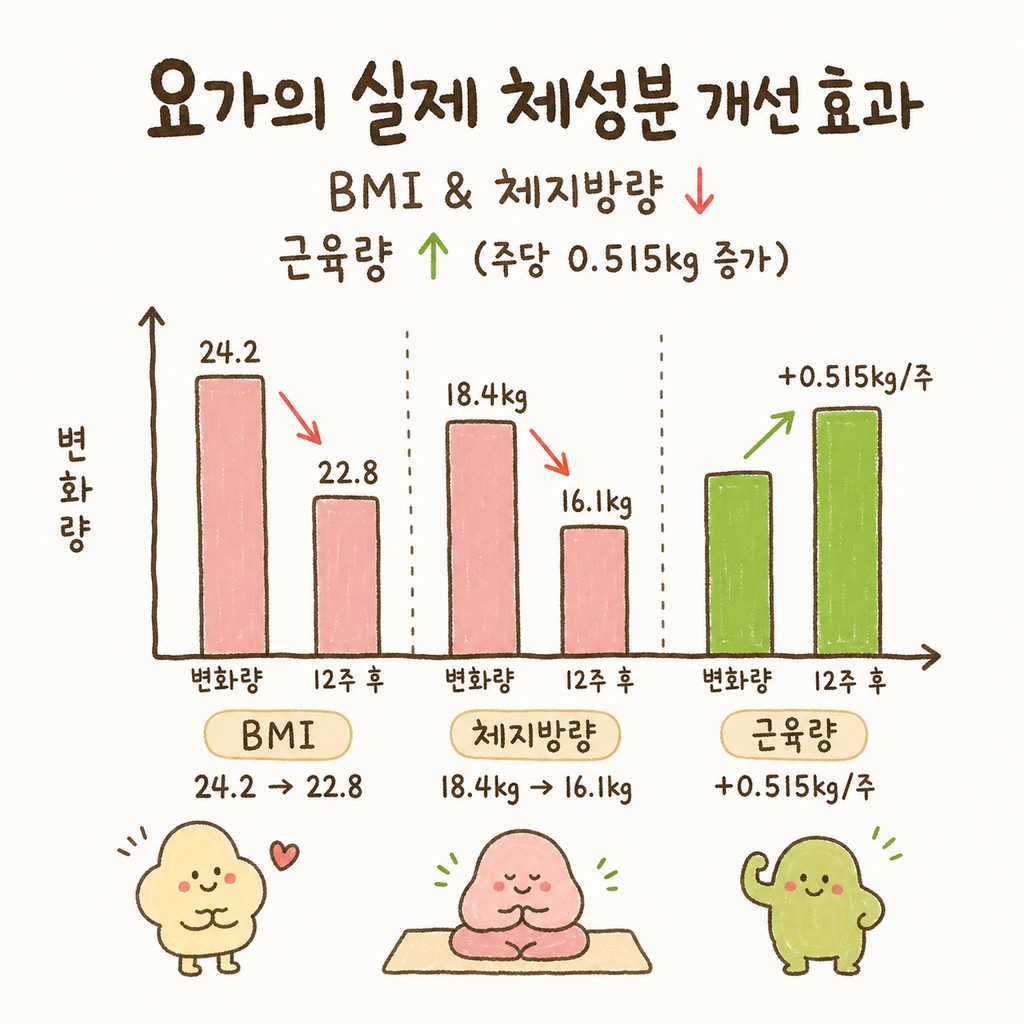
What is noteworthy is the change in muscle mass. According to the study, the yoga group showed statistical significance with muscle mass increasing at a rate of 0.515 kg per week. Yoga is not just an exercise for flexibility; it helps improve overall body composition by reducing fat and increasing muscle.
The integrated approach at Baekrokdam Clinic
In Korean medicine, we don't just look at the amount of fat. We examine the circulation of Qi and Blood along with the state of edema. To resolve lower body obesity, an integrated approach is most effective: reducing overall body fat through aerobic exercise, strengthening lower body muscles with yoga to increase elasticity, and improving edema through posture correction and massage.
If the pelvis is misaligned, lower body circulation will inevitably decrease. Restoring circulation through pelvic correction is the true starting point for change. During consultations, I emphasize lifestyle habits that aid lower body circulation to my patients.
Lower body management points you can start right now
Here are specific points you can put into practice starting today.
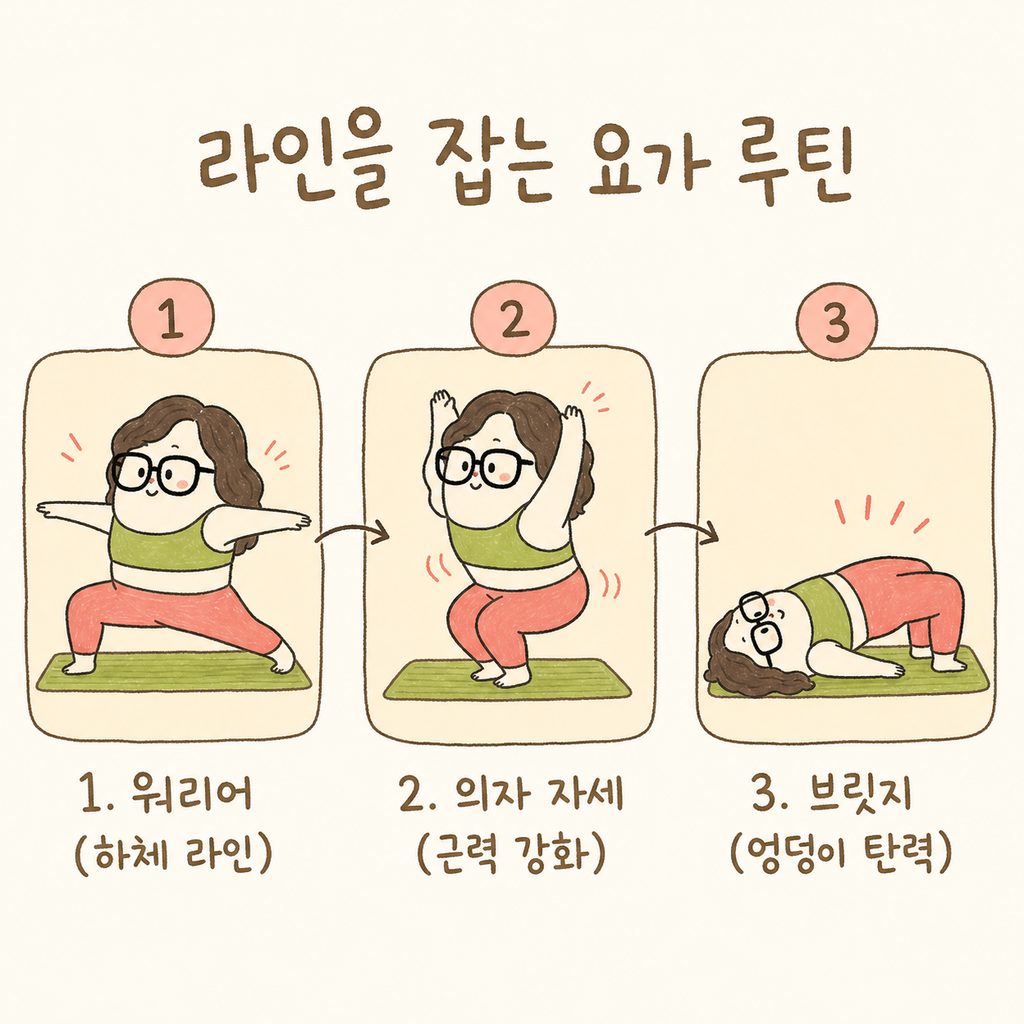

1. Combination of strength training and aerobic exercise To define the lower body line, strength exercises such as squats, lunges, deadlifts, and hip thrusts are excellent. Create a routine of 3 sets of 10 reps for each exercise, with about 1 minute of rest between sets. For aerobic exercise, consistently walk or cycle for at least 30 minutes, and if weight loss is your goal, aim for at least 300 minutes of moderate-intensity exercise per week.
2. Utilizing effective yoga poses Focus yoga on activating metabolism and refining body lines rather than just calorie consumption.
Warrior Pose: Rotate your legs 90 degrees and hold for 30 seconds to 1 minute to improve thigh and hip lines.
Chair Pose and Bridge Pose: Perform 3 sets of 1 minute each to strengthen lower body muscles and increase hip elasticity.
Performance Tip: Practicing yoga for 30–60 minutes on an empty stomach in the morning increases the fat-burning effect.
3. Sustainable diet management Excessive fasting does not last long. A reduction of about 500 kcal per day is appropriate. Aim for a weight loss of 2–3 kg per month, and if you feel hungry at night, develop the habit of drinking water or tea, or limiting yourself to a light snack under 200 kcal.
Lower body weight management is not a task that ends in a short period. It is a process of changing your body's circulation system. Rather than feeling rushed, I hope you practice these steps one by one with a heart that cares for your body.
If managing on your own feels overwhelming or if you need more detailed help tailored to your constitution, try the Baekrok Gambi-jung program. You can expect much more efficient and healthy results. Please try it out and feel free to let me know how it went during your next visit.
References