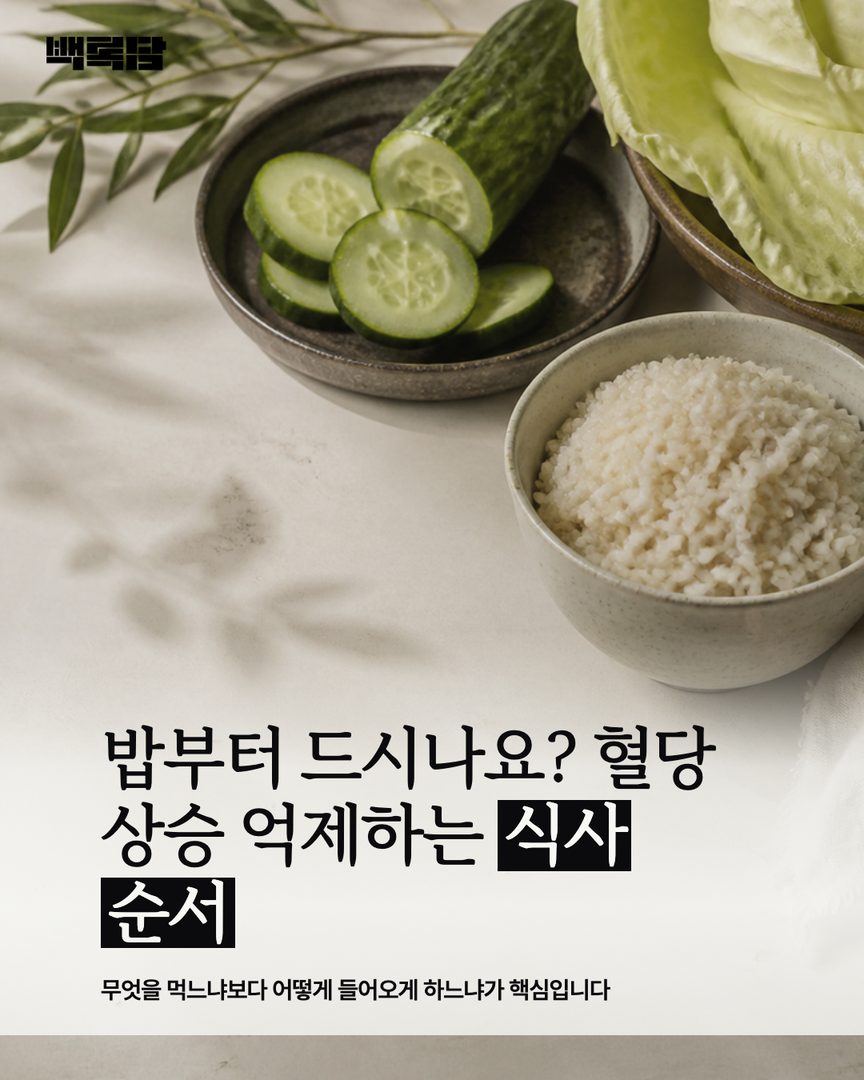
Start with Rice? Blood Sugar Spike Prevention & Meal Order Secrets

Table of Contents
- The Signal Blood Sugar Spikes Send to Metabolic Health
- Finding Blood Sugar-Suppressing Ingredients on Your Pantry Shelf
- The Difference in Blood Sugar Levels That Meal Order Makes
- Observing Eating Habits Through the Clinic Practice Lens
- Blood Sugar Defense Routine to Implement Starting Today
- References
When you go to a restaurant, what's the first thing you reach for? Typically, it's a steaming bowl of rice or noodles that you take a big bite of to start your meal. But this small habit can trigger post-meal fatigue and hunger pangs, signaling the beginning of a blood sugar spike.
Many believe that managing blood sugar requires expensive health supplements or completely cutting out carbohydrates. However, the key is not just what you eat, but how to slow the rate at which glucose enters the bloodstream. Today, I'll share practical methods to suppress blood sugar spikes using readily available ingredients and meal sequencing—approaches I often discuss in clinical practice.
The Signal Blood Sugar Spikes Send to Metabolic Health
When we consume carbohydrates, they're broken down into glucose that enters the bloodstream. A rapid spike in blood sugar within a short time is called a blood sugar spike. When this occurs repeatedly, our pancreas must secrete large amounts of insulin to address it.
The problem arises when this process becomes habitual. The pancreas becomes overworked, increasing the risk of insulin resistance, where cells no longer respond properly to insulin. According to nutrition experts, insulin resistance is known as one of the major causes of type 2 diabetes. It's not simply about one number rising—it's about the collapse of your body's entire metabolic rhythm.
Finding Blood Sugar-Suppressing Ingredients on Your Pantry Shelf
You don't need an expensive diet plan. Affordable ingredients easily found at local supermarkets can serve as excellent blood sugar defenses. The key is arranging dietary fiber and protein to physically slow carbohydrate absorption.
First, there are vegetables you can freely enjoy. Vegetables like lettuce, cabbage, and cucumber are low in calories and sugar, causing no burden. Cucumbers and lettuce, in particular, have a very high water content of 90-95%, providing rapid satiety. Add mushrooms, seaweed, or kelp to your meals. The sticky compounds and dietary fiber in seaweed help regulate the speed at which carbohydrates convert to sugar and get absorbed.
Protein choices are also important. Nutrition experts often recommend chicken as a low-fat protein option. Tofu and legumes are also excellent choices that are affordable while contributing to blood sugar stability. If you're eating noodles, try adding eggs first, or use seasonings like vinegar, mustard, or pepper. Vinegar's acidic properties tend to slow starch digestion, making it useful for blood sugar management.
The Difference in Blood Sugar Levels That Meal Order Makes
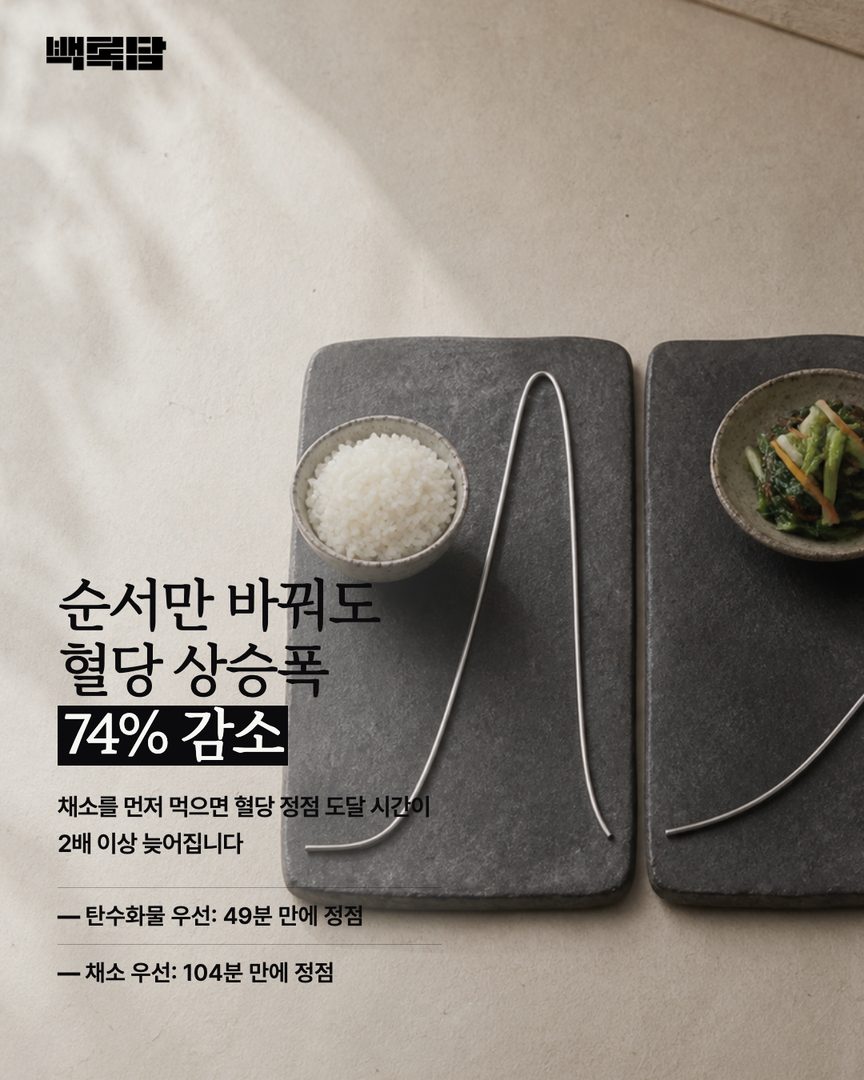
Eating the same foods can yield completely different results depending on the order in which you put them in your mouth. According to one study, peak post-meal blood sugar averaged 8.18mmol/L when carbohydrates were eaten first, but only 6.92mmol/L when vegetables were eaten first.
What's even more surprising is the difference in time it takes to reach peak blood sugar. With carbohydrate-first meals, peak was reached in about 49 minutes, but with vegetable-first meals, it took an average of 104 minutes—more than double. This aligns with findings that when meals are eaten in the order vegetables → protein → carbohydrates, the 1-hour post-meal blood sugar rise decreases by 74%.
The principle is simple. Dietary fiber forms a barrier in the intestines first, then protein slows digestion, so when carbohydrates enter last, they're absorbed slowly. For Koreans who consume a lot of rice, this is a much more practical and sustainable strategy than arbitrarily reducing food intake.
Observing Eating Habits Through the Clinic Practice Lens
In Korean medicine, we don't just look at numbers—we also examine the individual's digestive condition and the flow of energy. When treating patients who need blood sugar management, many experience overwhelming drowsiness after meals or sudden hunger that becomes hard to bear. This is likely a phenomenon occurring from blood sugar rising sharply and then dropping rapidly due to excessive insulin secretion.
I advise patients to observe the "quality of hunger." It's important to distinguish whether you're simply hungry or experiencing "false hunger" that strongly craves sweets. Skipping breakfast leads to overeating at lunch, which immediately triggers a blood sugar spike. Making it a habit to always eat breakfast—to maintain nutritional balance and prevent overeating at lunch—forms the foundation of metabolic health.
Blood Sugar Defense Routine to Implement Starting Today
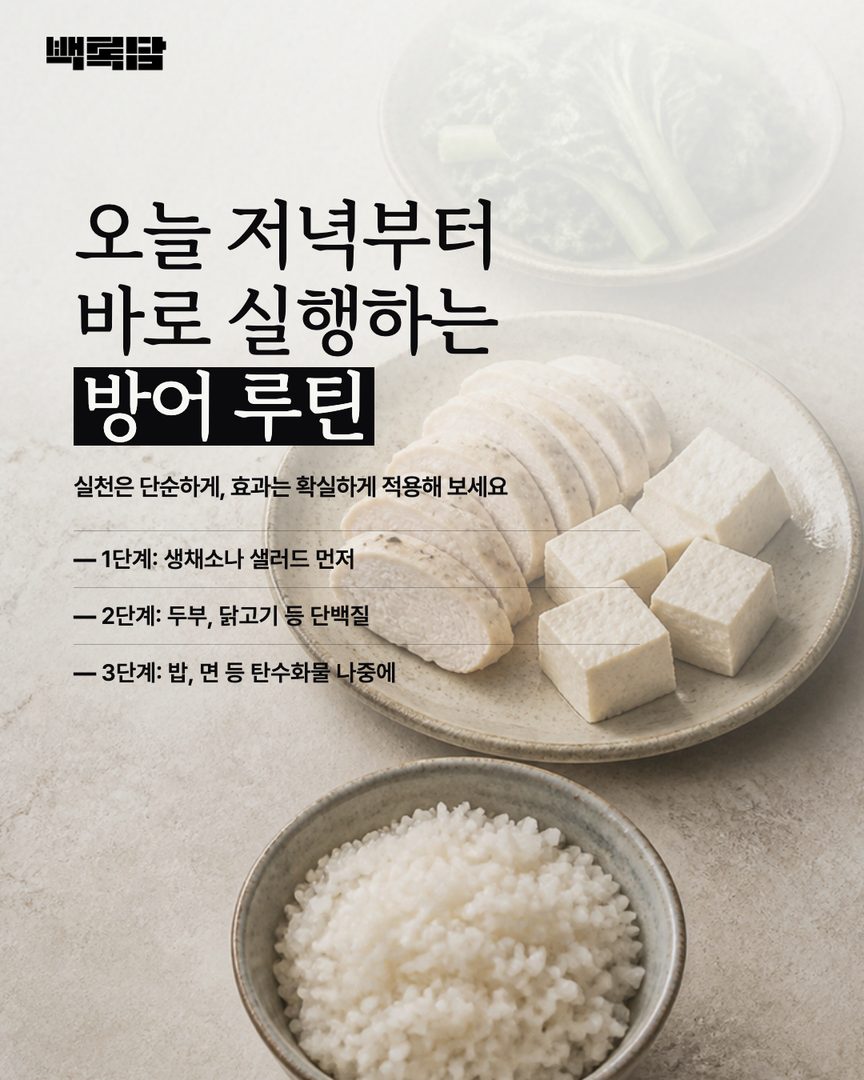
Theory may be complex, but practice should be simple. Here's the sequence you can apply starting from tonight's dinner table.

First, eat raw vegetables or salad first—lettuce, cabbage, cucumber, anything on the table. For dressing, I recommend low-sugar options like olive oil or vinegar-based dressings.
Second, consume protein side dishes like tofu, chicken, fish, or eggs next. This creates a buffer zone in your stomach before carbohydrates arrive.
Third, eat rice or noodles—carbohydrates last. Since you've already achieved some satiety from vegetables and protein, you'll naturally reduce carbohydrate intake.
If eating out makes it difficult to pack a lunch, try tackling the vegetable side dishes or salad served as banchan first. Also, instead of sitting down immediately after eating, try moving your body—even just 5 minutes of walking around the office or standing while taking a phone call—greatly helps stabilize blood sugar.
Blood sugar management isn't a restrictive diet that squeezes you—it's a caring process that helps your body comfortably accept energy. I hope you'll apply the small wisdom of changing meal order rather than simply enduring restrictions.
After changing your meal order, pay close attention to how the post-meal fatigue or hunger pangs differ. These small changes accumulate to alter the big picture of metabolic health. If you find it difficult to manage your diet alone or need customized management suited to your body type, trying the Baekrokdam Gambi-hwan Program along with more efficient approaches is a good option. Next time I see you at the clinic, please be sure to tell me which meal order felt most comfortable for you.