
Facial Psoriasis in Your 20s: Why It's More Than Just a Skin Problem | Incheon Psoriasis

Does your heart sink every time you face red spots and white flakes in the mirror? Have you ever experienced something like this?
Facial Psoriasis in Your 20s: Why It's More Than Just a Skin Problem
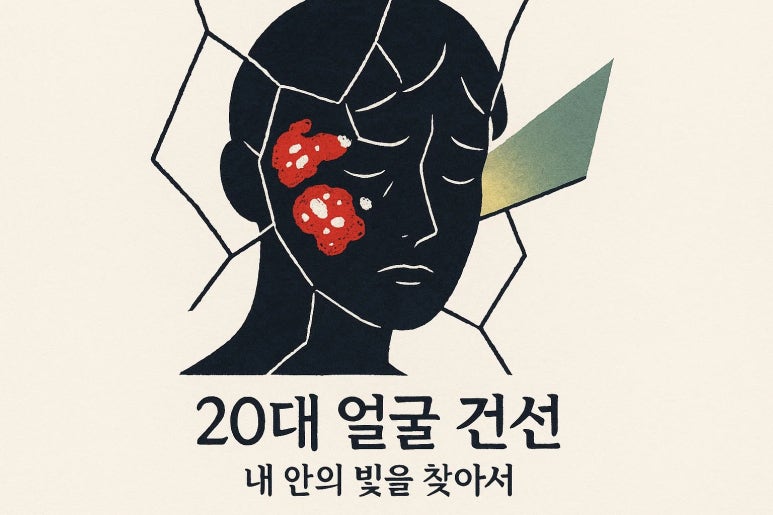
Especially for people in their 20s who are highly concerned with their appearance, facial psoriasis becomes more than just a skin disease; it's a `deep suffering` that erodes self-esteem and impacts social life. Many young patients I see in my clinic express `frank feelings` like, "I don't know how I can meet people with this face," or "Even if I cover it with makeup, it's still obvious, and it's so stressful." I understand the weight of that suffering better than anyone. Why does psoriasis appear on the face, specifically in our twenties when we should be at our brightest, to torment us? Rather than merely rushing to remove visible symptoms, it's crucial to correctly interpret the signals your body sends and understand `the true nature of psoriasis`. Only then can we move beyond simple improvement and embark on `a true path to recovery`, preventing recurrence and restoring a healthy skin environment. To help you reclaim your radiant daily life, I'd like to share a page from my clinical notes, which I've personally recorded and interpreted.
Clinical Notes: Clues Found in Patient A's Story
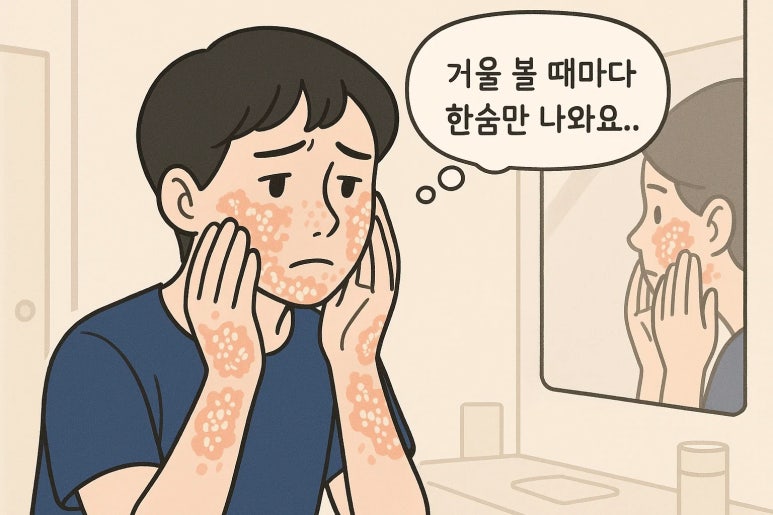
We must first pay attention to the unique circumstances experienced by `facial psoriasis patients in their 20s`. Patient A, whom I met, was in her mid-20s and on the verge of seeking employment. `Red psoriatic lesions` were distinctly visible on her forehead, around her eyebrows, and next to her nostrils. Every time she attended interview study sessions, she became acutely aware of others' gazes, and many nights she struggled to sleep due to itching. `Deep despair` permeated Patient A's voice when she said, "Every time I look in the mirror, all I can do is sigh. I don't know what I did wrong." She started avoiding plans with friends and found herself feeling intimidated even when visiting cosmetic stores. For Patient A, `skin psoriasis` was not just a simple skin problem; it felt like `a massive wall` blocking her dreams and future. Similar to Patient A's case, `young psoriasis` patients are in crucial transitional periods – studying, job seeking, dating, and social life – making them `even more vulnerable to stress`. Stress during this period becomes a powerful factor that exacerbates psoriasis symptoms. Furthermore, given the face's prominent location, psychological distress is inevitably maximized. This is compounded by the inherent challenges of `chronic skin diseases`.
Psoriasis: What is My Body Trying to Tell Me?
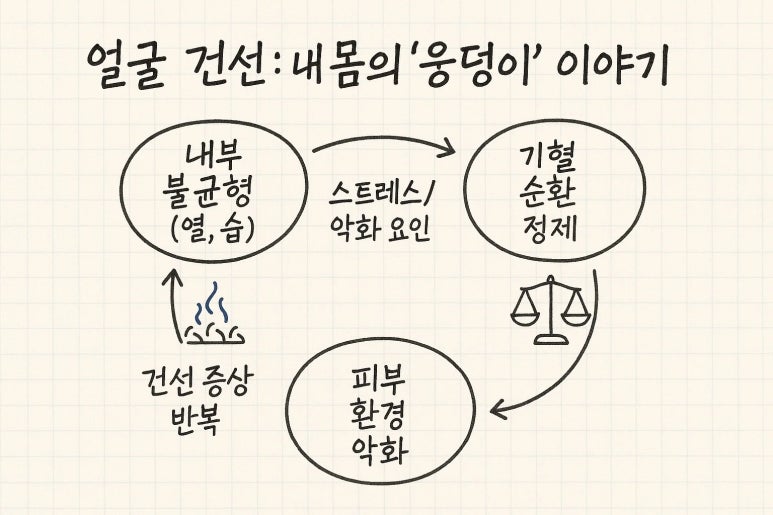
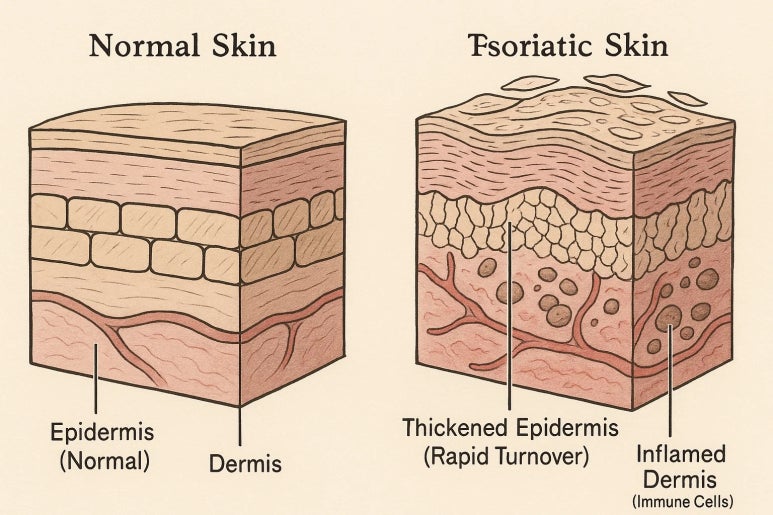
So, what are the `causes of psoriasis`, and how should we approach this problem? In Western medicine, psoriasis is considered an `autoimmune disease` caused by an `abnormality in the immune system`, leading to `excessive skin cell proliferation and inflammation`. The `skin cell turnover cycle` becomes abnormally rapid, causing scale buildup and red inflammation. I go a step further, interpreting the fundamental `context` of this phenomenon from a Traditional Korean Medicine (TKM) perspective. Our body is a single organism, and the skin is like a mirror reflecting our internal health. Psoriasis appearing on the face is not merely a skin issue; it often indicates an `imbalance` within our body, particularly an `excessive accumulation of 'heat' and 'dampness'`, and `stagnation of 'Qi and blood circulation'`. I often liken this to `'stagnant water in a puddle'`. The Qi and blood, which should flow freely, become stagnant, and within this stagnation, unnecessary heat and dampness accumulate, manifesting on the skin's surface. Especially in their 20s, various factors like lifestyle, diet, and stress can combine to `intensify this imbalance`.
Psoriasis Management Roadmap for a Radiant Daily Life
So, what are the practical `psoriasis management methods` to control this distressing `chronic skin disease`? Beyond simply prescribing medication, I provide patients with an integrated roadmap to restore overall body balance. This is akin to `clearing the water in a stagnant puddle and transforming it back into a freely flowing river`.
1. Diet and Lifestyle Habits that Understand Your Body's Signals
If your skin is red and feels hot, it could be a sign of excess internal heat in your body. It's best to avoid spicy and irritating foods, greasy foods, and excessive alcohol consumption. Adequate hydration and regular sleep are essential for `strengthening immunity and skin regeneration`. In particular, late-night meals or irregular eating habits can burden the digestive system and `exacerbate 'dampness' within the body`, so caution is advised.
2. Stress Management
For patients in their 20s, stress is `the most powerful factor triggering and worsening psoriasis`. It's crucial to find your own stress-relief methods, such as meditation, light exercise, or hobbies. I recommend that patients dedicate time to themselves, focusing entirely on their well-being, even if it's just once or twice a week.
3. The Role of Traditional Korean Medicine (TKM) Treatment
`TKM treatment for psoriasis` focuses on identifying the fundamental `cause of psoriasis` and restoring the body's balance. By analyzing each individual's `constitution and symptom patterns`, we prescribe `herbal medicine that expels accumulated heat and toxins from the body, promotes smooth Qi and blood circulation, and enhances skin regeneration`. This goes beyond simply suppressing inflammation on the skin's surface; it helps `boost the skin's inherent healing power to prevent recurrence`. Of course, herbal medicine treatment requires time, and it aims for `a gradual improvement in the body's internal environment` rather than immediate symptom disappearance. Rather than hastily using the word 'cure' for any treatment, it is more realistic to approach it consistently with the `concepts of 'management' and 'control'`.
4. Moisturizing and UV Management
Dry skin can exacerbate psoriasis symptoms, so it's important to consistently apply a gentle moisturizer. While excessive UV exposure should be avoided, appropriate sun exposure can aid in `Vitamin D synthesis` and positively influence `immune modulation`. It is always best to consult with a specialist to find the appropriate methods for this aspect.
What I want to emphasize is that you are not 'victims' of this disease, but `'agents of recovery'`. The suffering of `facial psoriasis in your 20s` always weighs heavily on me. However, I believe that you can overcome this period by understanding your body, actively managing it, and `finding balance in your life`. Psoriasis may appear suddenly and cause hardship, but it also provides an opportunity to reflect on our body and mind. I promise to always be with you on your journey, serving as your warmest and most insightful guide. It is my sincere hope that, together with medical professionals who meticulously care for your entire body, and not just on your own, you will `reclaim your radiant twenties`.