
My Feet Burn Every Night...What Causes Diabetic Neuropathy?

"My Feet Burn Every Night"...Diabetic Neuropathic Pain: The Real Culprit Is Elsewhere
| "Every night, it feels like my feet are on fire, and like thousands of needles are pricking them, making it impossible to sleep. Even the slightest brush of a blanket makes me jump." |
The 68-year-old, who has suffered from diabetes for over 15 years, said he dreads the arrival of night. The pain and numbness in his feet, which were dormant during the day, invariably resurrected like monsters as darkness fell, consuming him. The neuropathic medications (such as gabapentin) prescribed by his doctor had long since lost their efficacy, leaving only dizziness. Recently, his glycated hemoglobin (HbA1c) had risen to 8.5%. He was slowly giving up on everything.
Why do diabetic patients suffer from such agonizing neuropathic pain? The explanation that nerves are simply 'damaged' due to high blood sugar is insufficient. To understand the root of the problem, we need to shift our perspective.
1. Your Nerves Are Starving
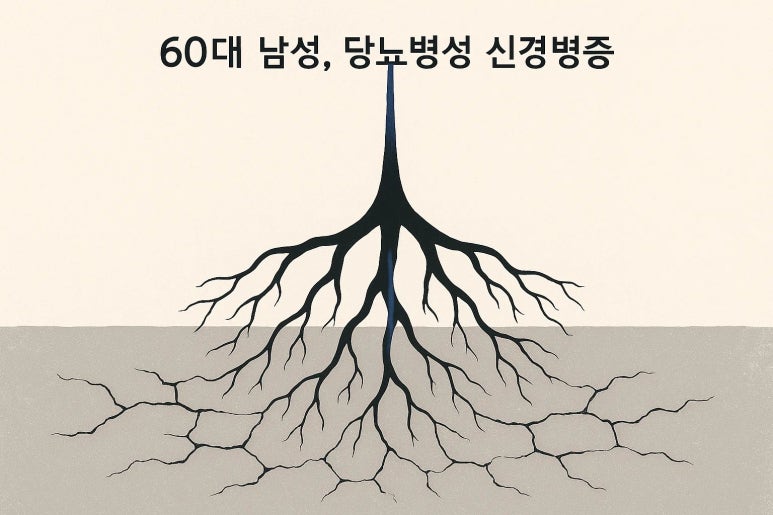
| Let's imagine our body's nerves as 'tree roots' and our body as 'soil.' A body that has sustained high blood sugar for a long time is like 'desert soil,' parched and cracked by drought. As the soil dries out, the deepest roots (peripheral nerves in the toes and fingertips) begin to wither, deprived of nutrients. |
The excruciating pain of diabetic neuropathy is precisely the desperate cry of these 'starving nerves.' Beyond mere nerve damage, it's the final scream as they slowly die, deprived even of the minimal nutrients (oxygen and blood) necessary for survival.
In Traditional Korean Medicine (TKM), this systemic state of nutrient deficiency and functional decline is termed 'Qi and Blood Deficiency (氣血兩虛).' This signifies that both the body's energy (Qi) and its material foundation (Blood) are depleted, an insight that perfectly aligns with the 'parched soil' analogy.
2. Pain Blockage vs. Nutrient Supply: A Fundamentally Different Approach
Conventional neuropathic medications primarily focus on suppressing nerve channels that transmit pain signals. This is akin to gagging the nerve's 'mouth' because its screams are too loud. While it can reduce pain in the short term, it fails to address the underlying cause of 'starvation.' It's like propping up a withered tree with supports while the soil continues to dry out.
| CASE STUDY: A Shift in Treatment Perspective |
| Traditional Korean Medicine (TKM) treatment, however, looks elsewhere. It aims to irrigate and fertilize the 'parched soil,' allowing the tree roots to regain the strength to thrive on their own. In other words, it focuses on promoting peripheral circulation to deliver nutrients to every corner of the nerve cells. |
This is more than just suppressing symptoms; it's a fundamental treatment method that creates an 'environment' where nerves can recover on their own.
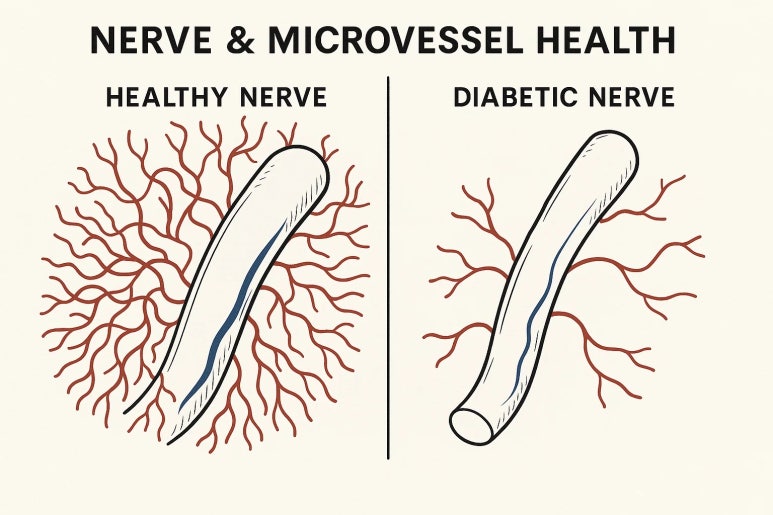
3. How to Bring Life-Giving Rain to Parched Soil
So, how exactly can we fertilize the 'soil'? The key is to replenish Qi and Blood (氣血) and clear blocked blood vessels.
| Step 1: Restore Basic Vitality with Qi and Blood (氣血) Replenishment
Step 2: Nourish Nerves by Promoting Peripheral Circulation
Step 3: Remove Blood Stasis (瘀血) and Manage Pain
|
Most importantly, blood sugar management is crucial. No matter how good the nutrition supplied, if the 'poison' of high blood sugar continues to contaminate the soil, the tree will inevitably wither again. Only by correcting lifestyle habits under the guidance of a specialist, while simultaneously striving to fertilize the 'soil' of your body, can you finally find hope of breaking free from the agonizing cycle of pain.
#DiabeticNeuropathy