
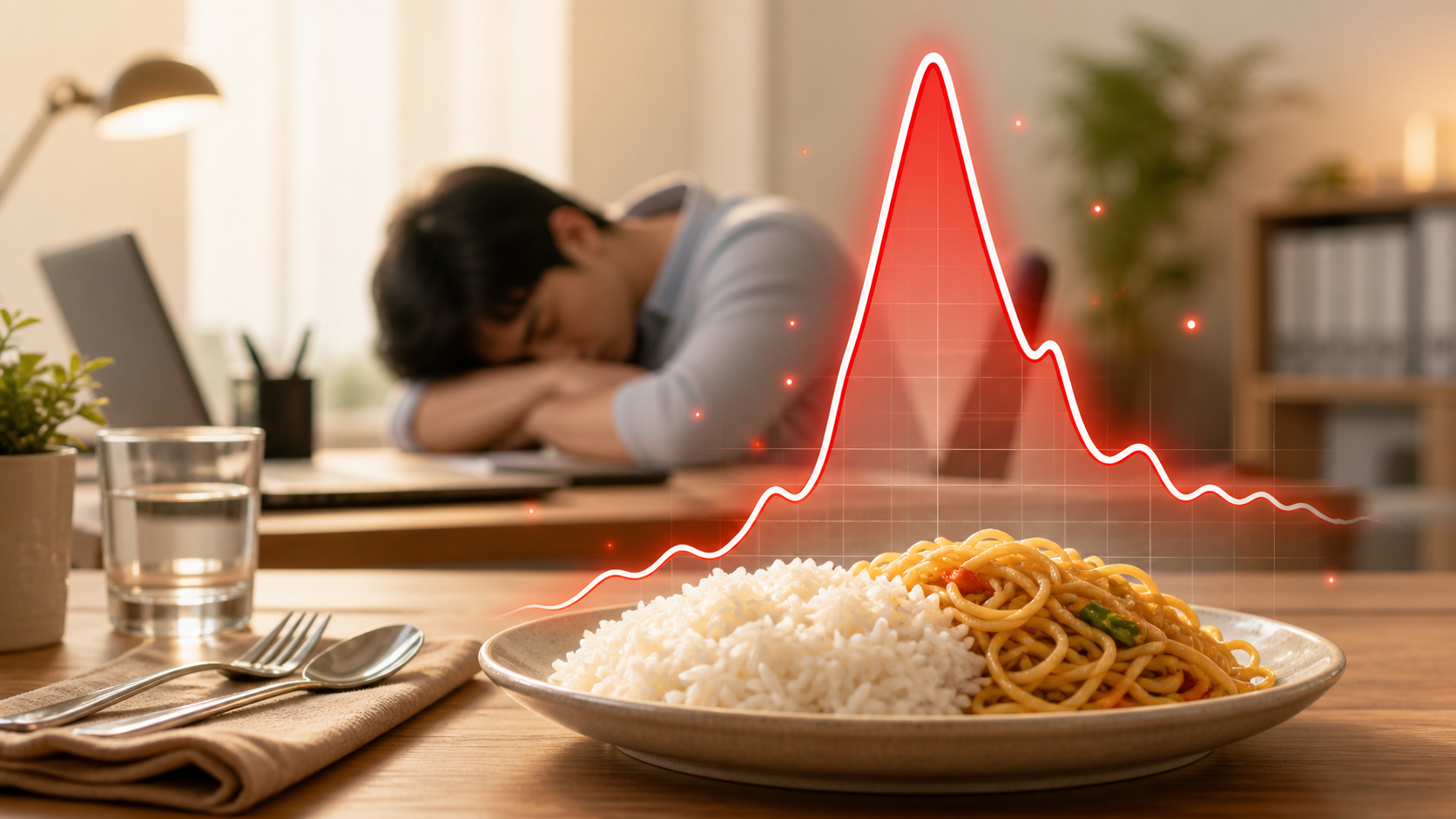
Why You Feel Sleepy After Meals — Blood Sugar Spikes and the Fat-Storage Connection

Table of Contents
When Kim Min-jung (pseudonym, 43) first came to see me, she said this:
"I always crash after lunch. Even coffee doesn't help. But my weight keeps going up — especially around my belly."
Sound familiar? That heavy, sleepy feeling 30 minutes after a meal — it's easy to dismiss as overeating. But it's often a sign of a blood sugar spike.
What Exactly Is a Blood Sugar Spike
It's when blood glucose shoots up rapidly after eating, then crashes back down. Everyone's blood sugar rises after a meal, but a "spike" means the rise is too steep, too fast. Generally, if blood glucose exceeds 180 mg/dL within an hour of eating, that's considered a spike.
When blood sugar surges, the pancreas releases a large flood of insulin to push glucose into cells. When this happens all at once, blood sugar plummets again. That "crash" is what creates post-meal drowsiness and sudden hunger. That's why you feel like eating again just two hours after a full meal.
Why Does This Make You Gain Weight
Insulin is a "storage hormone." It converts excess glucose into fat and stores it. When blood sugar spikes repeatedly, insulin stays chronically elevated, and the body gradually becomes desensitized to it. This is called insulin resistance.
With insulin resistance, the same amount of food raises blood sugar even higher, and fat accumulates more easily — especially as visceral belly fat. If you're dieting hard but the belly won't budge, this pattern is often the hidden cause.
The Korean Medicine Perspective
I view this condition as a combined pattern of Bi-Heo (脾虛, Spleen Qi Deficiency) and Dam-eum (痰飲, Phlegm-Dampness). Bi-Heo means the digestive function of the spleen has weakened. Dam-eum refers to accumulated metabolic waste in the body. When both occur together, food can't be converted into energy efficiently and tends to be stored as fat.
In Korean medicine, this body state is often seen as accumulation of Seup-yeol (濕熱, Damp-Heat) — craving sweets, feeling hungry again quickly, and fat concentrating in the abdomen are the classic signs.
Practical Ways to Reduce Spikes
1. Change your eating order. Vegetables → protein → carbohydrates. Eating in this order produces a much gentler blood sugar curve with the same foods. Research from Weill Cornell Medicine confirmed that eating order alone significantly lowers post-meal glucose peaks.
2. Walk for 10 minutes after eating. A light post-meal walk helps muscles consume blood glucose directly. It doesn't need to be intense exercise — a short walk around the office floor makes a real difference.
3. Gradually reduce white rice. Mixing in oats or barley slows digestion so blood sugar rises more gradually. If switching entirely feels like too much, start with 70% white rice + 30% barley or oats.
How Baekrok-Gambijeong Helps
Baekrok-Gambijeong is a standardized herbal tablet. The formula is the same for all patients — personalization comes through the dosage design (frequency, amount, timing). The baseline is 2 tablets twice daily, adjustable to 1–3 tablets based on your condition.
The formula contains herbs that resolve Dam-eum and strengthen the digestive system (Bi-Wi, 脾胃), including Mahwang (麻黃, Ephedra). Mahwang activates the sympathetic nervous system to raise basal metabolism. It's used safely through careful dose design, maintaining the same therapeutic effect as a decocted formula while being far more convenient to take.
When blood sugar is constantly fluctuating, appetite control becomes genuinely difficult. Taking the tablet at a set time each day also serves as a behavioral trigger — creating a meal rhythm and anchoring appetite regulation. The routine of taking it is itself the starting point for lifestyle change.
Frequently Asked Questions
Q. Can blood sugar spikes be a problem even without diabetes?
A. Yes. Even with normal fasting glucose, repeated post-meal spikes can gradually lead to insulin resistance. This stage is sometimes called "pre-diabetes," and it's a common underlying factor in visceral obesity, fatty liver, and high cholesterol.
Q. Is post-meal sleepiness alone a reason to suspect blood sugar spikes?
A. If you also have hunger returning within 2 hours and fat concentrating in the belly — all three together — it's worth investigating blood glucose variability. The most accurate way is to wear a continuous glucose monitor (CGM) for about two weeks.
Q. Should I take Baekrok-Gambijeong before or after meals?
A. The default is 30 minutes before meals, but if you have a sensitive stomach, we adjust to after meals. Timing is designed to fit your individual condition.
References
— Shukla AP et al., "Food Order Has a Significant Impact on Postprandial Glucose and Insulin Levels," Diabetes Care, 2019. (Full text)
— Korean Diabetes Association. Clinical Recommendations for Blood Glucose Monitoring, 2023.