
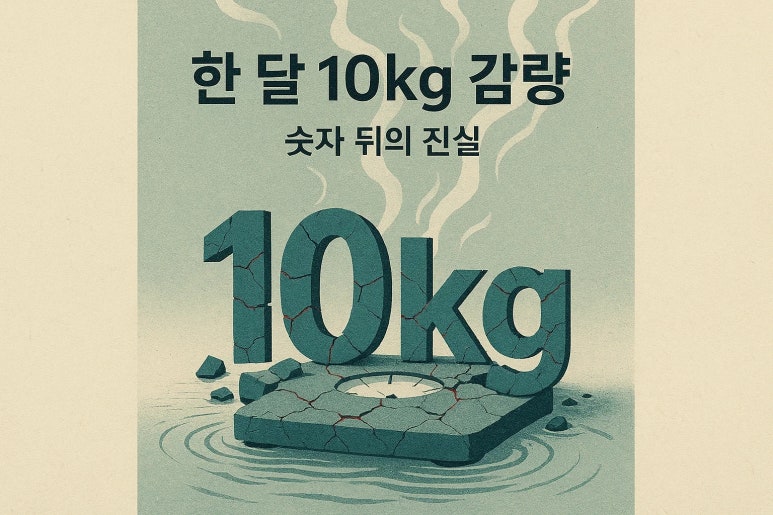
Lose 10kg in a Month: Expert's Realistic Advice

10kg Weight Loss in a Month: Realistic Advice from an Expert
Is it truly possible to lose 10kg in a month? Many people knock on my clinic door with a fervent desire to "succeed this time for sure" and ask this very question. The expectation of dramatic numbers is always appealing. However, from a clinician's perspective, it's necessary to critically examine what this goal truly means for our bodies and how it might impact our health. What should we look at to create healthier and more sustainable changes, beyond just reducing body weight? I begin by listening to patients' vivid experiences, interpreting the body's 'environment,' and integrating traditional Korean medicine principles with modern metabolic and behavioral science to find the answers.
10kg in a Month: The Truth Behind the Number
From what I've observed in my clinic, the goal of losing 10kg in a month is numerically achievable only under specific conditions. However, it's extremely rare for this number to represent solely body fat loss. To lose 1kg of body fat, our bodies need to expend approximately 7,700kcal. If you were to lose 10kg of body fat over 30 days, this calculates to a daily calorie deficit of over 2,500kcal. Given that the recommended daily caloric intake for adult women is around 2,000kcal, this figure is only attainable by consuming almost nothing and engaging in intense physical activity every day.
| So, how do claims of losing 10kg in a month arise? Most of this weight loss comes from a reduction in water and muscle mass, not body fat. For instance, when starting an extreme low-carbohydrate diet, glycogen stores decrease, and the water bound to them is also lost. Furthermore, employing methods that induce diarrhea or promote diuresis accelerates the loss of body water. As one patient who described her face as "a water-soaked sponge" in the morning illustrated, individuals with severe edema might temporarily experience significant water loss. However, this can hardly be considered true rapid weight loss. It's akin to simply removing water without making fundamental changes to the body's 'environment.' |
What Rapid Diets Leave Behind in the Body
Excessive short-term dieting goes beyond mere weight loss; it disrupts critical balances in our bodies. The three points I'm particularly concerned about are as follows:
| 1. Disruption of Stress Hormones: When the body is suddenly deprived of nutrients, our brain perceives this as a crisis and activates the HPA axis (hypothalamic-pituitary-adrenal axis). Elevated levels of the stress hormone cortisol lead to an increased appetite and easier fat accumulation, initiating a vicious cycle. Ms. A, who was sensitive and anxious throughout her weight loss period, eventually experienced the yo-yo effect, unable to resist binge eating every night even after successfully losing weight. |
2. Imbalance in Appetite Signals: Appetite-regulating hormones like leptin and ghrelin function optimally with a stable energy supply. Rapid weight loss disrupts this hormonal balance, leading to stronger feelings of hunger and reduced satiety. Consequently, it's common for individuals to succumb to uncontrollable cravings.
3. Exacerbation of 'Dam-eum' (Phlegm-Retention) from a Korean Medicine Perspective: In traditional Korean medicine, waste products resulting from impaired fluid metabolism in the body are referred to as 'Dam-eum'. Excessive weight loss can deplete vital energy and essential fluids and weaken organ functions, thereby paradoxically promoting the formation of Dam-eum. The rapid regain of weight after water loss, or the feeling of being heavier and more swollen, could be due to these changes in the body's environment. This ultimately leads to dietary side effects.
Excessive weight loss not only reduces the number on the scale but also robs our bodies of their natural resilience, making subsequent dieting efforts less realistic.
The Path to Healthy and Sustainable Weight Loss
So, how can we healthily change the body's environment and achieve sustainable weight loss? I focus not just on calorie counting, but on helping our bodies maintain a healthy state autonomously.
Diet: 'Filling Up' Rather Than 'Emptying Out': Prioritize ample protein and dietary fiber. Protein prevents muscle loss and promotes satiety, while dietary fiber is crucial for gut health and blood sugar management. Reduce refined carbohydrates and sugar, but include an appropriate amount of healthy carbohydrates (brown rice, multi-grain rice) to maintain the balance of vital energy and essential fluids.
Movement: Beyond 'Exercise' to 'Everyday Life': Strenuous workouts aren't the only answer. Increase your NEAT (Non-Exercise Activity Thermogenesis) by taking the stairs instead of the elevator, walking short distances, and so on. Incorporating strength training 2-3 times a week can help preserve muscle mass while boosting your basal metabolic rate.
Deep Sleep: The Best Diet Aid*: Sleep is not merely about resting; it's a time for the body to regenerate and balance hormones. Consistent deep sleep of 7-8 hours daily helps lower stress hormones and regulate appetite. If you lack sleep, no matter how hard you try, your body easily shifts into a fat-gaining mode.
Stress Management: Nurturing Your Mind*: Find stress-relief methods that suit you, such as meditation, yoga, or hobbies. Stress is a primary factor that promotes cortisol secretion, leading to fat accumulation.
| One patient consistently came in with the goal of losing just 1kg per month. Initially, she felt frustrated, but she identified her eating habits through a diet diary, incorporated 30-minute walks after work into her routine, and ensured sufficient sleep. After three months, having lost a total of 3.5kg, she said, beyond just the weight loss, "My body feels light and refreshed. My stress has also decreased." This is precisely the healthy weight loss approach I advocate. |
| In contrast, Ms. B, who lost over 5kg in a short period, gained all the weight back within a month and became exhausted, saying, "It's too hard to start again." This was due to the physical fatigue from extreme dieting and exercise, and the dietary side effects that led back to binge eating. For Ms. B, the key to correction was 'balanced meals and sufficient sleep,' rather than the speed of weight loss. |
| The goal of losing 10kg in a month is unrealistic numerically and can be detrimental to health. We must understand the body's environment and play a role in helping it heal and become healthy on its own. Finding a sustainable routine tailored to oneself, rather than rushing, is ultimately the fastest and safest shortcut. Even if it's not me, I encourage you to consult medical professionals who can thoroughly assess your entire body and help you find a healthy weight loss method that is right for you. |
Smart Diet Choices for Yourself
Instead of reckless weight loss plans, it's crucial to understand yourself deeply and make changes at your body's own pace. Remember that methods attempted in haste can exhaust your body and, in the long run, lead to greater frustration. I always strive to pay close attention to the small signals patients' bodies send and interpret the true stories hidden within them. Your body is a complex and beautiful entity that cannot be defined by numbers alone. Instead of rushing, trust yourself and start making small changes today. That is the beginning of the fastest, safest, and healthiest weight loss that is truly you.