Headache Accompanied by Neck and Shoulder Pain in a 30-Year-Old Man | Incheon Headache

Headache Accompanied by Neck and Shoulder Pain in a 30-Year-Old Man | Incheon Headache
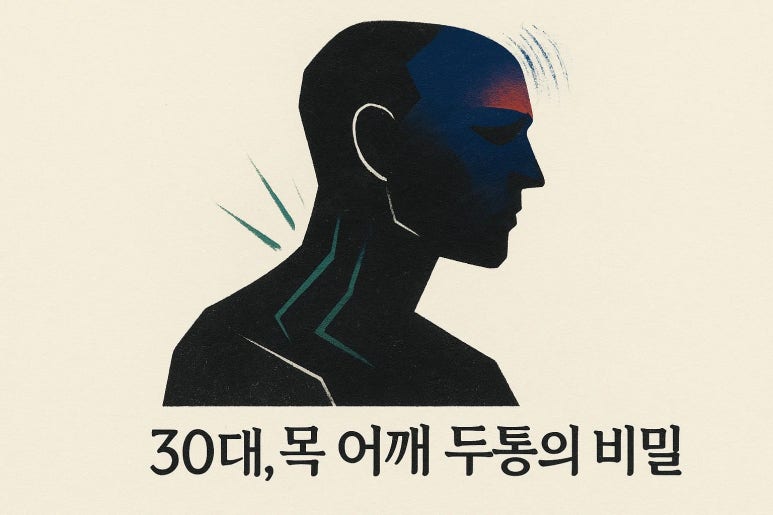
When sitting in front of a computer for a long time at work, sometimes I find my neck and shoulders getting stiff without even realizing it.
However, have you ever experienced this stiffness going beyond simple discomfort and leading to a throbbing headache in your head?
Particularly among men in their 30s, there are not a few cases where they visit the clinic complaining of such symptoms.
Listening to their stories, I often ask these questions.
“Have you noticed that when neck and shoulder pain worsens, the headache also worsens?”
Mostly, they nod.
This is precisely the common pattern of ‘cervicogenic headache’ that we will talk about today.
Cervicogenic Headache: How is it Different and How Do You Recognize It?
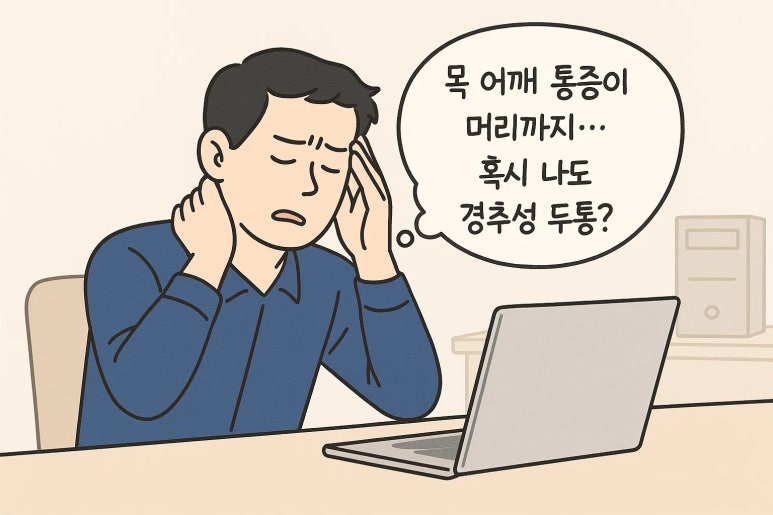
“How is a cervicogenic headache different from a normal headache?”
Unlike common tension headaches or migraines, a ‘cervicogenic headache’ has the ‘characteristic’ of starting from a problem around the neck and the pain spreading to the head.
It mainly starts from the back of the neck and appears in various patterns up to the side of the head, forehead, and around the eyes, and in many cases, it is accompanied by ‘other symptoms around the neck’ such as ‘shoulder stiffness and arm numbness.’
Pain worsens when moving the head or is sometimes induced in certain postures.
“How do I know if the headache I’m experiencing is a cervicogenic headache?”
If the headache worsens when moving the neck or shoulders, and if ‘pain is induced in a specific area’ when pressing around the back of the neck or shoulders, there is a high possibility it is a ‘cervicogenic headache.’
Also, if numbness in one arm or fingers or ‘sensory abnormalities are accompanied,’ it is necessary to suspect ‘structural problems of the cervical spine itself, such as cervical disc.’
‘For accurate diagnosis, examination by a professional medical institution is essential.’
Let’s take an example of Patient A, a ‘headache in a 30-year-old man’ whom I met in the clinic.
Patient A worked as a developer in an IT company and sat in front of a computer for more than 10 hours a day.
At first, it was just the back of the neck being stiff and the shoulders being bunched up, but from one day on, he said a ‘headache around the temples and eyes’ came every afternoon.
He passed it off thinking it was because of fatigue, thinking it would be okay if he rested for a moment, but as time went on, the ‘frequency and intensity of headache occurrence worsened’ to the point where daily life was difficult.
|
Patient A’s neck was ‘stretched forward like a turtle,’ and his shoulders were completely hunched up. When I pressed the back of the neck and shoulders, ‘muscle bunches like hard rocks’ were felt in several places. Particularly when I pressed ‘around cervical vertebrae 2-3 and the area inside the shoulder blade,’ he groaned “Ugh!” and said “Director, the place that usually hurts now hurts more as you press that part!”Patient A had a ‘habit of bowing his neck’ even when looking at a smartphone or reading a book normally, and confessed that ‘work stress’ was also significant. |
Like this, ‘cervicogenic headache’ does not stop at just a neck problem, but often appears as ‘complex causes are intertwined.’
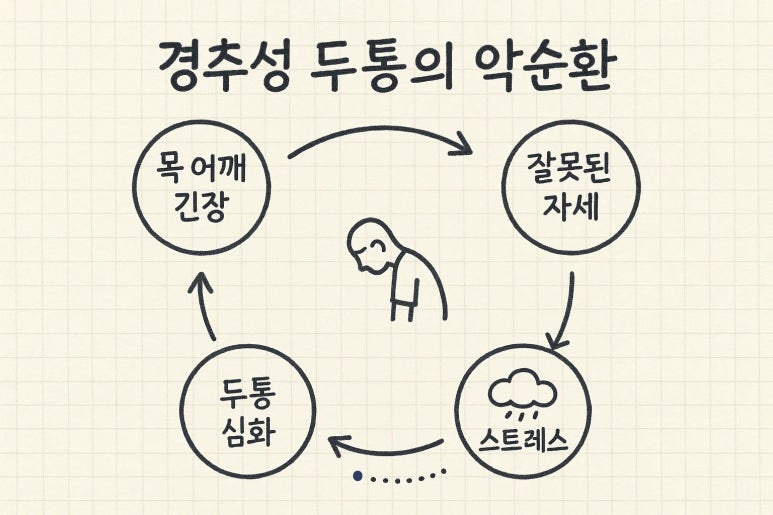
Tension in the neck and shoulders, incorrect posture, and stress act as if ‘gears mesh to create a vicious cycle.’
The Secret Link Between Neck, Shoulders, and Headache
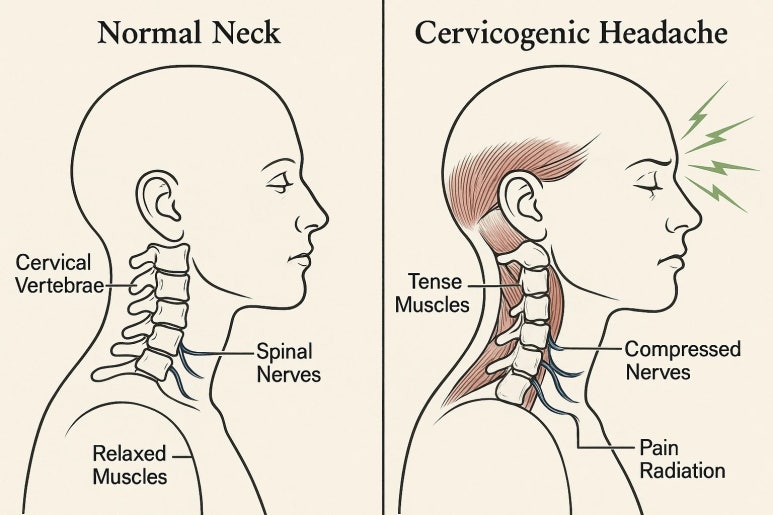
The neck part (‘cervical spine’) of our body supports the head and is the ‘place through which important nerve bundles pass.’
If the muscles around the neck are continuously tense, this ‘restricts the movement of cervical joints’ and ‘compresses surrounding nerves,’ acting as a ‘headache cause.’
Particularly, small muscles at the back of the neck, such as the ‘suboccipital muscles,’ are ‘directly connected to the skull,’ so the tension in these muscles becomes an important ‘clue’ directly connected to headaches.
`
I compare this relationship to the ‘conductor of an orchestra.’ The neck plays the role of the conductor of the orchestra called the head. Just as instruments cannot find their tempo and make disharmony if the conductor is uncomfortable, if the neck does not function properly, it affects the entire head and induces headaches. Modern medically, it is interpreted that ‘tension in the muscles around the neck and abnormalities in joint function increase the sensitivity of the cervical nerves, and due to this, the pain pathway related to the trigeminal nervous system is activated,’ leading to headaches.
Ultimately, ‘neck and shoulder pain’ goes beyond simple discomfort and changes the ‘pattern’ of pain signals transmitted to the brain, leading to the result called headache.
The 'Way' of Cervicogenic Headache Treatment Presented by Korean Medicine
In Korean medicine, we do not see ‘cervicogenic headache’ as just head pain.
We find the ‘principle’ and treat within the ‘context’ of the whole body, such as ‘imbalance of the internal organs inducing neck tension, stagnation of Qi and Blood circulation, and stagnation of Liver-Qi (肝氣) due to stress.’
In my clinical experience, many chronic headache patients whose response to general treatment was weak find a ‘new recovery path’ through a Korean medicine approach.
We mainly ‘relax stiff neck and shoulder muscles’ through ‘acupuncture treatment,’ control inflammation and pain with ‘pharmacopuncture,’ and reclaim the ‘balance of misaligned cervical joints.’
Here, a ‘customized herbal prescription’ suitable for an individual’s constitution and symptoms helps ‘change the body’s overall environment and restore the balance of nerves and constitution.’
Particularly in the case of ‘men in their 30s’ accompanied by chronic fatigue and stress, ‘herbal medicine that stabilizes the mind and body and supplements Qi and Blood’ can be an important part of ‘headache treatment.’
Wisdom of Recovery Practiced in Daily Life
Along with treatment, efforts in daily life play a decisive role in ‘decreasing headache occurrence frequency’ and ‘intensity.’
“What lifestyle improvements would be helpful?”
First, it is ‘maintaining correct posture’ through ‘posture correction.’
When working on a computer, ‘adjust the monitor to eye level,’ and when looking at a smartphone, ‘lift the screen to eye level rather than bowing the neck.’
When sitting in a chair, it is good to maintain a ‘posture of putting your back against the backrest and slightly pulling your chin in.’
Second, it is ‘regular stretching.’
Get up from your seat once every hour and ‘gently rotate your neck and shoulders, and do stretching to stretch the back of your neck by pulling your chin in.’
It is important to ‘sufficiently relax the muscles around the neck such as the trapezius and sternocleidomastoid.’
“I heard stress management is also important.”
Yes, that is correct.
‘Stress is a main culprit that tenses neck and shoulder muscles.’
It is important to find your own ‘stress relief method’ and maintain ‘peace of mind’ through ‘regular aerobic exercise or meditation,’ etc.
‘Sufficient sleep’ is also an important element helping the body’s recovery.
These ‘lifestyle improvements’ will become a ‘fundamental PATH’ for cultivating recovery power by oneself, beyond simple management.
‘Cervicogenic headache’ is an important signal sent by our bodies.
Rather than simply suppressing the pain, it is important to understand the ‘essence’ of the pain, dig into the ‘principle,’ and find the ‘fundamental recovery path.’
Before the small discomfort of the neck and shoulders shakes the quality of life overall, I will help from the side so you can ‘carefully look at the whole body and step forward as an agent of recovery.’
‘A journey away from chronic headaches toward a better life,’ why not start right now?