
My stomach feels so uncomfortable just drinking coffee | Caffeine Indigestion in 30s Women

Table of Contents
Persistent Discomfort: What's the Cause?
| "Doctor, it seems like I'm the only one who gets heartburn and bloating specifically after drinking coffee. I drink it to wake up in the morning, but my stomach feels bad all day." |
Many people, like Ms./Mr. A (pseudonym), vaguely sense that caffeine doesn't agree with them, but they struggle to pinpoint the exact cause or find ways to enjoy it healthily. This discomfort not only diminishes their quality of daily life but also causes them to overlook important signals from their body that are often disregarded.
I don't view caffeine-induced indigestion merely as a gastrointestinal issue. I interpret it as a phenomenon resulting from the complex interplay of various factors, including an individual's digestive sensitivity, caffeine consumption habits, stress, and overall constitution.
Understanding Through Case Studies: The Impact of Caffeine on Our Bodies
In practice, I frequently encounter cases like the following:
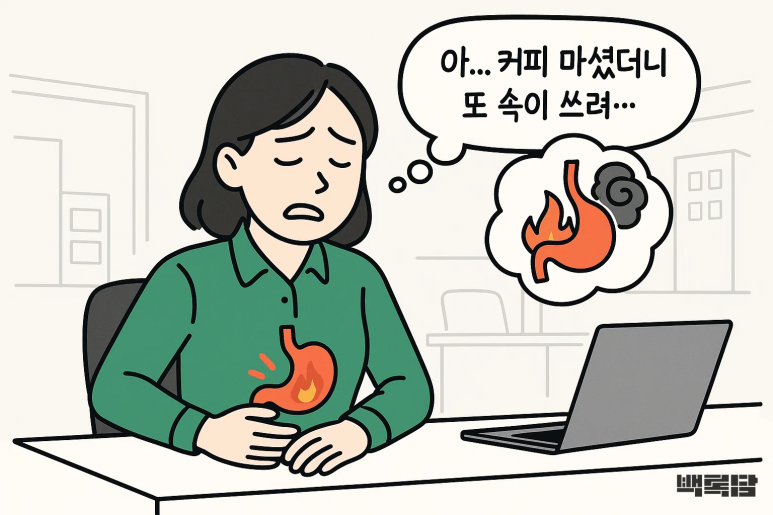
| Ms. Kim Jiyoung (pseudonym), a woman in her mid-30s working in an office, drank an average of three or more cups of coffee daily due to chronic fatigue. Initially, she considered it a temporary phenomenon, but after a few months, whenever she drank coffee, she invariably suffered from heartburn and a bloated, distended feeling. The indigestion also led to a loss of appetite, causing her to lose weight and feel a decrease in vitality. She reported that drinking coffee on an empty stomach particularly exacerbated the heartburn by further promoting gastric acid secretion. Although an endoscopy revealed no specific abnormalities, her discomfort persisted, eventually leading her to seriously consider choosing sleep over coffee. |
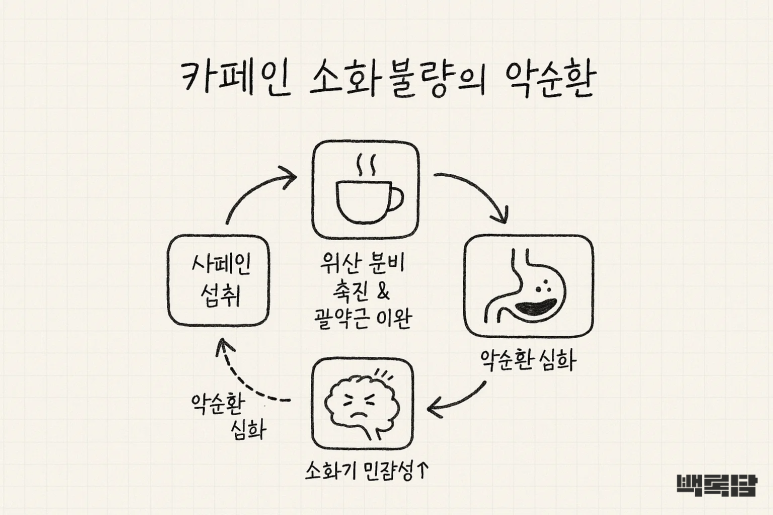
Many individuals, like Jiyoung, experience persistent discomfort even when an endoscopy shows no major issues. This highlights the need to understand the complex effects caffeine has on our bodies. Caffeine doesn't just provide an awakening effect; it also acts on the digestive system in various ways.
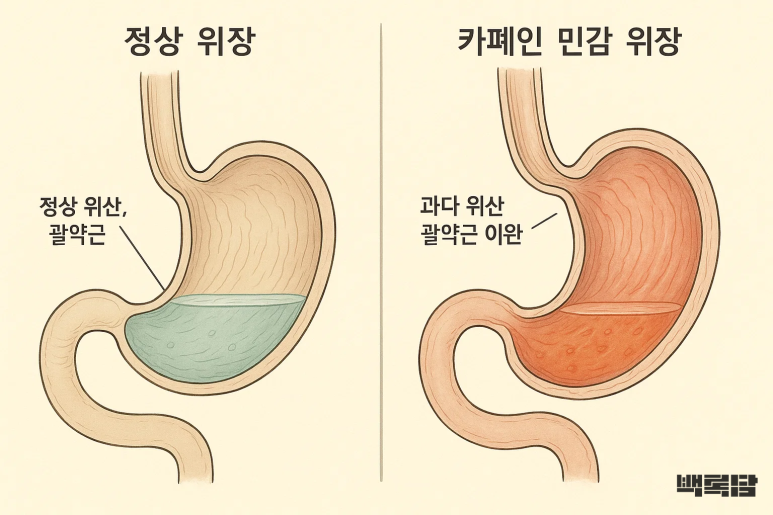
| Caffeine stimulates the central nervous system, producing an alerting effect, while also directly impacting the gastrointestinal tract. It stimulates histamine receptors in the gastric mucosa, promoting gastric acid secretion, which is a primary cause of heartburn. Furthermore, it relaxes the lower esophageal sphincter, increasing the risk of stomach contents refluxing into the esophagus. This process is particularly sensitive in individuals with a naturally weakened gastric mucosa or functional dyspepsia, thereby increasing caffeine sensitivity. Activation of the gut-brain axis, coupled with stress, can further disrupt digestive function. Caffeine intake also affects bowel motility, causing diarrhea in some and constipation in others. These complex interactions are the underlying mechanisms for the gastrointestinal issues that manifest as coffee side effects. |
Thus, caffeine-induced indigestion is not merely a stomach issue but a complex phenomenon intertwined with the nervous system and lifestyle habits.
How to Enjoy Caffeine Healthily
So, can we escape this discomfort and find ways to enjoy caffeine healthily? Rather than cutting out caffeine entirely, it's crucial to understand how your body reacts to it and develop wise consumption habits accordingly.
I carefully examine patients' lifestyle habits, stress levels, and usual digestive state to offer personalized solutions. My focus extends beyond simply suppressing symptoms to fundamentally improving the gastrointestinal environment and restoring balance to the nervous system and overall constitution.
You can consider the following practical tips:
| Here are some practical tips for healthy coffee consumption. First, avoid drinking coffee on an empty stomach; it's best to drink it at least 30 minutes after a meal. Also, I recommend choosing milder-tasting beans over highly acidic ones, or mixing in decaffeinated coffee. Warm coffee is less taxing on the stomach than cold coffee. Drinking a glass or two of water before consuming caffeine to protect your stomach, or mixing it with warm milk or soy milk to help protect the gastric lining, are also good strategies. Finally, consuming caffeine with fiber-rich foods like oatmeal can reduce the burden on your digestive system. |
For some, simply adjusting their caffeine intake time brings significant improvement, while for others, I recommend consuming specific complementary foods along with it.
Important Precautions to Remember
However, in certain situations, caffeine consumption must be considered very carefully.
| If you have been diagnosed with gastrointestinal conditions such as gastritis, gastric ulcers, or GERD (Gastroesophageal Reflux Disease), or if your symptoms are severe, caffeine intake can worsen them. Furthermore, pregnant women, breastfeeding mothers, heart disease patients, and individuals with severe anxiety should severely limit their caffeine intake or consult with a medical professional before deciding. For patients with acute gastrointestinal bleeding, severe arrhythmias, or uncontrolled high blood pressure, caffeine intake is absolutely contraindicated; in such cases, immediate medical attention is necessary. It is crucial to be aware of and prevent these factors that can trigger indigestion symptoms. |
Caffeine-induced indigestion can be more than just discomfort; it could be an important signal that the overall balance of your body is disrupted.
I aspire to be a partner who helps patients not miss the small signals their bodies send, enabling them to regain a vibrant daily life through healthy habits.
Even if not with me, I sincerely recommend meeting with a healthcare professional who will carefully examine your entire body and listen to your body's voice. The journey to recovery begins with understanding yourself.