
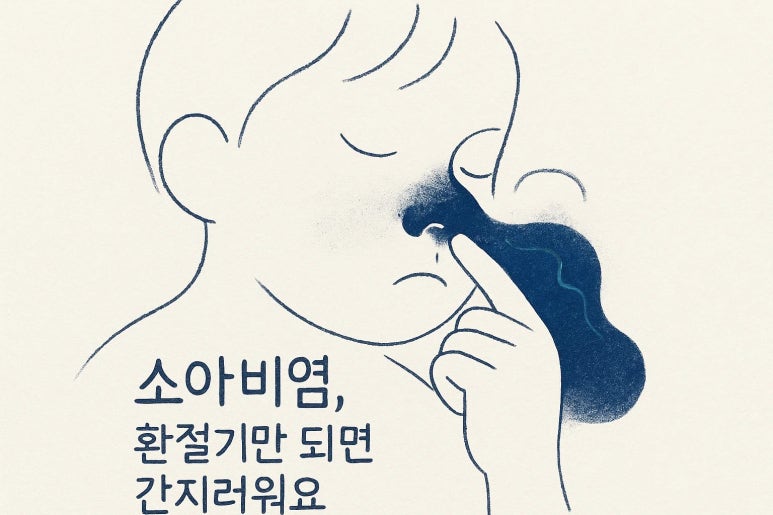
My Nose is So Itchy! | Our Child's Childhood Allergic Rhinitis During the Change of Seasons

“My Nose Is So Itchy” | Pediatric Rhinitis in Our Child During Transitional Seasons
| “My nose is so itchy.” It's one of the most common complaints I hear from young patients in my clinic. Every time I see a child with a small, crumpled face constantly scratching their nose, I know parents' hearts must ache. This suffering, which reappears every transitional season, is a truly difficult time for both children and their parents. Why does our child's nose get itchy, and why do they suffer from nasal congestion, runny nose, and sneezing, even losing sleep, whenever the seasons change? Are these just transient symptoms like a common cold, or a deeper signal from their body? As a clinician, I aim to provide answers to these desperate questions from parents. I will delve deeply into why our child's pediatric rhinitis conspicuously worsens during every transitional season, and share practical management tips for home and the wisdom of Korean traditional medicine. |
Why Does Our Child Experience "Itchy Nose" and "Difficulty Breathing" Every Transitional Season?
| Jimin (pseudonym), a 7-year-old I met in my clinic, was a typical patient with pediatric allergic rhinitis. Every spring and autumn, she would invariably tear up, saying, “My nose is so itchy.” At night, severe nasal congestion would force her to sleep with her mouth open, leading to a hoarse throat, and she would often wake up in the middle of the night due to continuous sneezing. Even when at cram school or playing with friends, she appeared withdrawn because of her sniffling and runny nose. Many children, like Jimin, experience particularly severe rhinitis during transitional seasons. The nose in our body is like a sensitive ‘weather radar’ that first detects changes in the external environment. Transitional seasons are when this radar frantically sounds alarms. Scientifically, during transitional seasons, rapid temperature changes and dry air irritate the nasal mucous membranes, easily triggering inflammatory reactions. Added to this are various allergens such as pollen, fine dust, yellow dust, and house dust mites. When a child's immune system recognizes these external substances as invaders, it triggers an overreactive defense response, leading to an explosive manifestation of rhinitis symptoms like runny nose, sneezing, nasal congestion, and itching. |
Parents, Could Our Child's "Inner Dam" Have Collapsed?
| “My child's symptoms are unusually severe. Other children are fine, but why is only my child like this?” This is the question parents ask most frequently. This isn't merely a problem of external stimuli. I compare a child's body to a ‘dam’. If external stimuli and changes are ‘water,’ then our body's immunity and autonomic nervous system regulation ability are the ‘dam’ that manages this water. A strong dam doesn't overflow even with a sudden influx of water, but a weakened dam easily collapses with a small amount of rain. Pediatric rhinitis is similar. Environmental changes during transitional seasons affect all children, but some easily experience worsening rhinitis, while others pass through unaffected. This difference lies in the child's ‘inner dam,’ that is, the body's autonomous regulatory system. Growing children, in particular, have immature immune and autonomic nervous systems, making them more sensitive to external changes. From the perspective of Korean traditional medicine, which has been passed down from classical medical texts, I interpret this condition not merely as a nasal disease but as a loss of body balance due to the weakening of the functions of the Five Viscera and Six Bowels, including the lungs (respiratory organs), spleen (digestive organs), and kidneys (immune function). When the body's internal regulatory capacity weakens, the nasal mucous membranes react hypersensitively even to minor environmental changes, leading to persistent nasal congestion and runny nose. |
Home Management Tips for "Transitional Season Rhinitis"
“So, how can we strengthen our child's ‘inner dam’?”
Consistent lifestyle management at home can significantly help boost a child's immunity and alleviate rhinitis symptoms.
1. Indoor Environment Management: Good health during transitional seasons begins with comfortable indoor air. Maintain Appropriate Humidity:* Use a humidifier to keep indoor humidity at 50-60%, preventing dryness of the nasal mucous membranes. Maintain Cleanliness:* Frequently wash bedding and clean every nook and cranny with a HEPA filter vacuum cleaner to remove house dust mites. Washing with hot water at over 55 degrees Celsius once or twice a week is recommended. Consistent Ventilation:* To expel indoor pollutants, ventilate by opening windows for at least 10 minutes, 2-3 times a day.
2. Body Temperature Management: Be careful to prevent sudden changes in your child's body temperature. Dress warmly: Cold morning and evening air can easily irritate the nasal mucous membranes, so dress your child in several layers of light outerwear to facilitate temperature regulation. Lukewarm Water: In the morning, drink lukewarm water instead of cold water to keep the stomach, intestines, and lungs warm and protected.
3. Nasal Irrigation and Moisturizing:Saline Nasal Rinse: Gently rinsing the inside of the nose with lukewarm saline solution can wash away allergens and keep the mucous membranes moist. (Do not force if your child strongly resists.) Nasal Area Moisturizing: When the area around the nose is chapped or dry, apply a thin layer of moisturizing cream to reduce irritation.
4. Dietary Management:Prioritize Warm Foods: Avoid cold or irritating foods, as they can burden digestive and respiratory health, and instead, focus on warm, easily digestible foods.
Immunity-Boosting Foods: Encourage a balanced intake of immunity-boosting foods such as seasonal fruits, vegetables, and whole grains. However, if sneezing and nasal congestion persist despite these home management efforts, or if pediatric rhinitis is severe enough to interfere with your child's daily life, professional help is crucial.
“What About Herbal Medicine Treatment Tailored for Children?”
In Korean traditional medicine, pediatric rhinitis is not viewed as merely a nasal problem. I interpret clues from the patient's vivid voice ([VOC]) and physical signals, comprehensively examining the entire context of the child's body, including individual constitution, lifestyle habits, digestive capacity, and sleep patterns. The treatment I emphasize goes beyond simple symptom suppression. It is a process of transforming the child's internal body environment and restoring the balance of the immune system, much like thawing frozen ground during winter and creating fertile soil for seeds to grow well.
Based on the principles of the Shanghan Lun and Jingui Yaolue (classical texts of Korean traditional medicine), I prescribe ‘tailored remedies’ that suit the child's body condition. For instance, for a child with a cold body and weak digestive system leading to a runny nose, I use herbal medicines that warm the body and aid digestion. For a child with excessive heat and dryness causing dry nasal mucous membranes, I use herbs that cool the heat and replenish vital fluids to restore body balance. Herbal medicine thus serves to repair and strengthen the child's ‘inner dam,’ helping them build the strength to respond effectively to external stimuli. While the treatment process varies individually, patients often experience gradual symptom relief and overall improvement in condition by consistently taking the medicine for typically 2-3 months.
Of course, not every child will experience 100% identical results. However, the process of enabling the child's body to gain the strength to change itself through herbal medicine and build a healthy body that is less affected by external environmental changes is certainly a meaningful journey. I transparently explain the limitations of treatment and the expected course, and I aim to accompany parents on their child's recovery journey. Even if not with me, I recommend seeking out medical professionals who meticulously examine the child's entire body to find healthy solutions. To be honest, I, too, have deeply contemplated the suffering of parents dealing with children's rhinitis in my clinical practice. But every time I observe a child's body finding its own balance, I marvel at the human body's incredible resilience.
Our children's noses are more than just passages for breathing; they are important sensory organs for exploring and experiencing the world. I sincerely hope that children will no longer repeat, “My nose is itchy,” and can freely enjoy the world with clear breaths. Consistent attention and effort will be the greatest investment in your child's healthy future.