

"I Keep Moving Without Realizing It" | Motor Tic Disorder Reappearing in Teens

“I Keep Moving Without Realizing It” | Motor Tic Disorder Reemerges in Teens
| “My child's tics definitely disappeared when they were young, so why have they started again now that they're teenagers? Am I doing something wrong?” In my clinic, I hear deep confusion and distress in the voices of parents who bring their teenage children, holding their hands tightly. The child often says, “I keep moving without realizing it,” with an anxious look in their eyes. It's surprisingly common for motor tic disorder, which appeared briefly in childhood and then disappeared, to resurface as children enter puberty. Parents find it difficult enough that their child is going through the sensitive period of puberty, but with the old tics recurring, they are consumed by deep worry that it might be a sign of a more serious condition. Why, of all times, does motor tic disorder reappear in teenagers during this crucial period? I always begin my consultations with this question. |
“I Keep Moving Without Realizing It”: Why Does Adolescent Motor Tic Disorder Reappear?
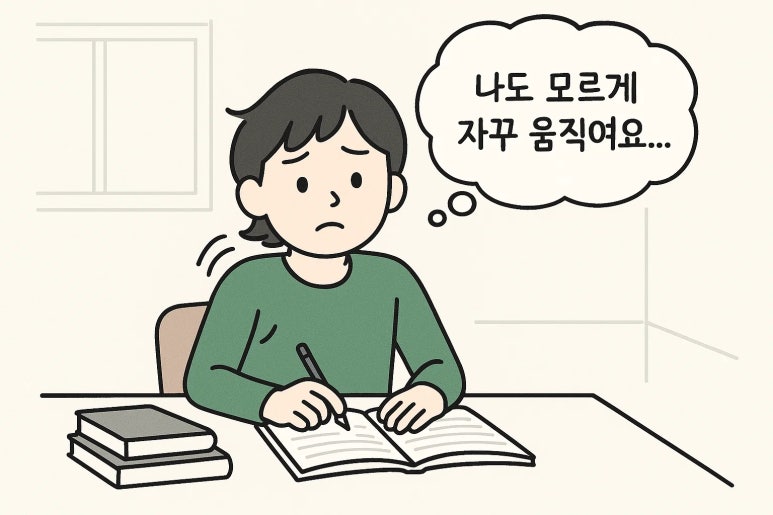
Minji (pseudonym, 15), whom I met, had a brief eye-blinking tic in her early elementary school years, but it quickly disappeared, so her parents said they had forgotten about it.
However, when she entered eighth grade (the second year of middle school), she suddenly started clearing her throat frequently and shrugging her neck, and these motor tics noticeably increased.
It was also a period of significant academic stress, and she was feeling sensitive after experiencing minor misunderstandings in her friendships.
Her parents tried to reassure Minji, saying, “You only had that for a short time in elementary school, just don't worry about it,” but the tics didn't decrease; instead, they seemed to become even more frequent as Minji struggled.
Our Body as an Aquarium: Nervous System Sensitivity and Pubertal Changes
I explain it to Minji and her parents like this:
The reappearance of adolescent motor tic disorder is not simply 'the old tics returning.'
I liken it to 'an aquarium on the verge of overflowing.'
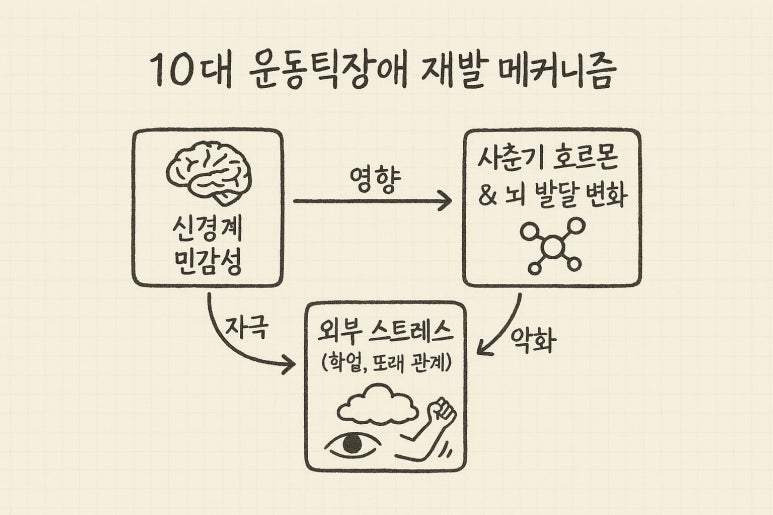
In 'our child's body, which is like an aquarium,' a certain amount of water, or nervous system sensitivity, has been present since childhood.
This stems from genetic factors or neurobiological temperament, meaning some children have a more delicate nervous system and are more sensitive in their responses than others.
Tic disorder is recognized as a neurodevelopmental condition with complex genetic and neurobiological underpinnings. Rather than a dysfunction of a single neurotransmitter, impaired coordination across various brain systems is often cited as a key underlying cause.
This nervous system sensitivity is, in effect, a potential factor for tics.
So, what is the 'water pouring into the aquarium' during puberty?
The biggest change is pubertal hormonal shifts.
Puberty can overlap with the period when tic severity often peaks.
While studies suggest that elevated testosterone or estrogen levels can complexly influence tic symptoms, it's often the physical, social, and emotional stress and anxiety experienced during this period, rather than the hormones themselves, that are the primary drivers behind increased tic symptoms.
Changes in brain development can also influence tic severity.
These complex factors stimulate the sensitized nervous system, causing previously latent tics to reemerge, thereby explaining why tics reappear.
'External Water' Fueling Tic Symptoms: Academic and Peer Relationship Stress
Adding to this are the unavoidable academic stress and peer relationship issues in daily life.
Anxiety about falling grades, conflicts with friends, and comparisons via social media all exert immense pressure on teenagers.
Tics can directly interfere with academics or increase stress, and conversely, academic stress can exacerbate tics.
Furthermore, peer bullying, rejection, and conflicts are major stressors that can cause loneliness and depression in adolescents, and these are also known to worsen tic symptoms.
This is precisely why positive peer relationships can serve as a protective factor for mental health.
These complex factors stimulate the sensitized nervous system, causing previously latent tics to reemerge and becoming significant contributors to adolescent motor tic disorder.

The Wisdom of Repairing an Overflowing Aquarium: The Journey of Holistic Tic Disorder Treatment
So, how should we understand and treat adolescent tics that have reappeared in our children?
I explained to Minji, “We need to bail out the overflowing water from the aquarium and repair the cracks in the aquarium itself.”
I believe that simply suppressing tic symptoms cannot be a fundamental solution.
What I focus on is understanding the multifaceted causes that disrupt the body's balance and, through a holistic treatment approach, helping the child's nervous system to regain stability and balance on its own.
In my clinic, I meticulously examine the child's constitution and lifestyle background to identify clues and patterns related to the causes of tic disorder.
This involves exploring how the child's overall physical condition and lifestyle habits—such as whether they sleep well, have comfortable digestion, frequently catch colds (indicating their immune strength), and their usual personality—relate to their tics.
For instance, if a child is constantly tired and sensitive due to lack of sleep or a weak digestive system, they become more vulnerable to external stress, making tics more likely to appear.
Thus, tic disorder treatment goes beyond mere symptom suppression; it is a process of changing the child's bodily environment and restoring the nervous system's balance.
In Western medicine, non-pharmacological treatments like Comprehensive Behavioral Intervention for Tics (CBIT) are effectively applied alongside medication.
CBIT, in particular, includes habit reversal training and has demonstrated acute and sustained efficacy to the extent that it is recommended as a first-line treatment by several medical academies.
For the patients I see, I help them restore the balance of their disrupted autonomic nervous system and alleviate the tension in an overly agitated nervous system through personalized herbal medicine prescriptions tailored to each patient's physical condition and context, thereby enabling the child to regain their self-regulatory capacity.
For example, for a child experiencing heart palpitations and sleep disturbances due to tension and stress, I prescribe herbs that calm the mind and promote deep sleep, thereby laying the groundwork for the body to recover on its own.
Herbal medicine treatment acts as an assistant, correcting the body's major systems and helping stabilize the nervous system.
| Communication with the child and parents is crucial during the treatment process. I speak frankly. Tic treatment is not something that ends in just a month or two; it is a journey that requires consistent management and effort. Sometimes, it tests one's patience as improvements and setbacks alternate. However, I believe this process is a valuable time for the child to understand their body and mind and learn how to regulate themselves. Treating our child's motor tic disorder means walking alongside them through this complex journey, helping them find their lost balance and stand tall on their own. Even if it's not me, please seek out medical professionals who will carefully examine your child's entire body and listen to their story. We all need to warmly accompany them on their path so that they can once again find healthy growth and recovery. |