Protein Drinks at Convenience Stores: What to Check First?

Table of Contents
- Identifying the Right Protein Source for Your Body
- Optimal Protein Content Based on Your Goals
- The Trade-off Between Sugar and Artificial Sweeteners
- How to Evaluate Cost-Effectiveness and Efficiency
- Summary: Selection Criteria for RTD Products That Suit You
- Smarter Ways to Use Protein Drinks
- References
Identifying the Right Protein Source for Your Body
The first thing to examine is the 'type' of protein. Most RTD products use animal-based protein extracted from milk, which broadly divides into whey protein and casein protein.

Whey protein is rapidly absorbed, making it beneficial for muscle recovery immediately after exercise. Casein protein, on the other hand, constitutes approximately 80% of milk protein and is slowly absorbed in the body, providing a higher satiety effect. For dieters who need to reduce hunger between meals, a product with an appropriate blend of casein may be advantageous.
However, some individuals experience bloating from drinking milk alone. For such people, it's wise to check for 'lactose-free' labeling or choose products based on whey protein isolate (WPI) with lactose removed. Forcing down a protein that doesn't suit your constitution can反而 lead to indigestion and decreased overall condition.
Optimal Protein Content Based on Your Goals
Recently, ultra-high protein products exceeding 40g and reaching 50-60g have emerged. At first glance, it might seem that more is better, but there's a limit to how much our bodies can absorb at once.
For a general meal replacement or after light activity, 20~30g of protein is sufficient. However, after intense weight training, a high-protein product containing 40g or more may be more efficient. For example, products like TakeFit Monster or LabNosh Protein Max are designed with a strong focus on maximizing supplement efficiency.
One important note is that as protein content increases, so does the thickness you taste when drinking and the calorie burden. Rather than blindly chasing higher numbers, first consider whether you're drinking this beverage as a 'snack' or as 'post-workout supplementation.'
The Trade-off Between Sugar and Artificial Sweeteners
The most overlooked aspect when choosing a protein drink is 'sugar.' Products with high protein content but lots of sugar or fructose added for flavor can become enemies of weight management/diet.
Recent products use alternative sweeteners like allulose or stevia instead of sugar to reduce calories. However, individuals sensitive to sweeteners may reject them due to artificial aftertaste. Choosing based primarily on taste significantly increases the likelihood of selecting a product with relatively higher fat and calories.
Check the sugar content on the nutrition label and, if possible, choose products with low simple sugars. If the sugar is too low and the taste suffers, you may need a compromise—checking whether the total calories are appropriate even with a small amount of sugar included.
How to Evaluate Cost-Effectiveness and Efficiency
The price difference between buying protein drinks individually at convenience stores and purchasing in bulk online is substantial. According to data from the Korea Consumer Agency, the price per gram of protein can vary by up to 11.7 times between products.
If you need to drink it daily as a habit, powdered supplements are the cheapest, but the hassle of mixing is significant. Even among RTD products, comparing the price per serving reveals considerable brand variation. Some premium lines are priced at around 3,200 won per 190ml pack.
To ensure cost-effectiveness, rather than simply relying on brand recognition, develop the habit of calculating the 'price per gram of protein.' This allows you to distinguish whether your payment is reasonable for the protein content or whether you're paying for marketing costs.
Summary: Selection Criteria for RTD Products That Suit You
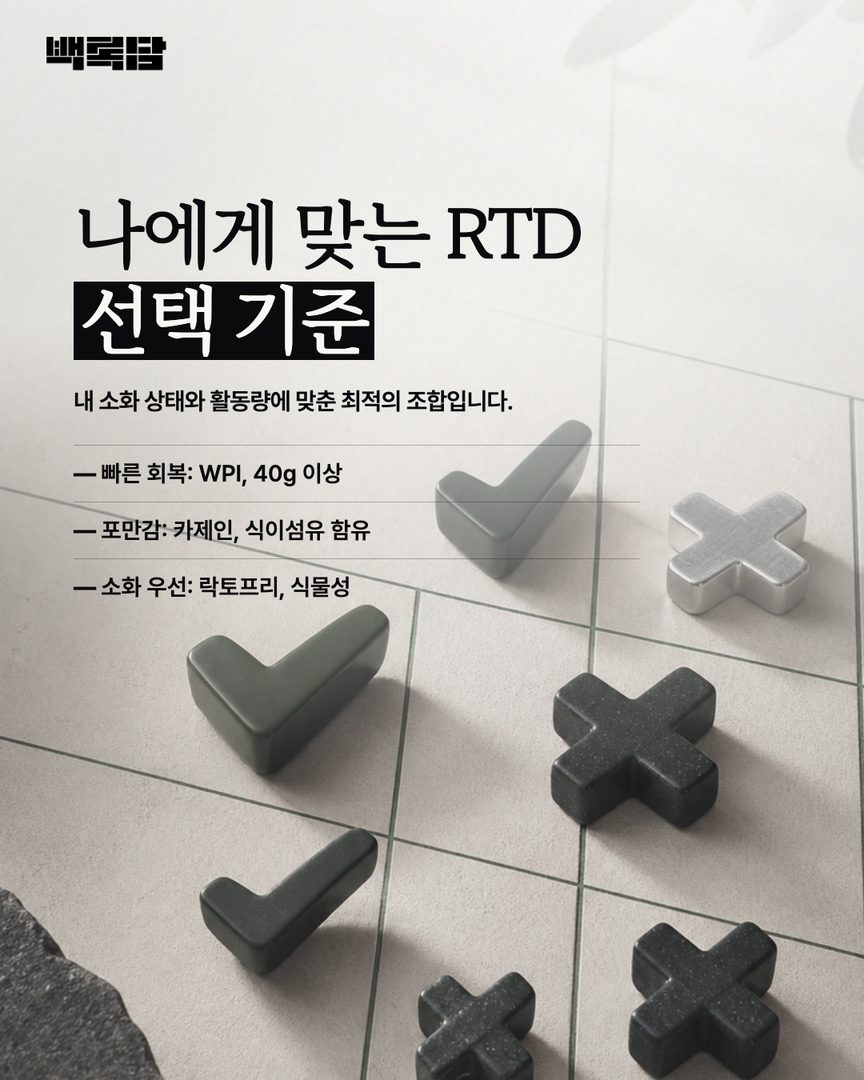
If you're overwhelmed by too many options, narrow down your choices using the following situation-specific criteria:
When you need rapid recovery immediately after exercise: Whey protein (WPI) based, high-protein product with 40g+ content
When you want satiety as a meal replacement: Casein-containing product, balanced RTD with dietary fiber included
When you have difficulty digesting dairy: Lactose-free certified product, plant-based protein (pea, soy) product
When strict sugar management is needed: 0g or low-sugar design, product with low artificial sweetener content
Rather than simply following 'products that others recommend,' choosing based on your digestive condition and daily activity level is the start of a healthy diet/weight management.
Smarter Ways to Use Protein Drinks
RTD products are convenient, but they should not become the entirety of your meals. Liquid-form protein bypasses the chewing process, so the satiety feeling your brain perceives may be lower than the actual intake.
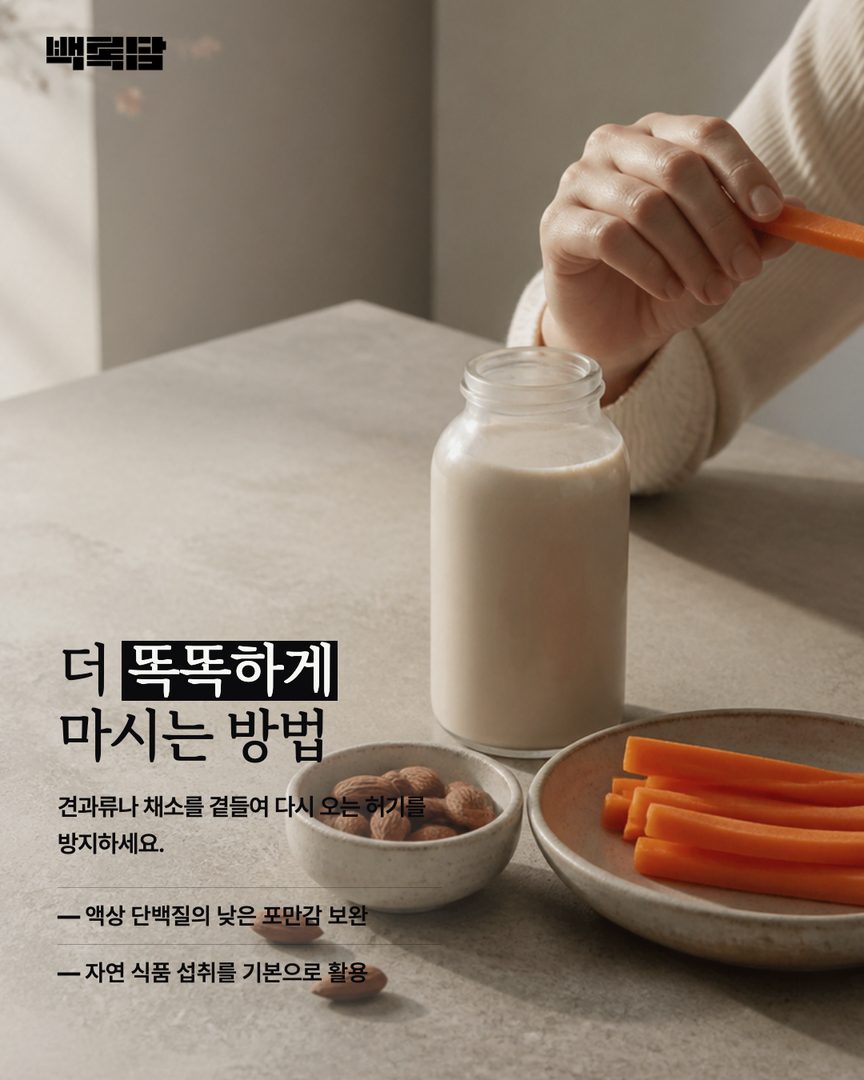
Therefore, when drinking a protein beverage, it's beneficial to pair it with nuts or fresh vegetable sticks to add 'the sensation of chewing.' This helps prevent false hunger and maintain a more sustainable diet. Additionally, rather than relying heavily on large amounts of protein supplements, prioritize natural food sources whenever possible and use RTD products strictly as a 'supplement.'
The one minute spent reading nutrition labels at the convenience store refrigerator can determine your metabolism health. Review your products once more using the criteria for ingredients, content, and sugar that I've shared today.
If you find it difficult to balance your protein intake ratio during regular diet management, or if you're looking to find an efficient weight loss approach suited to your constitution, you can expect more systematic results with the Baekrokdam program. The next time you choose a product, please let me know what criteria you used during your consultation. Let's find the optimal combination together.