Gen Z Weight Management Routine: Diet Patterns & Health Apps

Table of Contents
The scene of a healthcare app notification popping up on a smartphone screen and logging meals at set times is now familiar to many. For Gen Z, who are digitally native, weight management is not simply a grueling ordeal of starving or running blindly—it is closer to a 'design' process of collecting data and finding optimal efficiency.
However, the concerns of patients seen in clinical practice are similar. Many diligently log data through apps, yet body changes are slow, or they become exhausted quickly after following trending routines. Today, let's examine how Gen Z approaches weight management and the essential criteria for building sustainable routines.
The Anxiety Behind Number-Focused Routines
These days, there is a tendency to react more sensitively to data recorded in apps than to bathroom scale numbers. According to KB Financial Research Institute's '2024 Korea Wellness Report,' 8 out of 10 Gen Z individuals use healthcare apps for health management. The characteristic of valuing convenience over reliability is particularly strong.
The problem is that this 'convenience'-centric approach can sometimes obscure the body's genuine signals. That 61.6% of Gen Z responded that they worry about their physical health, with the biggest concern being weight loss methods (21.8%), carries significant implications. Beyond the simple desire to lose weight, there is an underlying psychology of wanting to confirm whether their body is properly under control.
Rather than being satisfied with simply calculating and recording calories, a perspective that examines how that data connects to your condition is needed. When absorbed in numerical results, one tends to collapse easily at the slightest plateau.
Intelligent Pattern Adjustment Over Strict Restriction
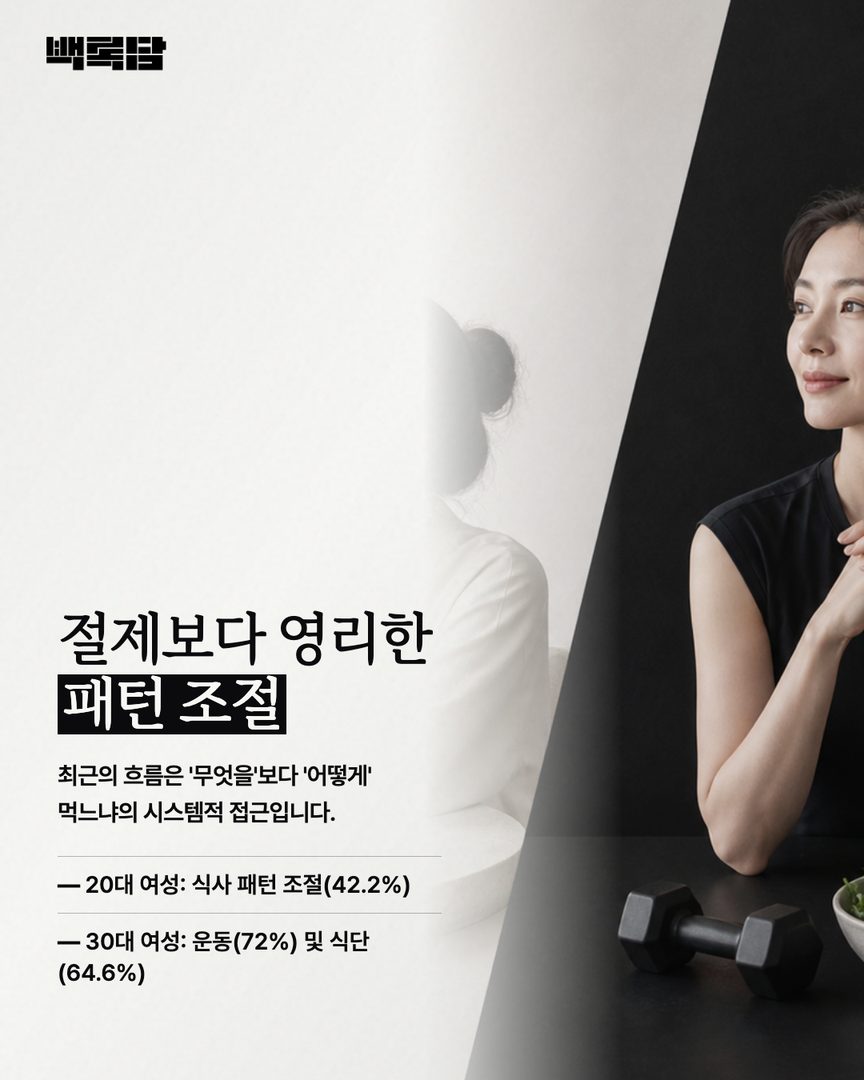
While past diet approaches focused on 'what not to eat,' recent trends have shifted toward the pattern question of 'how to eat.' Interesting findings also emerged from University Tomorrow's 20s Research Institute survey. While women in their 30s emphasized exercise (72.0%) and diet control (64.6%), women in their 20s showed greater interest in dietary pattern adjustment (42.2%).
This means they prefer systematic approaches such as adjusting meal timing intervals or changing nutrient composition sequences rather than unconditional fasting. However, if pattern adjustment flows into trend replication like 'intermittent fasting,' it can become dangerous.
Individual metabolism capabilities vary. The 16:8 fasting, optimal for some, may become a trigger for severe hunger and binge eating for others. This is exactly what I observe carefully in clinical settings. The process of checking whether energy levels drop too much or sleep quality worsens when applying trending routines must precede everything.
The Correlation Between Weight Management and Condition from a Korean Medicine Perspective
In Korean medicine, weight is not viewed merely as the amount of fat. It examines together how harmoniously the body's vital energy (gi) flows and whether waste products are not stagnating but being well expelled. This aligns with the point where Gen Z prioritizes 'daily condition maintenance' as the purpose of health management.
Pay special attention to the fact that those in their 20s cited fatigue accumulation prevention (44.8%) as their primary purpose for recovery management. If one maintains excessively low calories or combines overexercise for weight management, the body recognizes this as a 'crisis situation' and tends to reserve energy. Ultimately, metabolism slows, fatigue intensifies, and this leads to a vicious cycle that obstructs further weight loss.
In the end, the core of a successful routine is not 'starving the body' but 'creating an environment where the body uses energy well.' Rather than forcefully squeezing in a state of low energy, increasing metabolism efficiency through supplements tailored to one's constitution is a much wiser direction.
Practical Guide for Sustainable Routines
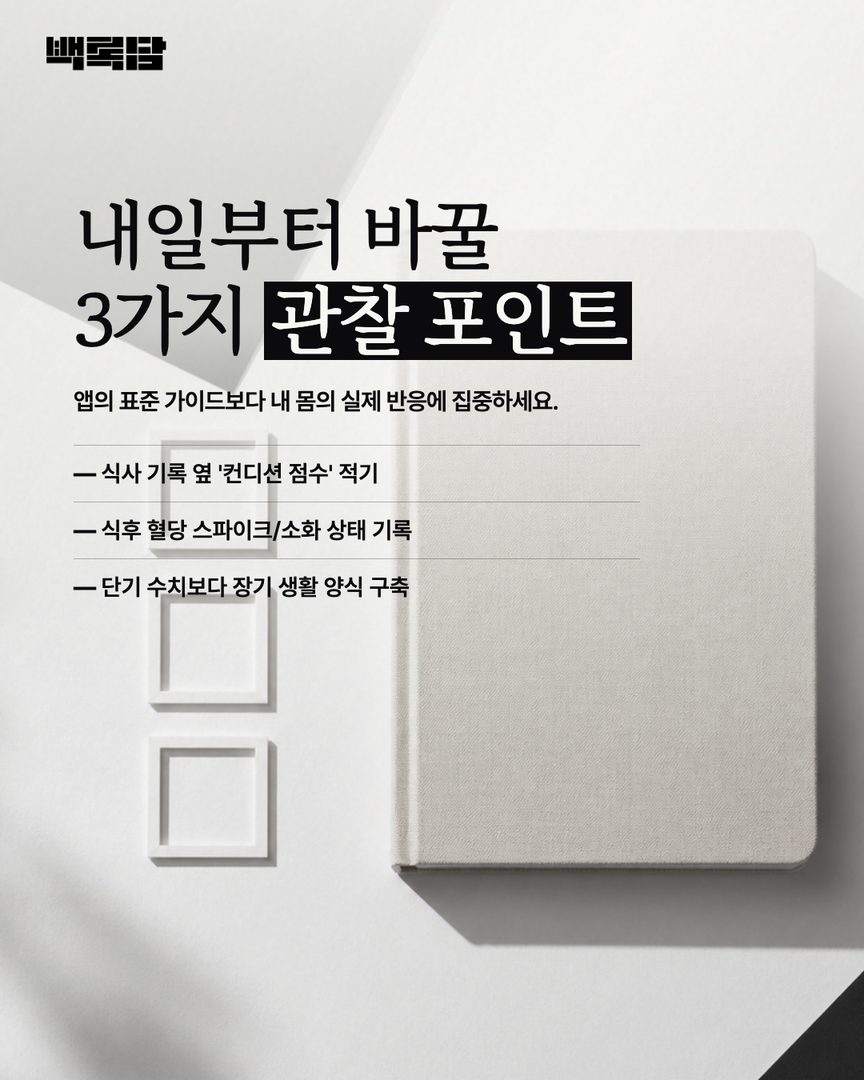
So what should you change starting tomorrow? Before relying on app numbers, add the following three observation points to your routine:
First, write a 'condition score' alongside meal logs. Even when eating the same calories, some days the body feels light while other days it swells noticeably or drowsiness pours over. Accumulating data on which meal patterns make you most comfortable is important.
Second, focus on 'your response' rather than 'convenience.' Standard guidelines recommended by healthcare apps are for reference only. Recording signals your body sends—for example, food coma from rapid post-meal blood sugar spikes or indigestion after consuming certain foods—and adjusting those patterns is truly smart management.
Third, don't obsess over short-term numerical changes. According to one study, while the intervention group had significantly less weight than the control group at 6 months (-1.33kg), the difference was not significant after 24 months[1]. This shows that creating a long-term sustainable 'lifestyle' is far more difficult and important than initial intense pressure.
The Power of Small Adjustments Over Ambitious Plans
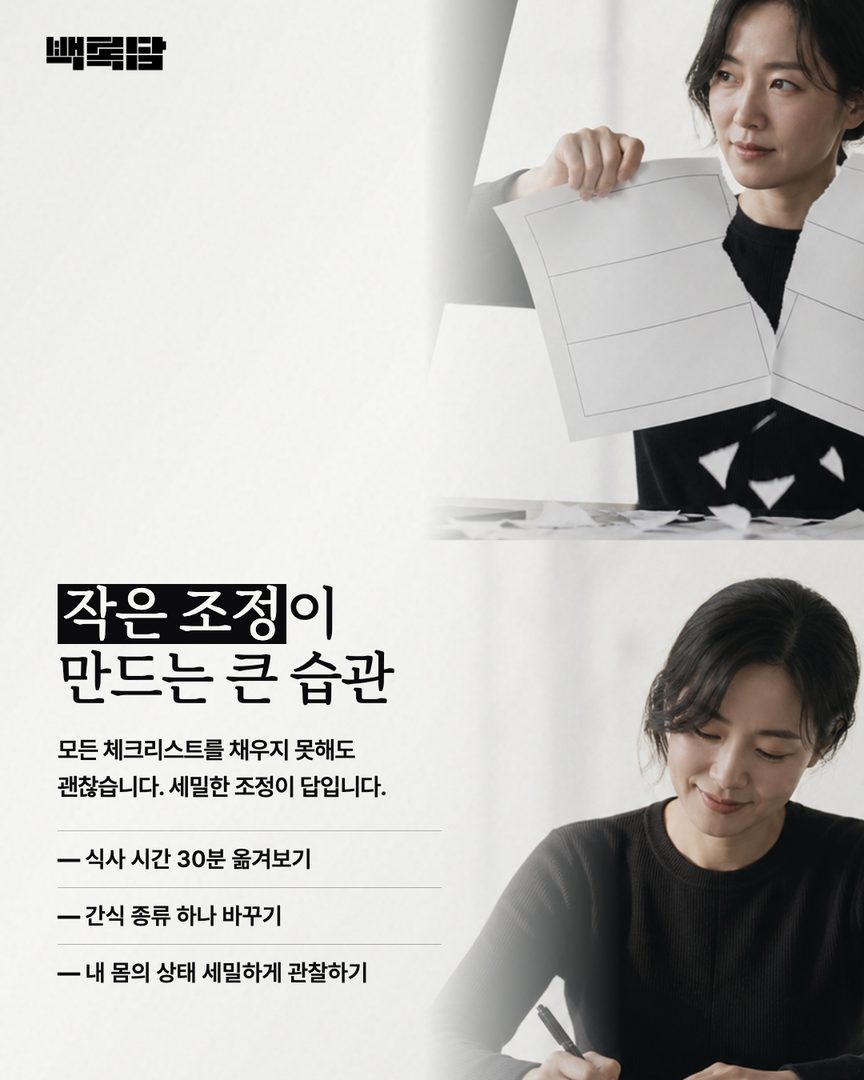
The desire to create a perfect routine and execute it all at once actually triggers giving up. Just because you couldn't check off all the diet app's checklist doesn't mean you failed. Rather, healthy habits are formed from the collection of small adjustments—observing your body's condition closely and shifting meal times by 30 minutes or changing snack types accordingly.
When the body feels too heavy or pattern adjustment alone reaches its limit, seeking professional help is also an option. With the Baekrokdam program, you can design your routine in a healthier direction through detailed adjustments tailored to individual constitution and metabolism status.
After dinner tonight, before checking the app's numbers, take a moment to quietly feel what state your body is in right now. Whether your stomach is comfortably full or if it's a false hunger—this brief observation will be the starting point that changes your routine. If I see you in the clinic next time, please tell me which patterns made your body feel lightest.
References
[1] Effectiveness of obesity interventions among South Korean children and adolescents and importance of the type of intervention component: a meta-analysis. (Clinical and experimental pediatrics, 2022)
"Health management is also about habits"...8 out of 10 Gen Z use healthcare apps
Looking at those who successfully lost weight, such meal routines existed