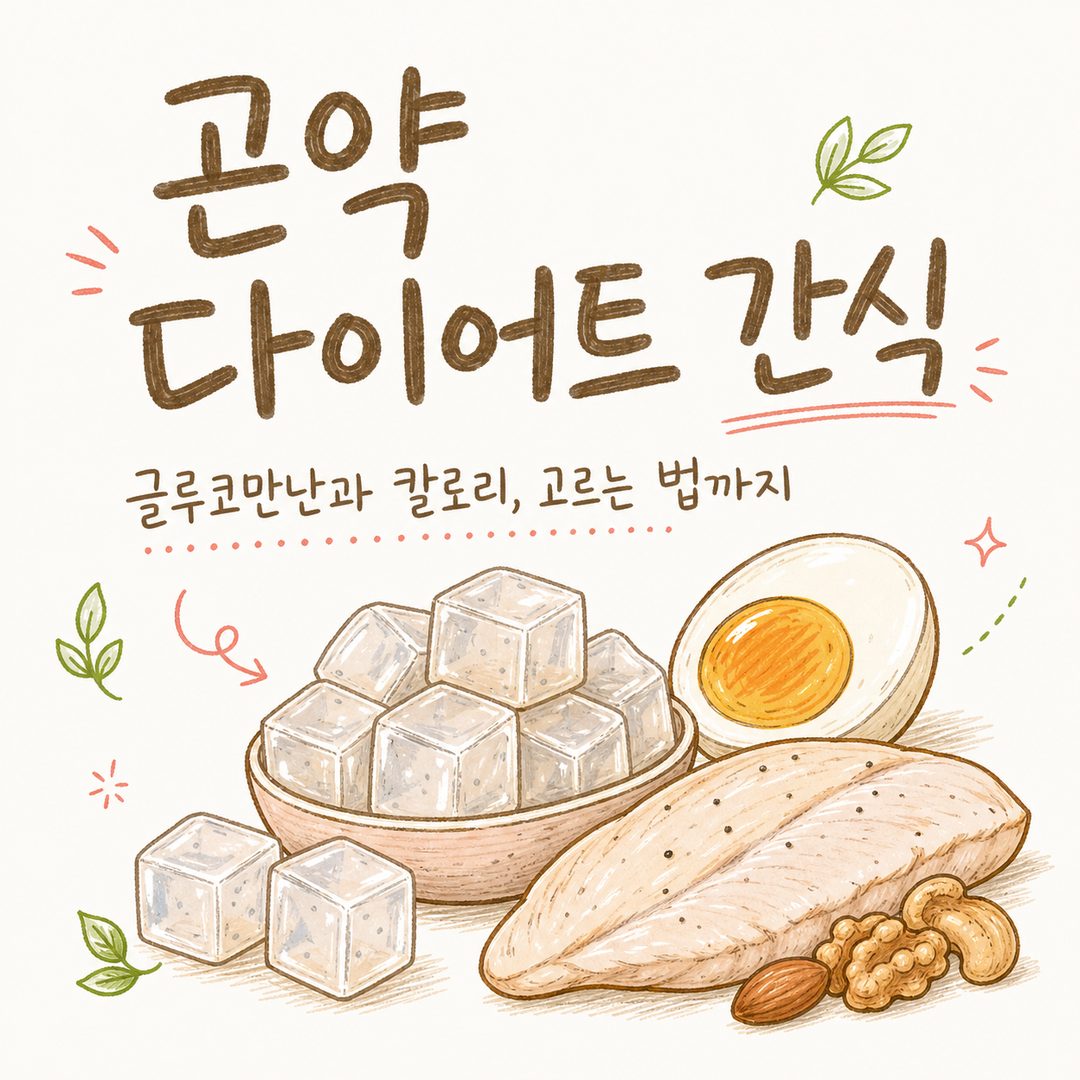
Konjac Diet Snacks: Glucomannan, Calories, and Tips

Table of Contents
During consultations for weight management, I often hear patients say, "I get so snacky around 8 PM that I end up opening a bag of chips." As a fellow human, I understand that feeling all too well. That is why when patients ask, "Is it okay to eat things like konjac jelly?" I don't necessarily stop them. However, I always point out that konjac snacks are a "supplementary card for managing hunger," not a "meal replacement," and that many products on the market have exaggerated advertisements. Today, I will explain how to smartly choose and utilize konjac diet snacks, in the same tone I use with my patients in the clinic.

The Base — Konjac Calories and Glucomannan
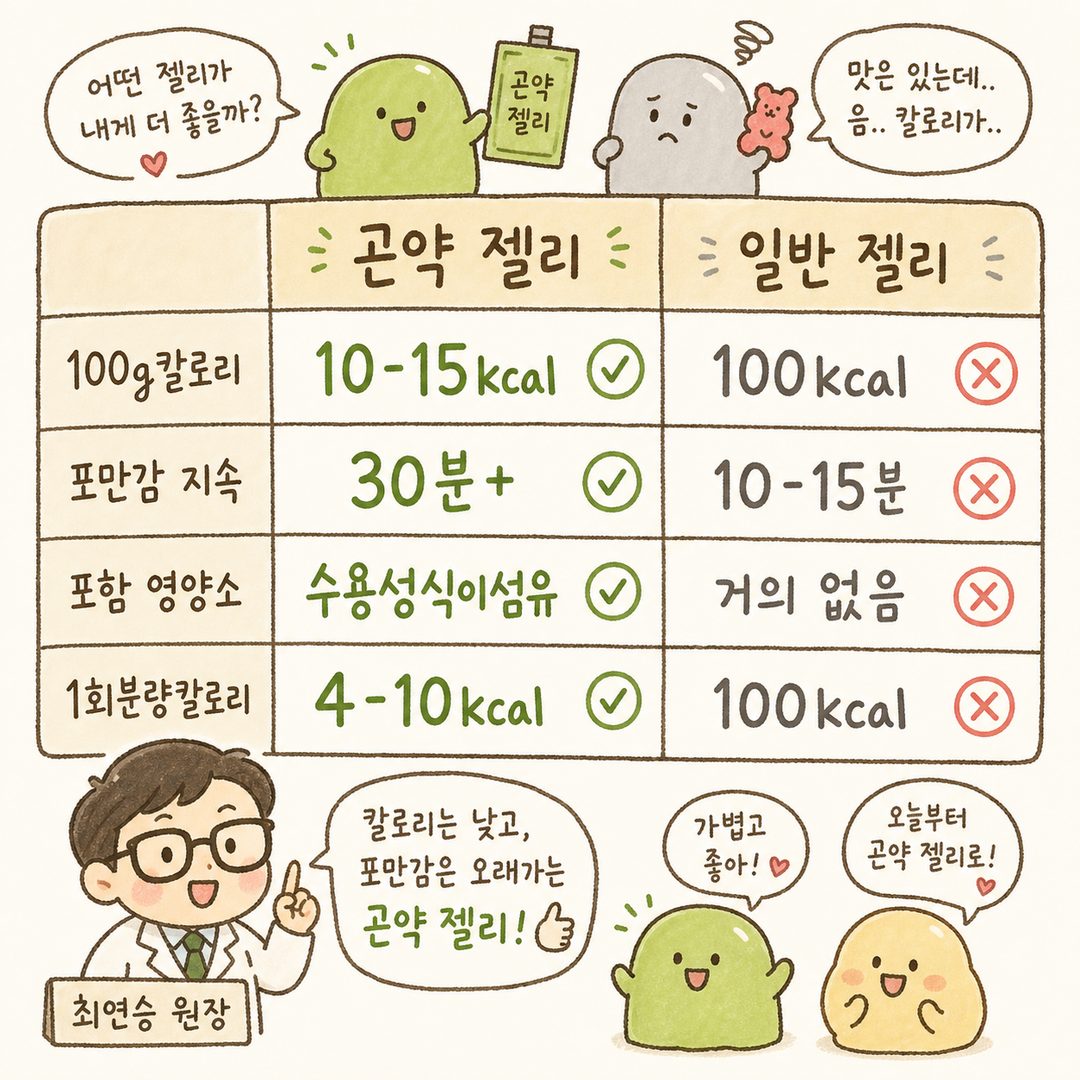
The greatest weapon of konjac snacks is the low-calorie nature of konjac itself. According to nutritional data, konjac is extremely low in calories, usually around 10–15 kcal per 100g. Commercially available konjac jellies contain about 4–10 kcal per pouch (approx. 130g), which is a significant difference compared to regular jellies that often exceed 100 kcal. Choosing a konjac-based snack naturally reduces your total daily caloric intake even for the same weight of food.
Furthermore, glucomannan (a water-soluble dietary fiber), the main component of konjac, absorbs water and expands in the stomach to create a feeling of fullness. Since it provides a sense of being "somewhat full," it is a useful card for managing hunger between meals. However, konjac is approximately 95–97% water, making it almost like water in solid form. It contains virtually no nutrients like protein, vitamins, or minerals. Therefore, it is accurate to think of the base itself as an "empty, low-calorie filler."
Protein — What You Pair with Konjac is the Real Variable
I do not recommend "one-food diets" consisting only of konjac. Because it lacks nutrients, replacing entire meals with konjac can easily lead to nutritional imbalances. Therefore, when using konjac snacks, the variable I always emphasize is whether you are pairing it with protein.
Even for weight loss, a diet that includes vegetables and proteins such as chicken breast or fish is more appropriate. The same principle applies to snacks. Instead of just carrying a pouch of konjac jelly, pairing it with a boiled egg, a cup of Greek yogurt, or a slice of chicken breast completely changes the duration of satiety. Konjac takes the role of "immediately suppressing hunger," while protein takes the role of "carrying you through to the next meal." In the clinic, I see that those who stick to this combination significantly reduce the frequency of succumbing to late-night snack cravings.
Ingredients — Checking the Actual Dietary Fiber Content
When choosing konjac snacks, be sure to check the secondary ingredients—specifically the konjac content. When the Ministry of Food and Drug Safety (MFDS) investigated 146 popular online konjac jellies, the average konjac content of the 54 products found unfit was only 0.4g. Despite being called "konjac jelly," they contained almost no actual konjac.
This is a problem because a certain amount is required to experience the dietary fiber benefits that are the core value of konjac. According to standards cited in the same investigation, at least 2.7g of dietary fiber per day is needed to help with cholesterol and bowel movements, and studies focused on weight loss often mention consuming 1g of konjac about an hour before a meal. Products with only 0.4g don't even come close to these figures.
I tell my patients, "First, check if the konjac content is listed in grams on the nutrition facts label." Products where konjac is tucked away at the very end of the ingredient list are essentially regular jellies just borrowing the name "konjac."
Sauces and Seasonings — The Trap of Sweetness and Additives
While the konjac base itself is low-calorie, the syrups, sauces, and flavor additives applied to it often drive the calories back up. In particular, the "sweet konjac jelly" category often uses liquid syrups as a main ingredient, which can easily dilute the advantages of the base.
The same applies to konjac noodles or konjac gimbap. Konjac noodles themselves are low at 10–15 kcal per 100g, but if the sauce poured over them is thick and sweet, the total calories for the meal can end up being similar to regular noodle dishes. This is why I emphasize the principle: Konjac = Base replacement, Sauce = Separate control. There is little point in cutting calories by switching the base to konjac if you fill them back up with the sauce.
Another point to note from the MFDS investigation is advertising. Among the 146 products investigated, 37% (54 products) used false or exaggerated advertising, and 62% claimed unverified effects such as weight loss or constipation improvement. You should ignore copy that suggests "you can lose weight with just this one thing" and instead develop the habit of reading the ingredients and content on the label yourself.
❌ Common Late-night Snacks vs. ✅ Konjac-based Options
Let's compare two ways of handling that "9 PM hunger."
❌ A bag of regular jelly: Around 100 kcal; mostly sugar, so you'll likely crave more snacks in about 30 minutes.
❌ A bag of chips + soda: High in calories, low in satiety, and disrupts your appetite the next morning.
✅ 1 Konjac jelly (4–10 kcal) + 1 boiled egg: Low in calories, with protein to sustain fullness.
✅ Konjac noodles (10–15 kcal per 100g) + chicken breast/vegetables + light sauce: Sufficient as a meal replacement.
✅ A slice of konjac cake (muk) + kimchi/vegetables: Safely satisfies cravings for something salty.
The key is "not adding konjac to your diet, but replacing high-calorie options with konjac." It is safer to use konjac as a way to replace part of your rice or noodles rather than just adding it on top of everything else.
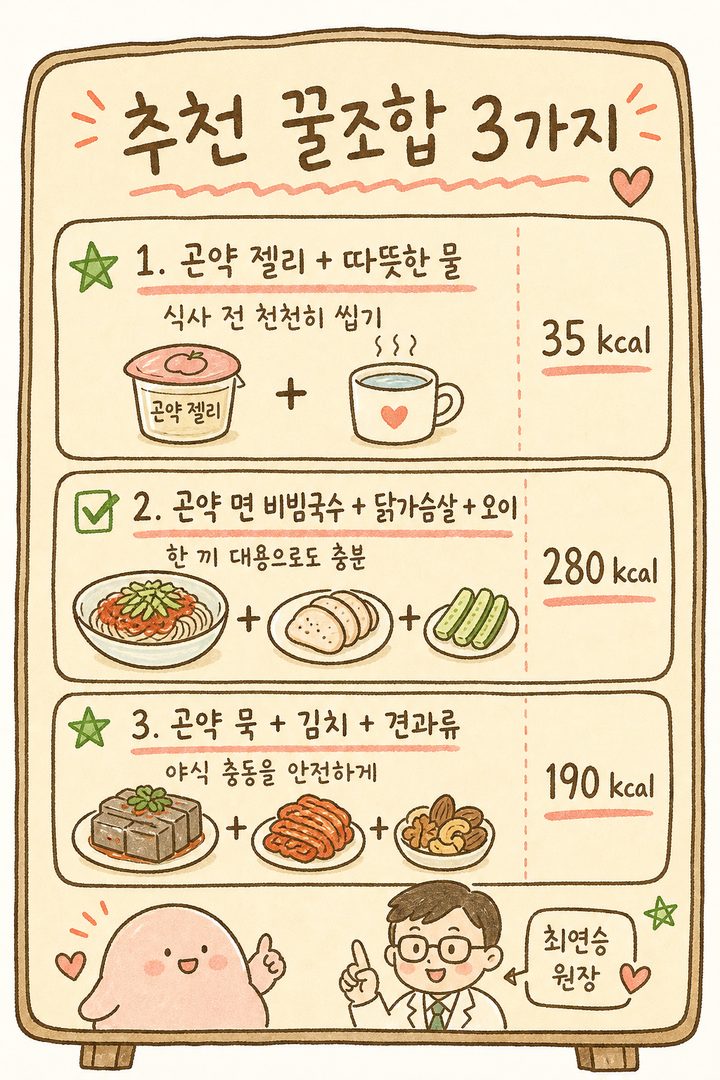

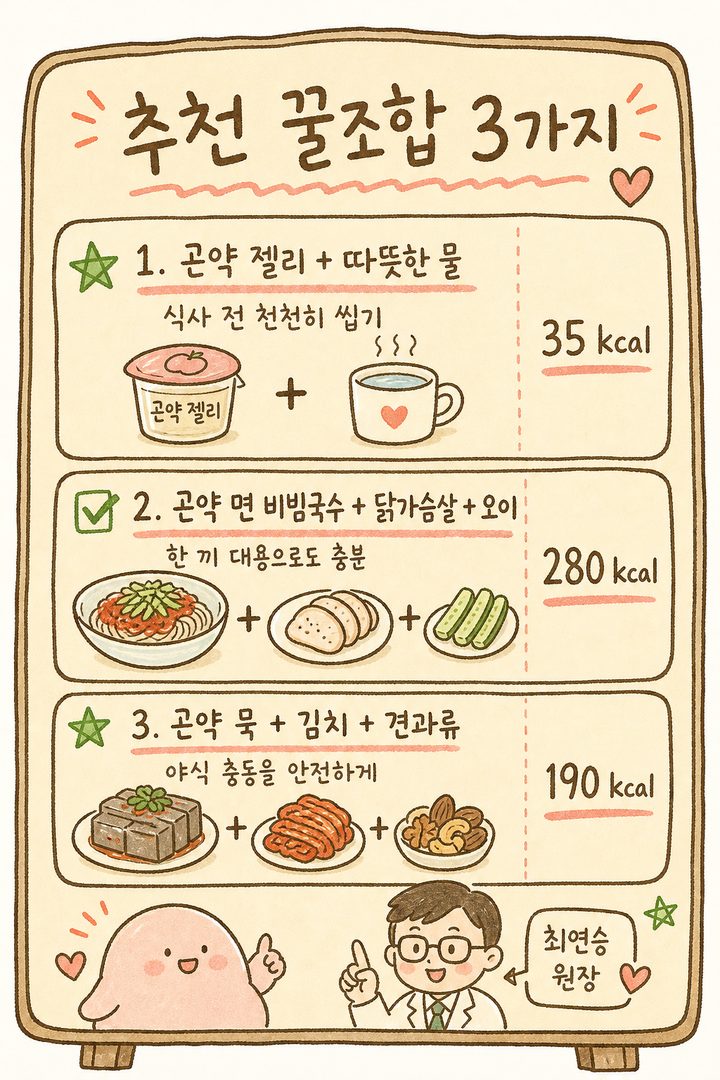
3 Recommended Combinations
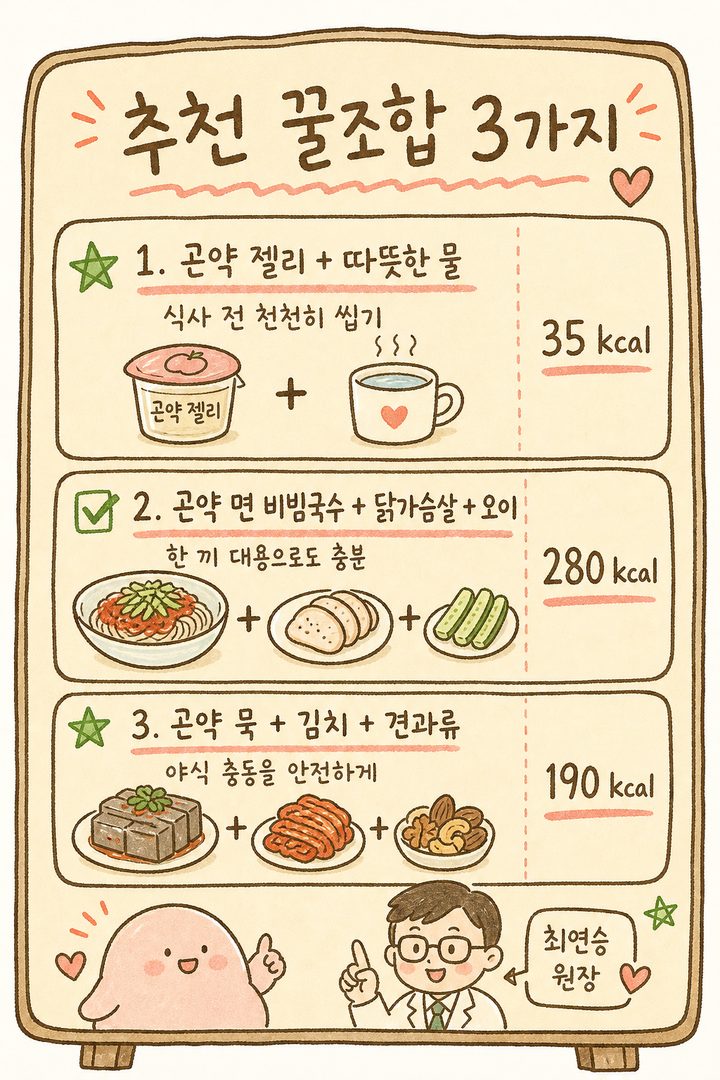
Here are the combinations I frequently suggest to patients in the clinic:
- Pre-dinner Konjac Jelly + A Glass of Warm Water
Chew the konjac jelly slowly before your meal and drink plenty of water with it. The glucomannan will expand, naturally helping you reduce your meal portion. The rule for konjac products is to consume them with sufficient water.
- Konjac Bibim-guksu (Spicy Noodles) + Chicken Breast + Sliced Cucumber
Use konjac noodles instead of flour noodles and top them with protein and vegetables. Use a light sauce based on soy sauce, vinegar, and sesame oil. This combination significantly reduces meal calories while providing necessary protein.
- Konjac Cake (Muk) + Kimchi + Small Amount of Nuts for Late-night Cravings
This is a card to use instead of ramen when you crave something salty at night. Use konjac cake for volume, kimchi for flavor, and a small amount of nuts to supplement healthy fats. Eating too much may cause digestive discomfort, so stick to a single bowl portion.
It is recommended to chew konjac snacks slowly and thoroughly. Swallowing them quickly delays the satiety signal and can strain digestion due to konjac's unique texture. Furthermore, rather than completely replacing a meal with konjac, it is safer to use it as a supplementary tool for overall daily calorie control.
When used correctly, konjac snacks are a great supplementary card that gently breaks the cycle of late-night cravings and snacking. However, you must avoid being fooled by products with only 0.4g of content and maintain the habit of pairing them with protein to see real changes. If you feel you have reached a limit with diet control alone, or if you constantly struggle with appetite, bloating, or digestive issues, consider seeking personalized help through the Korean medicine diet with Baekrok Gambi-jung. The nights you spend enduring with a pouch of konjac jelly can become much lighter.