Chicken Breast Tomato Pasta: Calories, Protein & Tips

Table of Contents
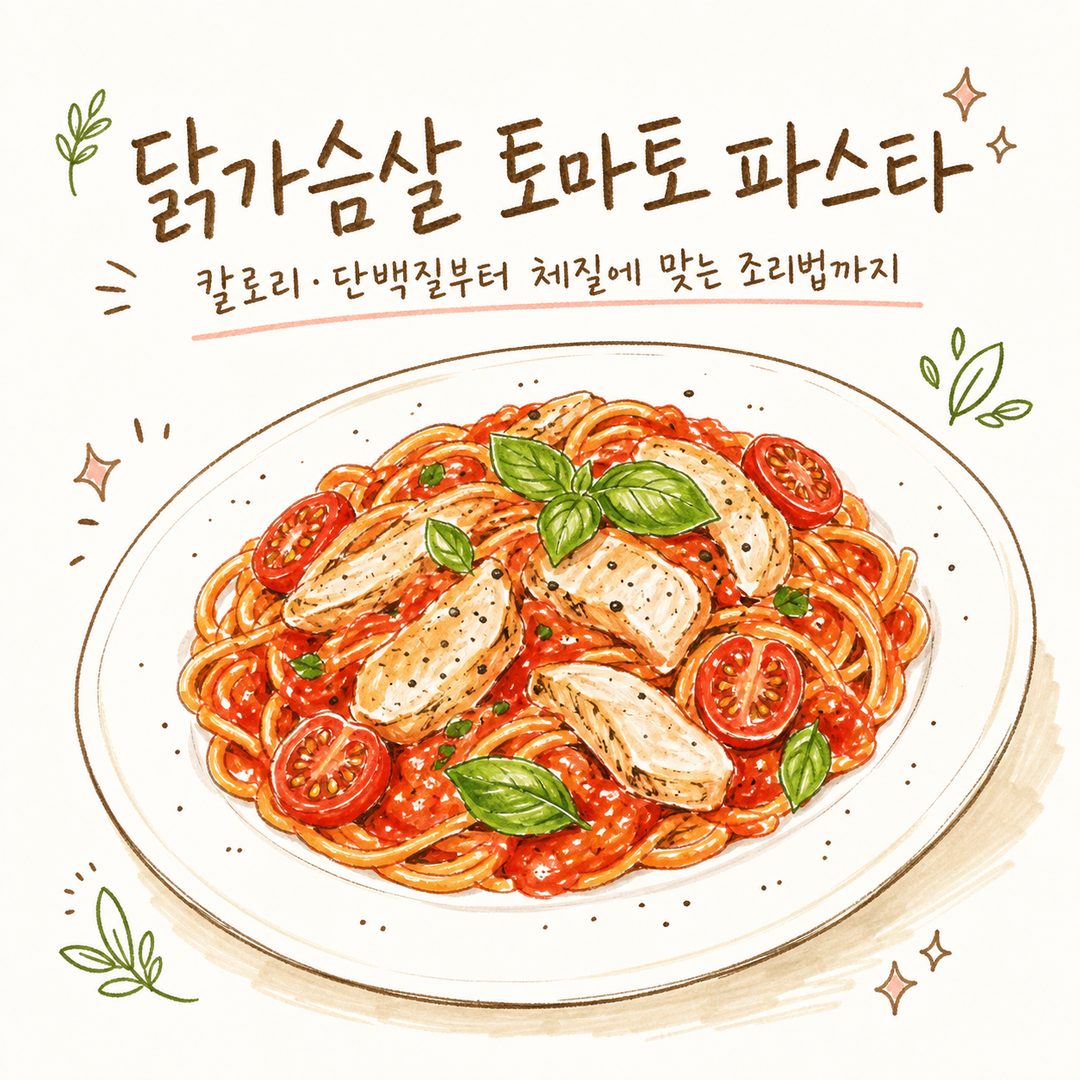
When discussing diet plans with patients in the clinic, I often hear, "Doctor, chicken breast is too dry to eat every day." That’s why Chicken Breast Tomato Pasta is gaining popularity lately. It’s a combination that allows you to maintain protein intake without it being a chore to eat, making it a frequent choice during weight management.
Why Chicken Breast Tomato Pasta is a Diet Staple
When dieting, many people focus solely on reducing calories, which often leads to a collapse in protein intake. A protein deficiency causes muscle loss and a drop in basal metabolism, eventually leading to a plateau where weight no longer drops. Therefore, it is crucial to choose meals that secure a sufficient amount of protein per serving.
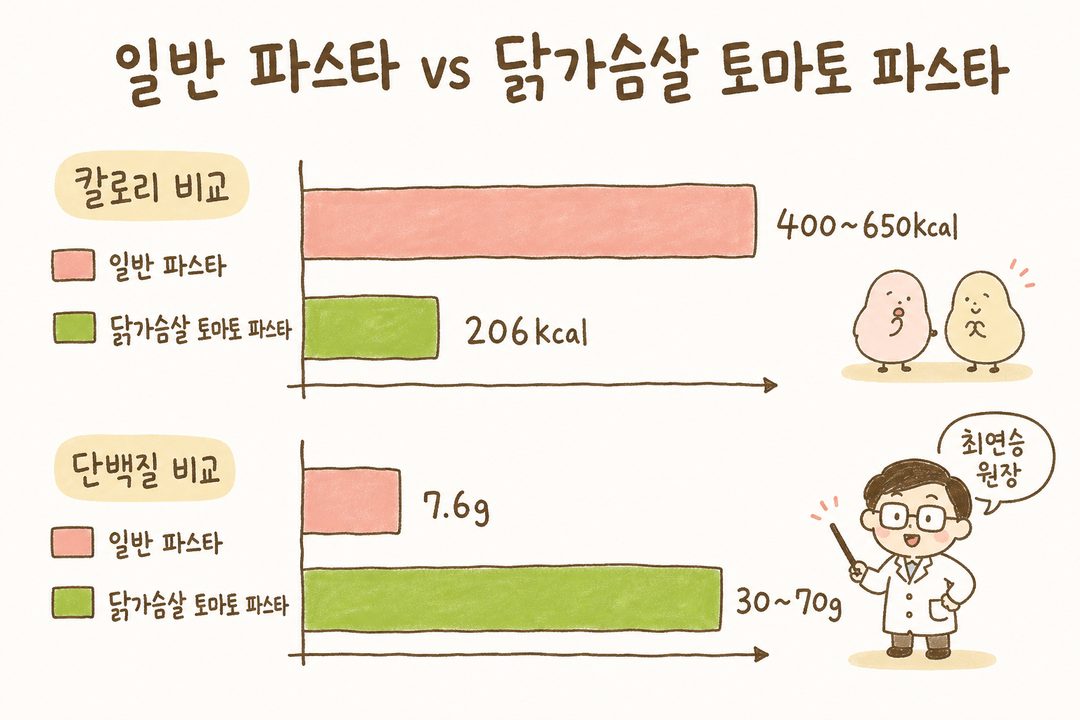
Chicken breast tomato pasta is quite balanced in this regard. According to fatsecret and geniet databases, a typical commercial serving falls within the range of approximately 400–650 kcal and 30–70g of protein. Compared to fatsecret's data for regular tomato sauce pasta (no meat, 1 cup), which sits at 206 kcal and 7.6g of protein, choosing the chicken breast version multiplies the protein intake several times over while using the same tomato base.
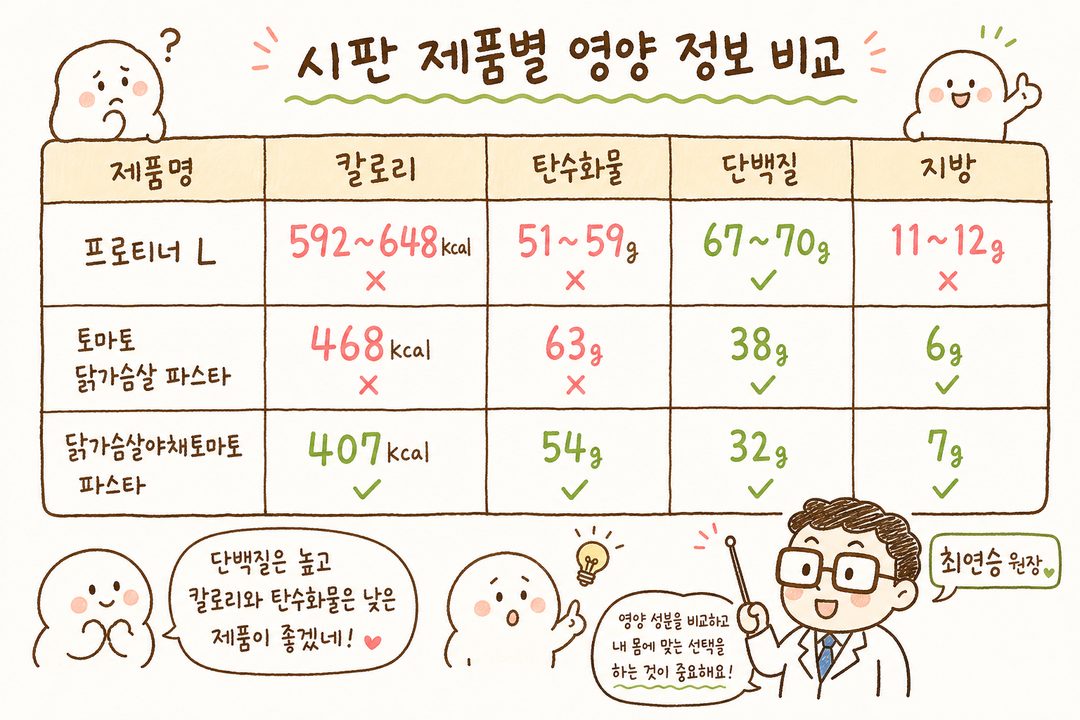
Nutritional Breakdown by Product and Serving
Let's look at the specific numbers. Based on products listed in nutritional databases, chicken breast tomato pasta generally looks like this:
Proteiner L Chicken Breast Tomato Pasta is recorded in one source as 592 kcal, 51g carbs, 67g protein, and 11g fat; another source lists it as 648 kcal, 59g net carbs, 70g protein, and 12g fat.
Tomato Chicken Breast Pasta (444g serving) contains about 468 kcal, 63g net carbs, 38g protein, and 6g fat.
Chicken Breast Vegetable Tomato Pasta (350g serving) contains 407 kcal, 54g carbs, 32g protein, and 7g fat.
Summarizing these figures, a homemade version of chicken breast tomato pasta realistically ranges between 400–650 kcal, 50–65g of carbohydrates, 30–70g of protein, and 6–12g of fat. Even for the same menu, the difference can be as much as 200 kcal depending on the amount of noodles, the ratio of chicken breast, and the amount of olive oil used.
Real Changes Observed in Patients
Many patients receiving weight management counseling at our clinic have switched their lunch to chicken breast tomato pasta. When they replace a meal of cream pasta, gimbap, or ramen with this menu, securing over 30g of protein in one meal, we often see a decrease in cravings for sweets that usually hit around 4 or 5 PM.
Office workers, in particular, often report, "The frequency of reaching for chocolate or bread in the afternoon has definitely decreased." This is less about willpower and more about the effect of increased protein and dietary fiber, which helps blood sugar rise and fall more slowly. As seen in data for chicken breast tomato stir-fry (243 kcal and 35g protein per 200g according to Philize), the combination of tomato and chicken breast is a structure that easily fills the protein requirement for a meal. This corresponds to approximately 50% of the daily recommended intake for an adult (based on a body weight of 60–70kg).
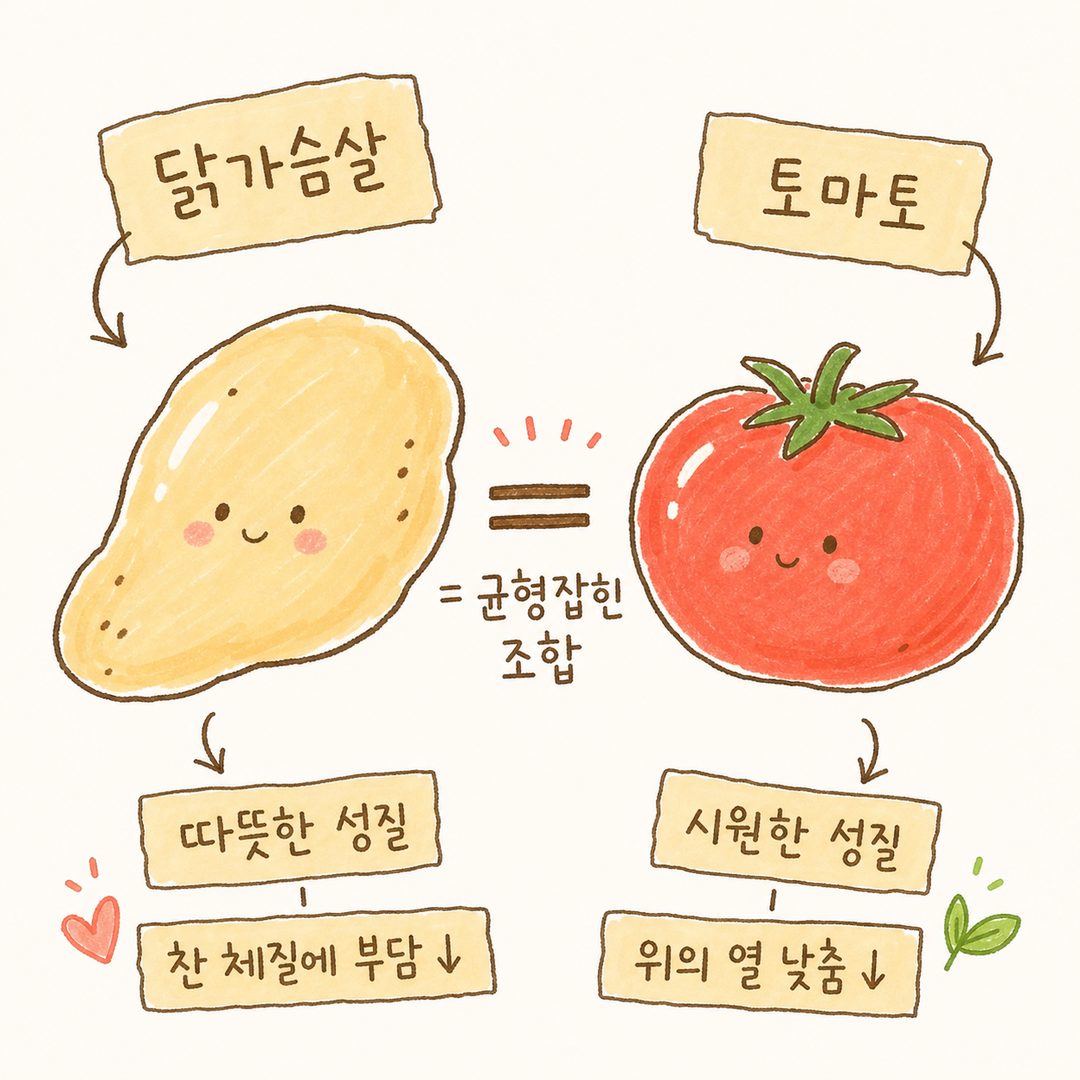
The Baekrokdam Perspective: Combining Tomato and Chicken
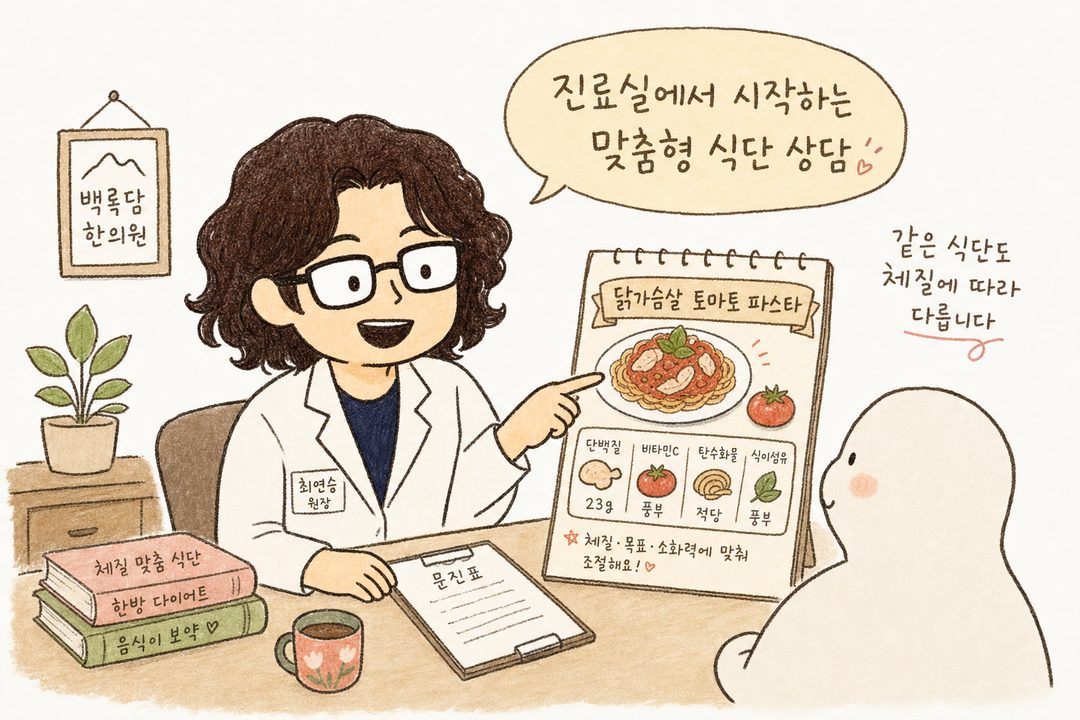
In Korean medicine, we don't view food simply through calories and protein; we also consider the flow of energy (Qi) and digestive capacity. Chicken has a warm nature, making it less burdensome for those with a cold internal constitution. Conversely, tomatoes have a cool nature, which helps soothe heat accumulated in the stomach. When these two meet, they create a balance that isn't biased toward one side.
However, reactions vary by individual. If you frequently feel bloated or gassy, the acidity of tomatoes might irritate your stomach; in this case, it's better to reduce the amount of tomato, cook the noodles slightly less (al dente), and eat slowly. On the other hand, for those with cold hands and feet or fluctuating appetites, we suggest adding a bit of garlic or ginger to supplement the warm energy. To those who ask, "Why do I keep getting indigestion even on a diet?" I provide a cooking method suited to their constitution as much as the type of food itself.
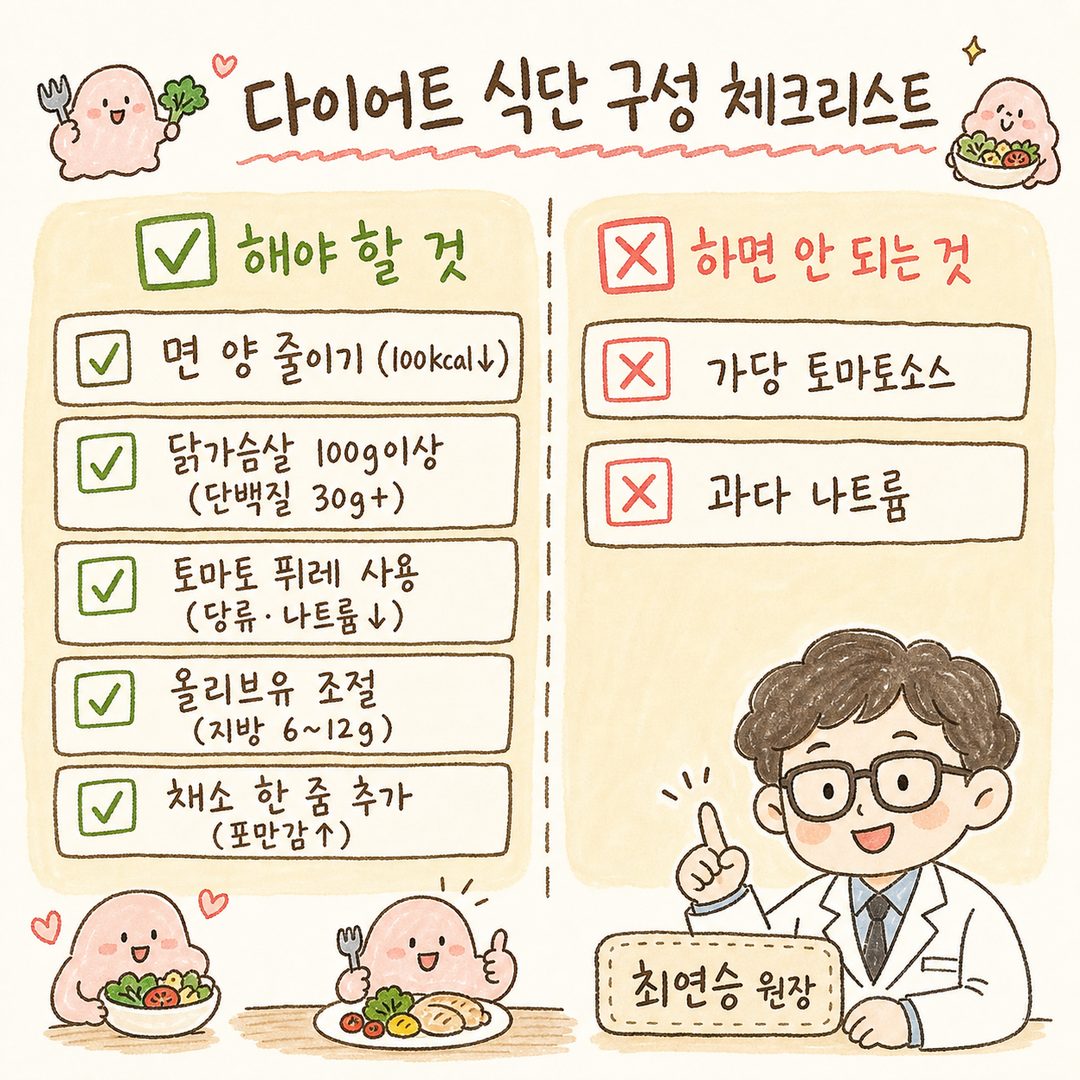

Practical Tips for Today
Managing the proportions in a single meal is faster than following complex rules. To make the most of chicken breast tomato pasta during weight management, try the following:
Set a target of under 400–500 kcal per meal and reduce the amount of noodles by one handful. Simply reducing the noodles can cut nearly 100 kcal.
Use around 100g of chicken breast to ensure at least 30g of protein per meal. The 32–70g range found in commercial products serves as a good reference.
Instead of commercial tomato sauce, use unsweetened tomato puree flavored with garlic and basil to naturally reduce sugar and sodium.
You can easily manage fat within the 6–12g range just by reducing the amount of olive oil used in the pan.
Add a handful of vegetables like cabbage, spinach, or mushrooms for dietary fiber. This increases satiety and tends to reduce the frequency of post-meal snacking.
Once you master one menu, it becomes easier to choose similar options when eating out or using meal kits.
A single meal won't solve every weight management challenge. However, making a protein-rich meal like chicken breast tomato pasta a staple a few times a week will naturally lead to fewer snacks and longer-lasting fullness. If your weight isn't budging despite dietary changes, or if you experience fatigue, edema, or digestive discomfort, consider a Baekrok Gambi-jung diet consultation at Baekrokdam Clinic. We provide personalized prescriptions and lifestyle adjustments tailored to your constitution. Since everyone's body reacts differently to the same diet, we will help you navigate those specifics.