Abdominal Obesity Standards: Waist Size and Weight Goals

Table of Contents
Have you ever pinched your upper belly in front of the mirror and wondered, "Is this just fat, or is it abdominal obesity?" This is the most common question I hear in the clinic. Your weight stays the same, but your belly seems to stick out, and while your clothes fit elsewhere, the waist feels tight. Today, I’ll explain the objective criteria for abdominal obesity and where to start if you exceed them.
Starting with a single line: Waist Circumference
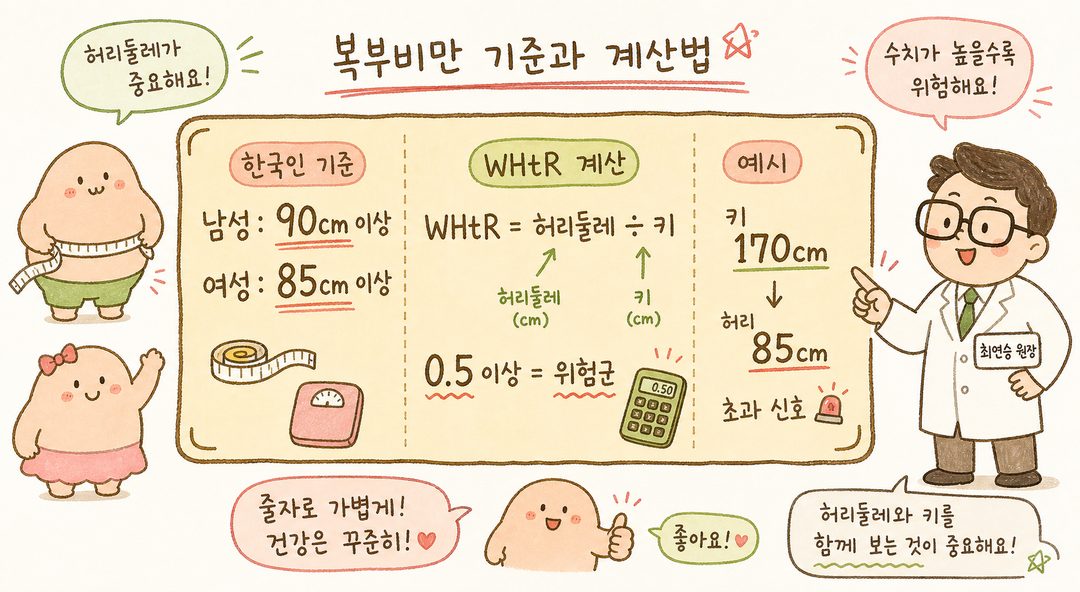
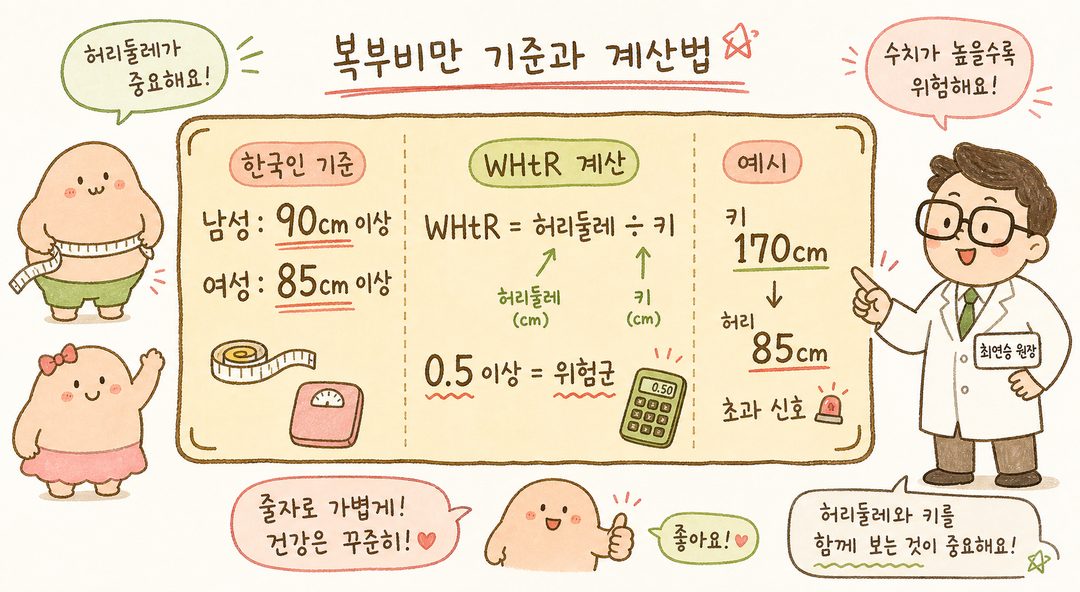
Abdominal obesity is simpler than you think. The only indicator is waist circumference. The Korean standard used by the Korean Society for the Study of Obesity and the National Health Insurance Service is 90cm or more for men and 85cm or more for women. Even if your Body Mass Index (BMI) is within the normal range, if your waist exceeds this line, it is classified as abdominal obesity. This is the point most often missed by those who say, "But my weight is fine..."
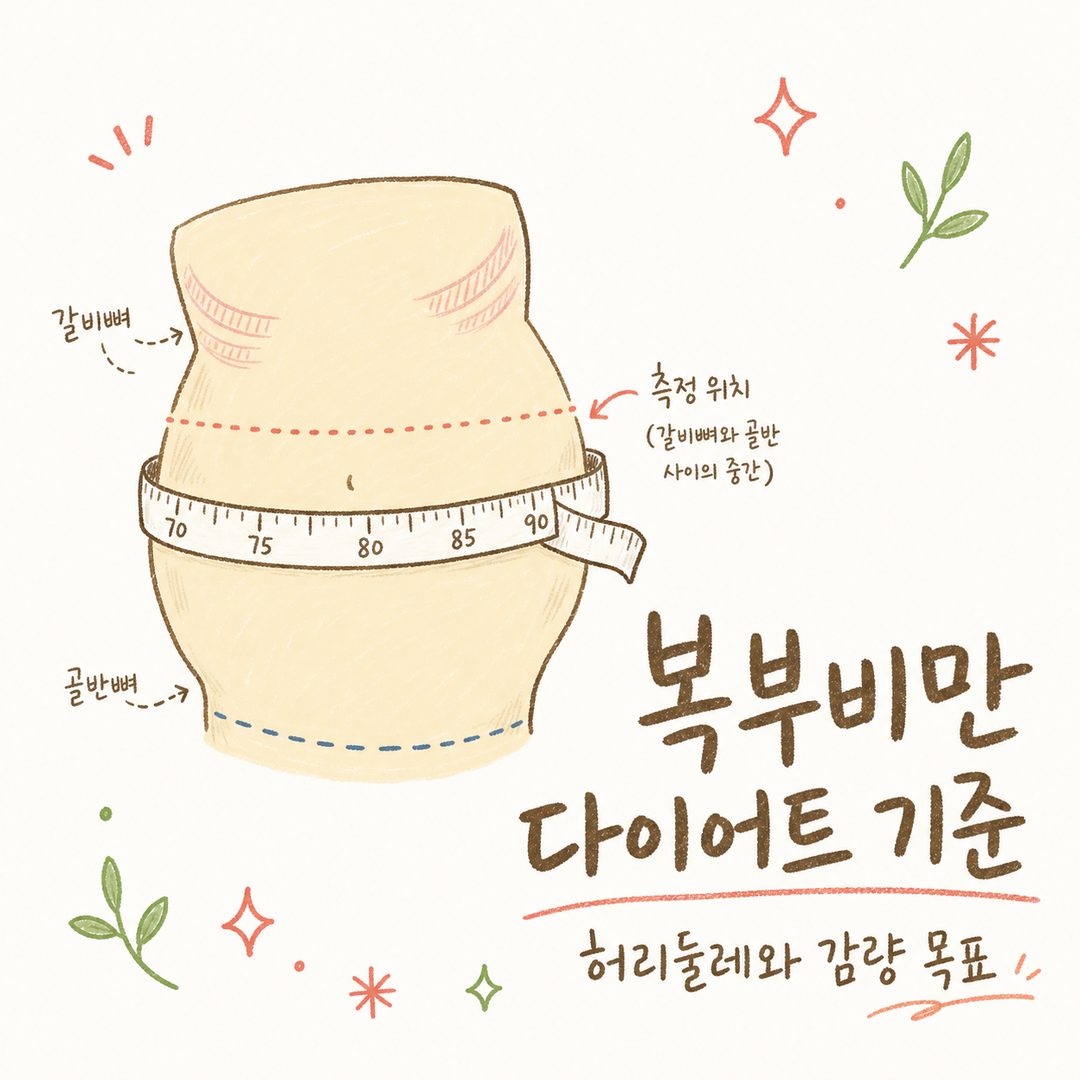
The measurement location is also crucial. Stand comfortably with your feet about 25–30cm apart, then measure horizontally at the midpoint between the lowest rib and the top of the hip bone (iliac crest). That is your true waist circumference. It often does not align exactly with the navel. If you measured around your belly button and thought you were fine, please check again. An additional indicator is the Waist-to-Height Ratio (WHtR); a value of 0.5 or higher is considered a risk group for abdominal obesity. For example, if you are 170cm tall, the warning light turns on the moment your waist exceeds 85cm.
Not all belly fat is the same
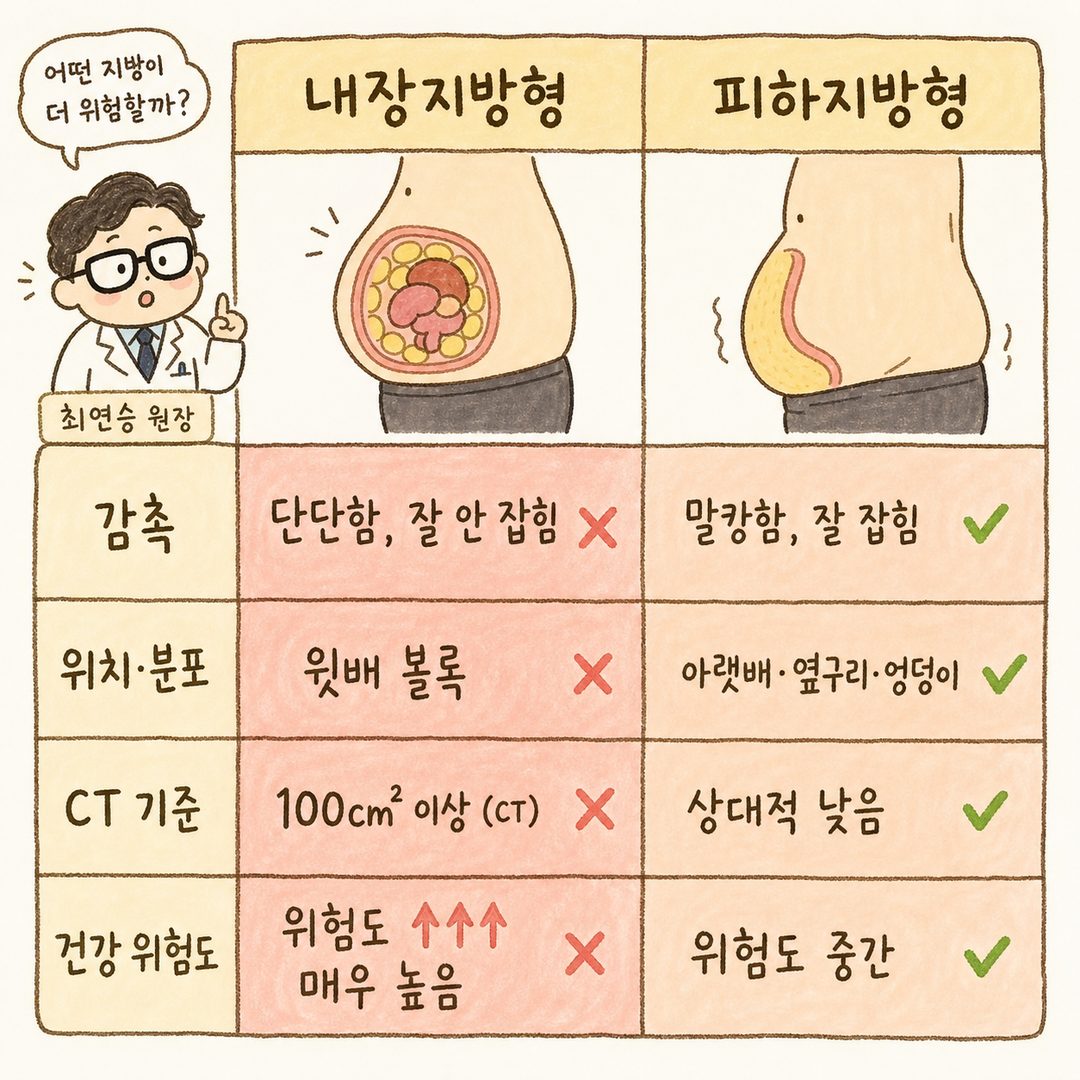
Even if the belly protrudes, the underlying nature of the fat differs. It is mainly divided into two types. Visceral fat accumulates inside the abdominal cavity surrounding the organs. It is characterized by a firm, protruding upper belly that is difficult to pinch with your hands. This type requires caution as it significantly increases the risk of hypertension, diabetes, dyslipidemia, and cardiovascular diseases. On a CT scan, a visceral fat area of 100cm² or more is classified as visceral fat-type abdominal obesity.
Subcutaneous fat accumulates just under the skin. It feels soft and squishy when pinched and often extends to the sides, hips, and thighs. The health risk is lower than that of visceral fat. However, as the volume increases, visceral fat tends to increase as well, raising the overall risk. Therefore, do not assume you are safe just because it is subcutaneous fat. Pinch your belly to see which type you are; it will give you a sense of where to start your weight loss approach.
How much should you lose?
Exceeding the limit doesn't mean you must suddenly lose 10kg or 20kg. The primary goal recommended by experts and the National Health Insurance Service is a 5–10% weight loss of your current weight over 6 months. For someone weighing 70kg, the first goal is about 3.5–7kg in 6 months. It might seem small when written down, but even this amount significantly improves waist circumference, blood pressure, and blood sugar levels.
Don't rush the speed. Consuming about 500kcal less per day results in an average loss of 0.5–1kg per week. A 20–30% reduction in usual food intake is the basic principle. Losing 2–3kg a week isn't necessarily good news; it often involves muscle loss and a high chance of the yo-yo effect. In the clinic, I often say that a "slow but permanent diet/weight management" wins in the end.
What Korean medicine looks at together
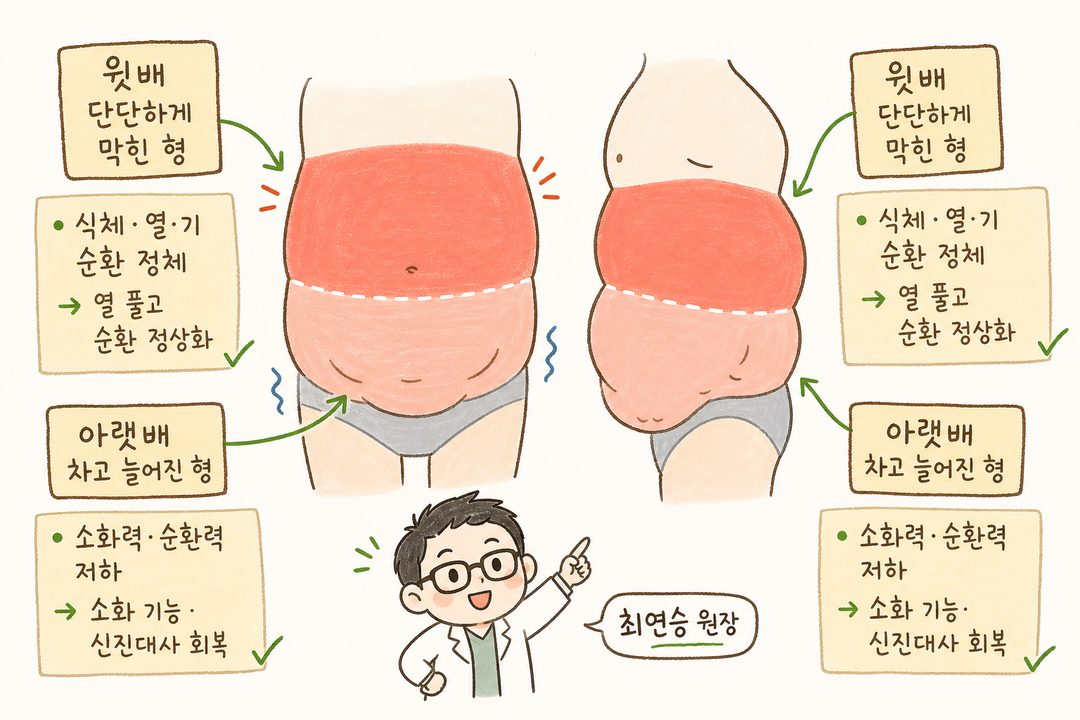
At Baekrokdam Clinic, we don't just look at the waist circumference number. We examine the person's constitution and lifestyle rhythm. Even with the same 90cm waist, one person might have visceral fat with a firm, blocked upper belly, while another has a cold, heavy lower belly. A firm, uncomfortable upper belly is often linked to indigestion, internal heat, and stagnant Qi circulation. A cold, sagging lower belly is frequently seen when digestive function and circulatory power decline, leaving fat unmanaged.
Therefore, in a Korean medicine diet, we approach it by clearing blockages and regulating appetite rhythms rather than just prescribing "eat less." The strategy for someone who overeats or snacks late at night must differ from someone who eats little but still has a protruding belly. While accepting the objective standard of waist circumference, reading the signals your body sends makes your diet/weight management strategy much clearer.

Things you can start today
What you can do right now is simpler than you think. First, measure your waist circumference accurately with a tape measure. The key is to measure at the midpoint between the bottom of the ribs and the top of the hip while exhaling comfortably. For your diet, the first step is to reduce refined carbohydrates (white rice, white bread, snacks, sugar) and move toward unsaturated fats like vegetables, whole grains, lean meats, fish, legumes, and nuts. If changing a whole meal is hard, start by swapping a bowl of white rice for 2/3 of a bowl of multi-grain rice.
Regarding exercise, for those with obesity, aerobic exercise at 50–60% of maximum capacity for over 60 minutes, 6–7 days a week is recommended. It sounds intense, but combining your commute walk with an evening stroll is enough. The intensity is right if you are slightly out of breath but can still hold a conversation. Maintaining a 20–30% reduction in food and this exercise for 6 months will put the 5–10% weight loss goal well within reach.
If your waist is just over the line but your body feels heavy and your appetite rhythm is unstable, it might be a constitutional signal that diet and exercise alone cannot solve. At Baekrokdam Clinic, we read your constitution, circulation, and appetite patterns alongside the objective waist measurement, using Baekrok Gambi-jung to clear blockages. Before struggling alone with a tape measure, let us take a look together.