
Still Tired Despite Eating Enough? Nutrition Density Guide

Table of Contents
When choosing convenience store meals or salad packs, we usually check calories first. But if you feel full yet quickly drained of energy, or experience persistent hunger after meals, the problem may not be calories but rather 'density.'
Meals that simply fill volume versus meals that densely pack the nutrients your body needs produce completely different results. In today's post, I'll share criteria for selecting high nutrition density products that deliver maximum efficiency even in small quantities.
The 'Hidden Nutritional Deficiency'—Full Stomach, Poor Nutrition
We live in an era of abundant food. However, abundance doesn't guarantee health. According to the 2024 Korea National Health and Nutrition Examination Survey published by the Korea Disease Control and Prevention Agency, approximately 32.4%—or 1 in 3 Koreans—experience nutrient deficiency or excess.

What stands out here is that energy intake is often sufficient, yet essential nutrients like vitamins and minerals are frequently deficient. Processed foods and high-calorie items are high in calories (energy) but contain virtually none of the micronutrients needed to run the body. This is what's referred to as the modern 'hidden nutritional deficiency.'
Ultimately, what matters isn't 'how much you eat,' but rather the nutrition density perspective—how many nutrients are packed into each unit of calories.
How to Read the Numbers on Product Labels: Calories vs. Nutrients
When selecting products at the supermarket or convenience store, focusing solely on 'low-calorie' labels can actually risk choosing products with low nutrition density. For example, products that strip away all nutritional components to reduce calories may fill your stomach temporarily but offer no benefit to your body.
For wiser choices, utilizing national nutrition data platforms like K-FIND, operated by the Ministry of Food and Drug Safety, is an excellent approach. Developing a habit of comparing the nutritional components of foods you frequently eat—checking how much vitamins, minerals, and dietary fiber are included relative to the same caloric content—is essential.
According to one study, when prices were reduced for high nutrition density foods ranked in the top 20% of nutrition profiling scores, consumers showed changes in purchasing behavior[1]. This demonstrates that while we cognitively understand the importance of nutrition density, at the actual point of selection, we're more easily swayed by simple indicators like price, taste, or calories.
The Dietary Context Seen in Clinical Practice
In Korean medicine, rather than simply looking at nutrient numerical values, practitioners examine how that food interacts with the body's qi (energy) and its digestive absorption capacity. Because even if you select a product with high nutrition density, if gastrointestinal function is compromised and nutrients cannot be properly absorbed, it's essentially useless.
Particularly for those with reduced appetite or suddenly decreased food intake, efficient nutritional supplementation in small quantities is crucial. Rather than blindly seeking high-calorie supplements, we recommend prioritizing naturally high-density foods.
For instance, fruits like SunGold kiwifruit contain 152mg of vitamin C per 100g, making it easy to meet the adult daily recommended intake of 100mg—a prime example of a high nutrition density food. This type of option that fills necessary nutrients in a small volume is the core of 'efficient diet' recommendations made in clinical practice.
Nutrition Density Selection Guide to Apply Starting Today
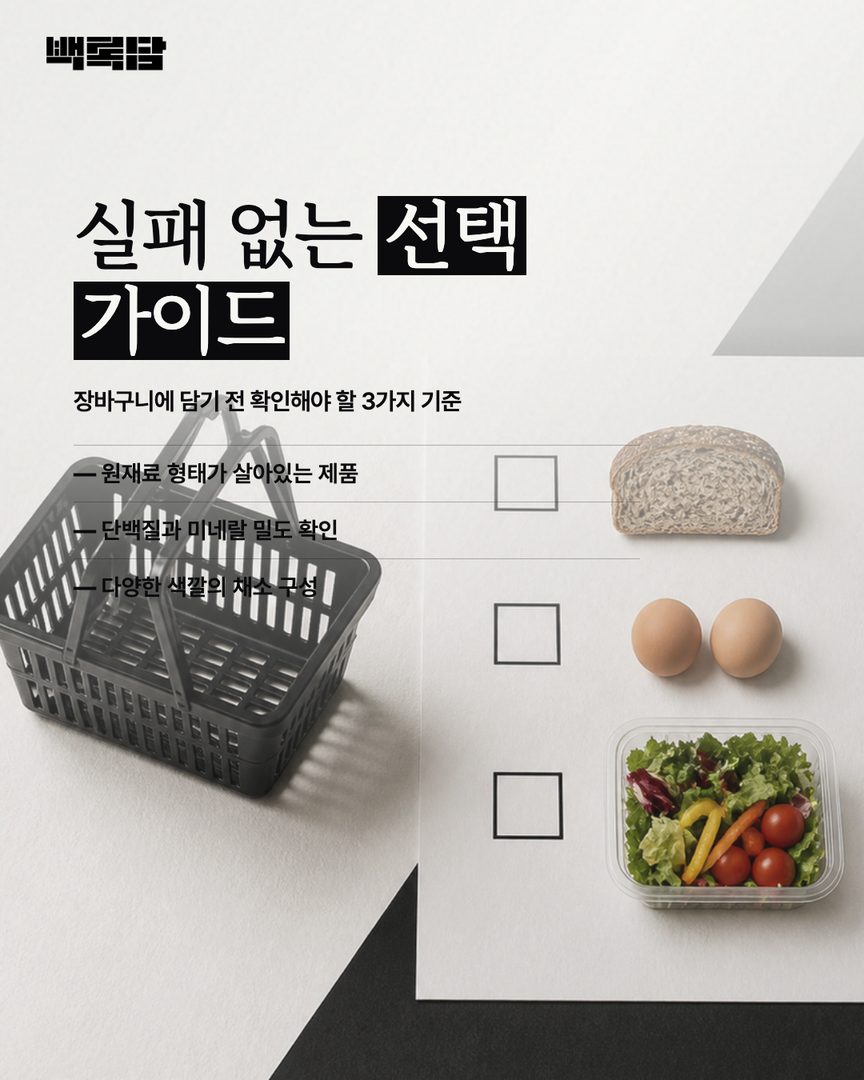
So, what specific products should you choose? Before adding items to your cart, consider these three criteria:
First, choose products with ingredients in their living state. As processing becomes more complex, nutrients are more likely to be destroyed, leaving only 'empty calories' like refined sugar or sodium. Choosing whole grain bread over refined white bread and fresh fruit over fruit juice are the basics.
Second, check protein and mineral density. Even among convenience foods, options vary. For example, natural foods with high protein content like eggs (approximately 12g protein per 2 large eggs) or cooked dried black beans (approximately 15g protein per 1 cup) are good additions to pair with your meals.
Third, monitor your vegetable and fruit intake. According to KDCA data, the daily recommended intake for Koreans is 500g of vegetables and fruits, but very few people adequately meet this. Particularly among young adults aged 19–29, only 10.6% consume at or above the recommended amount. When choosing salad packs, instead of those containing only cabbage, select products with diverse colored vegetables to increase nutrition density.
For Sustainable Nutrition Management
A diet focused on increasing nutrition density is a much longer-term health management approach than short-term diet/weight management. While it may be difficult to change all your eating habits at once, I recommend trying an experiment where you replace just one meal or even one snack with something 'high-density.'

If despite reducing your food intake, you continue to feel lethargy, or if you're struggling with appetite control, please don't assume it's simply a willpower issue. Depending on your metabolism state or constitution, nutrients are often not efficiently delivered.
By combining the Baekrokdam program with a diet guide tailored to your body constitution, you can improve your body's metabolic efficiency and expect more satisfying results. Today, take a close look at the nutrition facts label on the back of food products using the criteria I've shared. Discovering whether what you're eating truly fills your body or simply fills your stomach is the beginning of healthy change.
References
[1] Effects of nutrient profiling and price changes based on NuVal® scores on food purchasing in an online experimental supermarket. (Public health nutrition, 2016)
"Abundant Food Yet Nutrient Deficient"... The Answer Lies in Examining Your Table?
The Key to Slow Aging is 'Density Food'... Can It Also Reduce Blood Sugar Concerns?