InBody: Muscle Mass vs. Skeletal Muscle Mass Explained

Table of Contents
Patients often walk into the consultation room holding their InBody results with the same question: "Doctor, why are Muscle Mass and Skeletal Muscle Mass listed separately? Which one is my actual muscle?" I remember being just as confused when I first saw an InBody report. Today, I’ll explain why these two numbers are separated and how to interpret your body's status step-by-step.
Why Muscle Mass and Skeletal Muscle Mass are Listed Separately
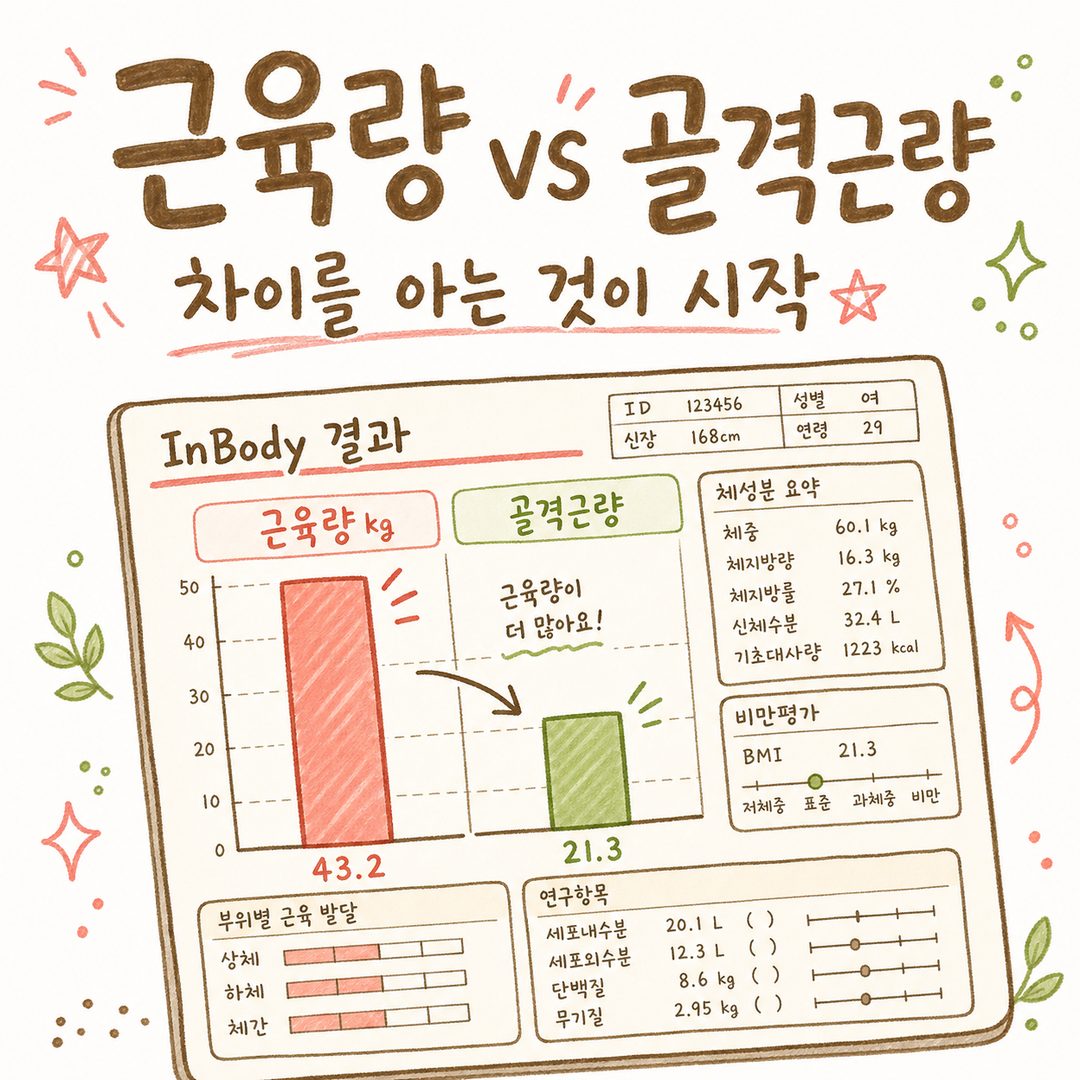
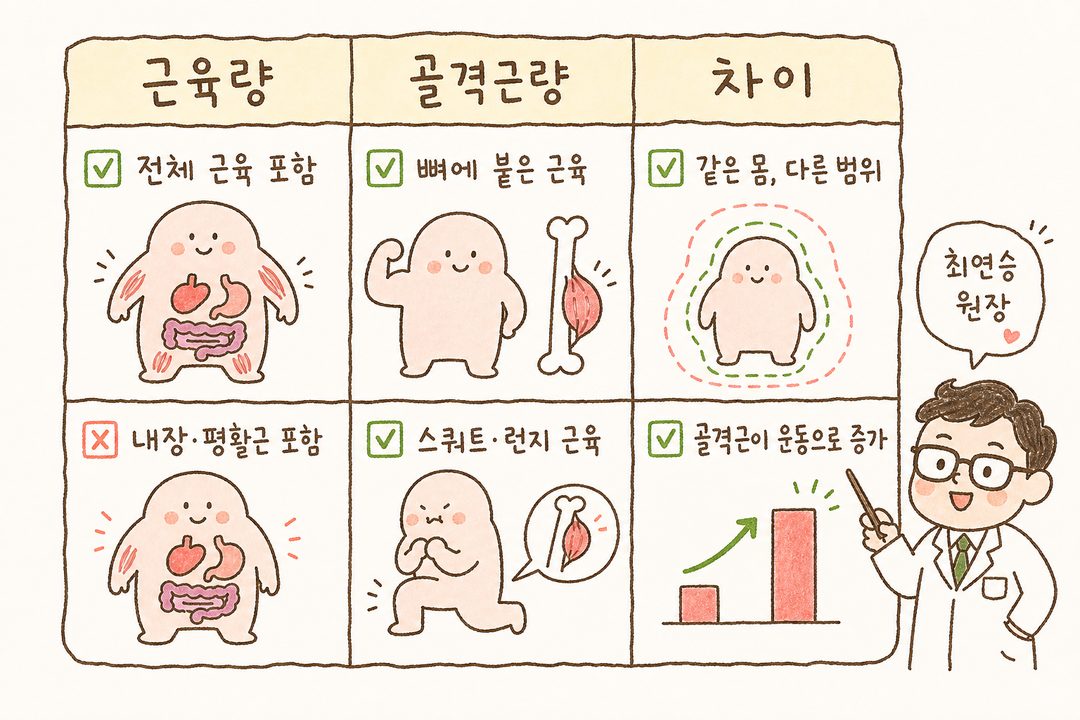
The Muscle Mass (kg) printed on your InBody sheet is the total sum of all muscles in your body. This includes the limb muscles we usually think of, but also the smooth muscles surrounding the stomach and the cardiac muscle of the heart. You can think of it as the "entire engine that burns calories even when you are resting."
Skeletal Muscle Mass (SMM) is the figure extracted specifically for the muscles attached to your bones. These are the muscles used directly when you squat or climb stairs. On the InBody result sheet, it is labeled as "Skeletal Muscle Mass (kg)" or "SMM." This is why you might see figures like Muscle Mass 57.7kg and Skeletal Muscle Mass 34.3kg side by side. Since the measurement scope is different for the same person, the Skeletal Muscle Mass is naturally lower.
Ultimately, the muscle you can directly grow through exercise is skeletal muscle. When managing a diet/weight management or fitness plan, this is the number we truly need to focus on.
Standard Ranges and How to Read the Bar Graph
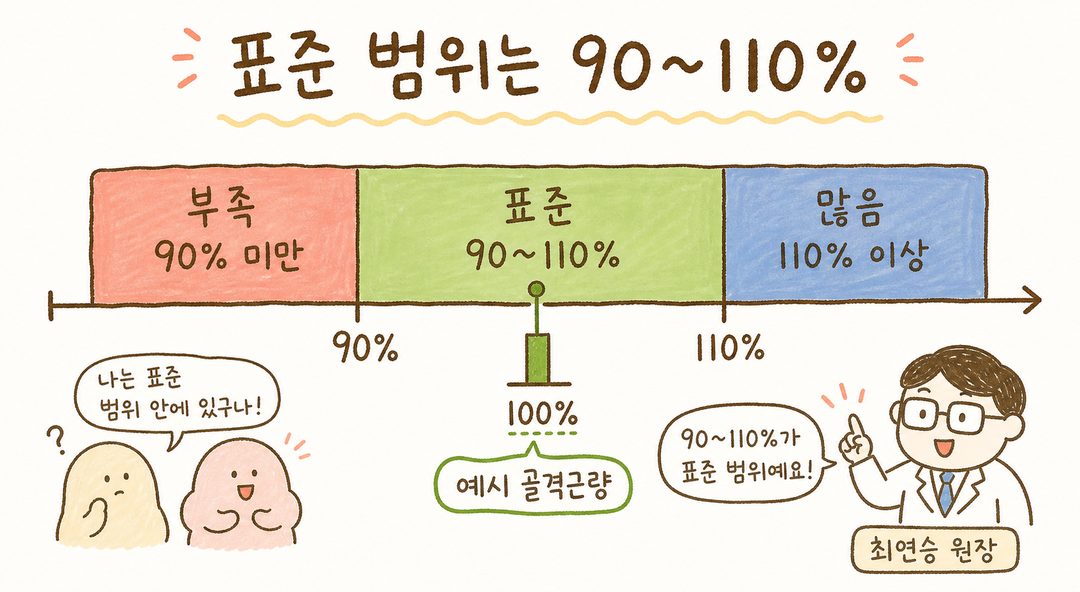
When you first receive an InBody report, you'll see a bar graph divided into three sections. The middle section is 'Standard,' which represents the range of 90% to 110% of the ideal muscle mass. The machine calculates your height, weight, and gender to set an appropriate value as 100% and defines the surrounding area as the standard.
The classifications are as follows:
Below 90%: Muscle mass deficiency
90–110%: Standard
Above 110%: High muscle mass
We also frequently discuss this as a ratio to body weight. In Korean health and diet/weight management data, a Skeletal Muscle Mass of about 30–40% of body weight is considered within the normal range for adults. Men generally have a slightly higher ratio than women. For those who exercise consistently, men often reach 40–45% and women reach 37–40% of their body weight.
Let’s look at specific numbers. For a 70kg man, a Skeletal Muscle Mass of 31kg or more is considered average, while for a 54kg woman, 21kg or more is the average line. However, keep in mind that these numbers are empirical standards often used in clinical diet/weight management settings rather than national averages from academic papers.
Actual Changes Observed in the Clinic
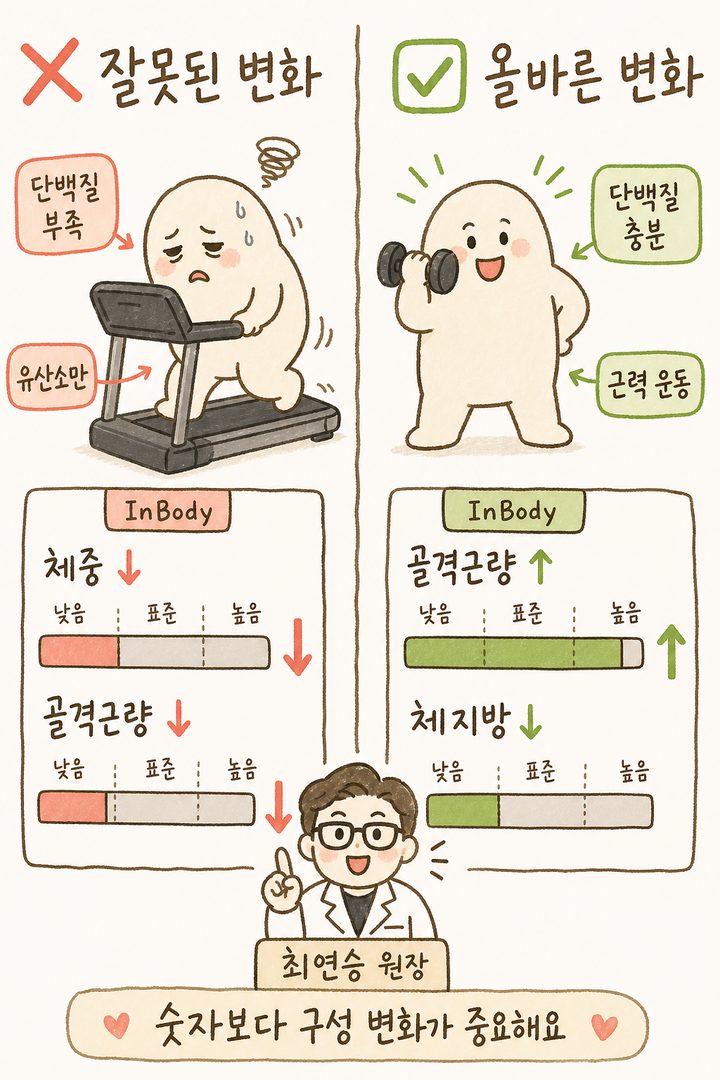
There are days when patients who have started a diet/weight management program come back a month later for a follow-up InBody test. It is more common than you might think to see that while weight has decreased, the Skeletal Muscle Mass bar has also dropped. This typically happens when someone cuts their meals too drastically or performs only cardio without consuming enough protein.
Conversely, there are cases where the weight change isn't significant, but the Skeletal Muscle Mass bar moves slightly to the right while the Body Fat Mass bar moves to the left. This is what people mean when they say their "body composition has changed." Even if the total weight is similar, the body feels lighter and clothes fit differently.
In the clinic, I advise patients not to look at weight alone. You need to take InBody tests every one to two months on the same machine at a similar time of day to track the movement of the Skeletal Muscle Mass and Body Fat Mass bars to understand the overall trend.
Muscles and Constitution from a Korean Medicine Perspective
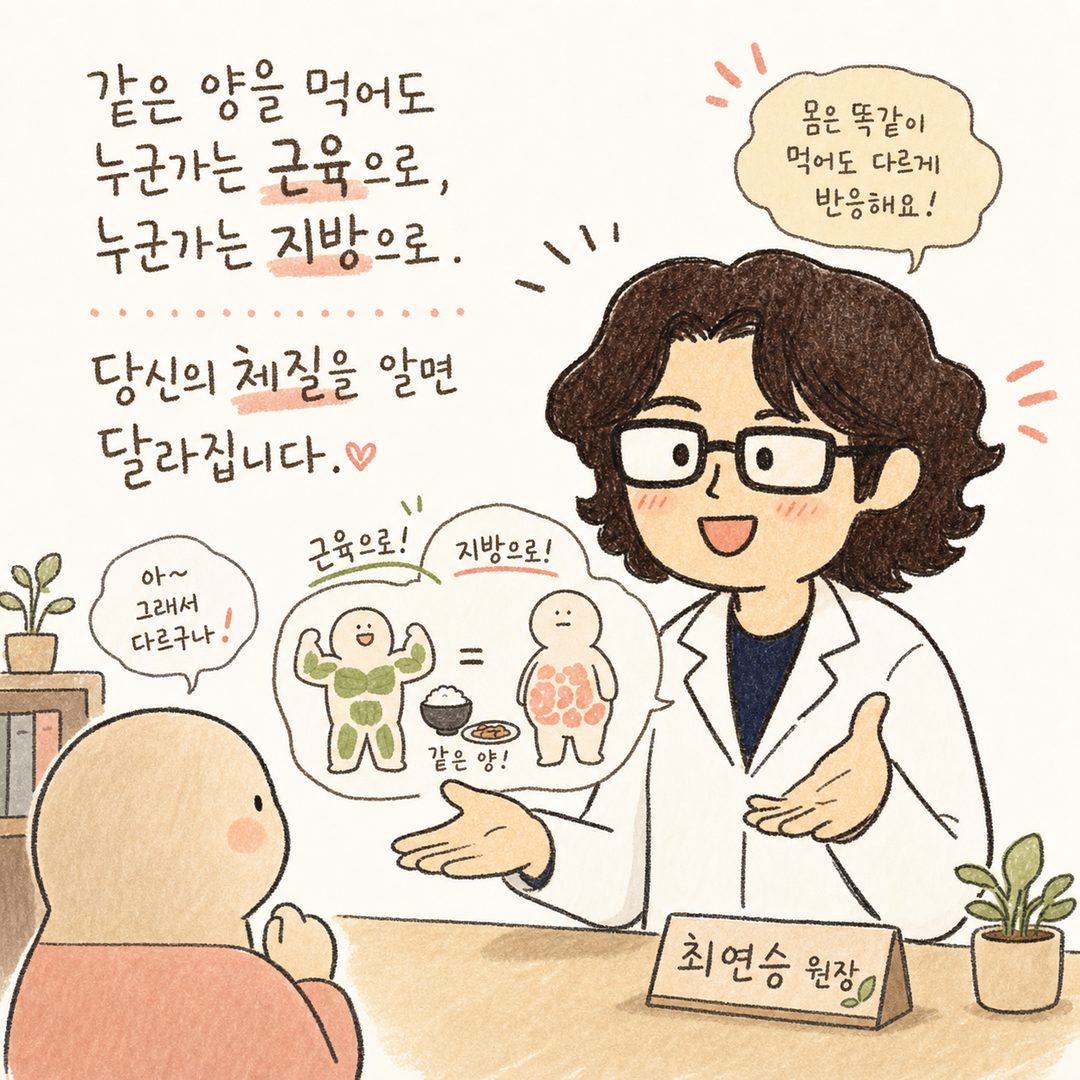
In Korean medicine, we don't view muscle simply as volume. We believe that the energy of the Spleen and Stomach (digestive system) must be strong for the food you eat to be properly converted into flesh and muscle. This explains why, even with the same intake, some people build muscle well while others simply accumulate fat or experience swelling.
Those who usually have cold hands and feet, tire easily, and get out of breath with little movement often have a Qi deficiency (Gi-heo) tendency. For this constitution, warming the Spleen and Stomach and boosting energy while incorporating resistance training is more effective than extreme calorie restriction. For those with a lot of Damp-phlegm (Seup-dam), waste products and moisture are trapped between muscle fibers, so an approach that reduces swelling helps restore the skeletal muscle ratio.
Korean herbal prescriptions follow this same logic. It’s not just "medicine that sheds weight," but rather "medicine that helps my body build and utilize muscle effectively."
Action Points You Can Start Today
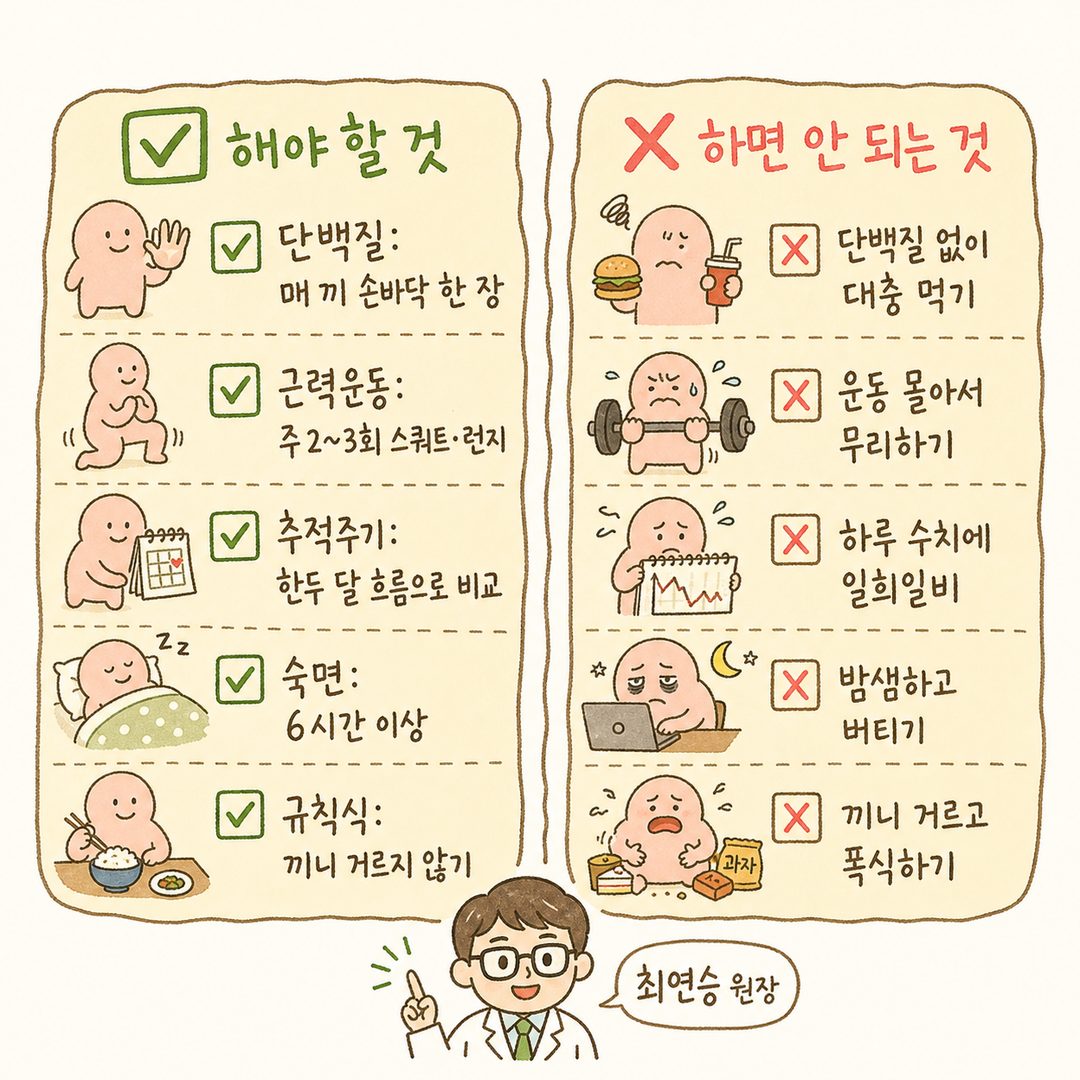
Instead of grand changes, here is a summary of things you can change starting today:
Ensure you have a palm-sized portion of protein with every meal. Tofu, eggs, chicken breast, fish, or beans are all good options.
Don't just do cardio; incorporate bodyweight exercises like squats, lunges, or planks 2–3 times a week.
Don't compare InBody results weekly; look at the trend over one or two months. Checking too often can lead to unnecessary stress over minor fluctuations.
Do not reduce sleep below 6 hours. Muscles recover while you sleep.
Reduce patterns of skipping meals followed by binge eating. When the Spleen and Stomach are exhausted, muscle won't build.
If you consistently follow these five points for about two months, you will see the InBody bars slowly shifting.
Chasing only the weight number can easily lead to a diet/weight management where you lose muscle as well. If you want to check where your skeletal muscle mass stands and whether your constitution is geared toward building muscle effectively, feel free to visit our clinic with your InBody results. At Baekrokdam Clinic, we prescribe Baekrok Gambi-jung to help revitalize the Spleen and Stomach energy according to your constitution while clearing away swelling and stubborn fat. Let’s create a diet/weight management plan that changes the flow of your entire body, not just a single number.