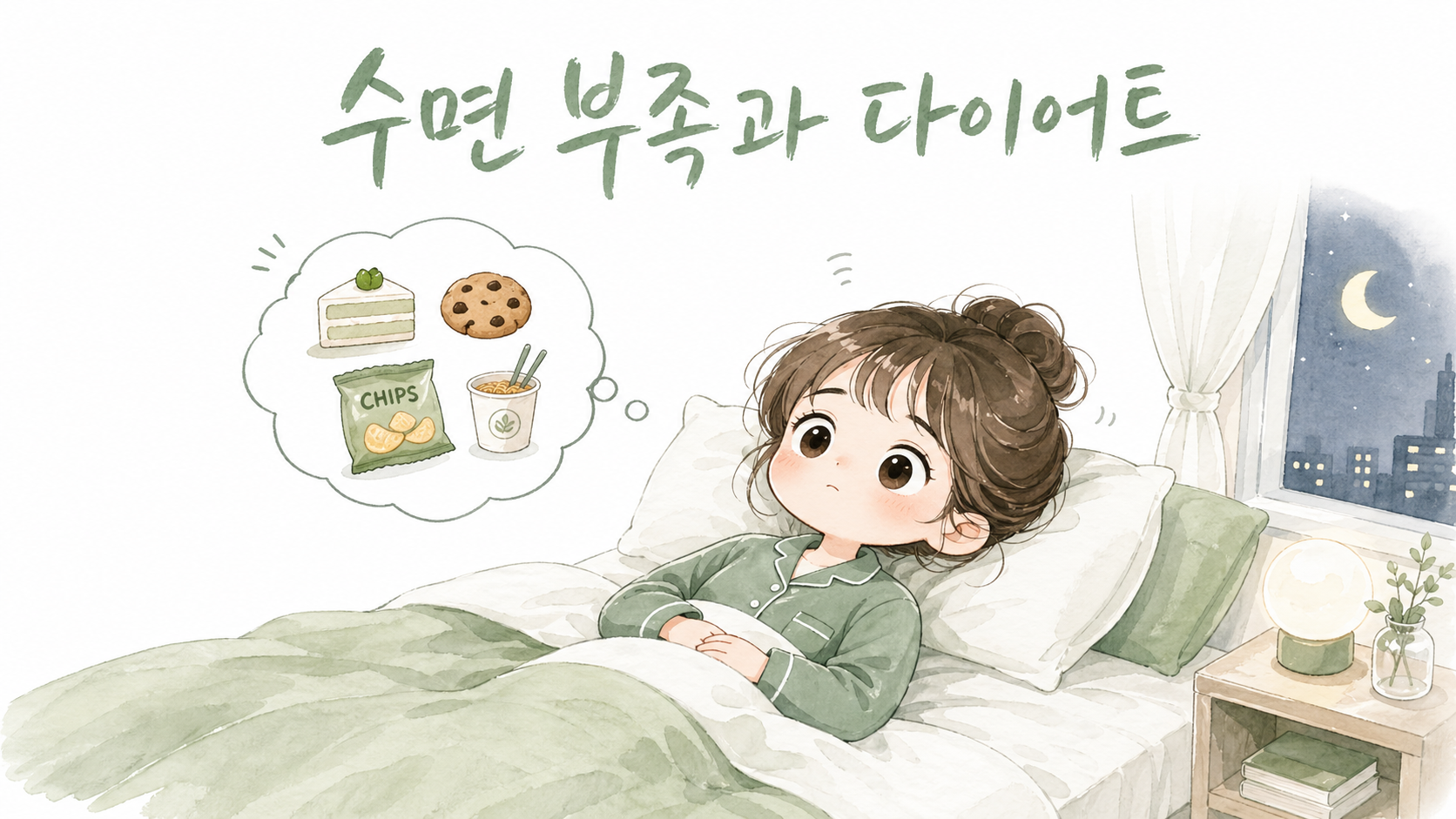
Why Does Sleep Deprivation Cause Weight Gain? — How Insufficient Sleep Affects Appetite and Body Weight

Table of Contents
"Yesterday I clearly didn't eat late-night snacks and held back, but when I step on the scale in the morning, the number stays the same or even goes up."
This is something I often hear in the clinic. I used to think, "Then I just need to cut back more," but it turns out the real culprit was something else entirely.
If you're watching your diet and exercising but the weight won't budge, it's worth checking whether you're overlooking sleep. Poor sleep and weight gain are more interconnected than most people realize.
The Appetite Regulation Switch in Our Bodies: Leptin and Ghrelin
Our bodies have a sophisticated hormone system for regulating hunger and fullness. Two key players are leptin and ghrelin. Leptin, released from fat cells, acts as a "satiety hormone" that sends signals to the brain saying "You've had enough to eat," suppressing appetite. Ghrelin, on the other hand, is secreted by the stomach as a "hunger hormone" that sends signals saying "I'm hungry, find some food."
When sleep is insufficient, this balance breaks down. When sleep time falls below 5 hours, leptin levels decrease and ghrelin levels increase.
In other words, your body has plenty of energy, but your brain keeps receiving hunger signals. This is precisely why you suddenly crave greasy and sweet foods when staying up late at night.
It's not a matter of willpower—it's a hormonal hijacking. Knowing this made me feel a bit wronged too.
The Stress of Sleeplessness, Cortisol, and Abdominal Fat
Sleep deprivation itself acts as considerable stress on our bodies. When stressed, our adrenal glands secrete a hormone called cortisol. While cortisol plays positive roles in the short term, such as raising blood sugar to generate energy, problems arise when levels remain consistently elevated due to chronic sleep deprivation.
High cortisol levels increase appetite and create a tendency to store fat particularly around the abdomen.
However, this is a survival strategy of our bodies. It's meant to store energy for later, but it's a rather useless function for modern humans. If it seems like only your belly fat increases even when eating the same things, you may suspect the influence of cortisol due to chronic sleep deprivation.
How Traditional Korean Medicine Views Sleep and Obesity: Simhwa (心火) and Dam-eum (痰飮)
Traditional Korean medicine explains the relationship between sleep deprivation and weight gain from a somewhat different perspective. When the state of not sleeping properly continues, unnecessary heat (熱) accumulates in the body. Specifically, heat building up in the heart (心臟), which governs thoughts and emotions, is called Simhwa (心火). When Simhwa is present, you feel chest tightness and anxiety, cannot sleep deeply, and keep waking up. This unstable state creates "false appetite," making you seek sweet or刺激性 (stimulating) foods.
Additionally, if you don't rest adequately at night, the function of your body's energy metabolism, that is, the function of the spleen and stomach (脾胃), declines. Nutrients that are digested and absorbed are not properly transported and utilized, and instead tend to accumulate in the body as sticky waste products, easily becoming Dam-eum (痰飮). If your body feels heavy and you swell easily, it may be a signal that Dam-eum is accumulating. In the end, when you can't sleep, Simhwa burns even hotter and Dam-eum accumulates even more—a vicious cycle repeats.
How to Break the Vicious Cycle
Simply deciding to "just sleep earlier" may not easily solve this problem. If hormonal imbalance and metabolic decline have already begun, efforts to improve sleep quality and restore the body's balance are needed together.
The first thing you can try is going to bed at a consistent time. Getting up and going to sleep at similar times on weekends as on weekdays helps recover your biological rhythm. Avoiding blue light from smartphone or TV screens one to two hours before bedtime, and relaxing your body and mind through meditation or light stretching, are also good methods.
However, if appetite regulation remains difficult despite these efforts, and you don't feel refreshed even after sleeping and waking up, professional help may be needed. Particularly if metabolic decline and increased appetite due to sleep deprivation are noticeable, a traditional Korean medicine approach that corrects the body's imbalance can be a good option. Because the goal is to address the fundamental causes disrupting sleep quality, rather than simply suppressing appetite. Such processes can be systematically examined and managed through the Baekrokdam Gambi-jung Program.
Frequently Asked Questions
Q. If I take sleeping pills and sleep soundly, will it help me lose weight?
Sleep inducers or sedatives may help you fall asleep temporarily, but they are difficult to become a fundamental solution for weight loss. Sleep induced by medication can interfere with natural sleep cycles, particularly reaching deep sleep stages. The body's recovery and hormone balance occur precisely during this deep sleep. Therefore, even with medication assistance, if the 'quality' of sleep declines, it may be difficult to see weight loss effects. Long-term use may lead to dependency or other side effects, so a cautious approach is needed.
Q. I think I'm getting enough sleep for more than 7 hours, but I feel tired during the day and my appetite has increased. Why is that?
Quality of sleep matters as much as the quantity. If you frequently wake up during the night, have snoring or sleep apnea, or sleep lightly due to many dreams, your body cannot recover properly even if you get enough hours of sleep.
In such cases, it's a good idea to check whether there is a separate cause that is reducing your sleep quality. Stress, anxiety, or certain medical conditions could be the cause. Even if you sleep for a long time, if the quality is low, an imbalance in leptin and ghrelin can still occur.