Qi Deficiency, Fatigue, Obesity: The Real Reason You Can't Lose Weight Even When Eating Less

Table of Contents
- The Real Reason for Qi Deficiency, Fatigue, and Obesity: Why You Don't Lose Weight Even When Eating Less
- Why Do Qi Deficiency (氣虛) Fatigue and Obesity Come as a Package?
- Why Are Random Dieting and Fasting Dangerous for Qi Deficiency (氣虛) Patients?
- What Is the Stepwise Approach to Solving Qi Deficiency Fatigue and Obesity?
- How Can Exercise and Korean Medicine Formulas Be Combined Efficiently?
- Frequently Asked Questions
The Real Reason for Qi Deficiency, Fatigue, and Obesity: Why You Don't Lose Weight Even When Eating Less
"I'm clearly eating less than before, but why do I seem to gain more weight?" This is one of the most common questions I hear in the clinic. Many of you are adjusting your diet and putting in effort, but your body keeps getting heavier and waking up in the morning has become a struggle. I too once, driven by ambition alone, starved myself excessively or increased my exercise volume, only to end up feeling drained and dizzy. Through these trial and error, I came to realize—it's not simply a matter of calories, but rather that your body's "energy production efficiency" itself has declined.
In Korean medicine, this condition is called Qi Deficiency (氣虛). It's important to understand the connection: when the engine (Qi) becomes weak, it cannot properly burn the fuel (food), and the resulting residue accumulates in the body, leading to obesity.
Why Do Qi Deficiency (氣虛) Fatigue and Obesity Come as a Package?
Let me compare our body to a car. When the engine's horsepower is good, it runs lively, generates heat, and consumes energy efficiently as you add fuel. However, in the state of Qi Deficiency (氣虛) where engine output has decreased, even a small amount of fuel isn't fully burned, causing oil to leak around the fuel tank or residue to remain. This is the generation process of phlegm-dampness (痰飮) in Korean medicine.
Since the efficiency of energy production has decreased, fatigue naturally pours out. You become short of breath with just a little movement, and sleep doesn't feel refreshing. But the critical point here is that because your body is tired, activity levels decrease further and metabolism slows down even more. Ultimately, you fall into the vicious cycle of 'low energy → decreased activity → metabolic decline → weight gain (obesity)'.
Why Are Random Dieting and Fasting Dangerous for Qi Deficiency (氣虛) Patients?
Many people choose 'reducing food intake' as their first solution to obesity. However, for those with the Qi Deficiency-Fatigue-Obesity pattern, excessive fasting can actually be poison. This is because when the engine is already weak and you cut off the fuel supply, the body enters survival mode and lowers the basal metabolic rate even further.
In reality, this is where the 'plateau' that many people experience originates. If you've reduced food intake by 30% but see no weight change, that's not due to lack of willpower—it's likely because your body has decided, "Since energy is too low right now, I need to store everything that comes in." If you force yourself to starve further at this point, muscle mass decreases, further damaging Spleen Deficiency (脾虛)—your digestive and absorption functions—so that eventually you become fixed into a constitution where you gain weight even eating little.
What Is the Stepwise Approach to Solving Qi Deficiency Fatigue and Obesity?
The goal shouldn't simply be losing weight, but creating 'a body that can burn energy.' I recommend the following stepwise approach to my patients:
Energy Replenishment (Buqi, 補氣): First, you need to boost your Qi and increase the engine's output. Rather than random fasting, improving the Spleen Deficiency (脾虛) state through quality protein and warm foods should come first.
Waste Removal (Qudan, 祛痰): Once the engine starts running, you need to clear away the accumulated phlegm-dampness (痰飮) and blood stasis (瘀血). At this time, formulas like Bangpungtongseong-san (防風通聖散) can help promote metabolism and reduce inflammatory swelling.
Gradual Increase in Activity: When you have no energy, high-intensity exercise actually causes 'Qi counterflow (氣逆)' phenomena, making you even more tired. It's better to start with light walking first and let the body learn the sensation of using energy.
How Can Exercise and Korean Medicine Formulas Be Combined Efficiently?
With exercise, it's more important 'in what condition' you do it than 'when' you do it. Going to the gym aggressively and sweating for 1~2 hours in a Qi-deficient state actually depletes your Qi further and delays recovery.
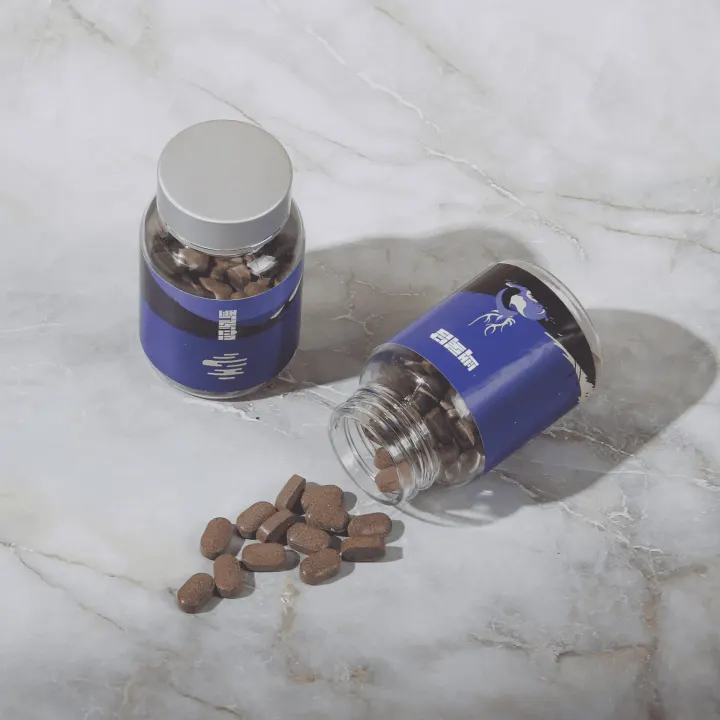
The best method is to turn on the body's 'combustion mode' with metabolism-aiding formulas, then combine with light resistance exercise. For example, try pairing standardized tablet formulas like Baekrokdam Gambi-jeong (白鹿潭 感肥錠) to regulate appetite and improve metabolic efficiency, with about 30 minutes of brisk walking 3 times per week. This way, your body recognizes, "Ah, it's safe to use energy now," and begins burning body fat more efficiently. This is a different approach from simply suppressing appetite with drugs like semaglutide—it's a process of creating a 'self-sustaining body.'
Frequently Asked Questions
Q. I'm really eating less but keep gaining weight and feeling tired. Do I have a Qi Deficiency constitution?
If you experience unusually severe drowsiness after meals, sweat profusely with just a little movement like heavy rain, and find it extremely difficult to open your eyes in the morning, you may be in a Qi Deficiency (氣虛) state. This isn't simply obesity but an 'energy absence' state due to metabolic dysfunction, so treatment that supplements Qi should take priority over random fasting.
Q. Exercise makes me even more tired and I can't go about my daily life. Should I still do it?
When you feel extremely low on energy, exercise can actually become a stressor and elevate cortisol levels, worsening obesity. In such cases, it's recommended to drastically reduce exercise volume and first build up your foundational stamina with herbal medicine prescriptions along with sufficient sleep. Once you feel your body's energy has recovered to about 60~70%, gradually increasing the intensity can be helpful.
Q. Does taking herbal medicine or tablet prescriptions cause immediate weight loss?
The purpose of the prescription is not simply to reduce the number on the scale, but to awaken a stagnant metabolism. Initially, you may feel lighter as swelling subsides. However, true weight reduction accelerates "when your metabolic efficiency improves and your activity levels naturally increase." Rather than rushing, try focusing on restoring your body's rhythm.
The cycle of Giheo-Fatigue-Obesity is more tightly connected than you might think, but once you understand the principles, you can absolutely break it. Don't forget that checking your body's engine condition first and proceeding at a pace suited to you is the fastest path. If you'd like to learn more about your specific body condition, I recommend checking your current metabolic efficiency through [Baekrokdam's Metabolic Management Program].