Only people currently living in Korea with their own Korean 010 mobile number can apply. Overseas residents are not eligible.
Causes of Back Acne | Distinguishing Sebum/Dead Skin Cells from Sweat/Friction
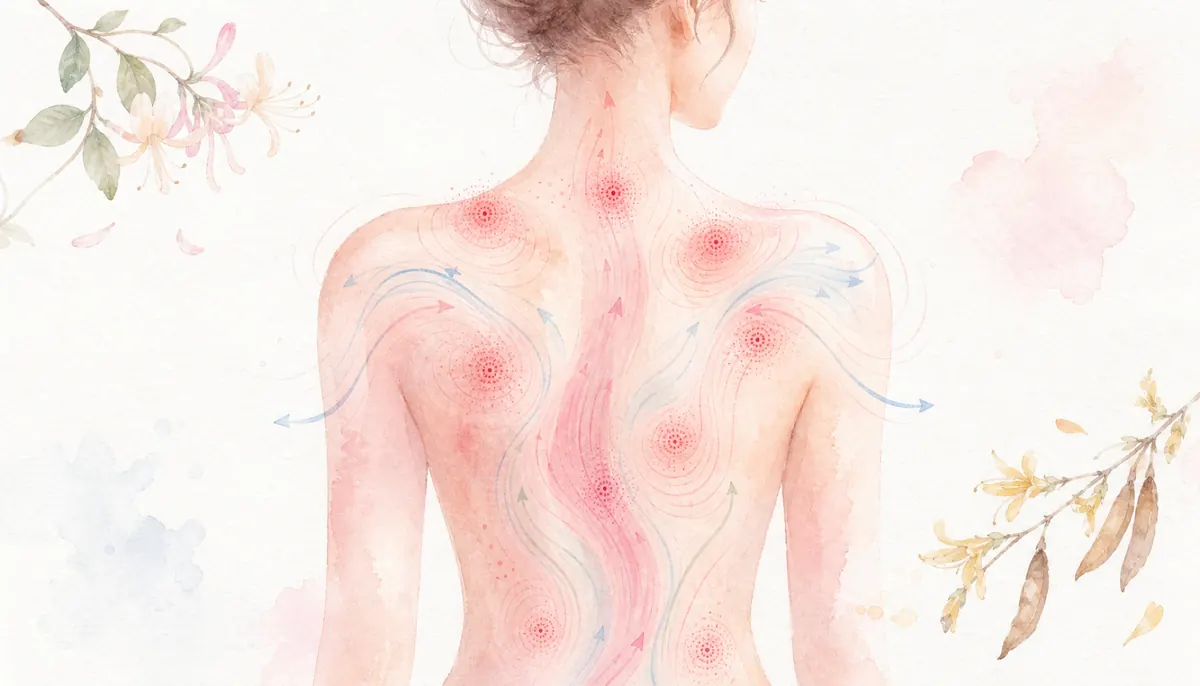
Back acne is not caused by poor hygiene; the basic process involves sebum and dead skin cells clogging pores, leading to inflammation within the hair follicle. The back has many sebaceous glands, and heat and sweat can easily become trapped under sportswear, backpacks, or protective gear, adding friction to the process. If itchy breakouts of similar size spread suddenly, other diagnoses such as bacterial or Malassezia folliculitis may be possible, requiring a dermatological evaluation.
Guide to Causes of Back Acne
Key points
1Sebum, dead skin cells, and inflammation are the core mechanisms, while sweat, friction, and certain products are common aggravating factors.
2Assuming it is caused by a lack of washing and scrubbing harshly can actually worsen the inflammation.
3Dermatological evaluation is the priority for deep, painful nodules/cysts, scarring, or suddenly spreading itchy rashes.
Clues to the Cause
Compare the appearance of lesions with the environment they are exposed to
Recording when, where, and in what shape they appear makes it easier to distinguish the core acne mechanism, aggravating conditions, and the possibility of folliculitis.
Observed Pattern
Possible Cause
Next Step
Mix of blackheads, whiteheads, and inflammation
Pore clogging by sebum and dead skin cells and inflammation
Consultation on acne treatment stages
Severe only where backpacks, sportswear, or protective gear touch
Acne mechanica caused by heat, sweat, pressure, and friction
Adjust wearing time and materials
Worsening of the upper back after using hair or body products
Products that are oily or may clog pores
Switch to non-comedogenic products
Sudden spread of similar-sized bumps and itching
Bacterial or Malassezia folliculitis, etc.
Differential diagnosis at a dermatology clinic
What the clinic checks first
Will scrubbing the back harshly with a Korean exfoliating towel (ttae-su-geon) or scrubs remove the cause?
Strong friction and frequent scrubbing can irritate the skin and worsen inflammation rather than cleaning the pores. Wash gently, change sweat-soaked clothes, and choose proven treatments appropriate for the level of comedones, inflammation, and scarring.
Understanding possible causes
The cause of back acne cannot be attributed to a single food or hygiene habit. To clearly identify what needs to be changed, one must distinguish whether individual factors—such as pressure and friction from clothing, backpacks, or protective gear that trap heat and sweat on the back, oily products, hormones, or family history—overlap with the core mechanism where sebum and dead skin cells clog pores and increase microbial and inflammatory reactions within the follicle.
How it may develop
Sebum and dead skin cells clog the pores
The back is an area where sebaceous glands are well-developed. When excessive sebum and shed skin cells accumulate at the pore opening, they become the starting point for blackheads, whiteheads, and inflammatory lesions.
Inflammation grows inside the clogged follicle
As the environment inside the follicle changes, immune reactions to *Cutibacterium acnes* can lead to inflammatory papules and pustules, or deeper nodules and cysts.
Deep inflammation increases the risk of scarring
Large, painful nodules and cysts are forms of inflammation that have progressed into the deeper layers of the skin. Squeezing them by hand increases the risk of scarring and hyperpigmentation, making early dermatological treatment important.
Factors to review
Heat, sweat, pressure, and friction
Heat and sweat trapped under workout clothes, backpack straps, or sports protective gear, combined with repeated rubbing, can worsen acne on the shoulders and back.
Oily hair and body products
Conditioners, hair oils, sunscreens, and body products left on the back can contribute to clogging pores. Check for 'oil-free' or 'non-comedogenic' labels.
Hormonal changes and family history
Hormonal changes, such as those during puberty or the menstrual cycle, and a family history of severe acne can influence sebum secretion and the risk of inflammation.
Useful context
Whether blackheads and whiteheads are present together, or if there are only rashes of the same size
Whether itching or pain is more prominent
The amount of time spent wearing wet clothes after exercise or sweating
The location and wearing time of backpacks, bra straps, or protective gear
Whether shampoo, conditioner, hair oil, or body products remain on the back
The timing of worsening in relation to menstrual cycles, medications, or supplement changes
Family history of severe acne and personal history of scarring
Changes in the number of lesions and photos over 6 to 8 weeks after starting a new treatment
More detail
Basic Mechanisms of Back Acne
Back Skin with High Sebum Secretion
Like the face, the back has many sebaceous glands, making it prone to clogged pores. It is not simply a matter of sweat.
Accumulation of Dead Skin Cells
If dead skin cells do not shed smoothly from the pore opening, they mix with sebum to form comedones, which serve as the basis for inflammation.
Inflammatory Response in the Hair Follicle
When microbial and immune responses increase in a clogged follicle, it can progress to red papules, pustules, or painful nodules.
Aggravating Factors Common on the Back
Heat and Sweat Under Sportswear and Protective Gear
Tight-fitting synthetic clothing and protective gear trap heat and sweat, which can worsen inflammation on the shoulders and back.
Repeated Friction from Backpacks and Chairs
Pressure from pressing and rubbing against the back can cause acne mechanica, making it important to adjust the contact position and duration.
Hair and Product Residue
Check if conditioners, oils, or oily products repeatedly contact the upper back, and adjust your showering sequence and products accordingly.
Similar Rashes with Different Causes
Bacterial Folliculitis
Pustules centered around hair follicles may increase suddenly; depending on the cause, antibacterial treatment may be necessary, so do not rely solely on acne products.
Malassezia Folliculitis
Itchy papules and pustules of similar size can spread across the chest and back; this is distinguished from acne that contains comedones.
Drug-Induced Acneiform Eruption
If a uniform rash appears after starting steroids or certain medications/supplements, do not stop them arbitrarily and consult your prescribing physician.
Baekrokdam's perspective on back acne consultations
We look beyond hygiene to analyze clogging, friction, and inflammation
If red, painful inflammation spreads rapidly along with a fever, or if deep nodules, cysts, and scars develop, a dermatology diagnosis and standard anti-inflammatory, antibacterial, or acne treatments take priority over Baekrokdam's Korean herbal medicine treatment. If back acne remains chronic or recurs after ruling out other causes like folliculitis and adjusting products, sweat, and friction, we can consult on how Korean herbal medicine can support the recovery of inflammation and lifestyle rhythms while maintaining existing treatments.
Diagnosis First
First, we distinguish between deep acne and folliculitis
We differentiate between comedones, nodules, and scars versus itchy, uniform rashes; for acute infections, standard dermatological treatment is prioritized.
Aggravating Factors
We identify overlapping factors such as products, sweat, and friction
We compare the distribution of lesions with areas in contact with sportswear, backpacks, protective gear, and hair or body products.
Herbal Medicine Treatment
We measure the supportive scope for chronic or recurring inflammation
While maintaining standard treatment, we track responses through new inflammatory lesions, pain, itching, pigmentation, and changes in sleep or digestion.
Your consultation at Baekrokdam will be more specific if you prepare photos of lesions from the last 6–8 weeks, information on itching, pain, and the presence of comedones, your use of sportswear, backpacks, or protective gear, a list of all hair and body products, and your response to previous dermatological treatments.
Frequently asked questions
Does back acne occur because I don't wash well?
No. The primary cause is the clogging of pores by sebum and dead skin cells leading to inflammation; sweat and friction can worsen the condition. Scrubbing too hard during cleansing may increase irritation.
Is sweat the reason why back acne occurs when exercising?
It is not just sweat; tight-fitting clothes and protective gear that trap heat and sweat, combined with friction, can contribute. Change your clothes after exercising and keep your equipment clean.
Are itchy bumps on the back also acne?
If itchy lesions of the same size spread without comedones (blackheads/whiteheads), it may be Malassezia or bacterial folliculitis. Since the treatment differs, a differential diagnosis by a dermatologist is necessary.
Sources
American Academy of Dermatology — Acne overviewMechanistic basis explaining pore clogging by sebum and dead skin cells, inflammation within the follicle, and the risk of scarring from deep nodules and cysts
American Academy of Dermatology — Sports equipment and acne mechanicaBasis for determining that heat and sweat trapped under sportswear, backpacks, or protective gear, along with pressure and friction, exacerbate shoulder and back acne
American Academy of Dermatology — Adult acne causesOfficial guidance that hormonal changes, stress, family history, and hair or skincare products can affect adult acne