
Sebum increases and skin cells clog the pores
When sebum and shed skin cells accumulate in the pores, blackheads and whiteheads form, which can lead to inflammatory lesions.
Adult acne occurs when sebum increases and dead skin cells clog pores, combined with the action of acne-related bacteria and inflammation. In adulthood, hormonal changes—such as menstrual cycles, periods before and after pregnancy or menopause, and the starting or stopping of contraceptive pills—can be linked to recurring breakouts on the chin and lower face. Chronic stress can exacerbate the condition through hormonal responses, and family history, pore-clogging skin or hair products, and certain medications are also contextual causes. Do not conclude that a specific food or insufficient cleansing is the sole cause, and do not arbitrarily stop taking new medications even if you suspect they are causing acne. If sudden severe acne occurs alongside other changes such as irregular menstruation or hirsutism, check for underlying medical conditions.
Guide to Causes of Adult Acne
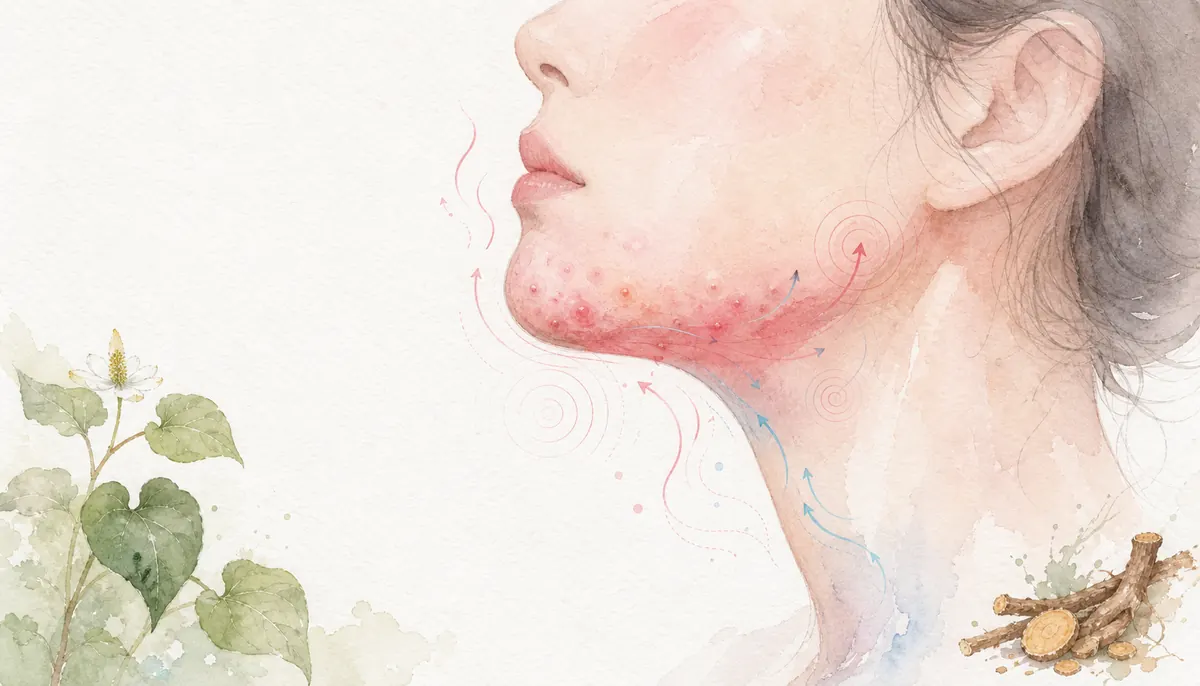
Distinguishing Cause Scenarios
| Recurring Scenario | Possible Interpretation | First Step |
|---|---|---|
| Recurrence on the chin and lower face before menstruation | Possibility of adult acne related to hormonal fluctuations | Record the cycle, location, depth, and pain |
| Started around pregnancy, menopause, or changes in contraceptive pills | Temporal relationship with changes in hormonal environment | Share pregnancy possibility and current medications with the dermatologist |
| Small bumps (milia-like) on the hairline or forehead after using a new product | Possible influence of products that clog pores | Check if the product is non-comedogenic and verify the application area |
| Sudden worsening after starting a new prescription medication | Possible drug side effect | Review alternatives with the prescriber without stopping medication arbitrarily |
| Acne accompanied by irregular menstruation, hirsutism, or rapid changes | Possible underlying hormonal disorder | Evaluate the cause through dermatology or related medical evaluations |
What the clinic checks first
Adult acne is a condition where sebum and skin cells accumulate within the pores, combined with bacterial and inflammatory reactions. Hormones, stress, products, and medications can influence this process or trigger worsening, but a single factor does not explain all lesions. We also distinguish it from similar skin conditions by observing the shape of the lesions and the sequence of events.
When sebum and shed skin cells accumulate in the pores, blackheads and whiteheads form, which can lead to inflammatory lesions.
Acne-related bacteria and immune inflammation within clogged pores work together to create red, painful pimples and deep nodules.
Androgens and hormonal fluctuations in adulthood stimulate the sebaceous glands and hair follicles, which can cause recurrent breakouts at specific times.
Hormonal fluctuations during the menstrual cycle, around pregnancy or menopause, and when starting or stopping contraceptive pills may coincide with adult acne.
Hormonal responses to chronic stress can exacerbate the condition, and a family history of acne provides context for an individual's susceptibility.
Lesions may appear where skin or hair products are applied, or the condition may worsen after starting certain medications; therefore, the relationship between the product/drug and the symptoms is examined.
This does not mean the skin is dirty; it is a process where sebum and cells accumulate inside the pores. Do not try to solve this with harsh cleansing.
Acne-related bacteria and inflammatory responses contribute to the formation of red pimples, pustules, and deep, painful nodules.
The proportion of sebum, pores, bacteria, and inflammation varies by person and lesion, so do not fixate on a single cause or repeat the same management method.
Note whether breakouts on the chin and lower face recur with the menstrual cycle, or if they started after pregnancy, menopause, or changes in contraceptive pills.
While acne can worsen during stressful periods, sleep, products, and hormonal changes may overlap, so observe if the same conditions repeat.
If lesions have increased along the hairline, forehead, or cheeks where hair products or cosmetics applied in the morning touch, check for "non-comedogenic" or "oil-free" labels and the areas of application.
Check if the condition worsened suddenly after starting a medication or changing the dosage, but do not arbitrarily stop important prescriptions because of acne.
If sudden acne occurs along with changes such as irregular menstruation, hirsutism, or hair loss, look for clues regarding underlying conditions during related medical evaluations.
Baekrokdam Korean herbal medicine treatment does not replace the evaluation of deep nodules, scarring risks, or similar conditions such as folliculitis. It provides supportive consultation after a diagnosis is made.
Consultation for adult acne causes at Baekrokdam
We prioritize necessary dermatological care by checking lesion depth, pain, scarring, and rapid redness, heat sensation, or fever.
We review menstruation, pregnancy, menopause, contraceptives, other medications, and the start dates of new skin or hair products alongside lesion locations in a single record.
Korean herbal medicine is not used to replace underlying disease evaluations or acne medications; consultations are limited to chronic skin discomfort that recurs after stabilization.
Please prepare photos of the lesions, start dates, locations, changes in menstruation, pregnancy, menopause, or contraceptives, any new products, all current medications, and details regarding diet, stress, and other physical changes.
The basic mechanisms are sebum production, clogged pores, bacteria, and inflammation. In adulthood, factors such as hormonal fluctuations, stress, skincare products, and medications can overlap as aggravating contexts.
Worsening of the chin and lower face before menstruation is a clue to a hormonal link, but it is not confirmed by location alone. We look at the cycle, products, medications, and other bodily changes together.
Do not stop taking it on your own. Inform your prescriber of the start/change date and the timing of the lesion worsening to discuss alternatives and skin treatment.
While there are studies on the link between certain diets and flare-ups, one food is not the cause for everyone. Record whether it recurs for you personally, and do not replace medical treatment with dietary changes alone.
Content reviewed:
This information supports, but does not replace, diagnosis or treatment by a qualified healthcare professional.