BRD Clinic
Only people currently living in Korea with their own Korean 010 mobile number can apply. Overseas residents are not eligible.

Closed Comedonal Acne Treatment: Steps to Reduce Comedones and Prevent Inflammation and Scarring

The focus of treating closed comedones is on topical treatments to reduce pore clogging from closed and open comedones, combined with low-irritation skincare. Options such as topical retinoids, benzoyl peroxide, or azelaic acid are selected based on skin condition and possibility of pregnancy; since these typically take several weeks to work, initial irritation and the number of new lesions should be recorded. Avoid squeezing by hand or repeatedly using antibiotics alone.

Guide to Treating Closed Comedones (Tiny Bumps)

Closed comedonal acne: Illustration for this condition

Key points

  1. 1Treatment intensity and the timing of medical evaluation vary depending on whether whiteheads and blackheads are primary or if red papules, pus, and nodules are mixed in.
  2. 2Topical retinoids are a key option for reducing comedone formation; start with a small amount and adjust the frequency of use based on dryness and stinging.
  3. 3Wash gently with a slightly acidic or pH-neutral cleanser, and avoid damaging the skin barrier through repeated scrubbing, peeling, or extraction.

Judgment criteria for closed comedone scenarios

ScenarioFirst stepNext step
Few comedones onlyGentle cleansing and topical treatmentEvaluate number of lesions at 12 weeks
Accompanied by inflammatory lesionsCombination of dermatology prescriptionsTrack irritation and scarring
Pregnancy or preparing for pregnancyCheck contraindicated medicationsConsultation for safe alternatives
Recurrence after existing treatmentRe-evaluation of prescriptions and cosmeticsBaekrokdam supportive consultation

What the clinic checks first

The misconception that all tiny bumps must be squeezed out to heal quickly

Repeated extraction using hands or tools can increase the risk of inflammation, hyperpigmentation, and scarring. The focus should be on topical treatments to reduce comedone formation and managing skin irritation.

More detail

First, we examine the lesions and skin condition

Distinguishing between comedones and inflammatory lesions

Treatment intensity and the timing of medical evaluation vary depending on whether whiteheads and blackheads are primary or if red papules, pus, and nodules are mixed in.

Checking cosmetics and friction

Check for new cosmetics, hair products, friction from masks or hats, and oil-rich products; avoid changing multiple products at once.

Always disclose the possibility of pregnancy

Topical and oral retinoids are contraindicated or require caution during pregnancy, so please share any pregnancy or planning details before a prescription is issued.

Apply topical treatments consistently

Use medication to reduce pore clogging

Topical retinoids are a key option for reducing comedone formation; start with a small amount and adjust the frequency of use based on dryness and stinging.

Select a combination suited to the lesions

Benzoyl peroxide and azelaic acid are prescribed considering inflammation, pigmentation, and irritation characteristics; avoid using antibiotics alone.

Evaluate the response around 12 weeks

Record the number of new comedones, inflammation, and irritation to decide on maintenance or changes after a sufficient period; do not over-apply in an attempt to achieve faster results.

Defining boundaries for recurrence and supportive care

Wash gently twice a day

Wash gently with a slightly acidic or pH-neutral cleanser, and avoid damaging the skin barrier through repeated scrubbing, peeling, or extraction.

Consult a dermatologist first for scars or nodules

If there are painful nodules, rapid scarring, or severe psychological distress, prioritize a dermatological evaluation, including potential oral treatment.

Korean herbal medicine is considered limitedly after existing treatments

Baekrokdam Korean herbal medicine treatment does not replace dermatological treatments such as topical retinoids; it is used for supportive consultation regarding menstruation, digestion, and recurring patterns.

Treatment and follow-up

Treatment for closed comedones (small bumps) begins by ruling out emergency/structural causes and other diseases. After recording symptom types and daily functional impact using consistent criteria, verified lifestyle changes, medications, and procedures are selected step-by-step. At Baekrokdam, while maintaining existing diagnoses and prescriptions, we provide consultations on limited supportive goals and discontinuation criteria for Korean herbal medicine treatment specifically for chronic or recurring patterns.

Options to discuss

Use medication to reduce pore clogging

Topical retinoids are a key option for reducing comedone formation; start with a small amount and adjust the frequency of use based on dryness and stinging.

Select a combination suited to the lesions

Benzoyl peroxide and azelaic acid are prescribed considering inflammation, pigmentation, and irritation characteristics; the use of antibiotics alone is avoided.

Evaluate response around 12 weeks

Record the number of new comedones, inflammation, and irritation to decide whether to maintain or change treatment after a sufficient period. Do not over-apply medication in an attempt to achieve faster results.

Limits and cautions

Do not use retinoids during pregnancy

Pregnancy or plans for pregnancy must be disclosed before prescription. Do not arbitrarily judge the safety of topical or oral retinoids.

Do not use antibiotics alone for long periods

To reduce antibiotic resistance, follow the recommended combinations and durations, and do not repeatedly use leftover medication.

Do not replace dermatological treatment with Korean herbal medicine

Korean herbal medicine treatment does not replace or delay the standard topical or oral treatments necessary for comedones, inflammation, and the risk of scarring.

What to track

  • Weekly number of new comedones and red lesions
  • Stinging, dryness, and frequency of topical agent use
  • Whether extraction was performed and changes in pigmentation or scarring
  • Menstruation, sleep, and timing of lesion exacerbation

How Baekrokdam approaches care

Baekrokdam does not view acute exacerbations, infections, or structural issues of closed comedones as primary targets for Korean herbal medicine treatment. Only after necessary tests and existing treatments have stabilized, and if chronic or recurring symptoms disrupt sleep, diet, or activities, we review all current medications and records to consult on a limited supportive scope. If there is no response or if symptoms worsen, a re-evaluation is performed immediately.

  • Weekly number of new comedones and red lesions
  • Stinging, dryness, and frequency of topical agent use
  • Whether extraction was performed and changes in pigmentation or scarring
  • Menstruation, sleep, and timing of lesion exacerbation

First, verify acute risks and existing diagnoses

Even for discomfort that appears to be closed comedones, we first rule out emergency signals and infection or structural causes, and verify test results and existing diagnoses.

Set narrow goals for Korean herbal medicine treatment

Without arbitrarily changing existing medications or procedures, we set specific recovery goals regarding sleep, diet, and activities for chronic or recurring closed comedones.

Re-evaluate prescriptions based on measured changes

From the start of treatment, the weekly number of new comedones and red lesions, as well as stinging, dryness, and frequency of topical agent use, are recorded consistently. If there is no clear response or if symptoms worsen, Korean herbal medicine treatment is discontinued and the diagnosis is re-examined.

Baekrokdam herbal medicine treatment does not replace or delay standard care, such as necessary tests, prescription medications, procedures, or surgeries required for acute exacerbations of closed comedones (tiny bumps) and infectious or structural diseases. Do not discontinue existing medications arbitrarily; if there is no response or new warning signs appear, prioritize related medical evaluation.

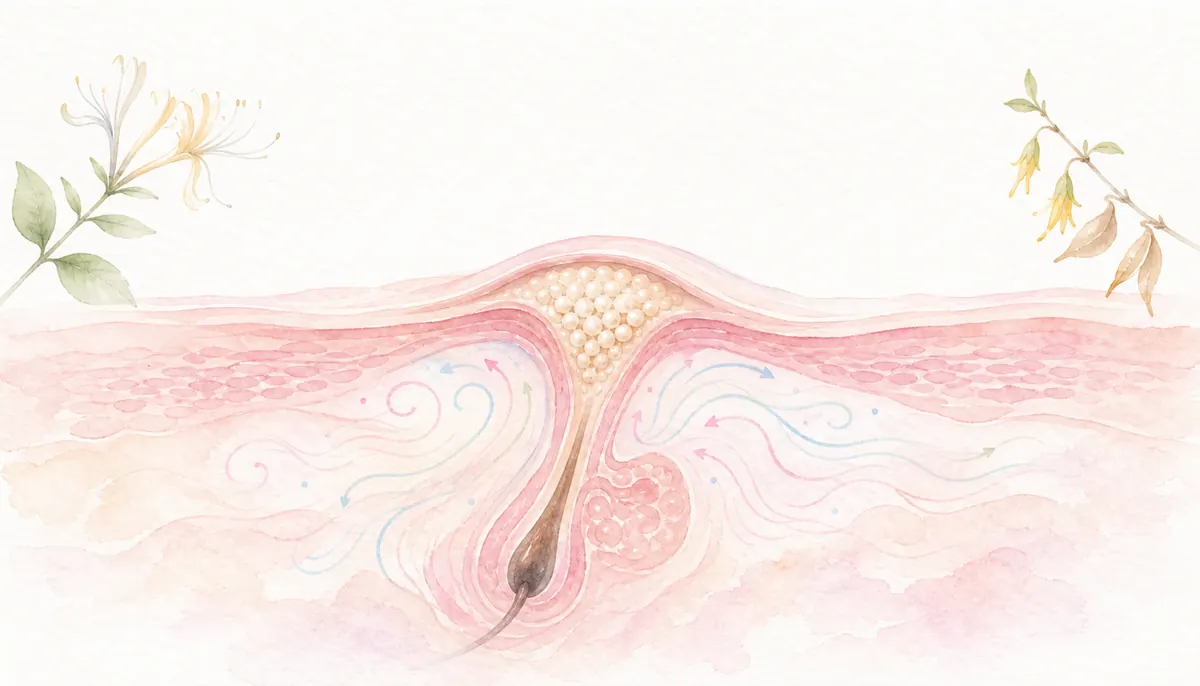
Baekrokdam's Perspective on Closed Comedone Treatment

We first rule out acute risks before addressing recurring daily discomfort

Baekrokdam does not first consider suddenly worsened closed comedones or emergency signals as candidates for herbal medicine treatment. Only when chronic or recurring discomfort persists after relevant tests and existing treatments do we review sleep, diet, and activity logs, as well as all current medications, to consult on a limited supportive scope of care.
01 · Safety

Screening for sudden emergency signals

Changes such as rapidly growing painful nodules or pus must be prioritized for immediate medical evaluation.

02 · Context

Examining the timing and circumstances of symptoms

The intensity of treatment and the timing of medical evaluation vary depending on whether white closed comedones and blackheads are the primary concern, or if red papules, pus, and nodules are mixed in.

03 · Tracking

Determining measurable changes in daily life

Wash gently with a slightly acidic or pH-neutral cleanser, and avoid damaging the skin barrier through repeated scrubbing, peeling, or extraction.

If you provide the time the symptoms started, recurring patterns, test results, and a complete list of prescription drugs, herbal medicines, and supplements, Baekrokdam can determine the boundary between the need for re-examination and supportive herbal medicine treatment during your consultation.

Frequently asked questions

Do closed comedones (tiny bumps) disappear faster if they are extracted?

Some comedones can be removed through professional extraction by a skilled practitioner, but repeated self-extraction increases the risk of inflammation and scarring. Treatment to reduce the formation of comedones is necessary.

How long does it take to treat closed comedones?

Topical treatments take several weeks, and the response is typically evaluated around 12 weeks. Do not stop treatment arbitrarily due to initial irritation; instead, adjust the method of application.

Can I receive Korean herbal medicine treatment for closed comedones?

While maintaining a dermatological diagnosis and topical treatment, we can consult on a limited supportive range for chronic recurring patterns after reviewing all currently taken medications.

Sources

  1. NICE — Acne vulgaris management recommendationsSkin care for comedonal and mild acne, combined topical therapy, and 12-week evaluation
    Open source
  2. AAD — Acne diagnosis and treatmentTopical treatment and scar prevention based on the degree of comedones and inflammation
    Open source

Content reviewed:

This information supports, but does not replace, diagnosis or treatment by a qualified healthcare professional.

The clinic is outside telephone hours

You can leave your inquiry now.

Leave an inquiry Call anyway