
Excessive sebum production
When the sebaceous glands produce excessive oil, it is more likely to remain trapped inside the pores. Hormonal changes can also stimulate the sebaceous glands.
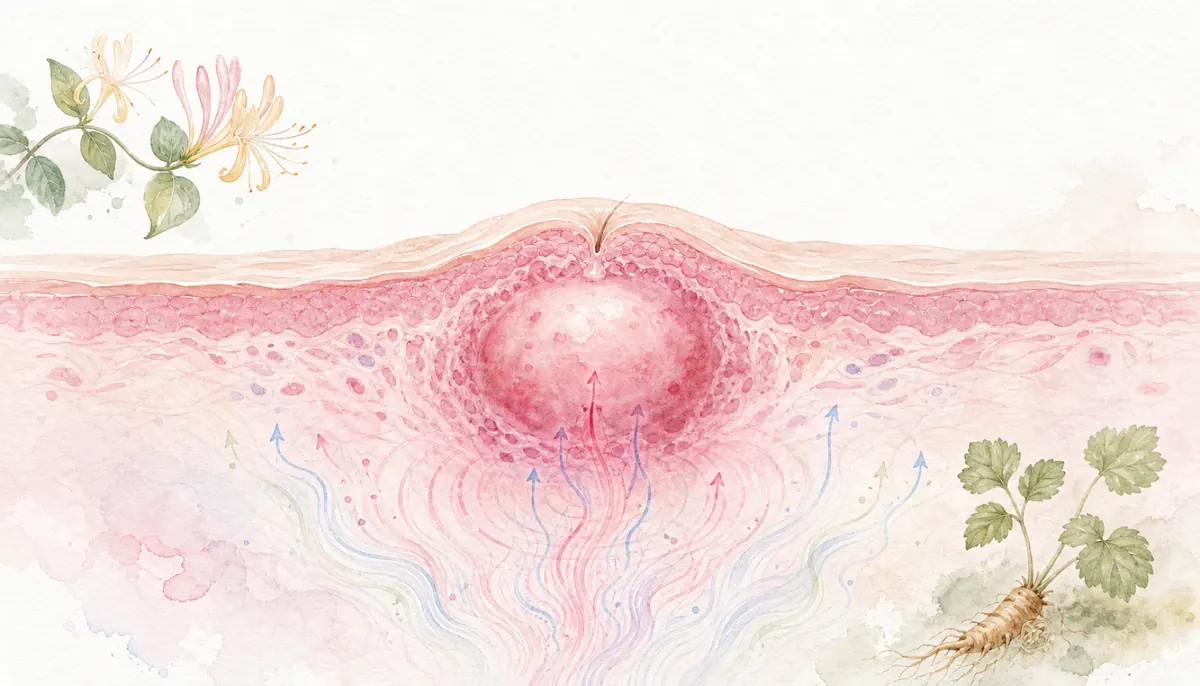
Inflammatory acne occurs through a complex process where excess sebum is produced, dead skin cells clog the pores, and naturally occurring skin bacteria multiply, leading to deep inflammation. Hormonal changes—such as those during puberty or around menstruation—family history, and certain medications can increase the likelihood of occurrence. Additionally, equipment that presses against the skin, tight clothing, or excessive scrubbing can be aggravating factors. Rather than attributing it to a single food or a lack of washing, please seek a prompt dermatology evaluation if deep, painful nodules recur or if scarring begins to appear.
Causes of Inflammatory Acne
Distinguishing Cause from Flare-up Patterns
| Observed Pattern | Possible Meaning | Next Step |
|---|---|---|
| Recurring around menstruation or during puberty | Possibility that hormonal changes, such as androgens, are affecting sebum production | Record the cycle and lesion locations on a calendar to share with a dermatologist |
| Sudden increase after starting a new medication | Possibility of being related to certain medications | Do not stop medication arbitrarily; verify the medication name and start date with your prescribing provider |
| Severe symptoms under helmets, masks, or bag straps | Possibility that pressure, friction, sweat, and humidity contribute to worsening | Reduce contact area and usage time, then compare the changes |
| Recurring deep, painful lumps that leave marks | Risk of nodular acne and scarring | Do not squeeze; seek early dermatological evaluation |
| Redness spreads rapidly and is accompanied by heat | Need to differentiate from infections other than typical acne | Evaluation at a medical institution on the same day |
What the clinic checks first
Purulent acne is understood as a process where sebum and dead skin cells clump together inside the pores and fail to be discharged, leading to bacterial growth and inflammatory reactions. Hormones, family history, and certain medications are background factors that increase risk, while pressure, friction, humidity, and excessive rubbing can worsen existing acne. Rather than identifying a single cause such as diet or hygiene, we consider the depth of the lesions and the risk of scarring together.
When the sebaceous glands produce excessive oil, it is more likely to remain trapped inside the pores. Hormonal changes can also stimulate the sebaceous glands.
When skin cells that should be shed and sebum stick together inside the pore, it becomes difficult for the contents to escape to the skin surface.
As bacteria naturally present on the skin increase and inflammation grows within the blocked pore, the pore wall can be damaged, leading to swollen and painful nodules or pustules that affect the surrounding skin.
Hormonal changes during puberty or around menstruation can affect sebum secretion, and the risk may be higher if close family members had severe acne, although these factors alone do not confirm the onset.
Certain medications can cause or worsen acne. Even if a connection is suspected, do not stop prescribed medication on your own; verify the start date with your prescribing provider.
Pressure from sports equipment, tight clothing, or bag straps, as well as hot and humid environments and excessive rubbing, can worsen inflammation.
Even with high sebum production, the same lesions may not occur if the pores drain well. We must look at the combined process of clogged keratin and the overlap of bacteria and inflammation.
The black color seen when the pore opening is open is a change in color caused by the contents being exposed to air. Assuming they are black because of a lack of washing and scrubbing hard can actually increase irritation.
If the pore wall is damaged and inflammation spreads deep into the surrounding skin, painful nodules or pustules can develop, making early evaluation important.
Check the relationship with puberty or menstruation, as well as the names and dates of any newly started medications, but do not determine the cause on your own or stop medication arbitrarily.
If breakouts recur under helmet straps, masks, bag straps, or tight clothing, record the contact locations and duration of use, and compare changes after reducing the irritation.
While some foods and stress may be related to aggravation, they have not been confirmed as the direct cause for everyone. Rather than unconditional restriction, record whether breakouts recur under the same conditions.
The contents of deep nodules do not easily come to the surface. Pressing or popping them with a needle can increase the risk of surrounding tissue damage, infection, discoloration, and scarring.
Based on the depth, distribution, and scarring of the lesions, they will ask about menstruation, medications, and family history. If necessary, they will differentiate it from other skin diseases or underlying conditions.
After receiving primary treatment for acute infections and deep nodules, if the condition recurs chronically, we consult on the supportive scope and limitations of Korean herbal medicine based on records of sleep, digestion, menstruation, and lesions.
Baekrokdam's perspective on consulting for the causes of inflammatory acne
For deep and painful lesions, rapidly spreading redness and heat, or newly forming scars, we guide you toward a dermatological evaluation before consulting on the cause.
We look for clues regarding recurring worsening by comparing the start dates of menstruation or new medications, the location of equipment contact, and the state before and after extraction or cleansing, alongside photos of the lesions.
Without arbitrarily changing dermatological treatments or prescriptions, we track changes in lesions alongside sleep, digestion, and menstruation to explain the scope and limits of combining Korean herbal medicine treatment.
Before your consultation at Baekrokdam, please organize recent photos of the lesions, the start date and location, menstrual changes, any newly started medications, friction from equipment or masks, whether extraction was performed, and your response to dermatological treatment.
It is not a condition caused by hygiene alone. It is a result of the combined action of sebum, dead skin cells, bacteria, and inflammation. Washing too frequently or too harshly can actually increase redness due to irritation.
While some foods may be related to flare-ups, they are not a direct cause for everyone. Rather than extreme restriction, record your intake and any changes in lesions to discuss with your healthcare provider.
Even if certain medications are having an effect, stopping them arbitrarily can be dangerous. Inform the prescribing physician of the medication name, start date, and when the lesions increased to check for possible adjustments.
Extracting deep nodules can increase the risk of inflammation, infection, and scarring. If the pain is severe or recurring, do not touch them and seek evaluation from a dermatologist.
Content reviewed:
This information supports, but does not replace, diagnosis or treatment by a qualified healthcare professional.