
Skin & Immune Oriental Medicine Treatment
Adult Atopic Dermatitis· Atopic Dermatitis
Baekrokdam Oriental Medicine Clinic, Songdo Incheon
Moving away from steroid-dependent skin to skin that recovers on its own.
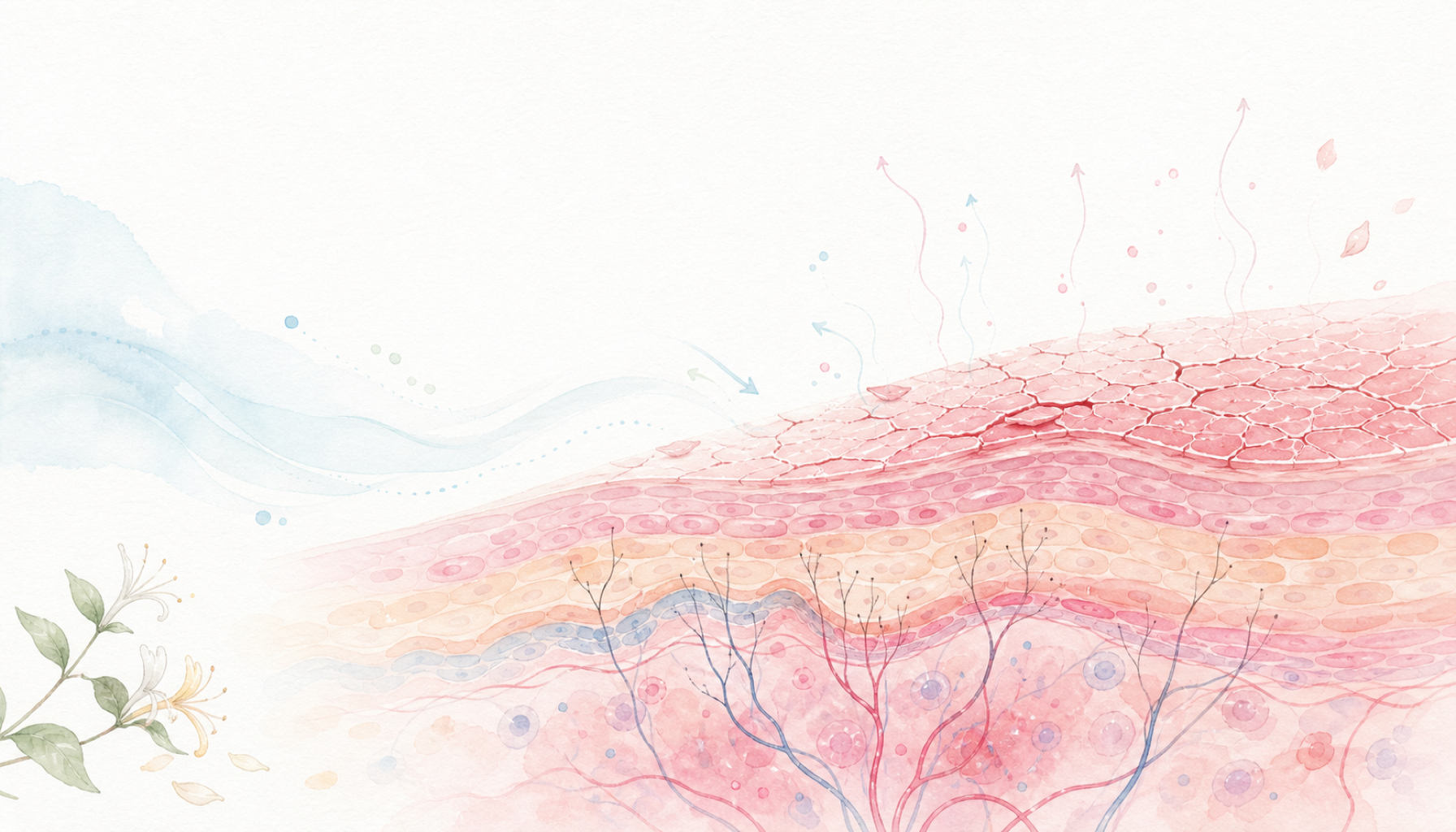
Have you ever lost sleep over an overturned face in the mirror or itching that doesn't stop even during an important meeting?From workplace stress to chronic skin changes, adult atopic dermatitis is more than just a skin condition; it is a pain that disrupts daily life. Now, instead of temporary measures that only calm the surface, Baekrokdam's sophisticated treatment that manages from within will be your answer.
For the anxiety of recurring relapses and steroid side effects for over 20 years, Baekrokdam Oriental Medicine Clinic will help you put a period to it.Correcting the internal immune imbalance tangled by Wind (風), Heat (熱), Dampness (濕), and Toxicity (毒)We help you regain a healthy skin barrier without worrying about rebounds. Experience a 1:1 customized oriental medicine solution that analyzes each patient's constitution and living environment.
Key disease information at a glance
- Other names
- Atopy, baby heat rash, eczema, chronic pruritus
- Main mechanism
- Excessive Th2 immune response · skin barrier dysfunction
- Classification
- Skin · immune Oriental medicine diseases
- Main symptoms
- Itching, erythema, oozing, skin dryness, lichenification
- Possible comorbidities
- Allergic rhinitis, asthma, sleep disorders, depression
- Diagnosis
- Syndrome Differentiation Diagnosis · SCORAD Index · Abdominal and Pulse Diagnosis
- Treatment
- Herbal Medicine Centered (Baekrokdam Immune-Modulating Herbal Medicine)
- General Treatment Period
- 3-4 months (6 months or more for chronic/lichenified cases)
- Telemedicine
- Available (Photo transmission and phone consultation)
Commonly heard in the clinic
Many patients visit using these expressions
These are expressions often heard in the clinic. If this sounds like your story, it may be worth suspecting adult atopic dermatitis.
Consult via telehealth →People who look for this
If any of the following situations sound like your story, we can examine these symptoms together from an Oriental medicine perspective.
What is adult atopic dermatitis?
Those who fight itching every day, even though tests only show high allergy levels with no clear solution. The pain is real, yet people say there is no way other than ointments. This is what Oriental medicine callsWind(風)·Dampness(濕)·Heat(熱)This is a tangled state of the skin.
Atopy is not simply a disease of dry skin,An immune disease where the body's immune system attacks itself or overreactsIn Korean medicine, it is viewed as a condition where the function of the spleen and stomach (脾胃) weakens, leading to the accumulation of waste products (damp-heat), which then manifests on the skin.
Let me clear up one misconception.Atopy is not an 'incurable disease,' but a 'chronic condition that requires management and recovery.'Rather than the word 'complete cure,' the goal should be 'a stable state where daily life is unaffected even without medication.' That is the most realistic and healthy path.
Medical texts from the Joseon Dynasty have dealt with symptoms similar to atopy under names such as 'naeseon (奶癬)' or 'chim-eum-chang (浸淫瘡).' As such, Korean medicine has long-standing know-how in resolving skin problems by addressing internal imbalances.
Western medicine'sAdult Atopic Dermatitisviews it as a complex interaction of genetics, environment, and immunity, which aligns closely with the theory of constitutional improvement in Korean medicine. A collaborative perspective is needed: treating external inflammation with Western medicine and internal immune balance with Korean medicine.
Medical Staff in Charge

Chief DirectorDr. Yeonseung Choe
Adult atopy is not a simple skin disease, but a state where internal qi and blood circulation and immune imbalance occur together. We recommend a method of managing symptoms while correcting the root cause through herbal medicine and acupuncture.
- Graduated from Gyeonggi Science High School
- Graduated from Kyung Hee University, Pre-medical Course in Korean Medicine
- Graduated from Kyung Hee University, College of Korean Medicine
- Current) Chief Director of Baekrokdam Korean Medicine Clinic
- Former) Chief Director of Miol Korean Medicine Clinic, Incheon Songdo Branch
- Former) Director of Miol Korean Medicine Clinic, Gangnam Main Branch
- Former) Chief Director of Dolbom Korean Medicine Clinic, Seocho Main Branch
- [Publications]
- Overcoming Polycystic Ovary Syndrome
- Overcoming Chronic Vaginitis - Symptoms, Causes, and Treatment
- Post-Miscarriage Care as Important as Postpartum Care: A to Z of Herbal Medicine After Miscarriage
Atopy is not caused by a single factor, butit is as if the dam of immunity has burst due to the overlap of various factorsit is like.
Main Causes of Adult Atopy — How They Accumulate
- 1 Intestinal Environment and Decline in Spleen and Stomach Function
In Korean medicine, it is said that 'the skin is a mirror of the internal organs.' If the digestive system cannot properly filter toxins, they surface through the skin
- 2 Steroid Misuse and Rebound Phenomenon
Relying solely on ointments destroys the skin's own regenerative power. This is why the condition worsens further when the medication is stopped
- 3 Chronic Stress and Upper-Body Heat (Sang-yeol)
Stress pulls the body's 'fire' upward, acting as the primary culprit in worsening atopy on the face and neck
- 4 Genetic predisposition and the allergic march
If parents have allergic diseases, the child's immune system must be strengthened from an early age
- 5 Environmental stimuli and dryness
Fine dust, chemicals, and dry air act as triggers that break down an already weakened skin barrier
Atopic dermatitis is not just about itching.Skin changes and systemic symptomsIt is characterized by these appearing together.
Main symptoms of adult atopic dermatitis — what patients actually experience
Skin area
- Unbearable itching — it worsens especially at night, leading to scratching until bleeding occurs
- Erythema and edema — redness and swelling of the skin
- Oozing and exudation — yellow discharge and crusting occur during the acute phase
- Lichenification — a state where the skin becomes thick and hard like leather due to chronic scratching
- Severe dryness and scaling — the skin barrier breaks down, causing white scales and cracking
Accompanying symptoms — systemic area
- Allergic rhinitis and asthma
- Insomnia due to nocturnal pruritus
- Chronic fatigue and lethargy
- Indigestion and constipation/diarrhea
- Anxiety, depression, and social withdrawal
Atopic dermatitis isImmunity and the autonomic nervous systema systemic issue, so other symptoms often occur as a set.
If these symptoms coexist, you shouldn't just apply ointments,Systemic treatmentit is a signal that you must start.
Chronic adult atopic dermatitis: Baekrokdam's approach
Summary— The key is not to suppress the symptoms, but to build the skin's own strength to overcome them. You must use herbal medicine to eliminate toxins inside the body and establish a barrier to prevent recurrence.
Why Baekrokdam focuses on herbal medicine
The goal of herbal medicine is not just to suppress external symptoms, but to create a body that can recover on its own without medication.
Atopic dermatitis isThis is not an area that can be solved simply with ointments.. Steroids forcibly block the inflammatory response; they are not the answer to why the inflammation occurs. This is exactly why symptoms flare up again once the medication is stopped.
Herbal medicine works by calming the hypersensitivity of the immune system and filling the skin's moisturizing factors from within.If Western medicine is about "inflammation suppression," herbal medicine is closer to "restoring the skin's self-regenerative power." This is why herbal medicine is essential for chronic atopic dermatitis.
Why it doesn't often show up in tests
Tests look at numerical values and structures, but the essence is often a 'body imbalance' that is not easily captured by tests.
There are many cases where atopic symptoms are severe even if the IgE level in a blood test is normal. What the test sees isValuesbut what the patient feels isSensation and Condition. Where heat in the organs is stagnated and how dried out the body fluids are cannot be fully revealed through images or numerical values.
That is why "no abnormalities found in tests"does not mean "there is nothing to treat". The scratches and the itching you experience every night are real. We must use Oriental medicine diagnosis to find the bodily imbalances that numerical values cannot capture.
So how do we treat it — the Baekrokdam method
We examine the entire body through inquiry, pulse diagnosis, and abdominal palpation, and resolve the root cause together with herbal medicine.
Instead of looking only at the skinA method of directly observing a person's constitution and lifestylewe approach it.
- Abdominal Palpation (Bok-jin)— We check the state of the spleen and stomach (脾胃) and the abdominal temperature. Among atopic dermatitis patients, many are in a state of 'upper heat and lower cold,' where the inside is cold and the outside is hot
- Pulse Diagnosis (Maek-jin)— We determine the degree of immune system hyperactivity and the state of blood deficiency (blood deficiency)
- Medical Inquiry (Mun-jin)— We listen in detail to sleep patterns, dietary habits, stress responses, and history of steroid use. We track changes through skin photo records
Based on this diagnosis, herbal medicineRemoval of damp-heat · Nourishing blood and moisturizing dryness · Immune stabilizationperforms simultaneously. The skin barrier becomes strong only when multiple axes are addressed together. This is why herbal medicine is well-suited for complex diseases like atopic dermatitis.
Differentiation of syndromes for adult atopic dermatitis observed in clinical practice
The causes of atopy vary by patient. We take a customized approach by dividing them into four main types.
Damp-Heat Type (濕熱型)濕熱
Acute stage characterized by excessive exudate, red skin, and severe burning sensation
Treatment direction: Clearing heat and resolving dampness (淸熱化濕)
Spleen Deficiency with Damp Accumulation Type (脾虛濕蘊型)脾虛濕蘊
Type characterized by indigestion, fatigue, dull skin, and frequent swelling
Treatment direction: Strengthening the spleen and removing dampness (健脾��濕)
Blood Deficiency and Wind-Dryness Type (血虛風燥型)血虛風燥
Chronic stage characterized by extremely dry skin, severe itching, and thickening of the skin (lichenification)
Treatment direction: Nourishing yin and enriching blood (滋陰養血)
Fetal Heat Type (胎熱型)胎熱
Occurs in infancy and early childhood, characterized by redness and heat primarily on the face and scalp
Treatment direction: Clearing the heart and guiding red out (淸心導赤)
Depending on changes in the patient's conditionFine-tuning prescriptions every 2 to 4 weeksto increase treatment efficiency.

Progress by stage of adult atopy treatment
Below is the general flow of herbal atopy treatment.
- Calming inflammation and discharging toxins
The first month is a period for putting out the fire. We target the most distressing symptoms first.
- Exudate decreases and red heat sensations begin to subside
- Nighttime itching is relieved, and sleep quality gradually improves
- Begin adjusting steroid usage in consultation with medical staff
- Skin barrier regeneration and strengthening of self-healing capacity
This is the period when the inner layers of the skin, not just the surface, fill back up.
- Thickened skin (lichenification) gradually becomes thinner and softer
- New skin emerges as the exfoliation cycle normalizes
- Sweating begins normally, and the skin's temperature regulation function recovers
- Immune stabilization and prevention of recurrence
This is the final and most important stage of treatment.
- Maintaining a state with almost no itching in daily life, even without medication
- Skin does not flare up significantly despite seasonal changes or stress
- Acquiring the power to manage skin independently through the internalization of lifestyle habits
Recovery speed may vary depending on the patient's condition and the duration of steroid use.
Consult comfortably via non-face-to-face services for your current concerns.Herbal medicine prescriptions are available from anywhere in the country.
Patients with chronic or severe atopic dermatitis: For those who have suffered for more than 10 years or have symptoms across the entire body6 months to 1 year or moreA long-term perspective is needed. Changing things from the root slowly without rushing is ultimately the fastest way.
Conditions often confused with adult atopic dermatitis
These are conditions that look similar to atopy but have different treatments. Accurate differential diagnosis comes first.
Characterized by thick, silvery-white scales with clear borders. It is generally less itchy than atopy, but the skin tends to thicken significantly more.
Mainly occurs on the scalp and T-zone of the face where sebum production is high. Unlike atopy, it is characterized by oily scales and erythema.
Itching occurs only in areas that have touched specific substances (metals, cosmetics, etc.). Unlike atopy, it improves quickly once the causative agent is removed.
Small blisters form on the palms and soles with extreme itching. It often accompanies atopy, but blisters are the primary symptom.
The skin swells and tightens, then disappears within 24 hours repeatedly. Unlike atopy, the skin does not become dry or thickened.
Adult atopic dermatitis treatment reviews
Frequently Asked Questions about adult atopic dermatitis
I have used steroid ointments for a long time; I am worried about a rebound when switching to oriental treatment.
The rebound phenomenon, where long-suppressed inflammation flares up, can be a daunting process. At Baekrokdam, rather than sudden cessation, we use a tapering strategy to gradually reduce dependence by combining herbal medicine and external agents while monitoring the patient's skin condition. The key is to cultivate the skin's self-healing power to control inflammation through oriental treatment that strengthens the skin barrier and discharges toxins from the body.
I am an office worker with frequent overtime and find it hard to visit the clinic; is treatment still possible?
For busy professionals, we provide intensive herbal prescriptions and lifestyle guides that can be practiced in daily life. While combined clinic visits are ideal, 1:1 herbal medicine tailored to the patient's constitution can greatly help in lowering internal damp-heat and balancing the immune system. We support continuous management through our non-face-to-face consultation and prescription system.
I can't sleep and feel depressed because of atopy; are psychological aspects also considered?
In Korean medicine, the concept of 'Simsin-il-yeo' (unity of mind and body) means that the skin and mind are viewed as one. For insomnia and stress caused by extreme itching, we prescribe herbal medicines that regulate heart fire (心火) to stabilize the nervous system and induce deep sleep. Since psychological stability is essential for increasing the rate of skin regeneration, we aim for integrated treatment that includes emotional care.
My rhinitis and atopy are worsening at the same time; can they be treated together?
Yes, it is possible. Rhinitis, asthma, and atopy—collectively known as the 'atopic march'—all share a common root in the hypersensitivity of the immune system. Through pattern identification treatment (Byeon-jeung) that strengthens lung function and corrects immune imbalances, we can manage both skin inflammation and respiratory symptoms simultaneously, which is effective in lowering overall allergic predisposition.
I work in sales and have frequent drinking gatherings; how bad is alcohol for atopy?
Alcohol dilates blood vessels and promotes damp-heat (濕熱) in the body, acting as a primary culprit that immediately exacerbates itching and oozing. If abstaining from alcohol is difficult due to work, it should be paired with herbal prescriptions that assist liver detoxification and rapidly discharge heat toxins. During the treatment process, it is important to gradually correct lifestyle habits while minimizing adverse effects on the skin.
Can lichenified areas, where the skin has become thick like leather, be recovered?
Lichenified skin, deformed by chronic scratching, is in a state where the circulation of Qi and Blood is stagnant. At Baekrokdam, we resolve stagnant blood stasis (Eohyeol) using acupuncture and pharmacopuncture, and use herbal medicines that aid skin regeneration to soften and regenerate hardened tissues. While long-term effort is required, once internal immunity is normalized, the thickened skin can gradually regain its original texture.
My skin was clear when I was a child, but I suddenly developed atopy as an adult. Has my constitution changed?
Atopy that suddenly develops in adulthood is more appropriately viewed as an 'immune overload' accumulated over a long period rather than a simple skin problem. While Western medicine focuses on genetic defects or environmental factors, Korean medicine understands this as a process where 'damp-toxins (濕毒)' and 'heat (熱)' accumulated in the body exceed the body's regulatory capacity and erupt through the skin. When organ functions weaken due to irregular lifestyle or stress, the body can no longer withstand stimuli it once tolerated. Therefore, combining treatment to suppress surface inflammation with treatment to correct collapsed internal Qi and Blood circulation to restore the body's defense power can help prevent recurrence.
Sweating during exercise makes me itch more; is it better for atopy patients to avoid exercise entirely?
While sweat can irritate the skin and temporarily worsen itching, appropriate movement is necessary in the long term for smooth Qi and Blood circulation. In Korean medicine, the role of sweat is viewed as important as a pathway for discharging waste from the skin. However, avoid strenuous exercise during the acute phase when heat sensation is severe. When symptoms subside, it is recommended to engage in light exercise to sweat and then immediately wash with lukewarm water to minimize irritation. When paired with herbal treatments that enhance the body's heat regulation and skin barrier regeneration, patients tend to improve toward a healthy state where sweating no longer causes itching.
Skin diseases to review alongside adult atopy
These are immune and skin diseases that are beneficial to manage alongside atopy.
Related Documents
Recommended Next Materials
Current documentAdult Atopic Dermatitis
Checking related topics and medical information sequentially will help you understand faster.
Atopic Dermatitis
For those visiting the clinic for atopic dermatitis, baby heat rash, or atopic skin inflammation. Telemedicine available for residents of Siheung, Bucheon, and Guwol-dong. We improve skin recovery power through herbal medicine and acupuncture. Nationwide treatment available.
Related diseases to explore
View togetherFor chronic skin conditions where ointments only provide temporary relief and symptoms worsen upon discontinuation. Rather than just suppressing surface inflammation, we restore the body's internal 'damp-heat' and broken immune balance.
View DiseasesFor those visiting the clinic for purulent acne, inflammatory acne, or nodular acne. Telemedicine available for residents of Bucheon, Songdo, and Juan. We balance sebum secretion through herbal medicine and acupuncture. Nationwide treatment available.
View Diseases