
Skin & Immune Oriental Medicine Treatment
Chronic Urticaria · Chronic Spontaneous Urticaria · Chronic Inducible Urticaria· Chronic Urticaria
Baekrokdam Korean Medicine Clinic, Songdo Incheon
Chronic itching recurring for over 6 weeks; we treat the internal hypersensitivity, not just the skin.
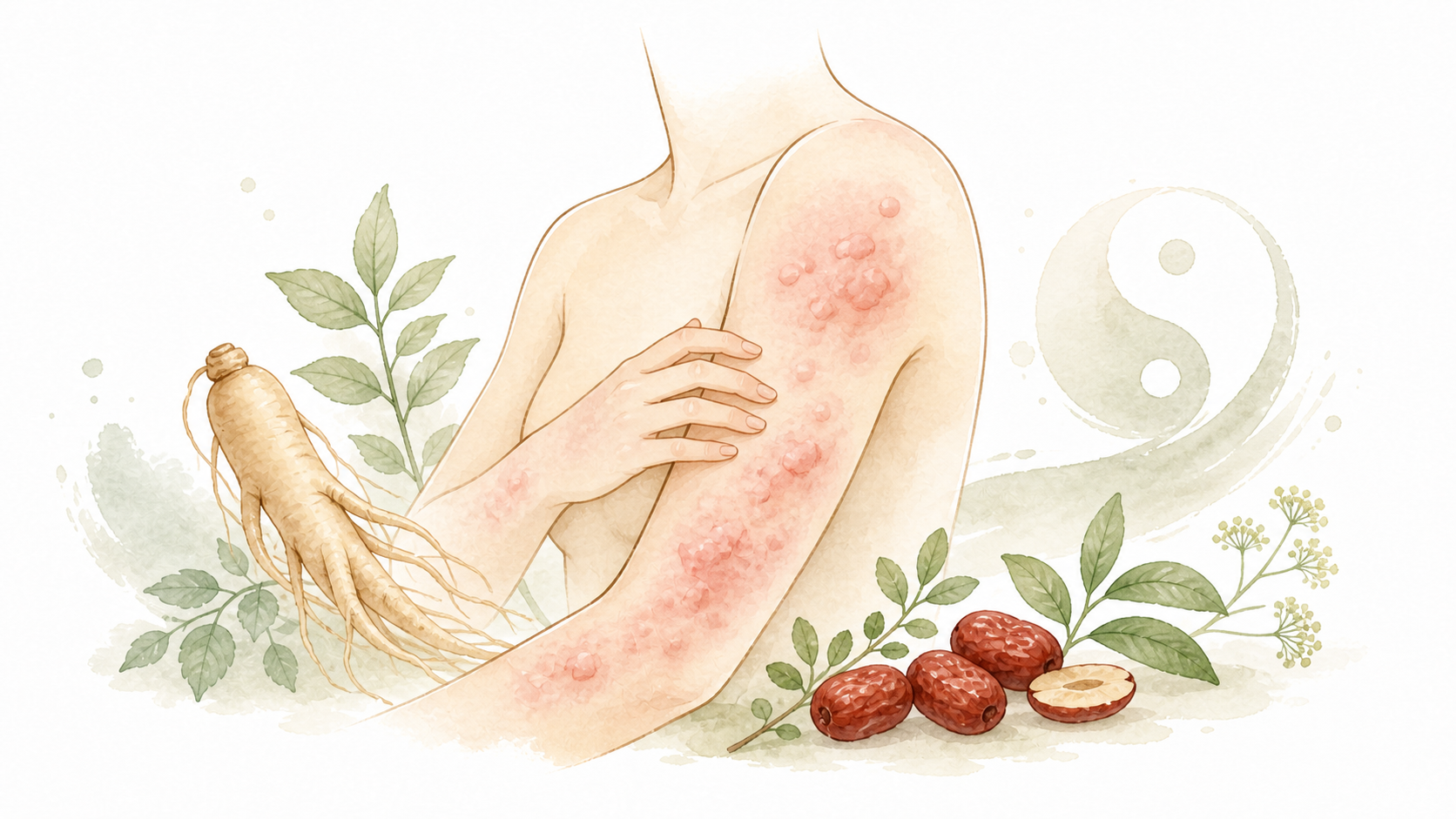
Do symptoms return the next day after stopping antihistamines, providing relief only while taking them?If unknown itching and wheals recur for more than 6 weeks, it is not simply a problem with the skin.
Chronic urticaria is a sign that the body's immune system has lost its way. Baekrokdam focuses on changing the internal environment so the skin can calm itself, rather than just suppressing symptoms.
Core disease information at a glance
- Other names
- Chronic spontaneous urticaria, chronic inducible urticaria
- Core criteria
- Wheals (swelling) and itching recurring for 6 weeks or more
- Classification
- Skin · Immune diseases
- Main symptoms
- Itching, wheals, angioedema, heat sensation
- Possible comorbidities
- Indigestion, insomnia, chronic fatigue, anxiety
- Diagnosis
- Inquiry, Inspection, Palpation — Trigger Factors and Constitution Differentiation
- Treatment
- Constitution-Customized Herbal Medicine (Baekrokdam Immune Reconstruction Program)
- General Duration
- 3–6 months (varies depending on chronicity)
- Telemedicine
- Possible
Commonly heard in the clinic
Many patients visit using these expressions
These are expressions frequently heard in the clinic. If this sounds like you, you may want to consider chronic urticaria.
Consult via telehealth →What is chronic urticaria?
Wheals and itching that recur almost daily or every few days for more than 6 weeksChronic Urticariais how it is defined. A key characteristic is that they disappear without a trace within 24 hours and appear in another location.
In Korean medicine, this is expressed asWind (風)due to its nature of appearing suddenly like wind, disappearing in an instant, and moving around. This 'wind' combines with heat or moisture in the body and manifests on the skin.
Please don't misunderstand.Hives are not caused simply by dirty skin.It is a state where the immune cells (mast cells) in our body have become too sensitive, detonating 'histamine bombs' even at insignificant stimuli.
In Western medicine, cases without a specific cause are calledChronic Spontaneous Urticaria (CSU)which actually means the 'cause is unknown.' Korean medicine seeks the answer here through gastrointestinal function, blood quality, and the stability of the autonomic nervous system.
Medical Staff in Charge

Chief DirectorDr. Yeonseung Choe
Many patients visit the clinic feeling frustrated, saying that antihistamines only provide temporary relief and that symptoms return even after increasing the dosage. Chronic urticaria is not simply a matter of external allergies. If it recurs for more than 6 weeks, it may be a warning signal from the body's immune system, gastrointestinal tract, and autonomic nervous system. Rather than relying solely on strong medication, I will help you find a way for your body to regain stability on its own.
- Graduated from Gyeonggi Science High School
- Graduated from Kyung Hee University, Pre-medical Course in Korean Medicine
- Graduated from Kyung Hee University, College of Korean Medicine
- Current) Chief Director, Baekrokdam Korean Medicine Clinic
- Former) Chief Director, Miol Korean Medicine Clinic Incheon Songdo Branch
- Former) Director, Miol Korean Medicine Clinic Gangnam Main Branch
- Former) Chief Director, Dolbom Korean Medicine Clinic Seocho Main Branch
- [Publications]
- Overcoming Polycystic Ovary Syndrome
- Overcoming Chronic Vaginitis - Symptoms, Causes, and Treatment
- Post-Miscarriage Care as Important as Postpartum Care: A to Z of Herbal Medicine After Miscarriage
Chronic urticaria occurs not from a single cause butdue to a combination of various imbalancesoccurs.
Main Causes of Chronic Urticaria — How They Accumulate
- 1 Deterioration of the intestinal environment
When the intestinal barrier weakens and toxins enter the bloodstream, the immune system becomes hypersensitive. Helicobacter pylori infection is also closely related.
- 2 Chronic stress
Psychological tension disrupts the autonomic nervous system, which directly leads to hypersensitivity of skin immune cells
- 3 Hormonal changes
For women, hormonal changes such as menstrual cycles, pregnancy, and menopause act as powerful triggers
- 4 Long-term use of antihistamines
Relying solely on medication may gradually degrade the body's own ability to regulate immunity
- 5 Lack of sleep and fatigue
Lack of sleep leads to a state of 'blood deficiency (血虛)', reducing the skin's ability to withstand external stimuli
In addition to itching, hivesSystemic discomfortare often accompanied by.
Main symptoms of chronic urticaria — what patients actually experience
Skin area
- Wheals — Swelling with distinct borders, similar to mosquito bites
- Severe itching — Especially unbearable itching at night or when body temperature rises
- Angioedema — Swelling and throbbing sensation in the eyelids, lips, hands, and feet
- Heat sensation and stinging — Burning sensation or needle-like pain in the skin
Accompanying Symptoms — Systemic Area
- Indigestion and abdominal bloating
- Insomnia due to nocturnal pruritus
- Chronic fatigue and lethargy
- Decreased concentration and anxiety due to itching
Immune system dysfunction does not remain only on the skinthe digestive and nervous systemsand affects
If these symptoms appear as a set, it is a signal that the overall immune system needs to be addressed.
Chronic Urticaria: Baekrokdam's Approach
Summary— Urticaria is not a disease of the skin surface, but a state where the internal immune balance is disrupted, causing the body to react hypersensitively to external stimuli. The goal is to change the environment, not just suppress the symptoms.
Why Baekrokdam Focuses on Herbal Medicine
The goal of herbal medicine is not just to suppress external symptoms, but to create a body that can recover on its own without medication.
Antihistamines block histamine receptorsThe role of extinguishing immediate itchingto perform this function. However, once the medication wears off, the body remains hypersensitive and produces hives again. This is why it is difficult to stop taking medication for one or two years.
Herbal medicine focuses on discharging wind (風), heat (熱), and toxins that trigger skin hypersensitivity and stabilizing the immune system.Rather than forcibly suppressing symptoms, it improves the constitution so that the skin can remain indifferent even when stimulated. This is why herbal medicine is a fundamental alternative for chronic diseases.
Why it is not easily detected through tests
Tests look at values and structures, but the essence is often a 'body imbalance' that is not easily captured by tests.
The reason 'unknown cause' appears in university hospital tests isspecific allergic antigensbecause there is no such thing. However, chronic urticaria is often not due to external antigens, but rather due to the body's own autoimmune mechanisms or autonomic nerve issues.
That is why, even if the test values are normal, patients experience a living hell every night due to itching.It is that there is a practical imbalance in an area that tests cannot see., it is not that there is no cause.
So, how to treat it — the Baekrokdam method
We examine the whole body through inquiry, pulse diagnosis, and abdominal palpation, and resolve the root cause together with herbal medicine.
To find the invisible cause,the patient's lifestyle patterns and constitutional weaknesses.we delve deep into
- Visual Inspection (Mang-jin)— We closely observe the color of the wheals (whether red or pale), their shape, the area of occurrence, and the time it takes for them to disappear.
- Medical Inquiry (Mun-jin)— We meticulously check sleep quality, digestive state, menstrual cycle, and stress triggers. In particular, gastrointestinal health is directly linked to the skin.
- Abdominal Palpation (Bok-jin)— We diagnose the state of heat-toxins in the internal organs through abdominal tenderness, gas, or hardness.
Based on the data identified in this way,Simultaneously targeting the three axes: immunity, gastrointestinal, and autonomic nervous systemwe prescribe herbal medicine to manage the condition. Rather than simply stopping the itching, you will experience your skin clearing as your overall systemic condition improves.
Differentiation branches of chronic urticaria observed in clinical practice
Chronic urticaria is broadly divided into four types depending on the cause. Which one applies to you?
Wind-Heat Type風熱
Acute recurrent type with red wheals, strong heat sensation, and worsening after a cold or exposure to heat
Treatment direction: Clearing heat and eliminating wind (淸熱祛風)
Wind-Cold Type風寒
Cold urticaria type with pale wheals that worsen upon exposure to cold wind or cold water
Treatment direction: Dispelling cold and eliminating wind (散寒祛風)
Blood Deficiency and Wind-Dryness Type血虛風燥
Old chronic recurrent type with dry skin and extreme itching every night
Treatment direction: Nourishing blood and moistening dryness (養血潤燥)
Stomach Heat Type胃熱
Type with habitual indigestion, bad breath, abdominal bloating, and sensitivity to food
Treatment direction: Clearing stomach heat and detoxifying (淸胃解毒)
Depending on the patient's condition, two or more types may be mixed,Fine-tuning the prescription while monitoring symptom changes every 2 to 4 weeksdoes.

Progress by stage of chronic urticaria treatment
Below is the general process of herbal immune reconstruction.
- Weeks 1-2 — Reduction in seizure frequency
In the early stages of taking herbal medicine,The frequency and intensity of hives breaking outbegins to decrease.
- The time it takes for hives to disappear after an outbreak becomes shorter
- The intensity of itching is relieved from 10 to around 7-8
- Observe the body's reaction while maintaining the dosage of antihistamines
- Months 1-2 — Reducing drug dependency
As skin immunity stabilizes,A period when Western medicine dosage can be reducedis.
- The interval between antihistamine doses increases (daily -> once every two days)
- The duration of uninterrupted sleep at night increases
- Accompanying indigestion or fatigue is improved
- Months 3-6 — Immune stabilization and relapse prevention
This is the stage of completing herbal treatment and internalizing lifestyle habits.
- Hives do not break out even in the presence of triggers (stress, food)
- Maintaining clear skin without Western medicine
- A state where immunity is strengthened by compensating for constitutional weaknesses
Treatment progress may vary depending on the individual's condition and chronicity.
Those with chronic symptoms for over one yearA longer treatment period should be planned. However, by slowly addressing the root cause, you can eventually return to a normal daily life without medication.

Consult comfortably via non-face-to-face services for your current concerns.Herbal medicine prescriptions are available from anywhere in the country.
Those with chronic symptoms for over one yearA longer treatment period should be planned. However, by slowly addressing the root cause, you can eventually return to a normal daily life without medication.
Diseases often confused with chronic urticaria
These are diseases that look similar to urticaria but have completely different treatments.
The itching is similar, but it is an eczematous disease where erythema, exudate, and scaling persist and do not disappear within 24 hours.
Occurs limitedly only in areas that have come into contact with specific substances (metals, cosmetics, etc.) and improves when the causative substance is removed.
It looks similar to urticaria, but the wheals persist for more than 24 hours, and purpura (bruising) or pigmentation remains where they disappear.
Characterized by white scales and thickened skin plaques rather than itching, with very clear boundaries.
Chronic urticaria treatment reviews
Frequently Asked Questions about Chronic Urticaria
How is chronic urticaria different from general urticaria?
It is usually divided by a 6-week threshold. If it disappears within 6 weeks, it is acute; if it recurs beyond that, it is considered chronic. Chronic urticaria is not simply caused by eating a specific food, but is often a state where the immune system itself has become hypersensitive, making it difficult to find a single cause.
I have been taking antihistamines for over a year; can I stop taking them?
I do not recommend stopping them abruptly from the start. As we manage the 'wind (風)' and 'heat (熱)' in the body with herbal medicine and skin hypersensitivity decreases, we move toward gradually increasing the dosing interval. In fact, many people maintain a stable condition without medication through this process.
Does poor gastrointestinal health make urticaria more likely to occur?
Yes, indeed. According to research, Helicobacter pylori or gastrointestinal issues are found in more than 60% of patients with antihistamine tolerance. In Oriental medicine, 'stomach heat (胃熱)' emanating through the skin is viewed as one of the primary causes of urticaria.
How long is the expected treatment period?
Generally, we look at about 3 to 6 months. Those who have suffered for over a year, those with accompanying angioedema, or those who have taken high doses of antihistamines (4 times the standard dose or more) may require a longer-term approach for immune reconstruction.
Is there a reason why itching worsens at night?
In Oriental medicine, this is called 'Blood Deficiency and Wind Dryness (血虛風燥)'. At night, as the body's fluids decrease, the skin becomes dry and 'false heat' rises. At this time, the properties of 'wind (風)' strengthen, leading to extreme itching.
Is it possible to check skin conditions through non-face-to-face consultation?
Yes, it is. We identify the patterns of skin lesions and general systemic condition through high-definition photos, video calls, and detailed medical questionnaires. You can receive herbal medicine via courier from anywhere in the country.
What is the difference between chronic spontaneous urticaria and inducible urticaria?
Spontaneous urticaria refers to wheals that appear suddenly without specific external stimuli, while inducible urticaria refers to reactions to specific stimuli such as temperature changes or friction. Both symptoms are considered chronic in that itching recurs for more than 6 weeks. In Oriental medicine, we do not simply look at the skin surface, but focus on finding and managing the cause of the collapsed immune balance within the body.
If I scratch my skin, it swells up along the line; is this also a symptom of chronic urticaria?
Yes, that symptom is called dermatographism, and it also falls under the category of chronic urticaria. It is a state where the skin reacts sensitively to even very minor physical stimuli, resulting in wheals and itching. If it keeps recurring even after taking antihistamines, it is necessary to carefully examine whether there is a decline in internal organ function or an accumulation of heat toxins in the body.
Skin diseases that can be reviewed along with chronic urticaria
These are immune and skin diseases that are good to manage along with chronic urticaria.
Recommended documents to view together
Recommended materials to view next
Current documentChronic Urticaria
You can understand faster by continuing to check related topics and treatment information.
Urticaria
To those visiting the clinic for urticaria, hives, or wheals. Telemedicine available for residents of Incheon, Yeonsu-gu, and Baegot. We improve skin recovery power with herbal medicine and acupuncture. Nationwide treatment available.
Related diseases to look into
View togetherTo those visiting the clinic for cold urticaria or cold wind allergies. Telemedicine available for residents of Bupyeong, Incheon, and Yonghyeon-dong. We improve skin recovery power with herbal medicine and acupuncture. Nationwide treatment available.
View DiseasesFor those visiting the clinic for closed comedones, comedonal acne, or whiteheads. Non-face-to-face consultations available for residents of Cheongna, Bupyeong, and Juan. We balance sebum secretion using herbal medicine and acupuncture. Nationwide consultations available.
View Diseases