
Unpleasant odor centered around the armpits
The common adult apocrine type appears locally around the armpits and genitals and may become more pronounced after sweating.
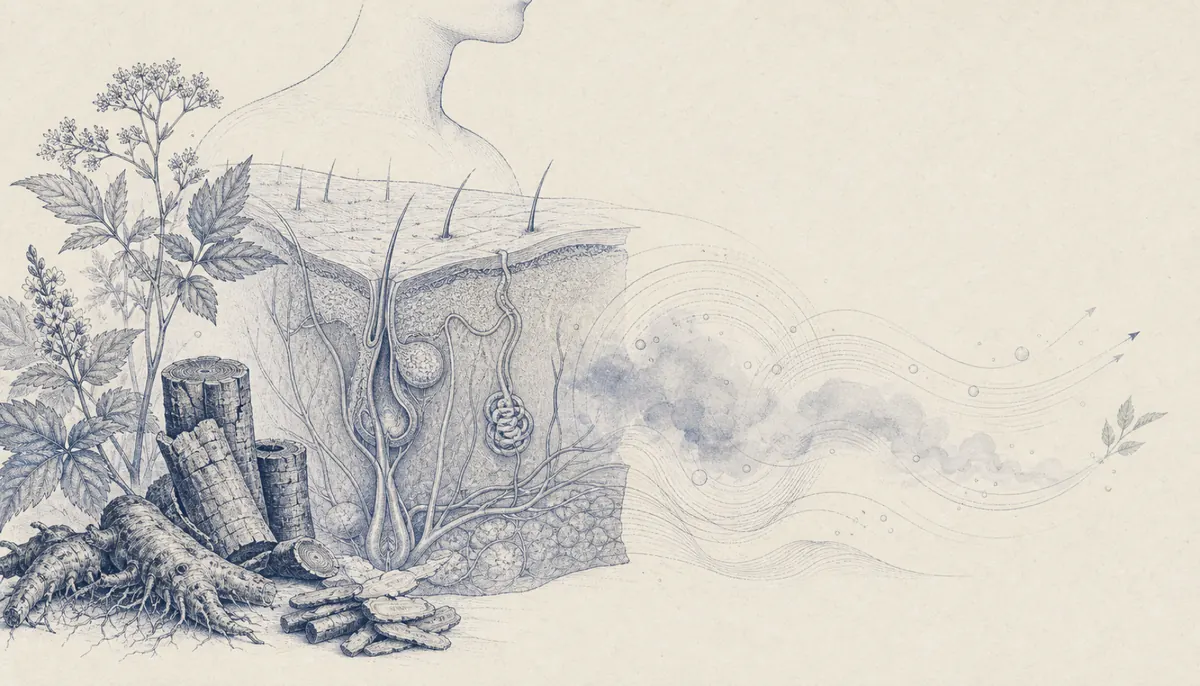
Osmidrosis is a condition where an unpleasant or unusual body odor occurs as sweat gland secretions and skin cell debris are broken down by bacteria and yeast on the skin. In adults, it commonly appears locally in the armpits or around the genital area, worsening after exercise or sweating, which can cause the odor to linger in clothing. If the odor suddenly begins across the entire body, is present in the breath or urine, or is accompanied by redness, soreness, or pain on the skin, do not dismiss it as simple underarm odor and seek an evaluation of the cause.
Guide to Osmidrosis Symptoms
Next steps by odor pattern
| Symptoms | Possibilities to check | Next step |
|---|---|---|
| Armpit odor soaks into clothes after exercise | Adult apocrine bromhidrosis | Record changes after changing clothes, sweating, or by area |
| Hands, feet, or skin folds are also damp and odorous | Accompanied by hyperhidrosis and bacterial skin changes | Check for skin erosion, deposits, or pitted lesions |
| Body odor overlaps with bad breath or urine odor | Possible eccrine type or systemic cause | Medical evaluation including medications and diet |
| Skin is red, hot, painful, and spreads rapidly | Acute issues such as skin infection | Dermatological evaluation on the same day |
| New onset in children or sudden onset of body odor | Need to differentiate underlying infection or metabolic causes | Prioritize medical history and physical examination during evaluation |
What the clinic checks first
Bromhidrosis is primarily characterized by the odor itself, which may be noticed by family or people around you before you notice it. We distinguish between localized odor (around the armpits and genitals) and systemic body odor, while examining the relationship with exercise, sweat, and clothing, as well as clues from hyperhidrosis or skin diseases.
The common adult apocrine type appears locally around the armpits and genitals and may become more pronounced after sweating.
The odor strengthens with sweat after heat or exercise, and since the smell can linger on clothes even after changing, please record these situations.
If the odor is spread throughout the body rather than in one area, or if breath or urine odors also change, we look for causes other than localized bromhidrosis, such as diet, medication, infection, or metabolic factors.
The primary symptom is a large amount of sweat, and sweat itself does not always have an odor. Since it can occur alongside bromhidrosis, please record sweat and odor separately.
Redness or erosion in the armpits and groin, substances attached to hair, or small pitted changes on the soles of the feet are clues to bacterial skin diseases.
If certainty and anxiety persist even when others cannot detect the odor, or if there are olfactory hallucinations, we examine olfactory or mental health causes along with a skin evaluation.
Apocrine osmidrosis in adults primarily causes odor in the armpits, and depending on the individual, it may also appear around the genital area.
The odor can intensify after exercise or heat and may persist in sweat-soaked clothing; try to distinguish between the odor of the skin and the odor of the clothes.
If your sense of smell becomes accustomed to a persistent odor, people around you may notice it first. Focus on confirming the specific area and situation rather than reacting to offensive expressions.
The odor may worsen on days with heavy sweating, but since the amount of sweat and the intensity of the odor do not always match, observe them separately.
If the armpits or groin are red, damp, itchy, or painful, seek a medical examination for dermatitis or bacterial/yeast infections.
If there are deposits on armpit hair or damp, pitted lesions on the soles of the feet accompanied by odor, treatment for those specific skin conditions is necessary.
Unlike localized armpit odor, if the odor is systemic and accompanied by bad breath or urine odor, a medical history is taken to check for possibilities such as diet, medication, infection, or metabolic diseases.
If a new odor appears in a child before puberty, or if a systemic odor begins suddenly without changes in hygiene habits, the underlying cause must be identified.
Rapidly spreading redness, heat, pain, and systemic symptoms require standard dermatological care first. Supplementary consultation at Baekrokdam should only be considered after acute risks have stabilized.
Consultation for osmidrosis (body odor) symptoms at Baekrokdam
We check for rapidly spreading redness, pain, fever, and changes in systemic, respiratory, or urine odors to ensure necessary medical care is not delayed.
We record the location of the odor before and after exercise or heat exposure, the extent to which it lingers on clothing, and changes in skin folds, hair, or feet.
This does not replace the treatment of skin diseases; instead, we track whether recurring odors, sweating, and sleep or digestive discomfort actually improve.
You can have a more detailed consultation at Baekrokdam if you prepare information on when and where the odor started, changes after exercise, sweating, or changing clothes, photos of the skin, bad breath or urine odor, and details on food, alcohol, and all medications currently being taken.
The apocrine type, which is common in adults, appears locally around the armpits and genital area. If smells from the entire body, breath, or urine overlap, other causes are evaluated.
No. Hyperhidrosis is a condition where the amount of sweat is excessive, whereas osmidrosis focuses on unpleasant or abnormal odors. The two can occur together.
If a body-wide smell suddenly develops without changes in hygiene or exercise, or if it overlaps with bad breath, urine odor, skin pain, or redness, please check the cause through a dermatologist or related medical evaluation.
Skin infections and systemic causes must be ruled out first, and necessary standard treatments should be received. Korean herbal medicine treatment is consulted only as a supportive measure for chronic or recurring discomfort after acute issues have stabilized.
It is not a problem of sweat alone; odors can occur when bacteria or yeast on the skin break down sweat gland secretions and cellular debris. Hyperhidrosis, skin infections, food, and medications are also evaluated separately. If it occurs suddenly in children or the overall body odor changes, other causes are checked.
Content reviewed:
This information supports, but does not replace, diagnosis or treatment by a qualified healthcare professional.