
HSV-1 infects the mucous membranes and skin around the mouth
The virus primarily infects the lips and the area around the mouth through oral contact, although HSV-1 can also cause genital infections.
Cold sores are primarily caused by the herpes simplex virus type 1 (HSV-1). Infection occurs through direct contact with the lips, the skin around the mouth, or saliva; the virus then remains dormant in nerve cells before reactivating. Transmission can occur through kissing, oral contact, or sharing items that have touched lesions or saliva. While transmission is possible even when no blisters are visible, the risk is highest during active lesions. Recurrence may coincide with fever, other illnesses, strong sunlight, menstruation, skin damage, or emotional stress, though a single trigger does not explain every recurrence. It is not concluded that cold sores are caused solely by poor hygiene or a specific food.
Guide to the Causes of Cold Sores
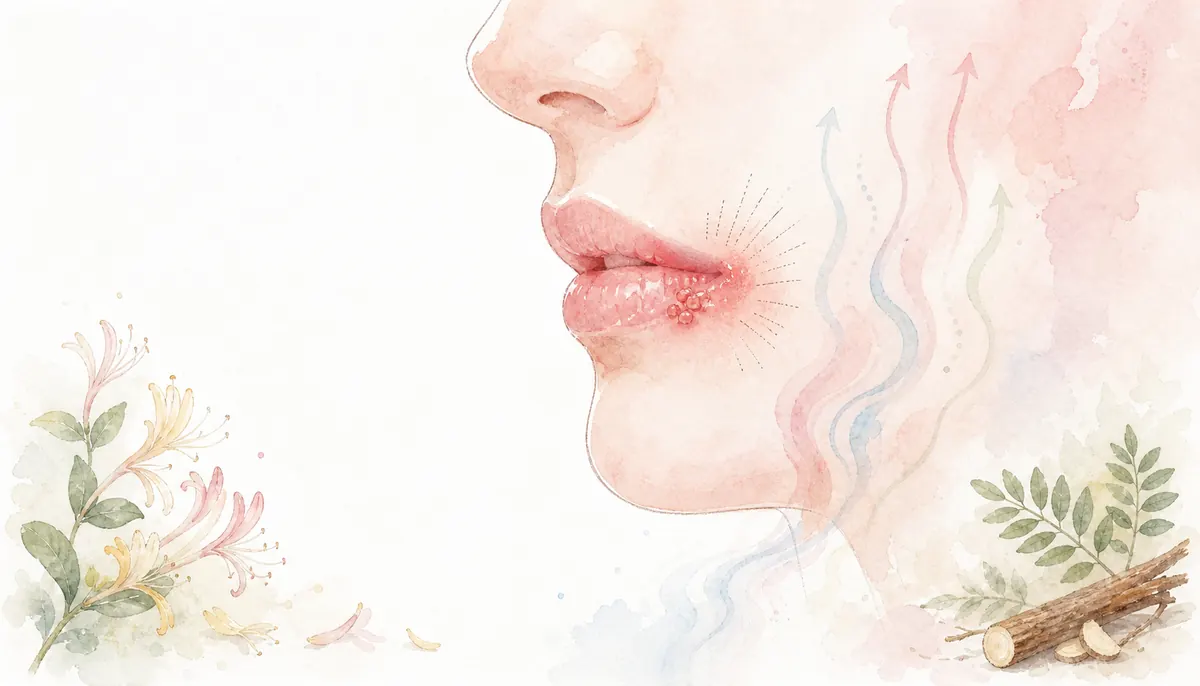
Distinguishing Infection vs. Recurrence
| Observation | Possible Meaning | First Step |
|---|---|---|
| Oral contact with a person who has active blisters | Possible direct transmission of HSV-1 | Avoid contact or sharing items until lesions have healed |
| Close oral contact, though no lesions were present | Possible asymptomatic viral shedding | Exercise caution regarding contact and seek medical evaluation if symptoms occur |
| Recurrent outbreaks in the same area of the lips | Possible reactivation of latent HSV | Record prodromal sensations and triggering situations |
| Recurrence following sunlight, fever, menstruation, or injury | Individual recurrence trigger context | Check if recurrence happens under the same conditions |
| Eye pain, redness, or widespread spreading | Possible corneal or severe infection | Immediate ophthalmological or medical evaluation |
What the clinic checks first
Cold sores are explained by the initial infection of HSV-1 followed by latency and reactivation. Transmission occurs through direct contact with lesions, saliva, or the skin around the mouth, and since triggers for recurrence vary by person, it is important to record the timing of these events.
The virus primarily infects the lips and the area around the mouth through oral contact, although HSV-1 can also cause genital infections.
Even after the first symptoms subside, the virus does not completely disappear from the body but remains in an inactive state within the nerve cells.
Blisters may recur in the same area when combined with fever, illness, sunlight, menstruation, skin injury, or emotional stress.
Kissing, oral contact, and sharing items that touch saliva increase the risk of transmission from the initial tingling stage until the blisters, ulcers, and scabs have fully healed.
Since the virus can be shed from the skin around the mouth even when it appears normal, the possibility of transmission is not considered zero simply because there are no blisters.
People with weakened immune function are at risk for more severe infections, and for individuals, illness, sunlight, injury, or stress may coincide with recurrence.
Infection can occur through kissing, oral contact, or sharing items contaminated with saliva; therefore, avoid contact when active lesions are present.
The virus can be shed even during asymptomatic periods, but the risk of transmission is highest when active lesions are present.
Cold sores are caused by the herpes simplex virus and are distinct from shingles, which is the reactivation of the varicella-zoster virus.
Check if recurrences happen in the same area following a cold or fever, but do not conclude that fatigue is the sole cause.
Mark recurrences on a calendar following exposure to strong sunlight, menstruation, or lip irritation to identify personal patterns.
Emotional stress may coincide with recurrence, but the infection is not attributed to an individual's mindset or hygiene.
If you have active cold sores, do not kiss babies and do not share tableware, towels, or lip products with immunocompromised family members.
Do not rub your eyes with hands that have touched a lesion. If you experience eye pain, redness, light sensitivity, or changes in vision, seek an immediate ophthalmological evaluation.
Herbal medicine treatment at Baekrokdam does not replace medical evaluation and antiviral treatment for the first severe infection, widely spreading lesions, or infections involving the eyes or immunocompromised patients.
Consultation on the causes of cold sores at Baekrokdam
Eye symptoms, exposure to newborns, or widespread lesions in an immunocompromised state are immediately referred for related medical evaluation.
We verify the relationship between the first occurrence and recurrent episodes, as well as the timing of oral contact, fever, sun exposure, menstruation, injury, and stress.
Without arbitrarily changing prescriptions, we record the frequency of recurrence and the impact on daily life to determine the scope of concurrent herbal medicine treatment.
Please prepare the dates and photos of the first occurrence and recurrences, history of oral contact, fever, sun exposure, menstruation, injury, stress, your immune status, and any antiviral medications you are taking.
They are primarily spread through oral contact with lesions, saliva, or the skin around the mouth. Transmission is possible even without visible lesions, but the risk is higher when active blisters or ulcers are present.
This is because after the initial infection, the HSV (Herpes Simplex Virus) remains latent in the nerve cells and then reactivates. Please record any recurring relationships with fever, sunlight, menstruation, injury, or stress.
Medical evaluation must come first for eye symptoms, immunocompromised states, widespread infection, or the first severe outbreak. Herbal medicine is consulted as a supportive measure during the stable phase and does not replace necessary antiviral treatment.
Antiviral creams can be more helpful when started at the first signs, such as tingling. If lesions are very large or painful, recur frequently, or if the patient is immunocompromised, a healthcare provider may consider antiviral tablets. Maintain hand hygiene and avoid contact until the blisters have completely healed; if you have lesions around the eyes or eye pain, seek prompt medical evaluation.
Following early signs like tingling or burning around the lips, small clusters of blisters may form, which then burst and lead to ulcers and scabs. Contagion is possible until the blisters have completely healed. Seek prompt medical evaluation if you have lesions around the eyes, eye pain, very large and painful lesions, or a weakened immune system.
Content reviewed:
This information supports, but does not replace, diagnosis or treatment by a qualified healthcare professional.