
비대면 vs 대면
Q. What is the difference between getting diet herbal medicine via telehealth versus visiting a clinic for an in-person consultation?
A.
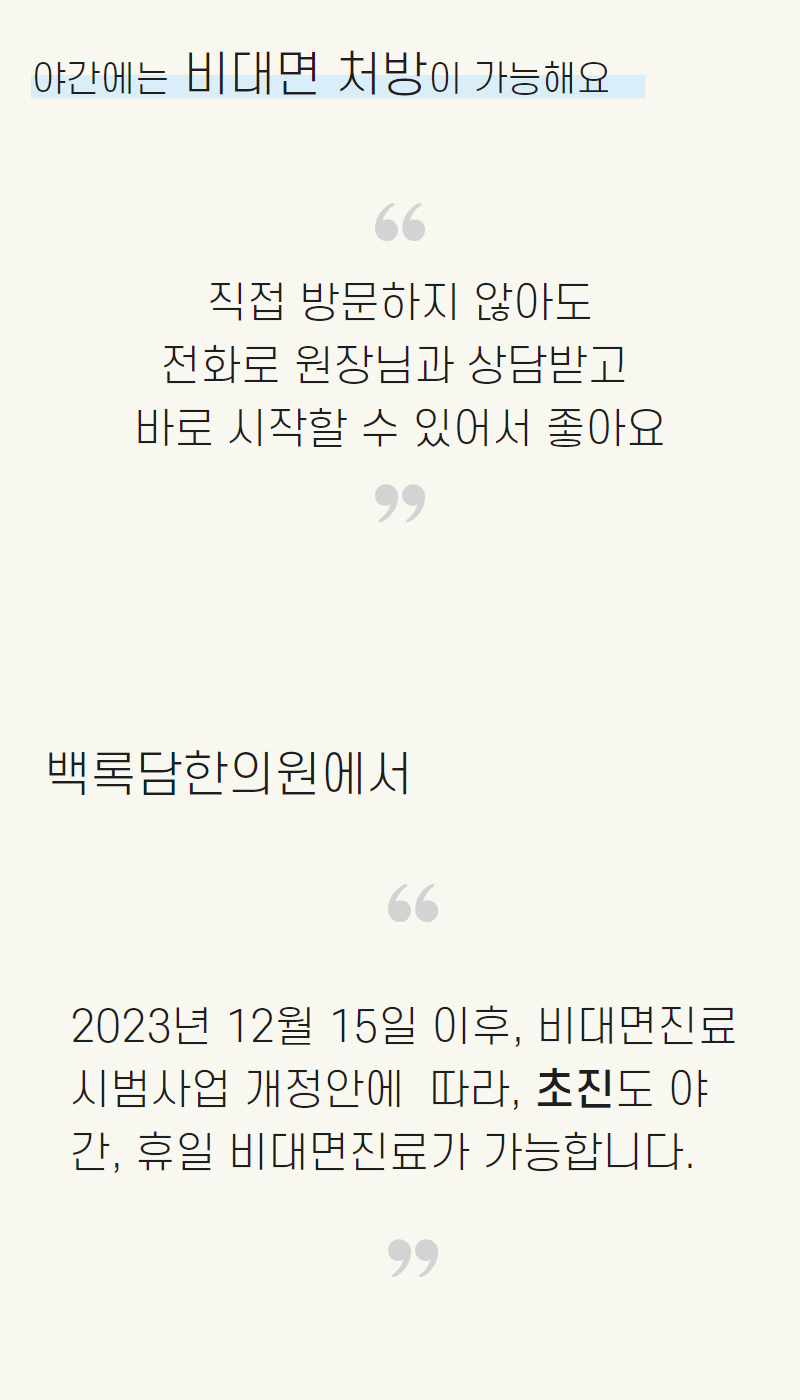
Telehealth is highly convenient for busy professionals, but weight loss is about restoring the body's overall balance, not just taking a 'fat-burning pill.' In-person visits allow me to perform pulse diagnosis and assess edema and skin condition to provide a precisely tailored prescription. It ultimately comes down to a choice between convenience and precision.
📝 Detailed Answer
In today's era, it is possible to receive quality medication through telehealth. However, over a decade of clinical practice has made one thing clear: the cause of weight gain differs for every individual.
Some patients are hindered by 'Eohyeol' (blood stasis), where blocked circulation leads to turbid blood, while others must first resolve 'Dameum' (phlegm-fluid retention)—the accumulation of metabolic waste in the body. If a patient in a state of 'Bi-heo' (Spleen deficiency) with severely depleted digestive function is given a strong appetite suppressant first, they will likely spend their day feeling dizzy and exhausted. Having experienced the pitfalls of relying solely on theory during my own studies, I understand how critical these subtle differences are.
Here is a comparison between the two approaches:
| Category | Telehealth Prescription | In-person Consultation |
| :--- | :--- | :--- |
| Convenience | Very High (No visit required) | Moderate (Visit required) |
| Diagnostic Precision | Questionnaire-based (Limited) | Based on the Four Examinations (Mang, Mun, Mun, Jeol) (Precise) |
| Constitution Tailoring | Focused on standardized formulas | Personalized prescription reflecting real-time status |
| Side Effect Management | Reactive feedback | Immediate status verification and adjustment |
| Psychological Support | Text-based communication | Motivational support through face-to-face counseling |
While telehealth offers 'efficiency,' in-person care offers 'optimization.' If you wish to understand your body's exact condition and start your journey safely, I recommend visiting the clinic to discuss your concerns with me in person.
#comparison
#comparison-table

Expert Verified
Dr. Yeonseung Choe
Chief Director