
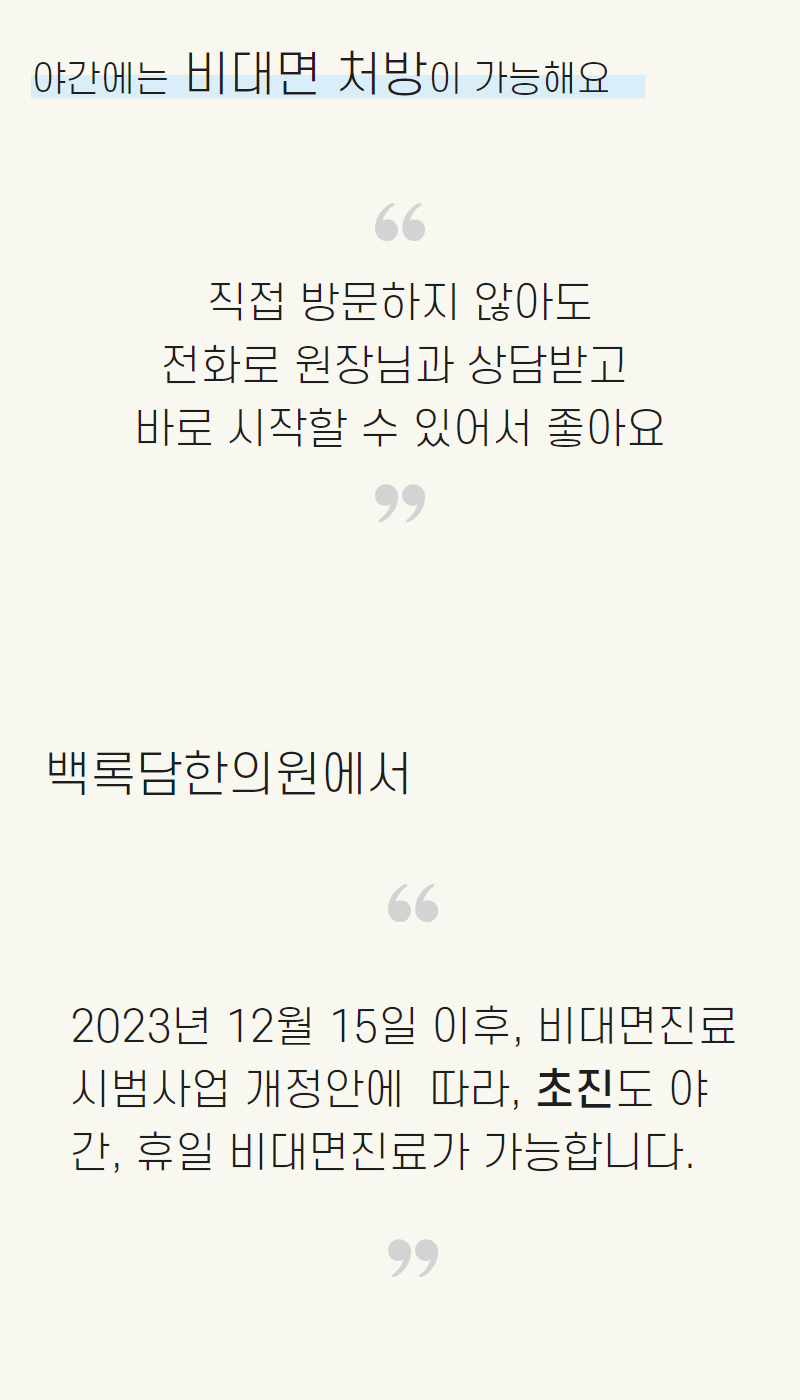
비대면 vs 대면
Q. I've seen a lot of online/non-face-to-face diet herbal medicine options lately. What is the difference between those and visiting a clinic in person?
A.
While non-face-to-face prescriptions are incredibly convenient for busy professionals, they cannot match the precision of an in-person consultation. To receive a personalized prescription tailored to your specific constitution and current health condition—rather than a generic 'weight loss pill'—visiting the clinic is highly recommended for optimal results.
📝 Detailed Answer
In Traditional Korean Medicine (TKM), weight gain is not viewed simply as a matter of calories, but as a result of internal imbalances. For instance, the herbal composition changes entirely depending on whether the cause is 'Eohyeol' (瘀血, blood stasis causing poor circulation) or 'Dameum' (痰飮, accumulated metabolic waste). If a patient with 'Bi-heo' (脾虛, spleen deficiency/weak digestive function) takes a strong, standardized diet formula without proper screening, they may experience dizziness and extreme fatigue.
Non-face-to-face consultations rely on questionnaires and phone calls, which allow for standardized prescriptions that can be helpful. However, an in-person visit allows for a comprehensive diagnosis including 'Mun-jin' (medical history), 'Mang-jin' (visual inspection), 'Jeol-jin' (pulse diagnosis/palpation), and 'Bok-jin' (abdominal palpation), combined with InBody analysis to identify physical imbalances.
This level of detailed 'custom design' is especially critical for those who have experienced yo-yo effects or side effects from Western weight-loss drugs, as their body's innate recovery power is often depleted. If you are looking for a precise solution tailored specifically to your body rather than just convenience, I encourage you to visit the clinic so we can find the right answer together.
#comparison
#comparison-table

Expert Verified
Dr. Yeonseung Choe
Chief Director