
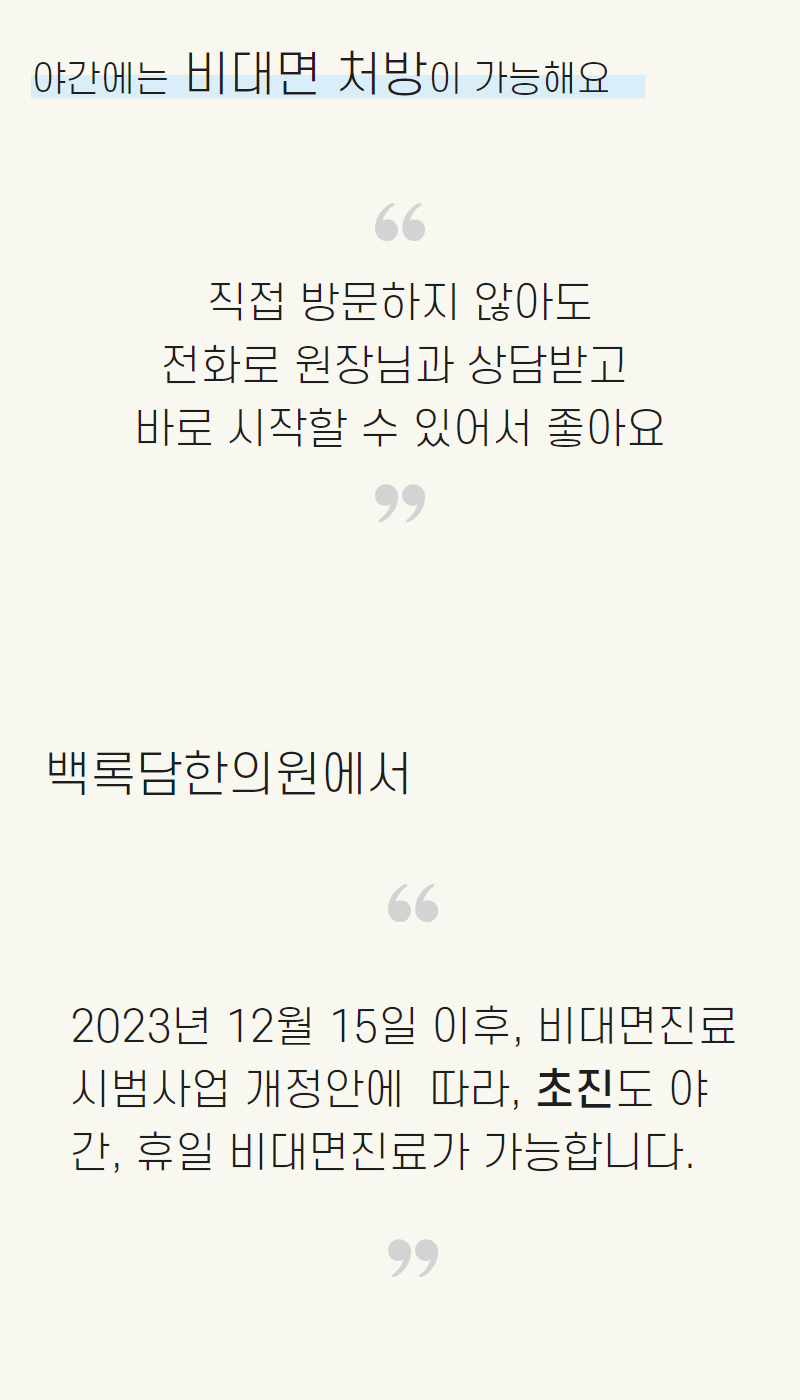
Remote vs. In-Person
Q. I see a lot of remote prescriptions for herbal diet medicine these days; is there a big difference compared to visiting the clinic in person?
A.
To be honest, while remote consultations are far more convenient—especially for busy professionals—they cannot match the precision of an in-person visit. Weight loss is not just about shedding pounds, but about restoring the body's overall balance. To truly understand what your body needs, it is essential to conduct a physical examination and feel the pulse face-to-face.
📝 Detailed Answer
I understand how burdensome it can be to take a day off work to visit a clinic, which is why remote care is so appealing. However, the core of Traditional Korean Medicine (TKM) is 'Byun-jeung' (辨證, Pattern Identification)—the process of analyzing symptoms to pinpoint the root cause.
Even if two people have the same weight gain, the internal causes differ. Some suffer from 'Eo-hyeol' (瘀血, blood stasis), where blocked circulation causes swelling; others have 'Dam-eum' (痰飮, phlegm-fluid retention), making the body feel heavy and lethargic. If a potent appetite suppressant is prescribed to a patient with 'Bi-heo' (脾虛, Spleen deficiency/weak digestive function) without a proper diagnosis, it may cause severe gastrointestinal distress, leading them to quit the diet within days. These subtle nuances are difficult to capture via questionnaires or screens.
For long-term success without the 'yo-yo' effect, you need a prescription tailored precisely to your body. Here is a comparison:
| Category | Remote Prescription | In-Person Consultation |
| :--- | :--- | :--- |
| Accessibility | Extremely Convenient | Requires Travel Time |
| Diagnostic Method | Questionnaires & Interviews | Four Examinations (Inspection, Listening/Smelling, Inquiry, and Palpation/Pulse) |
| Prescription Precision | General Pattern-based | Personalized Precision Prescription |
| Physical Check | Patient Self-reporting | Body Composition & Postural Analysis |
| Communication | Text/Phone-based | Face-to-face Counseling & Fine-tuning |
If this is your first time starting a regimen or if you have a sensitive physical condition, I recommend visiting the clinic at least once. After the initial detailed diagnosis, we can flexibly transition to remote follow-ups.
#comparison
#comparison-table

Expert Verified
Dr. Yeonseung Choe
Chief Director